
Featured Collection
Your cart
Featured Collection

PEAK SURGICAL
SKU:PS-D-056
Couldn't load pickup availability
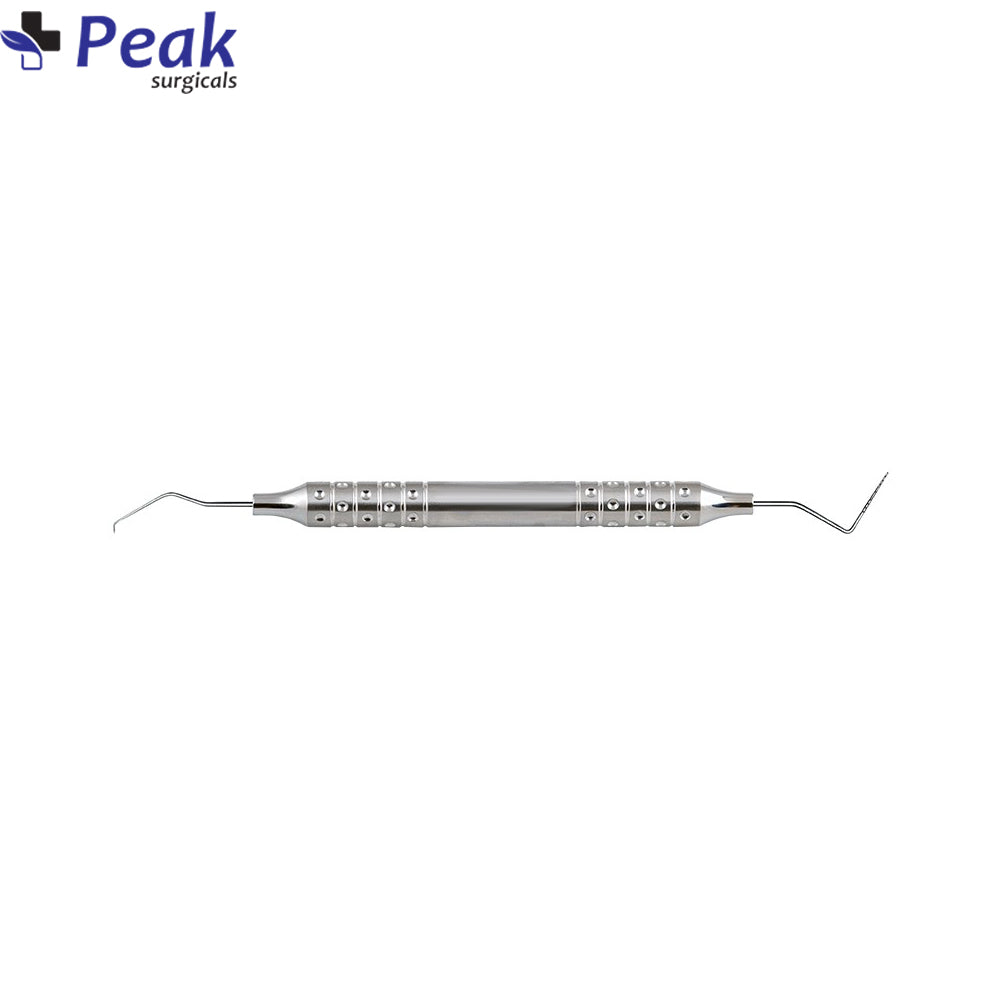
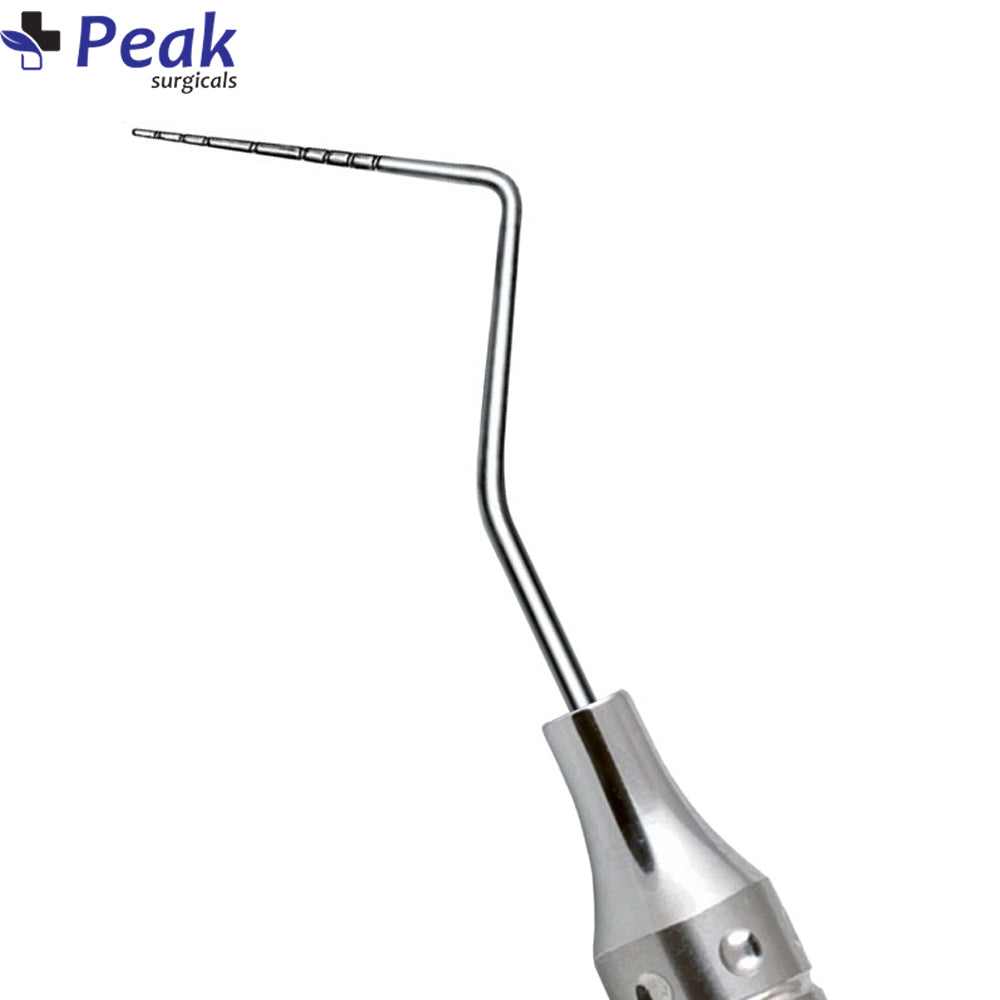
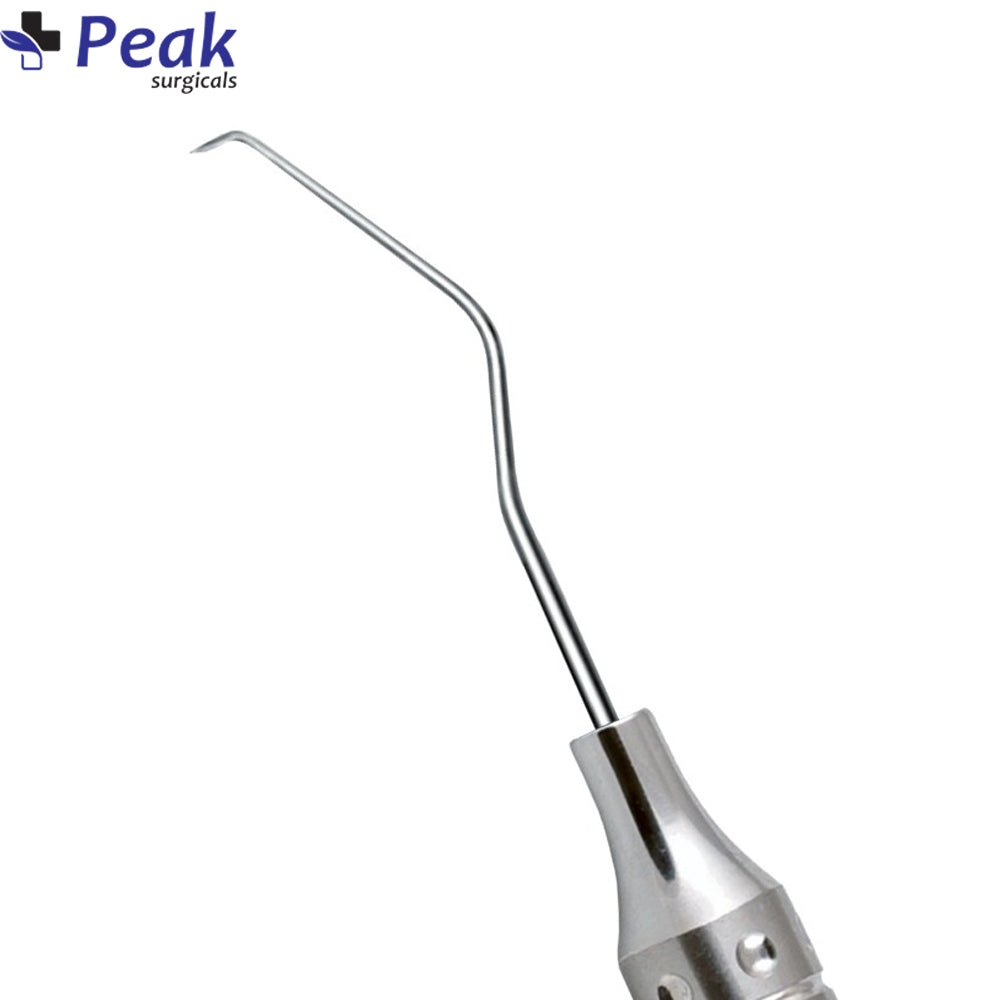
Expros 17/OW Thin Williams, SKU PS-D-056, is a double-ended dental diagnostic instrument made from German stainless steel for periodontal probing, tactile exploration, and restorative examination. The Explorer 17 end has a fine contra-angled working tip used to inspect occlusal pits, interproximal surfaces, restoration margins, crown edges, calculus ledges, and caries-suspect enamel. The opposite Thin Williams probe end carries 1 mm, 2 mm, 3 mm, 5 mm, 7 mm, 8 mm, 9 mm, and 10 mm markings for sulcus depth recording, bleeding-point documentation, attachment-level assessment, and periodontal maintenance comparison. The slim shank improves access around anterior teeth, posterior proximal surfaces, fixed prostheses, implant-adjacent soft tissue, and furcation entrances. Its textured cylindrical handle supports controlled finger rotation during mirror-guided examination. This pattern is used by periodontists, general dentists, restorative clinicians, dental hygienists, oral surgery teams, endodontists, dental schools, hospital dental departments, private operatories, procurement offices, and distributor catalogs requiring CE, FDA, and ISO-aligned reusable instruments.
The Expros 17/OW Thin Williams uses two working ends joined through a balanced solid handle, giving the operator a single instrument for exploration and calibrated probing. The Explorer 17 side is built with a slim contra-angle and narrow terminal curve, allowing the tip to enter developmental grooves, pass beneath marginal ridges, and trace the junction between tooth structure and restoration without blocking the mirror view. During a light pull stroke, the tip transmits tactile changes from softened enamel, calculus deposits, open margins, residual cement, and overhanging restorative material to the operator’s fingers. The Thin Williams end is longer and straighter, with a rounded terminal profile designed for axial insertion along the root surface. Its markings are read at the gingival margin while the shank remains parallel to the tooth. The handle has raised ring sections and recessed grip points that reduce slippage during wet-glove use. Fingertip rotation changes the approach angle from buccal to lingual and from mesial to distal surfaces without excessive lateral pressure.
In periodontal charting, the Thin Williams end is inserted after visual inspection, plaque disclosure when used, and supragingival assessment. The clinician records six readings per tooth, advancing the marked tip to the base of the sulcus and reading the band at the free gingival margin. The instrument is used around incisors, canines, premolars, molars, furcation entrances, implant collars, bridge abutments, and crown margins during baseline examinations and recall visits. In restorative dentistry, the Explorer 17 end is used after air drying to inspect occlusal fissures, proximal contact margins, composite transitions, amalgam edges, crown seats, inlay margins, and cement remnants. During periodontal debridement review, the same end helps identify residual calculus on root surfaces before final irrigation and polishing. Oral surgery teams use the pattern during pre-extraction dental clearance and post-scaling review. Endodontic and operative clinicians use the angled tip to assess access margins, caries margins, and restoration integrity under mirror guidance. The double-ended configuration keeps the examination sequence organized across hygiene, periodontal, restorative, and emergency dental appointments.
The Explorer 17 end is selected when the task requires a fine angled tip with tactile sweep rather than a depth reading. Its curved working form is suited for posterior occlusal pits, interproximal ledges, cervical margins, cement remnants, and fine restoration defects where a shepherd’s-hook explorer gives a less direct approach. The 1 mm mark records shallow gingival sulcus contact during maintenance checks. The 2 mm mark supports routine healthy-site documentation. The 3 mm reference is used for baseline screening and recall comparison. The 5 mm reading identifies deeper pocketing that affects scaling strategy and chart notation. The 7 mm mark assists furcation and posterior pocket assessment. The 8 mm reference supports advanced periodontitis recording around molars and prosthetic abutments. The 9 mm mark documents severe pocket depth before therapy review. The 10 mm reference supports surgical planning and referral records. Together, the explorer and measuring end keep restorative inspection and periodontal documentation within one tray setup across daily examinations.
German stainless steel gives the Explorer 17 tip and Williams probe end the rigidity needed for precise tactile response while resisting deformation during repeated clinical handling. The satin handle reduces glare under operatory lighting, while the polished working ends allow rapid visual inspection after cleaning. The reusable construction fits standard dental reprocessing workflows that include chairside debris removal, ultrasonic cleaning when used by the facility, rinsing, drying, pouching, and steam autoclave sterilization. A one-piece metal body simplifies tray auditing because there are no detachable sleeves, plastic inserts, or consumable measuring parts. CE marking supports international medical device purchasing, and ISO 13485 alignment reflects controlled manufacturing documentation expected by hospitals, dental schools, and procurement teams. FDA-compliant purchasing support helps United States clinics and distributors maintain vendor records for reusable hand instruments. For multi-chair departments, this pattern can be stocked in diagnostic, hygiene, restorative, endodontic, and oral surgery trays to keep periodontal recording and tactile inspection consistent across clinicians during daily operatory turnover.
| SKU | PS-D-056 |
|---|---|
| Product Name | Expros 17/OW Thin Williams |
| Price | $11.00 USD |
| Size/Gauge Variants | Thin Williams markings: 1 mm, 2 mm, 3 mm, 5 mm, 7 mm, 8 mm, 9 mm, and 10 mm |
| Instrument Category | Dental diagnostic explorer and periodontal probe |
| Procedure | Periodontal charting, caries detection, calculus inspection, restorative margin assessment, and dental examination |
| Material | German stainless steel |
| Finish | Satin handle with polished working ends |
| Sterilization | Reusable and steam autoclave compatible |
| Instrument Classification | Non-powered reusable dental diagnostic hand instrument |
| Reusable | Yes |
| Certifications | CE marked, ISO 13485 aligned, FDA-compliant procurement support |
| Warranty | 30 days money back guarantee |
| MOQ | 1 piece |
| OEM / Custom Orders | Available for clinics, distributors, and procurement programs |
| After-Sale Service | Product support and replacement assistance through Peak Surgicals |
How does this differ from an Expros 23/QOW Thin Williams instrument?
The Expros 17/OW Thin Williams uses an Explorer 17 working end, while the Expros 23/QOW Thin Williams uses a shepherd’s-hook Explorer 23 end. The Explorer 17 pattern has a finer contra-angled sweep for tracing posterior proximal margins, cervical restoration edges, and cement remnants. The Explorer 23 pattern is more commonly selected for occlusal pits, fissure tracking, and broader caries exploration strokes. Both patterns include a Williams-style measuring end for periodontal charting. This product is better suited when restorative margin inspection and proximal tactile access are central to the examination. The Williams side maintains 1 mm to 10 mm periodontal recording capability in the same handle.
How are the 1 mm to 10 mm markings selected during periodontal charting?
The Expros 17/OW Thin Williams uses the 1 mm and 2 mm markings for shallow sulcus readings during routine maintenance. The 3 mm mark supports baseline periodontal screening around healthy and stable sites. The 5 mm reading is used when pocket depth requires chart notation, debridement planning, and follow-up comparison. The 7 mm and 8 mm references help document deeper posterior pockets around molars, furcations, and prosthetic abutments. The 9 mm and 10 mm markings support severe pocket depth recording before periodontal surgery planning or referral. The fine probe profile helps maintain axial contact along the root surface while the clinician records six points per tooth.
How do CE, ISO 13485, and FDA procurement requirements apply?
The Expros 17/OW Thin Williams is positioned for professional dental purchasing where traceable sourcing and reusable instrument documentation are required. CE marking supports procurement for international healthcare markets that request medical device conformity records. ISO 13485 alignment reflects a manufacturing management framework used for regulated instrument supply. FDA-compliant procurement support assists United States clinics, hospitals, dental schools, and distributors with vendor documentation for reusable dental hand instruments. These references are relevant for tender files, clinical supply catalogs, multi-location purchasing, and distributor onboarding. The product remains a non-powered dental diagnostic instrument for professional examination workflows.
How is handle control used during intraoral examination?
The Expros 17/OW Thin Williams relies on a textured cylindrical handle rather than a ratchet, box lock, or spring mechanism. The raised ring sections and recessed grip points give the clinician stable control during wet-glove handling. While using the Thin Williams end, the operator rolls the handle between the thumb and index finger to keep the probe aligned with the root surface. During Explorer 17 use, the same rotation guides the curved tip through fissures, margins, and proximal ledges with controlled tactile pressure. This finger-roll control helps the clinician change angulation without lifting the mirror or interrupting the examination field. The design supports light diagnostic pressure rather than clamping or locking force.
Can clinics and distributors reprocess this instrument for repeated use?
The Expros 17/OW Thin Williams is a reusable German stainless steel dental diagnostic instrument suitable for standard clinical reprocessing. After use, staff can remove debris chairside, clean the working ends, process the instrument through ultrasonic cleaning when included in the facility workflow, rinse, dry, package, and steam autoclave according to local protocol. The solid metal construction supports repeated sterilization cycles in hygiene, periodontal, restorative, and examination trays. Hospitals and clinics can stock the same pattern across operatories to standardize periodontal charting and restorative inspection. Distributors can list the product with CE and ISO 13485 procurement references for professional dental buyers. The $11.00 USD price supports single-instrument replacement, dental school replenishment, and multi-chair inventory planning.
