Featured Collection
Your cart
Featured Collection

PEAK SURGICAL
SKU:PS-DE-006
Couldn't load pickup availability
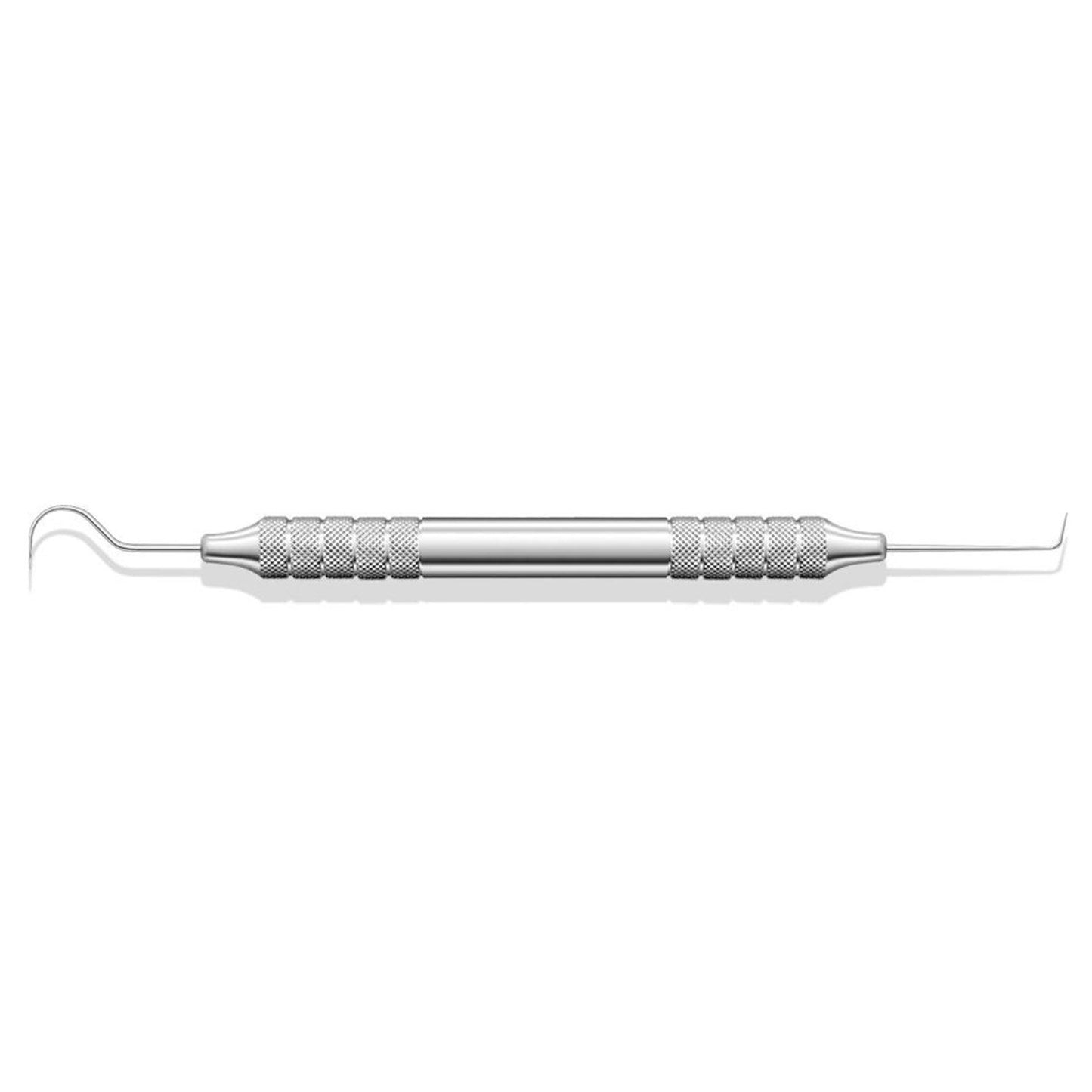
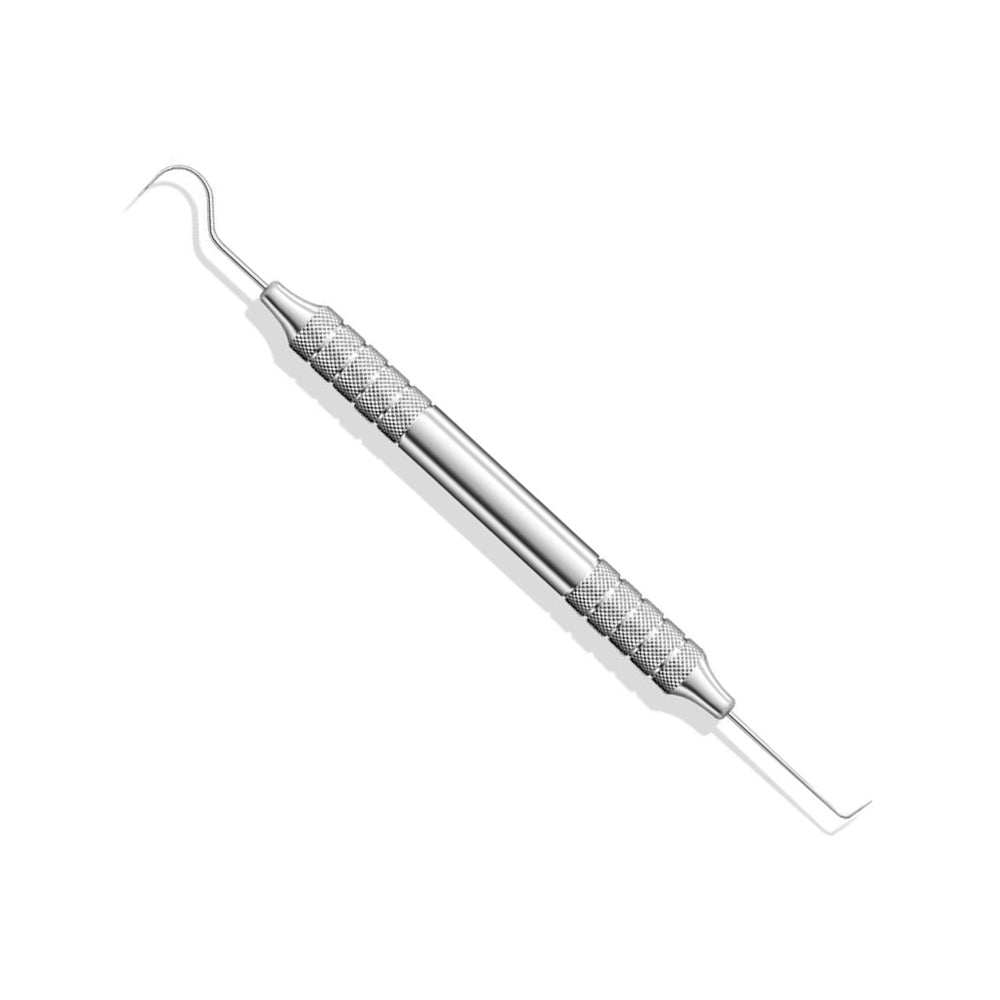
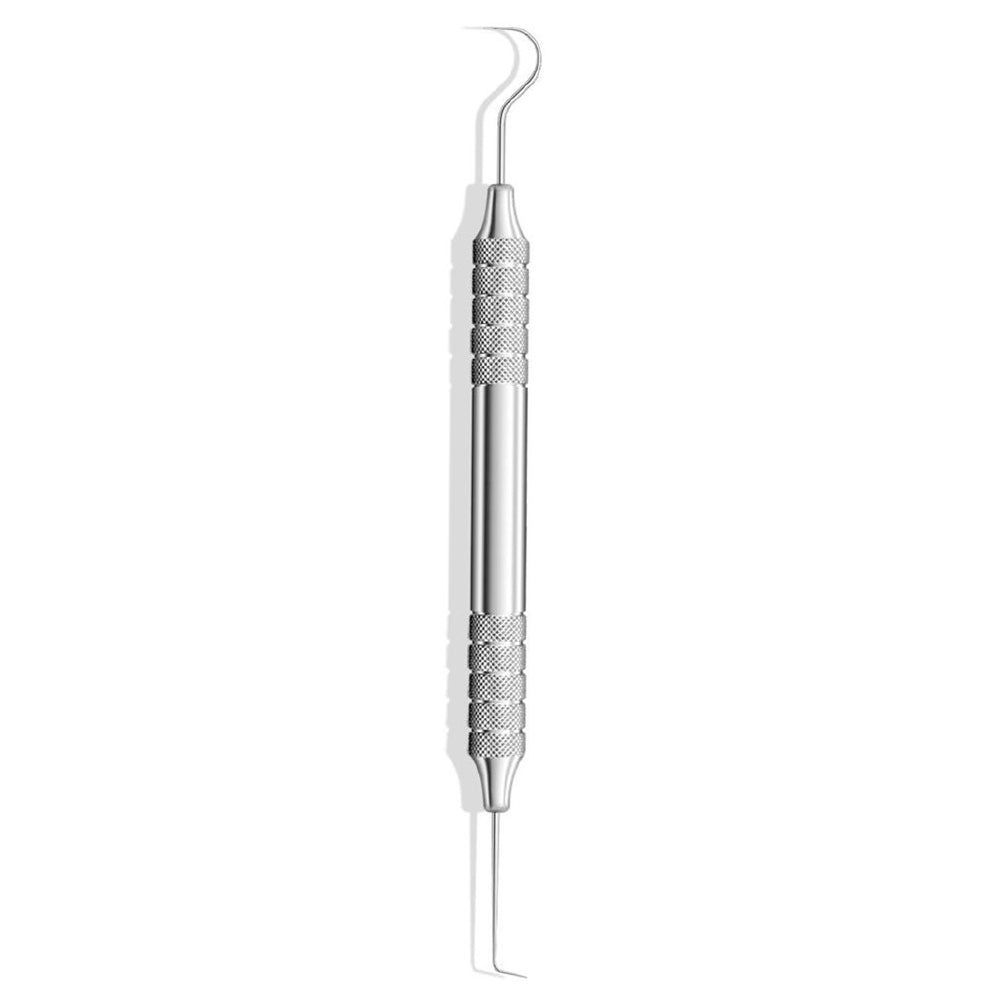
Explorer Shepherds Hook, SKU PS-DE-006, is a reusable dental diagnostic explorer made from German stainless steel for caries exploration, calculus detection, restoration margin checks, crown and bridge assessment, sealant inspection, periodontal screening support, and examination tray setup. The instrument is supplied in 0.5mm, 3.5mm, 5.5mm, 8.5mm, and 11.5mm size options with curved Shepherd hook working ends that support controlled tactile examination around occlusal pits, fissures, interproximal surfaces, cervical contours, restoration margins, overhangs, ledges, and small surface irregularities. The double-ended handle gives clinicians two approach angles for anterior, premolar, molar, restorative, periodontal, teaching, emergency, and veterinary dental workflows. The textured handle supports finger rotation, light exploratory pressure, and stable tactile feedback during intraoral examination. General dentists, restorative clinicians, periodontists, hygienists, dental students, hospital dental departments, veterinary dental teams, distributors, and procurement offices use this Class I reusable diagnostic hand instrument where fine curved stainless steel tips are required for repeatable surface assessment and diagnostic verification.
The Explorer Shepherds Hook uses curved Shepherd hook working ends to provide controlled tactile contact during diagnostic examination. The hook-shaped terminal profile helps the clinician approach occlusal pits, fissures, restoration margins, interproximal surfaces, cervical regions, crown margins, and subgingival access zones while maintaining visibility around the mirror, suction tip, cheek retractor, matrix band, or rubber dam component. The fine tip profile supports light exploratory strokes without the broad contact of a burnisher or the working edge of a scaler. The double-ended design provides opposing access angles, allowing the instrument to be rotated and repositioned according to tooth group, arch position, and operator hand preference. The handle supports grip stability during wet-glove use and controlled tactile movement. The instrument has no ratchet, spring lock, box joint, cutting blade, plunger, or serrated forceps tip because its function depends on fine tip geometry, shaft curvature, manual pressure, and tactile feedback. It is selected for diagnostic exploration, not for active scaling, carving, extraction, condensation, or tissue traction.
During clinical examination, Explorer Shepherds Hook is used after visual inspection, field drying, mirror positioning, and isolation adjustment when tactile confirmation is required. The curved working end can trace composite margins, amalgam margins, crown edges, inlay margins, onlay margins, sealant borders, occlusal pits, fissures, and proximal contour transitions. In restorative dentistry, the instrument supports detection of open margins, overhangs, marginal gaps, rough surfaces, and finishing irregularities before polishing, repair, or replacement planning. In periodontal workflow, it supports tactile detection of deposits and surface irregularities around cervical and interproximal areas before active instrumentation. Dental schools use the same instrument for diagnostic technique training, tactile feedback exercises, and examination tray standardization. Veterinary dental teams use comparable examination sequences for canine and feline oral assessment where small curved tips help access posterior and interproximal surfaces. The instrument supports examination, verification, and documentation before treatment planning, restorative correction, periodontal instrumentation, or follow-up review.
The 0.5mm, 3.5mm, 5.5mm, 8.5mm, and 11.5mm Explorer Shepherds Hook options allow clinics and procurement teams to match the instrument variant to tray preference, access requirement, examination sequence, and department standardization. The Shepherd hook pattern is selected when the clinician needs a fine curved diagnostic working end for detailed surface assessment in confined oral access fields. The design supports controlled contact around anterior teeth, premolars, molars, cervical margins, proximal surfaces, occlusal grooves, restoration edges, crown interfaces, and sealant margins. The double-ended pattern is useful when one working end provides better entry from the mesial, distal, buccal, or lingual direction depending on tooth position and operator approach. Selection depends on access angle, surface location, restoration type, periodontal condition, tooth group, isolation method, and required tactile control. The fine working end is not selected for active scaling, root planing, restorative carving, amalgam condensation, extraction, or endodontic obturation. It is selected when the operator needs controlled margin tracing, surface detection, and intraoral diagnostic feedback.
German stainless steel construction gives Explorer Shepherds Hook the rigidity required for repeated diagnostic use while maintaining tip alignment, shank stability, handle grip, and working-end integrity through clinical turnover. The stainless finish supports visual inspection after cleaning, including the curved Shepherd hook tips, slender shanks, handle grooves, and transitional areas where biofilm, calculus particles, restorative residue, polishing debris, or examination material can remain after use. After examination or treatment, staff remove visible debris, clean the working ends and handle grooves, rinse, dry, inspect tip integrity and alignment, package when required, and steam autoclave according to facility protocol. CE marking supports international medical device procurement, ISO 13485 certification reflects regulated manufacturing controls, and FDA-compliant procurement support helps United States buyers maintain reusable dental hand instrument records. The 1-year warranty, MOQ of 1 piece, OEM availability, rust-free stainless construction, return and replacement support, and carton box packing support clinics, hospitals, dental schools, laboratories, veterinary departments, distributors, and institutional purchasing programs.
| SKU | PS-DE-006 |
|---|---|
| Product Name | Explorer Shepherds Hook |
| Price | $3.30 USD |
| Size/Gauge Variants | 0.5mm, 3.5mm, 5.5mm, 8.5mm, and 11.5mm Shepherd hook diagnostic explorer options |
| Instrument Category | Dental diagnostic explorer, Shepherd hook explorer, and reusable examination hand instrument |
| Procedure | Caries exploration, calculus detection, restoration margin checks, crown and bridge margin assessment, sealant inspection, restorative evaluation, periodontal screening support, dental school examination training, and veterinary dental inspection |
| Material | German stainless steel |
| Finish | Satin, dull, and mirror finish options |
| Sterilization | Reusable; clean Shepherd hook tips, shanks, and handle grooves, rinse, dry, inspect tip alignment and working-end integrity, package when required, and steam autoclave through facility protocol |
| Instrument Classification | Class I non-powered reusable dental diagnostic hand instrument |
| Reusable | Yes |
| Certifications | CE marked, ISO 13485 certified, FDA-compliant procurement support |
| Warranty | 1 year |
| MOQ | 1 piece |
| OEM / Custom Orders | Available for clinics, hospitals, dental schools, laboratories, distributors, veterinary dental units, and institutional purchasing programs |
| After-Sale Service | Return and replacement support, order tracking assistance, and procurement documentation support |
How does Explorer Shepherds Hook differ from a straight dental explorer?
Explorer Shepherds Hook uses curved Shepherd hook working ends for controlled tactile access around pits, fissures, margins, and interproximal areas. A straight dental explorer uses a more linear working profile and is selected for different approach angles. The Shepherd hook design improves contact when the operator needs to trace curved surfaces, restoration edges, crown margins, and occlusal anatomy. Both instruments are used for diagnostic feedback rather than active calculus removal. Explorer Shepherds Hook is useful for checking restoration margins, crown edges, sealant borders, caries-suspected surfaces, and small surface irregularities. It is selected when the clinician needs a fine curved diagnostic tip for controlled intraoral examination.
When should Explorer Shepherds Hook be selected?
Explorer Shepherds Hook is selected when the clinician needs a fine curved diagnostic working end for detailed surface assessment. It supports examination around occlusal pits, fissures, cervical contours, interproximal surfaces, restoration margins, crown edges, sealant borders, and periodontal access zones. The double-ended pattern gives two approach angles for different tooth positions and operator preferences. It is useful in diagnostic trays, restorative assessment setups, periodontal examination trays, teaching kits, and veterinary dental packs. Selection depends on access angle, surface location, restoration type, periodontal condition, and required tactile sensitivity. The instrument is not selected for cutting, condensing, carving, extraction, scaling, or endodontic obturation.
How do CE, ISO 13485, and FDA procurement requirements apply?
Explorer Shepherds Hook is supplied for professional purchasing workflows that require reusable dental diagnostic instrument documentation. CE marking supports international procurement records for clinics, hospitals, dental schools, distributors, laboratories, and institutional buyers. ISO 13485 certification reflects manufacturing controls used in regulated medical device supply. FDA-compliant procurement support helps United States buyers maintain vendor files and reusable instrument records. These references support supplier onboarding, tender preparation, clinic audits, product file review, and multi-location purchasing approval. The instrument remains a Class I non-powered reusable dental explorer for diagnostic, restorative, periodontal, teaching, and veterinary workflows.
How are the Shepherd hook tips and handle controlled during examination?
The clinician holds the handle with light finger pressure and guides the curved Shepherd hook tip across the surface being examined. Short controlled strokes are used to trace pits, fissures, margins, grooves, proximal surfaces, crown edges, sealant borders, and cervical areas. The fine curved tip provides tactile feedback when it contacts calculus, marginal gaps, surface roughness, overhangs, or restorative irregularities. The double-ended design allows the operator to rotate the instrument and choose the working end that best matches the access direction. The textured handle supports grip stability during repeated diagnostic movements. This handling pattern supports clinical examination, restorative verification, periodontal assessment, teaching, emergency evaluation, and veterinary dental inspection.
How should clinics and distributors manage sterilization and supply?
Explorer Shepherds Hook is a reusable German stainless steel dental diagnostic instrument suitable for standard tray reprocessing. After use, staff remove visible debris, calculus particles, polishing residue, or restorative material from the curved Shepherd hook tips, shanks, and handle grooves. The instrument is cleaned, rinsed, dried, inspected for tip alignment and working-end integrity, packaged when required, and steam autoclaved according to facility protocol. The stainless construction supports repeated turnover in diagnostic, restorative, periodontal, hygiene, teaching, emergency, laboratory, and veterinary dental trays. Clinics can stock the available size options for examination tray replacement and diagnostic kit assembly. The $3.30 USD price supports single-piece replenishment, distributor inventory planning, and multi-chair clinic supply control.