
Featured Collection
Your cart
Featured Collection

PEAK SURGICALS
SKU:PS-L-001000-1-3-1-1-1-1
Couldn't load pickup availability
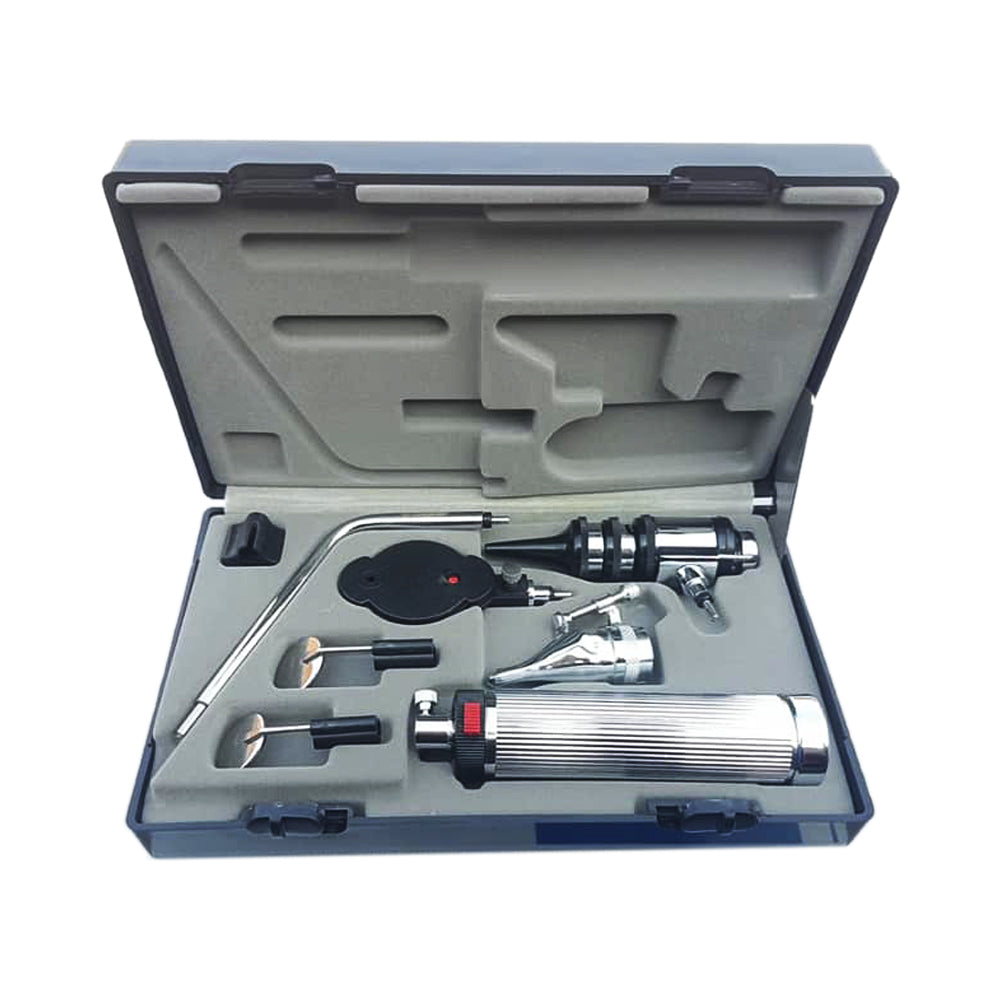
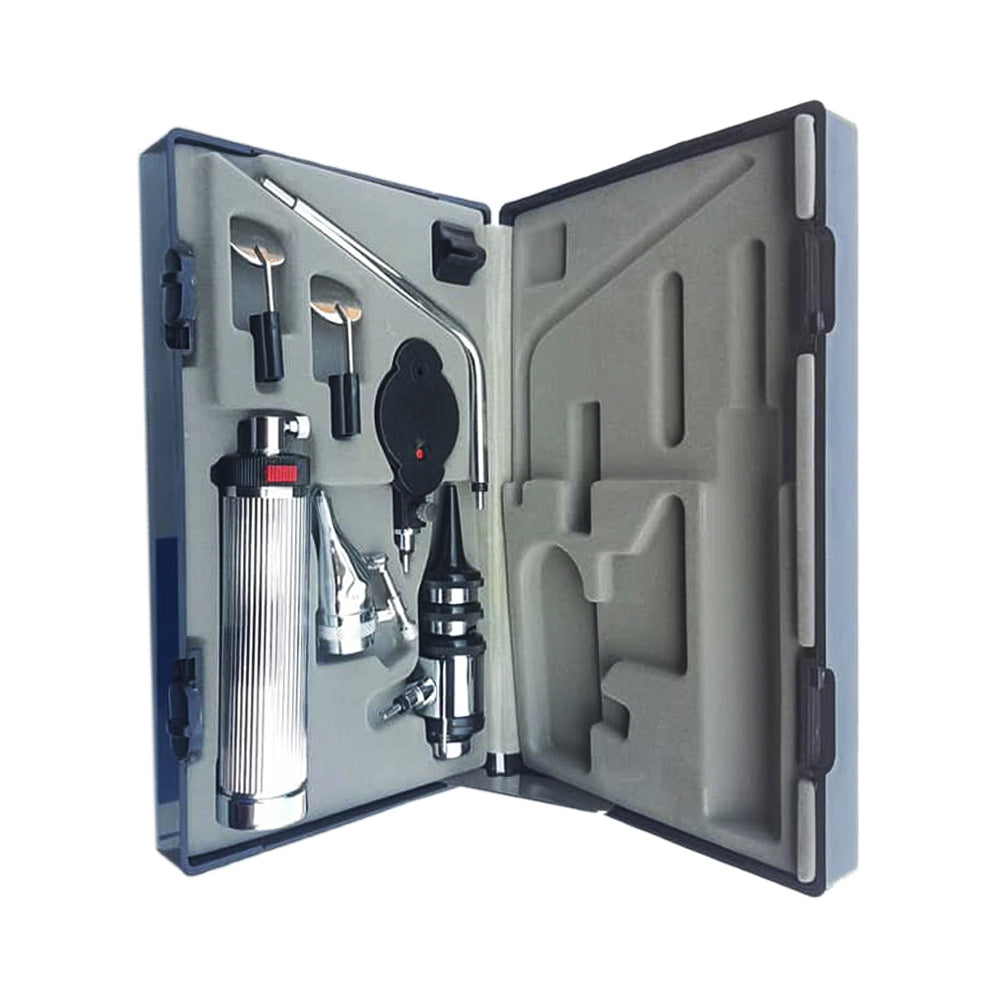
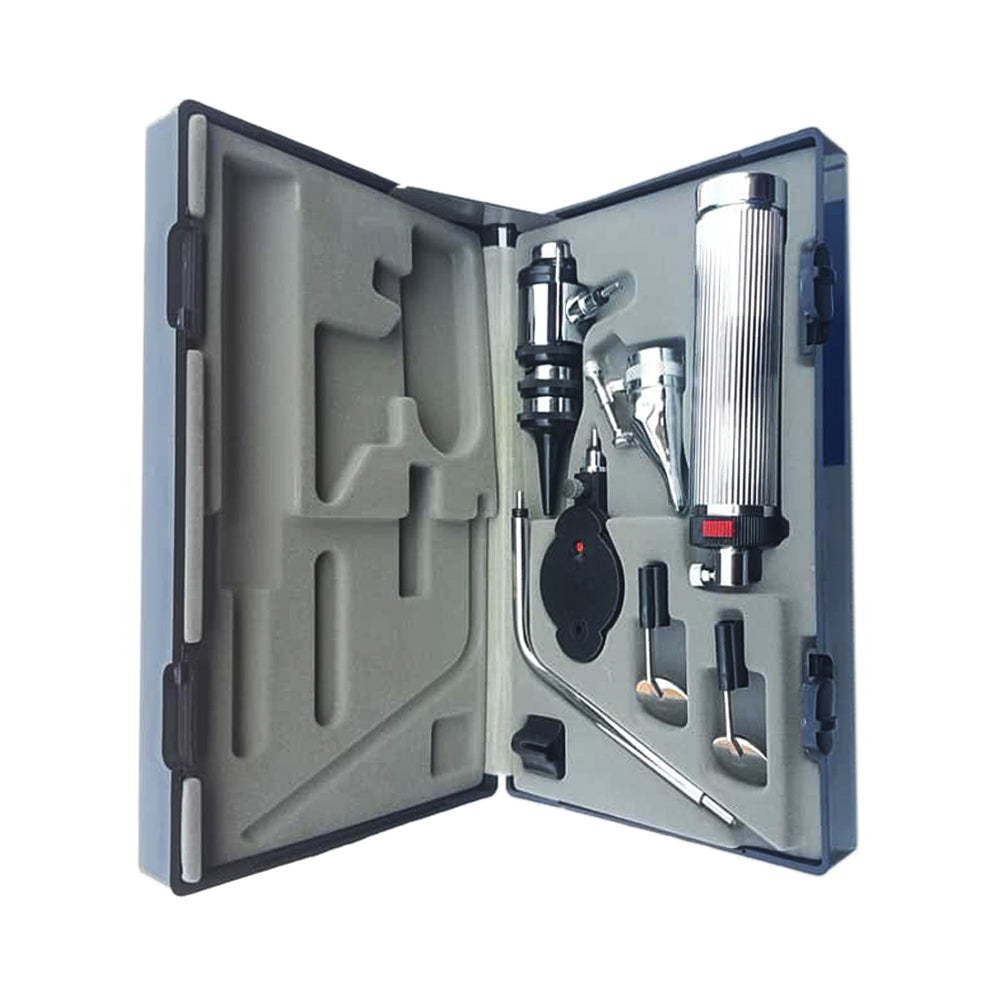
The ENT Diagnostic Instruments Set from Peak Surgicals (SKU: PS-L-001000-1-3-1-1-1-1) is a reusable clinical examination kit with German Stainless Steel instrument components, optical diagnostic heads, illumination accessories, and a molded storage case for structured ear, nose, throat, laryngeal, and oral cavity examination. This set is priced at $49.50 and includes an otoscope with LED illumination and magnifying lens, nasal speculum, tongue depressor, laryngeal mirror, tuning fork, headlight or penlight, forceps, probes, detachable diagnostic handle, reusable ear specula, mirror attachments, and fitted carrying case. ENT surgeons, otolaryngologists, general physicians, emergency clinicians, outpatient clinic teams, medical students, hospital examination rooms, ambulatory care units, school health programs, and procurement departments use this set during otoscopy, external auditory canal inspection, tympanic membrane assessment, anterior rhinoscopy, oral cavity examination, oropharyngeal assessment, indirect laryngoscopy, hearing screening, nasal foreign body evaluation, cerumen assessment, tonsillar inspection, and clinic-based ENT diagnostic workflow. The compact case keeps each component arranged for rapid access, instrument counting, protected storage, and transport between consultation rooms.
The otoscope component provides direct visualization of the external auditory canal and tympanic membrane through a lighted optical pathway. The LED source illuminates the canal while the magnifying lens enlarges the view of cerumen, canal edema, tympanic membrane color, perforation margins, retraction pockets, middle ear effusion signs, ventilation tube position, and foreign material. The diagnostic handle supplies controlled hand positioning and supports attachment of the otoscope head during examination. Reusable ear specula guide the optical cone into the canal opening and create a stable inspection axis without placing the lens assembly directly against the auricular tissue. The handle-and-head interface is important because otoscopy requires steady alignment between the clinician’s eye, lens, light beam, and canal direction. The fitted case protects the optical head, handle, specula, and accessories from tray damage during storage. In clinic workflow, the otoscope is used before suction, cerumen management, tympanometry referral, microscopic review, or procedural ear care decisions.
The nasal speculum opens the nasal vestibule for anterior rhinoscopy and controlled inspection of the septum, inferior turbinate, nasal floor, vestibular skin, mucosal edema, crusting, bleeding points, and obstructive anatomy. The tongue depressor provides oral cavity and oropharyngeal exposure by controlling the anterior tongue during assessment of tonsils, uvula, soft palate, posterior pharyngeal wall, oral mucosa, and floor of mouth. The laryngeal mirror supports indirect visualization of the laryngeal inlet, epiglottis, arytenoid region, vocal fold movement, and hypopharyngeal recesses when used with proper illumination. The penlight or headlight supplies directed light during oral, nasal, and throat examination when the otoscope head is not the working light source. Forceps and probes support foreign body handling, gentle tissue positioning, canal assessment, and targeted manipulation during outpatient examination. Each component addresses a specific diagnostic step, allowing the clinician to move from ear inspection to nasal access, oral exposure, laryngeal review, and minor retrieval tasks within one organized kit.
During otoscopy, the clinician selects the appropriate ear speculum, attaches the otoscope head, stabilizes the auricle, and inspects the external auditory canal before evaluating the tympanic membrane. In anterior rhinoscopy, the nasal speculum is introduced gently into the vestibule and opened under illumination to assess septal deviation, turbinate hypertrophy, mucosal inflammation, crusting, epistaxis source, and nasal obstruction. During throat examination, the tongue depressor controls tongue position while the light source exposes the tonsillar pillars, soft palate, uvula, posterior pharyngeal wall, and oral mucosal surfaces. For voice and laryngeal assessment, the laryngeal mirror is positioned to view the supraglottic and glottic structures during phonation and breathing. The tuning fork supports bedside hearing assessment through air conduction and bone conduction comparison during Weber and Rinne-style screening. Forceps and probes assist when the clinician evaluates ear canal debris, nasal foreign material, or accessible oral cavity findings. The set supports examination rather than operative dissection, making it suitable for clinic, emergency, training, and outpatient diagnostic rooms.
German Stainless Steel gives the reusable instrument components strength, corrosion resistance, and cleanable surfaces for repeated examination use. Diagnostic sets require stable attachment points, smooth speculum surfaces, aligned mirror heads, functional illumination, and protected optical lenses because clinical accuracy depends on light transmission, lens clarity, and instrument positioning. Metal instruments such as forceps, probes, specula, tongue depressor, nasal speculum, and laryngeal mirror are cleaned after use, brushed at contact surfaces, dried fully, and processed according to reusable instrument protocol. Optical and electrical components such as the otoscope head, handle, LED module, and battery area are managed with non-immersion surface disinfection so the lens, light path, and power contacts remain functional. The molded case is wiped and inspected so accessories remain separated and countable. CE marking, ISO 13485 manufacturing controls, and FDA compliance support purchasing files for hospitals, clinics, medical schools, distributors, and international procurement teams. The 1-year warranty, MOQ of 1 set, reusable format, and after-sale replacement support repeat clinical sourcing.
| SKU | PS-L-001000-1-3-1-1-1-1 |
|---|---|
| Product Name | ENT Diagnostic Instruments Set |
| Price | $49.50 per set |
| Size/Gauge Variants | Standard multi-component diagnostic set configuration |
| Instrument Category | ENT Diagnostic Instruments / Otolaryngology Examination Set |
| Procedure | Otoscopy, Tympanic Membrane Assessment, Anterior Rhinoscopy, Oral Cavity Examination, Oropharyngeal Assessment, Indirect Laryngoscopy, Hearing Screening, Foreign Body Evaluation |
| Material | German Stainless Steel instrument components with optical diagnostic heads and molded storage case |
| Finish | Satin, Dull, Mirror on reusable metal components |
| Sterilization | Reusable metal instruments compatible with clinical reprocessing; optical and electrical components managed by surface disinfection workflow |
| Instrument Classification | Class I diagnostic instrument set |
| Reusable | Yes |
| Certifications | CE, ISO-13485, FDA |
| Warranty | 1 Year |
| MOQ | 1 Set |
| OEM / Custom Orders | Available |
| After-Sale Service | Return and Replacement |
How does the ENT Diagnostic Instruments Set compare with a single otoscope?
A single otoscope is focused on external auditory canal and tympanic membrane examination. The ENT Diagnostic Instruments Set gives the clinician a broader examination platform by combining otoscope, nasal speculum, tongue depressor, laryngeal mirror, tuning fork, penlight or headlight, forceps, and probes. This makes the set stronger for general ENT clinic workflow because ear, nose, throat, laryngeal, and hearing screening steps can be completed from one case. A standalone otoscope does not provide anterior rhinoscopy, indirect laryngoscopy, oral exposure, foreign body handling, or bedside tuning fork assessment. The set is therefore selected for outpatient ENT rooms, emergency assessment, medical training, and general practice where multiple examination pathways are needed. The fitted case also keeps the diagnostic components arranged and protected between consultations. Procurement teams choose this set when the requirement is complete ENT examination readiness rather than ear-only inspection.
Which components are used for ear, nose, throat, and hearing assessment?
The otoscope and ear specula are used for external auditory canal inspection, cerumen assessment, and tympanic membrane visualization. The nasal speculum is used for anterior rhinoscopy, including inspection of the septum, turbinates, vestibule, nasal floor, and visible obstruction. The tongue depressor is used to expose the oral cavity, tonsillar region, soft palate, uvula, posterior pharynx, and tongue base region. The laryngeal mirror supports indirect laryngeal examination when vocal fold movement, epiglottic contour, or supraglottic anatomy must be reviewed. The tuning fork supports bedside air conduction and bone conduction screening during hearing assessment. Forceps and probes assist with accessible foreign body evaluation and minor diagnostic manipulation. The ENT Diagnostic Instruments Set keeps these components together for structured examination sequence and clinic efficiency.
What do CE, ISO 13485, and FDA compliance mean for procurement?
CE marking supports conformity documentation for hospitals, clinics, distributors, and training institutions sourcing reusable ENT diagnostic instruments. ISO 13485 indicates that manufacturing is managed under a medical device quality management system with controlled production, inspection, and traceability. FDA compliance supports procurement files for buyers sourcing diagnostic instruments for regulated markets. The ENT Diagnostic Instruments Set fits standard purchasing categories for non-powered and powered diagnostic examination tools used in outpatient and hospital settings. These credentials help procurement officers compare the set against tender requirements, internal sourcing policies, and distributor documentation needs. The listed SKU, price, reusable construction, molded case, and 1-year warranty support repeat ordering. For ENT departments and general clinics, the documentation aligns examination function with regulated purchasing expectations.
How is illumination used during ENT examination?
Illumination is central to ear, nose, throat, and laryngeal assessment because each examination site is recessed and requires directed light. The otoscope head uses LED light through the optical cone to illuminate the external auditory canal and tympanic membrane. The penlight or headlight is used when the clinician examines the nasal vestibule, oral cavity, tonsillar region, posterior pharyngeal wall, or laryngeal mirror reflection. During anterior rhinoscopy, light is directed into the opened nasal speculum so the septum and inferior turbinate can be inspected. During indirect laryngoscopy, illumination reflects from the laryngeal mirror to support visualization of supraglottic and glottic structures. The ENT Diagnostic Instruments Set combines optical magnification and directed light so each cavity is examined with the correct viewing method. This improves examination order, hand positioning, and diagnostic access in clinic workflow.
How should the ENT Diagnostic Instruments Set be cleaned and stored after use?
After use, reusable metal components are cleaned promptly so cerumen, mucus, saliva, blood, tissue residue, or examination debris does not dry on working surfaces. Ear specula, forceps, probes, nasal speculum, tongue depressor, and laryngeal mirror are brushed or wiped according to their contact surfaces and then processed through the clinic’s reusable instrument workflow. The otoscope head, handle, LED area, lens, and power contacts are managed with non-immersion surface disinfection so optical clarity and electrical function remain intact. The laryngeal mirror is inspected for surface clarity, and the nasal speculum is checked for smooth opening and blade alignment. The molded case is wiped, dried, and checked for intact compartments before instruments are returned. The ENT Diagnostic Instruments Set should be stored only after components are clean, dry, functional, and arranged in the correct case positions. Proper care preserves illumination, visualization, component organization, and repeated clinical usability.
