Skip to product information
1 of 4

PEAK SURGICAL

Cryer Dental Elevator – Single Ended Tooth Extraction Instrument

Cryer Dental Elevator – Single Ended Tooth Extraction Instrument

SKU:

Regular price $13.20 USD
Regular price Sale price $13.20 USD
Sale Sold out
Taxes included. Shipping calculated at checkout.
Quantity
  • 30 Days Money Back Guarantee.
  • 100% Quality Satisfaction.
  • Medical Grade Steel Reusable.
  • CE-CertificateCE Certified
  • FDA-CertificateFDA Certified
  • iso-certificateISO Certified
View full details

Cryer Dental Elevator – High-Leverage Root & Fragment Elevation

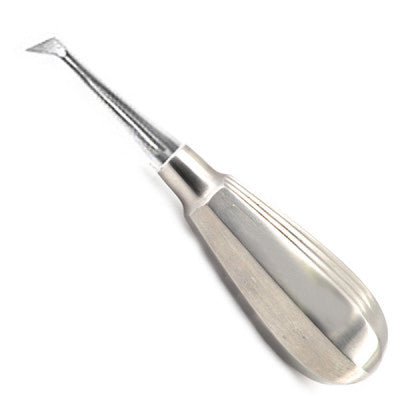
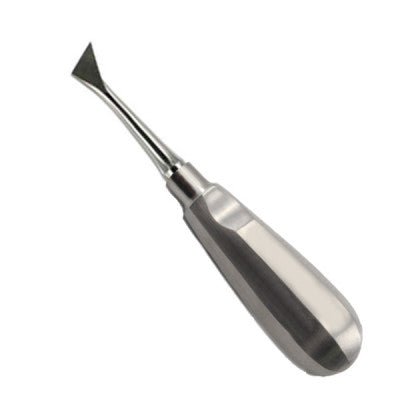
The clinical standard for posterior root and fragment removal. The Cryer Dental Elevator is a specialized oral surgery instrument meticulously engineered for the elevation of fractured roots and the luxation of teeth in high-resistance areas. Featuring a single-ended design and a distinctive triangular, angled blade, this tool acts as a mechanical necessity for clinicians requiring maximum lateral leverage within the alveolar socket. Often referred to as "East-West" elevators due to their left- and right-facing configurations, the Cryer pattern is specifically optimized for clearing the empty socket of a multi-rooted tooth or retrieving deep-seated root tips.

[Add to Cart – Professional Dental Surgery Series]

Key Features for Advanced Surgical Leverage

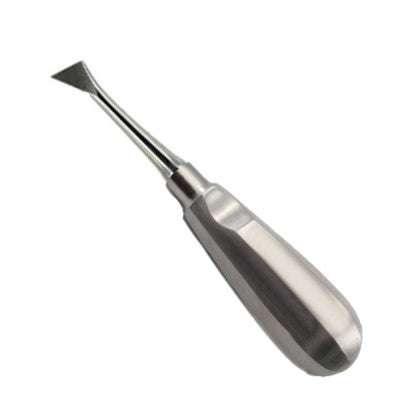
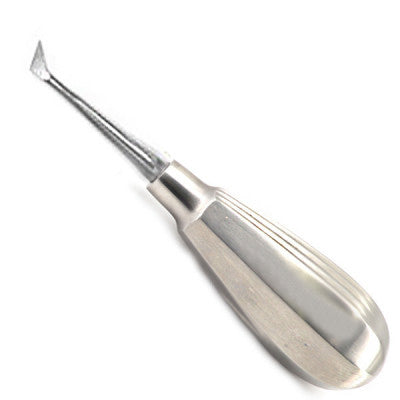
  • Triangular Pointed Blade: The working tip is forged into a sharp, pointed triangle. This "pick" geometry is essential for engaging the interradicular bone or wedging between the root and the socket wall to create a solid anchor point for elevation.
  • Precision Angled Shank: The blade is offset at a strategic angle from the shaft. This allows for superior access to the posterior regions of the mouth, providing the necessary clearance to apply force without the handle obstructing the clinician's view.
  • High-Torque Single-Ended Design: Engineered to focus all mechanical energy into a single working tip. This construction allows for the application of a significant controlled force, which is often required to break the vacuum of a retained root tip.
  • Ergonomic "Power-Grip" Handle: Features a robust, textured handle designed to fit securely in the palm. This ergonomic shape ensures that the practitioner can apply rotational torque and longitudinal pressure with absolute stability and reduced hand fatigue.
  • Balanced High-Tactile Construction: The instrument is weighted to ensure that the center of gravity supports the natural movement of the wrist. This balance is critical for maintaining tactile sensitivity, allowing the user to feel the moment the root begins to shift.
  • Surgical-Grade Stainless Steel: Forged from premium medical steel to ensure the blade remains sharp and the shank remains rigid under high stress. The high-polish finish provides total resistance to corrosion through repeated sterilization.

Product Overview: Mastery in Root Tip Retrieval

The Cryer Dental Elevator is a foundational asset for any dental surgical tray, particularly for complex extractions and oral surgery. Its primary utility lies in its "lateral displacement" capability; once a tooth is sectioned or a crown is removed, the Cryer elevator is used to engage the root and roll it out of the socket. Its sharp, pointed tip can also be used to remove small amounts of interradicular bone, making it an indispensable tool for managing fractured roots that are otherwise inaccessible to standard forceps.

Built to exceed the rigorous hygiene standards of modern dental practice, this elevator is fully autoclavable. Its seamless, solid-core construction supports the highest levels of infection control, ensuring a long clinical lifespan in high-volume environments.

Specifications & Clinical Applications

Feature Details

Material Premium Surgical-Grade Stainless Steel

Tip Profile Triangular / Pointed / Angled

Configuration Single-Ended (Left or Right Options)

Handle Style Ergonomic Textured Grip

Maintenance Fully Autoclavable / Reusable

Primary Use Cases:

  • Posterior Extractions: Elevating molar and premolar roots in the mandible or maxilla.
  • Root Tip Retrieval: Removing fractured or retained root fragments from deep within the socket.
  • Interradicular Management: Engaging and removing the bone between roots to facilitate easier extraction.
  • Socket Preparation: Loosening the periodontal attachments of multi-rooted teeth after sectioning.
  • Surgical Training: A standard instrument for teaching the principles of "wheel and axle" leverage in oral surgery.

Why Professionals Choose the Cryer Elevator?

  • Unmatched Leverage: The triangular blade provides multiple contact points for superior "grip and roll" mechanics.
  • Superior Access: The angled design is optimized for reaching the furthest molars.
  • Tactile Accuracy: Forged to transmit clear feedback from the root to the hand.
  • Exceptional Durability: Maintains its sharp, pointed edge through years of surgical use.

Frequently Asked Questions (FAQ)

Q: When should I choose a Cryer elevator over a straight elevator?

A: A straight elevator is typically used for the initial luxation from the surface. The Cryer is superior when you are working inside a socket, such as after one root of a molar has been removed, and you need to "roll" the remaining root into the space.

Q: Why are there "Left" and "Right" versions of the Cryer elevator?

A: Because the blade is angled and pointed, you need a specific orientation to engage the root from either the mesial or distal side. Having both a left and right Cryer in your surgical kit ensures you can approach any root tip from the most effective mechanical angle.

Q: Can the triangular tip be sharpened?

A: Yes. To maintain the "engagement" power of the instrument, the edges of the triangular blade can be sharpened with a fine Arkansas stone. Keeping the tip sharp reduces the amount of force required to secure a grip on the root.

Q: Is this instrument safe for use in pediatric dentistry?

A: While primarily used in adult oral surgery due to its high-leverage design, it can be used for adolescent extractions where permanent roots are deeply seated, provided the clinician uses appropriate controlled force for the patient's bone density.