Featured Collection
Your cart
Featured Collection

PEAK SURGICALS
SKU:PS-5801
Couldn't load pickup availability
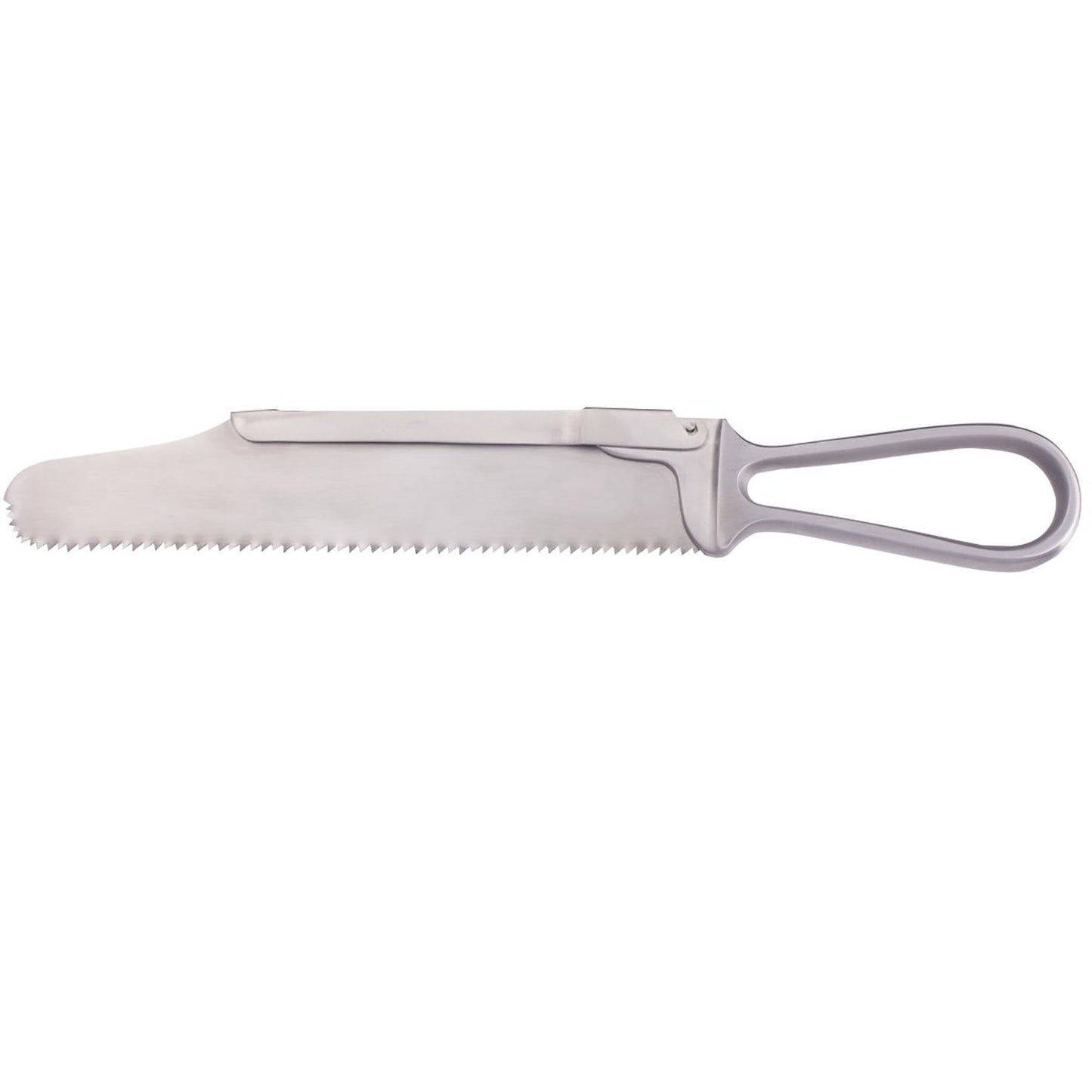

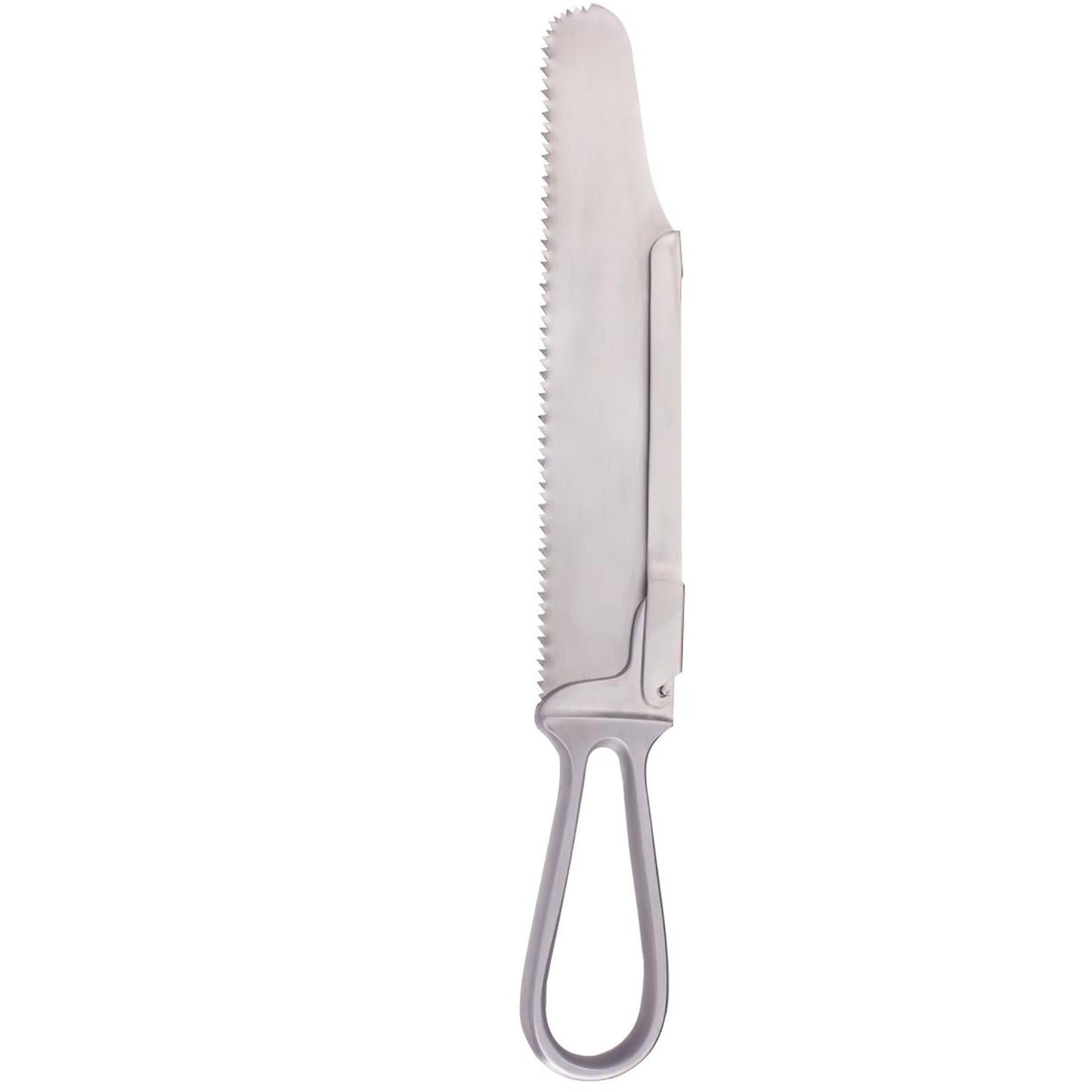
Charriere Amputating Saw, SKU PS-5801, is a reusable manual bone-cutting instrument manufactured from German stainless steel for controlled transection of exposed osseous structures during amputation and orthopedic resection procedures. The configuration uses a broad rigid saw blade with a continuous toothed cutting edge, a reinforced dorsal spine, and an elongated loop handle that supports secure reciprocating manual strokes. Unlike powered oscillating or reciprocating systems, the Charriere pattern converts the surgeon’s forward-and-back hand movement directly into mechanical cutting at the exposed bone surface. It is used during transtibial, transfemoral, transradial, and transhumeral amputations after soft-tissue division, periosteal management, and circumferential protection of the operative field have prepared the bone for transection. The instrument can also support revision amputation and selected open bone-resection procedures where a rigid manual saw is appropriate. Orthopedic trauma surgeons, vascular surgeons, general surgeons performing limb amputation, and reconstructive teams may use this pattern in hospital operating rooms. The broad blade provides a stable cutting plane, while the loop handle permits controlled alignment throughout the sawing sequence.
The Charriere pattern operates through a rigid toothed blade rather than a wire, powered handpiece, pivot, or articulated cutting head. The lower working edge carries a series of saw teeth that sequentially engage cortical and cancellous bone as the operator moves the instrument in controlled reciprocating strokes. Instead of attempting to remove the full bone thickness in one movement, each pass advances the kerf progressively while bone debris is displaced from the cutting line. The broad blade body resists lateral bending and helps maintain a consistent transection plane once the initial groove has been established. A reinforced upper spine visible along the dorsal surface increases structural stiffness and reduces unwanted flex during repetitive forward-and-back motion. At the proximal end, the elongated loop handle provides a large gripping surface that allows the surgeon to control blade direction, stroke length, and pressure without a locking mechanism. There is no ratchet, spring, box lock, or automatic depth control. Alignment therefore depends on hand position and continuous visual assessment of the saw path. The operator should establish the intended osteotomy level before sawing and maintain the blade perpendicular or deliberately angled according to the planned residual-bone contour.
During major limb amputation, use of the saw follows completion of the planned skin and muscle flaps, vascular control, nerve management, and exposure of the intended bone-transection level. In a transtibial amputation, the tibia and fibula are exposed and protected before osseous division; the rigid blade can then be positioned across the selected level so the surgeon develops a controlled kerf and progresses through the cortex with reciprocating strokes. During transfemoral procedures, the same cutting principle is applied to the femoral shaft after soft tissues have been cleared sufficiently to prevent entanglement with the teeth. In transradial or transhumeral surgery, the device can be used when the exposed radius, ulna, or humerus requires manual transection and the operative approach provides adequate blade clearance. Revision amputations may also require removal of additional bone to reshape the residual limb or address a problematic previous transection level. Surrounding vessels, nerves, muscle, and skin flaps must remain protected from the cutting edge throughout the sequence. Once osseous division is complete, sharp cortical margins are assessed and shaped with the appropriate rasp or bone instrument before definitive soft-tissue coverage and closure proceed.
PS-5801 is the catalog model for this Charriere Amputating Saw configuration. Its principal clinical components are the rigid blade, toothed inferior edge, reinforced dorsal section, blade-to-handle junction, and elongated loop grip. The broad blade provides the structural platform that guides the cutting path across an exposed long bone and resists torsional deformation when the stroke remains aligned. The saw teeth form the active cutting interface and should engage the cortex progressively rather than being forced laterally once the kerf has started. The dorsal reinforcement increases stiffness along the non-cutting edge, helping the blade maintain its working geometry through repeated manual strokes. At the proximal transition, the blade is supported as it enters the handle assembly so hand-generated force can be transferred along the same longitudinal axis as the cutting motion. The large open handle allows several gripping positions and gives the surgeon leverage for both forward and return strokes while maintaining directional control. The Peak listing contains a size selector but does not expose dimensional labels in the published product text. For that reason, PS-5801 should remain the principal purchasing identifier unless a selected size is separately recorded in the Shopify order documentation.
German stainless steel supplies the rigidity, edge support, corrosion resistance, and dimensional stability required for a reusable manual bone saw subjected to repetitive loading against cortical bone. Peak Surgicals lists satin, dull, and mirror finish options for PS-5801. Reduced-glare surfaces can limit reflected operating-room illumination, while a smooth finished blade remains accessible for visual inspection after reprocessing. Cleaning should begin promptly after use because blood, marrow, bone particles, and soft-tissue residue can collect between the saw teeth and around the reinforced upper spine or handle junction. The toothed edge requires deliberate brushing or other validated cleaning methods that reach individual interdental spaces without damaging the cutting profile. After rinsing and complete drying, sterile-processing personnel should inspect the blade for bent teeth, cracks, corrosion, lateral distortion, looseness at the handle connection, or other damage that could affect a straight cutting path. The device is reusable and should undergo terminal sterilization according to the healthcare facility’s validated process and applicable manufacturer instructions. Peak Surgicals lists the instrument as Class I with CE, ISO 13485, and FDA-related procurement information, together with a one-year warranty, one-piece MOQ, OEM availability, and return-and-replacement service.
| SKU | PS-5801 |
|---|---|
| Product Name | Charriere Amputating Saw |
| Price | $22.00 USD |
| Size/Gauge Variants | PS-5801 rigid-blade Charriere configuration with size selection available through the product listing |
| Instrument Category | Orthopedic Amputation and Bone Saw |
| Procedure | Transtibial, transfemoral, transradial and transhumeral amputation; revision amputation; selected open bone resection |
| Material | German Stainless Steel |
| Finish | Satin, Dull, Mirror |
| Sterilization | Reusable; terminal sterilization following validated institutional cleaning and reprocessing protocols |
| Instrument Classification | Class I Reusable Manual Bone-Cutting Instrument |
| Reusable | Yes |
| Certifications | CE, ISO 13485, FDA-related procurement documentation |
| Warranty | 1 Year |
| MOQ | 1 Piece |
| OEM / Custom Orders | Available |
| After-Sale Service | Return and Replacement |
How does the Charriere Amputating Saw differ from a Gigli Wire Saw?
The Charriere Amputating Saw uses a broad rigid toothed blade that moves across exposed bone through manual reciprocating strokes. A Gigli Wire Saw uses a flexible braided cutting wire attached to handles and is drawn alternately from side to side around the bone. The rigid Charriere configuration requires a relatively direct working corridor across the intended transection level. A Gigli design can pass around bone where access geometry favors a flexible cutting element rather than a broad blade. The Charriere blade also establishes a visually defined linear saw plane as the kerf develops. Selection between the two depends on surgical exposure, bone location, surrounding structures, available clearance, and the surgeon’s chosen amputation technique.
How should PS-5801 be selected when the product page shows a size option?
PS-5801 is the published catalog identifier for the Charriere Amputating Saw on the Peak Surgicals product page. The current listing presents a size selector but does not publish dimensional labels within its visible specification text. Clinical selection should therefore focus on whether the rigid Charriere blade pattern provides adequate reach and clearance for the intended exposed long-bone transection. During lower-limb amputation, sufficient operative space is required for the blade to complete controlled forward-and-back strokes without contacting protected soft-tissue flaps. Upper-limb procedures may require a smaller working corridor but use the same fundamental cutting mechanism. Hospitals should retain the selected Shopify option with their purchase record whenever a specific size is chosen so the exact ordered configuration remains traceable.
What do CE, ISO 13485 and FDA references mean for procurement?
Peak Surgicals lists CE, ISO 13485, and FDA-related information for the Charriere Amputating Saw. ISO 13485 concerns the quality-management system governing controlled medical-device manufacturing and associated processes. CE documentation supports conformity review for applicable medical-device markets. United States hospitals and distributors should evaluate the FDA records appropriate to the device category, establishment, and supplier as part of their procurement process. Regulatory references should not be rewritten as an unsupported statement that PS-5801 is individually FDA approved unless that precise status is documented. Procurement teams can retain product identification, supplier certificates, regulatory records, and purchasing documentation within their vendor-qualification files.
How is the Charriere Amputating Saw controlled during bone transection?
The Charriere Amputating Saw contains no ratchet, pivot, spring, or powered control mechanism. The operator controls the device entirely through the elongated loop handle and rigid blade. After the toothed edge is positioned at the predetermined bone level, short initial strokes establish the cutting groove before longer reciprocating movements advance through the cortex. The broad blade helps maintain the selected plane when hand movement remains aligned with the kerf. Stroke length and pressure can be reduced immediately if the blade begins to deviate or surrounding tissue approaches the cutting edge. Continuous manual control is therefore required until the bone is fully divided and the saw can be withdrawn safely from the operative field.
How should hospitals inspect and sterilize the Charriere Amputating Saw?
Hospitals should order the Charriere Amputating Saw using SKU PS-5801 and preserve any selected size information with the purchase record. Peak Surgicals lists a $22.00 price, one-piece MOQ, one-year warranty, OEM availability, and return-and-replacement service. Following use, blood, marrow, and bone particles should be removed promptly from the teeth, blade surfaces, dorsal reinforcement, and handle junction. Cleaning should be followed by thorough rinsing, complete drying, and inspection for damaged teeth, corrosion, cracks, blade distortion, or an unstable connection between the cutting section and handle. The instrument should be packaged so the exposed toothed edge does not damage adjacent devices or sterilization materials. Final sterilization should follow the healthcare facility’s validated reusable-instrument cycle and applicable reprocessing instructions before PS-5801 returns to an amputation or orthopedic bone-surgery set.