
Featured Collection
Your cart
Featured Collection

PEAK SURGICALS
SKU:PS-000070
Couldn't load pickup availability


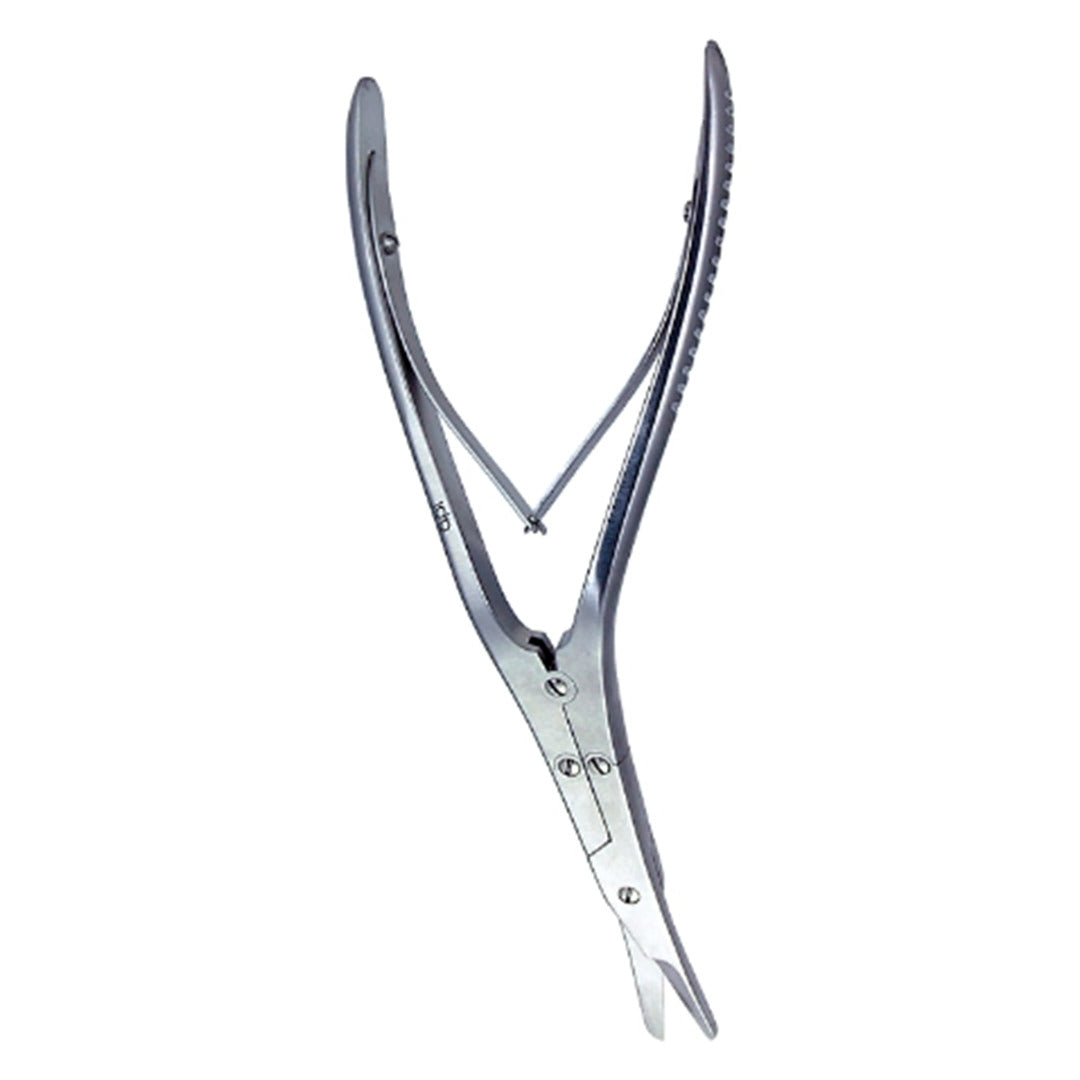
Caplan Septal Scissors, SKU PS-000070, are reusable ENT and rhinoplasty scissors manufactured from German stainless steel for controlled division of dense nasal septal cartilage and small bony tissue during endonasal surgery. The instrument measures 8 in (20.32 cm) overall and combines a curved profile, one serrated blade, blunt/blunt mildly rounded tips, a double-jointed compound-action mechanism, serrated grip handles, and a spring-assisted opening configuration. The compound linkage increases mechanical advantage at the short distal blades, allowing resistant cartilage to be divided with controlled hand pressure while the curved working axis improves access within the narrow nasal corridor. The pattern is used during septoplasty, functional and structural septorhinoplasty, submucous septal resection, endoscopic endonasal procedures, correction of severe cartilaginous deviation, septal bone-cartilage division, and selected craniofacial approaches. The serrated cutting surface stabilizes firm tissue during blade closure, while rounded ends limit unnecessary distal projection beyond the intended cut. Otolaryngologists, facial plastic surgeons, rhinoplasty specialists, and craniofacial surgeons use this instrument in hospital operating rooms, ambulatory surgical centers, and specialty ENT facilities.
The Caplan pattern uses a compound double-joint mechanism to multiply the force generated at the handles before that movement reaches the distal cutting blades. When the surgeon compresses the handles, the proximal articulation transfers motion through a second linkage, creating greater mechanical advantage than a conventional single-pivot nasal scissor. This design is particularly useful when firm quadrangular cartilage or thin bony septal tissue resists ordinary shearing pressure. One blade incorporates serrations that increase friction against the engaged material and reduce migration of the septal segment during closure. The opposing blade completes the shearing action as the compound linkage advances the cutting surfaces together. Blunt, mildly rounded tips create a less projecting distal profile than sharp-point scissors when working between elevated mucoperichondrial planes. The curved instrument axis keeps the proximal handle away from the direct visual corridor and helps orient the working end within the nasal cavity. Serrations along the grip surface improve hand purchase during forceful controlled compression. A spring between the handles reopens the mechanism after pressure is released, allowing sequential cuts without manually separating the handles after each closure. Neither a ratchet nor a locking mechanism maintains the cutting position.
During septoplasty, Caplan Septal Scissors are introduced after mucoperichondrial elevation has exposed the deviated cartilage and the surgeon has defined the portion requiring division. The short distal blades can be positioned across resistant quadrangular cartilage while the serrated surface stabilizes the tissue during compound-action closure. Structural preservation remains central to the workflow, particularly along the dorsal and caudal L-strut supporting the nasal dorsum and tip. During functional or aesthetic septorhinoplasty, the instrument may be used to divide thick septal cartilage, extend a planned septal cut, or release a cartilage-bone segment before subsequent reshaping or removal. In submucous resection, controlled sequential closures can section exposed deformity while the opposing mucosal flap remains protected. Endoscopic endonasal and selected craniofacial procedures can also require division of firm cartilaginous or limited bony structures within confined nasal access. The curved shaft improves visibility by keeping the operator's hand away from the central line of sight. Force should remain directed through the selected septal segment rather than applied as uncontrolled twisting or levering, especially near the perpendicular plate, vomer, skull-base attachment, or thin mucosal tissues.
PS-000070 is supplied in an 8 in (20.32 cm) overall Caplan configuration rather than as a multi-size family on this product page. Its length provides reach into the septal corridor while maintaining the handles outside the nostril and immediate operative field. The curved profile redirects the distal working section relative to the surgeon's hand, improving visualization around the septum during endonasal access. One serrated blade provides controlled grip on resistant cartilage as the opposing edge completes the cut. The blunt/blunt mildly rounded distal ends reduce sharp tip projection and support deliberate positioning between exposed septal structures. The double-jointed linkage is the principal mechanical feature, multiplying hand force before it reaches the cutting surfaces. Serrated grip handles provide traction for the fingers and palm when additional compression is needed, while the spring mechanism restores the open position after each cutting cycle. This configuration is selected when dense septal cartilage or limited thin bony tissue requires more leverage than fine rhinoplasty scissors can provide. It should be distinguished from delicate Fomon or Cottle patterns selected for different cartilage planes, finer shaping, or alternative access geometry within nasal surgery.
German stainless steel provides the structural rigidity, corrosion resistance, and edge support required for a reusable compound-action scissor exposed to repeated cutting loads and sterilization cycles. The double-joint mechanism requires particular attention during reprocessing because blood, cartilage fragments, and other surgical residue can collect around both articulations, the spring, blade junctions, and serrated surfaces. Cleaning should begin promptly after use and include deliberate access to the teeth of the serrated blade and grip areas. Thorough rinsing and complete drying should follow before functional inspection. Sterile-processing personnel should confirm smooth movement through both joints, consistent spring return, secure screws, accurate blade approximation, intact rounded tips, and absence of corrosion or deformation. Damage to either articulation can alter blade tracking and reduce the mechanical advantage for which the Caplan design is selected. The reusable instrument can undergo steam sterilization through a validated healthcare-facility process compatible with stainless steel surgical instrumentation and applicable reprocessing instructions. Peak Surgicals supports CE and ISO 13485 procurement documentation together with FDA-related records for applicable institutional purchasing and supplier-qualification requirements.
| SKU | PS-000070 |
|---|---|
| Product Name | Caplan Septal Scissors |
| Price | $68.20 USD |
| Size/Gauge Variants | Single configuration: 8 in (20.32 cm) overall length |
| Instrument Category | ENT and Rhinoplasty Septal Scissors |
| Procedure | Septoplasty, septorhinoplasty, submucous septal resection, endoscopic endonasal surgery, septal cartilage division, and selected craniofacial procedures |
| Material | German Stainless Steel |
| Finish | Surgical Stainless Steel Finish |
| Sterilization | Reusable; steam sterilization following validated healthcare-facility cleaning and reprocessing protocols |
| Instrument Classification | Reusable Manual ENT Septal Scissors |
| Reusable | Yes |
| Certifications | CE, ISO 13485, FDA-related procurement documentation |
| Warranty | 30-Day Money-Back Guarantee |
| MOQ | 1 Piece |
| OEM / Custom Orders | Available |
| After-Sale Service | Return and Replacement Support |
How do Caplan Septal Scissors differ from Cottle Septum Scissors?
Caplan Septal Scissors use an 8-inch curved profile, compound double-joint mechanism, and one serrated blade for heavy septal cutting. A Cottle Septum Scissor is commonly configured with shorter nasal blades and is available in patterns designed for controlled cartilage division through a more compact working geometry. The Caplan mechanism emphasizes increased mechanical advantage when resistant cartilage or limited thin bony tissue requires greater force. Its serrated blade also stabilizes the engaged segment while the opposing edge completes the cut. Cottle patterns can be preferable where shorter blade control or a different septal trajectory is required. Selection therefore depends on tissue resistance, depth, operative access, and the type of septal division planned.
Why is the 8-inch Caplan configuration used for septal surgery?
The 8 in (20.32 cm) overall length gives the surgeon sufficient reach into the nasal septal corridor while keeping the grip outside the immediate operative site. Its curved axis positions the distal blades away from the direct line between the operator's hand and the surgical target. This improves visualization during septoplasty and septorhinoplasty compared with a completely straight heavy scissor of similar length. The double-joint section occupies part of the instrument body because it is responsible for increasing force at the blades. Short distal jaws then concentrate that amplified movement on the selected cartilage segment. PS-000070 is supplied as one published length, so clinical selection centers on its compound-action geometry rather than choosing among multiple size variants.
What do CE, ISO 13485 and FDA references mean for procurement?
Peak Surgicals supports CE, ISO 13485, and FDA-related procurement documentation for Caplan Septal Scissors. ISO 13485 concerns the quality-management system used for controlled medical-device manufacturing and associated production processes. CE documentation supports conformity review within applicable medical-device markets. United States hospitals and distributors should evaluate the FDA establishment, listing, device, and supplier records required under their purchasing procedures. These regulatory references should not be rewritten as an unsupported claim that PS-000070 is individually FDA approved. Procurement teams can retain applicable certificates, SKU identification, supplier documentation, and purchasing records within their quality and vendor-qualification files.
How do the double joint and spring mechanism function intraoperatively?
The double-jointed mechanism increases mechanical advantage between the handles and distal blades. As the surgeon compresses the serrated grips, movement passes through both articulations before closing the cutting surfaces on the septal tissue. This arrangement produces greater distal force than a comparable simple single-joint scissor using the same hand pressure. The spring positioned between the handles restores the open configuration when grip pressure is released. That automatic reopening facilitates repeated staged cuts without requiring the operator to pull the handles apart manually after every closure. Before use, both pivots and the spring should move smoothly because stiffness, looseness, or asymmetric motion can interfere with controlled blade alignment.
How should hospitals order and reprocess Caplan Septal Scissors?
Hospitals should order Caplan Septal Scissors using SKU PS-000070 together with the 8 in (20.32 cm) dimensional specification. Peak Surgicals currently lists the instrument at $68.20 and displays a 30-day money-back guarantee on the product page. Standard institutional ordering can use a one-piece MOQ, with OEM and return or replacement support available for procurement requirements. After surgery, cartilage, blood, and tissue residue should be removed promptly from the blade serrations, both joint assemblies, spring, shanks, and grip surfaces. Cleaning should be followed by thorough rinsing, complete drying, and inspection of blade alignment, joint security, spring action, tip condition, and corrosion resistance. Final sterilization should follow the healthcare facility's validated reusable surgical-instrument process before PS-000070 returns to the septoplasty or rhinoplasty set.


