
Featured Collection
Your cart
Featured Collection

PEAK SURGICAL
SKU:PS-9396
Couldn't load pickup availability
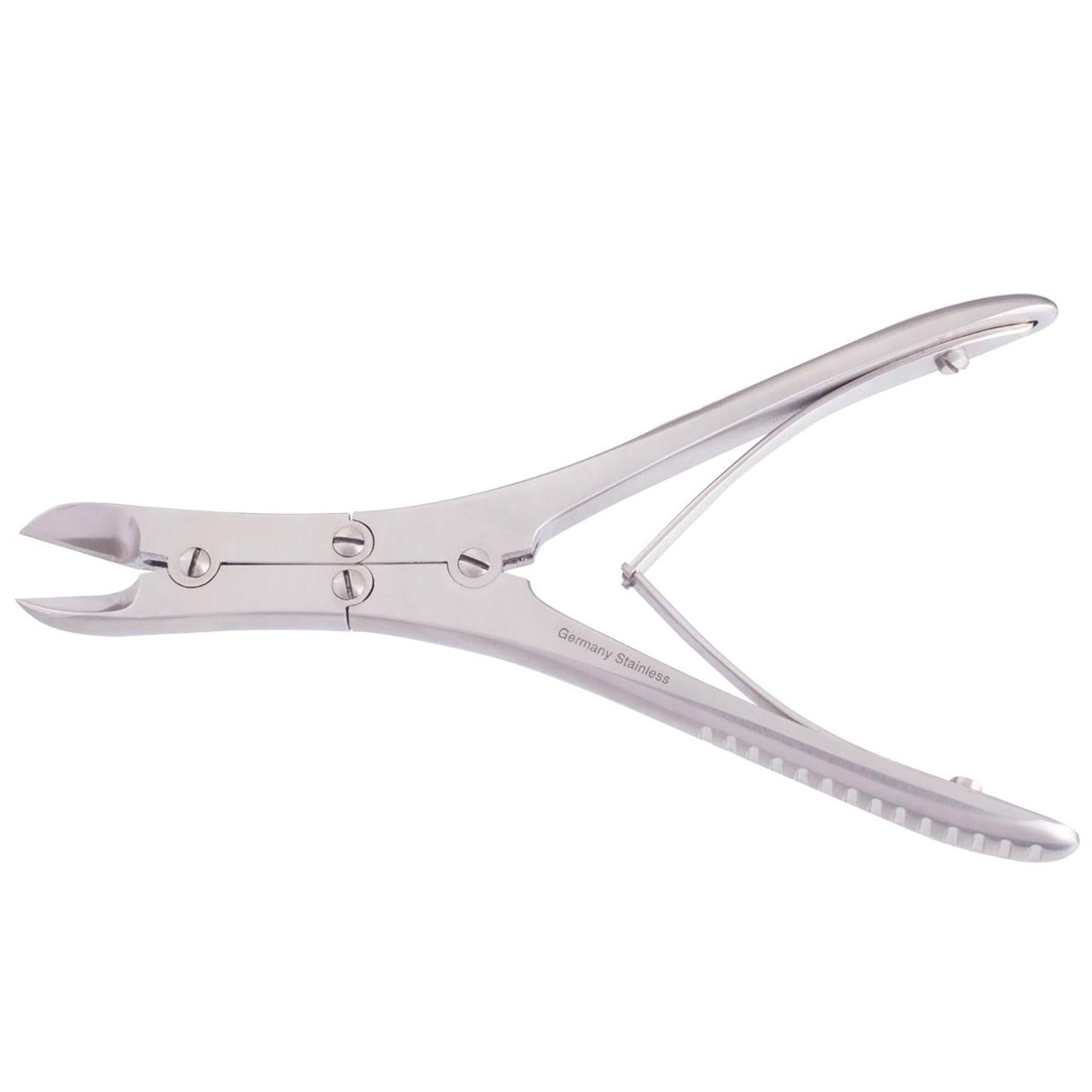
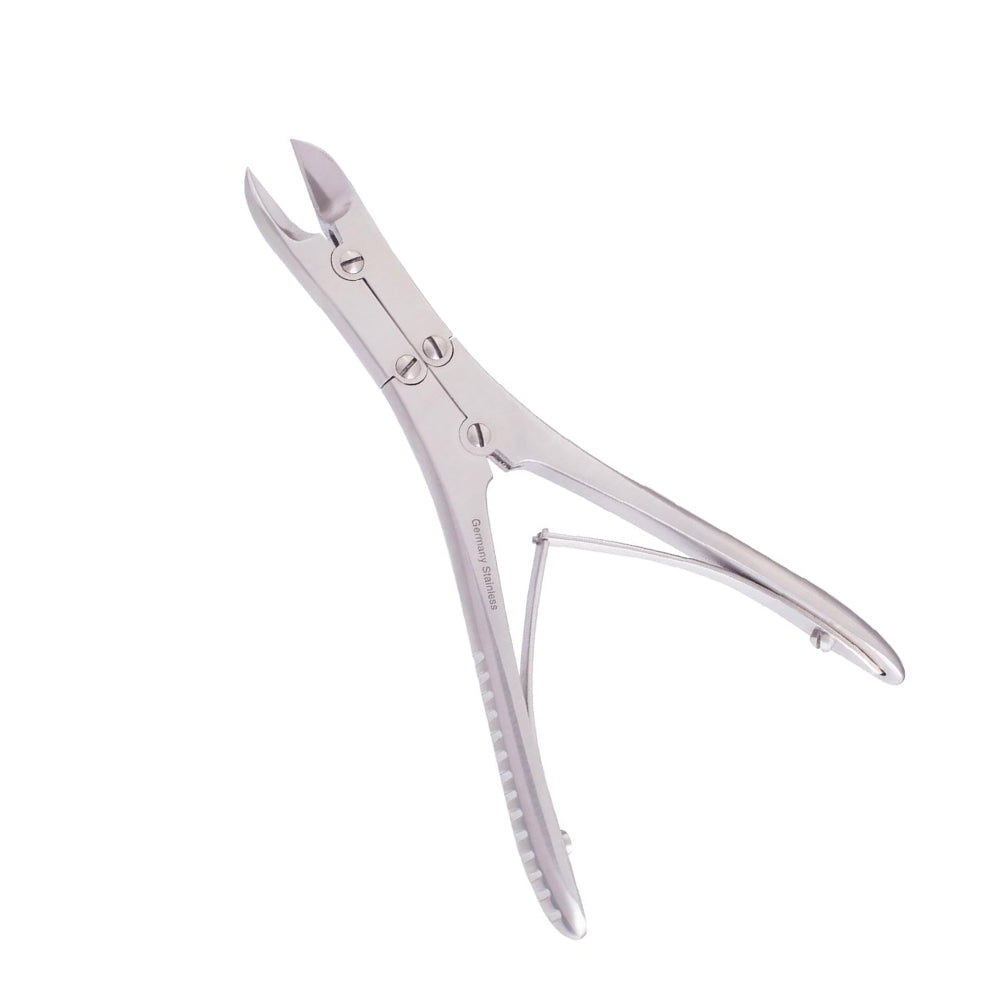
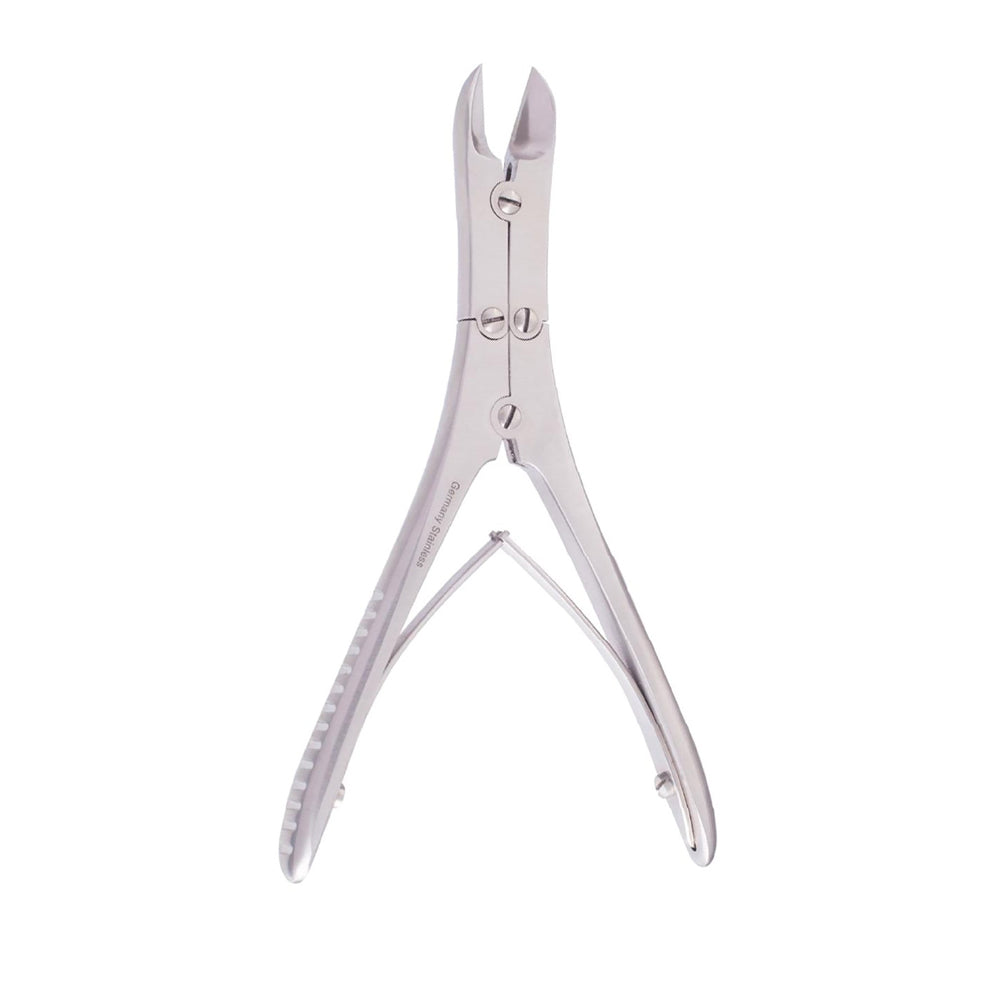
Bone Cutting Forceps, SKU PS-9396, is a 7-1/4 inch German stainless steel orthopedic cutting instrument designed for controlled shearing, trimming, and shaping of osseous tissue during trauma, reconstructive, podiatric, hand, foot, veterinary, and general orthopedic procedures. The listed options include 7-1/4 inch straight, 7-1/4 inch angled, and 7-1/4 inch 187mm straight standard blade patterns under model PS-9396. The instrument has sharp cutting jaws, a screw-secured pivot linkage, spring-handle return, contoured gripping arms, and a visible serration-textured handle zone for stable manual control during repetitive bone work. It is used during fracture-edge preparation, corrective osteotomy refinement, exostosis reduction, small-fragment bone trimming, arthrodesis surface preparation, metacarpal and metatarsal contouring, rib or flat-bone edge adjustment, and veterinary orthopedic reconstruction. Orthopedic surgeons, trauma surgeons, podiatric surgeons, hand surgeons, reconstructive teams, post-mortem services, and veterinary operating teams can integrate this reusable forceps into hospital operating rooms, ambulatory surgery centers, specialty clinics, teaching labs, and distributor-managed instrument trays requiring CE, ISO 13485, and FDA-compliant procurement documentation.
The working action of this instrument is based on opposing cutting blades that meet through a screw-secured pivot and remove bone by shearing rather than scooping. When the handles are compressed, force travels through the pivot into the jaw edges, allowing the surgeon to cut small osseous segments with direct control over entry angle and bite depth. The straight version provides direct inline access when the target surface lies in front of the hand, such as an exposed cortical ridge or resected fracture edge. The angled pattern changes the approach path so the jaw can reach around a prominence, retractor, or contour line without forcing the wrist into the operative field. The spring-handle return separates the jaws after each cut, supporting repeated compression cycles during staged trimming. The contoured handles and textured grip area reduce slippage under gloved handling and help maintain jaw orientation during dense bone engagement. This construction supports controlled manual force in open procedures where the surgeon needs visible blade placement before every cut.
In operative workflow, Bone Cutting Forceps is introduced after exposure, soft-tissue protection, and preliminary access have defined the osseous target. During fracture fixation, the instrument can trim sharp cortical edges before reduction, plate placement, screw insertion, or final irrigation. In corrective osteotomy, it is used after saw or osteotome work to refine small residual projections and adjust the intended contour. For exostosis reduction, the jaws remove focal bony prominences along metatarsal heads, phalangeal margins, tarsal surfaces, or other accessible ridges under direct visualization. In arthrodesis preparation, the straight blade assists accessible joint-surface shaping, while the angled form helps reach recessed margins around surrounding soft-tissue guards. Hand and foot surgeons use the 7-1/4 inch length for compact operative fields requiring leverage without excessive instrument bulk. Veterinary orthopedic teams can use the same design for companion-animal fracture repair, corrective bone shaping, and joint-margin cleanup. Each cut is followed by fragment removal, visual reassessment, irrigation, and palpation before fixation or closure proceeds.
The 7-1/4 inch straight pattern is selected when the surgeon has direct access to the target and needs the blade path aligned with the hand. This configuration is suited to exposed cortical borders, small-fragment fracture edges, flat-bone trimming, and accessible osteotomy margins. The 7-1/4 inch angled option is chosen when the target lies behind a contour, under a retractor edge, or along a sloped bony prominence where a straight approach would obscure visibility. It supports work around metatarsal exostoses, tarsal margins, phalangeal edges, and recessed arthrodesis surfaces. The 7-1/4 inch 187mm straight standard blade option gives the same overall length with a standard cutting profile for general orthopedic tray placement. This pattern is useful when instrument sets require a familiar straight-jaw cutter for trauma, reconstruction, podiatry, teaching, and veterinary use. Selection is based on exposure angle, target thickness, access depth, protected soft-tissue clearance, and whether the surgeon needs inline or offset blade contact during the trimming stage.
German stainless steel provides the rigidity, edge retention, and corrosion resistance required for repeated contact with cortical bone, cancellous tissue, hospital cleaning chemistry, and steam sterilization cycles. The listed finish options are satin, dull, and mirror, allowing facilities to match tray preference and operating room lighting conditions. Satin and dull surfaces reduce glare under overhead lights, while mirror finish supports fast visual inspection during receiving, count verification, and instrument assembly. After surgery, the cutting jaws, screw heads, pivot recess, spring handle area, and serrated grip zone require prompt cleaning so bone particles and marrow residue do not dry inside the mechanism. Standard processing includes rinsing, ultrasonic cleaning, washer-disinfector treatment, drying, lubrication of moving joints, jaw-edge inspection, packaging, and steam autoclave exposure according to facility protocol. CE marking, ISO 13485 manufacturing controls, and FDA procurement context support Class I reusable instrument purchasing for hospitals, clinics, distributors, and operating room supply teams. MOQ of one piece supports both replacement orders and new orthopedic tray assembly.
| SKU | PS-9396 |
|---|---|
| Product Name | Bone Cutting Forceps |
| Price | $33.00 |
| Size/Gauge Variants | 7-1/4 inch straight; 7-1/4 inch angled; 7-1/4 inch 187mm straight standard blades |
| Instrument Category | Orthopedic bone cutting forceps |
| Procedure | Fracture-edge preparation, corrective osteotomy refinement, exostosis reduction, arthrodesis surface preparation, small-fragment bone trimming, metacarpal and metatarsal contouring |
| Material | German stainless steel |
| Finish | Satin, dull, or mirror finish |
| Sterilization | Reusable instrument compatible with hospital steam autoclave sterilization workflow |
| Instrument Classification | Class I surgical instrument |
| Reusable | Yes |
| Certifications | CE, ISO 13485, FDA |
| Warranty | 1 year |
| MOQ | 1 piece |
| OEM / Custom Orders | OEM available for procurement and distributor requirements |
| After-Sale Service | Return and replacement support |
How does Bone Cutting Forceps differ from Luer Rongeur Forceps?
Bone Cutting Forceps uses opposing cutting blades to shear osseous tissue along a visible line. Luer Rongeur Forceps uses scoop-shaped jaws to bite and nibble smaller fragments from an exposed edge. The cutting forceps is selected when the surgeon needs blade-to-blade compression for trimming a projection, fracture edge, or osteotomy margin. The Luer pattern is selected when incremental scooping removal is preferred along a cortical shelf or cancellous surface. Bone Cutting Forceps provides spring-handle reopening and direct cutting jaw placement for repetitive controlled trimming. Both instruments can appear in orthopedic trays, but their jaw geometry and force delivery support different stages of bone preparation.
Which 7-1/4 inch option should be selected for a procedure?
Bone Cutting Forceps is listed in 7-1/4 inch straight, 7-1/4 inch angled, and 7-1/4 inch 187mm straight standard blade patterns. The straight option is selected when the target bone lies in direct alignment with the surgeon’s hand, such as an exposed fracture edge, cortical ridge, or flat osteotomy surface. The angled option is chosen for recessed margins, sloped exostoses, and areas where a straight blade would block the operative view. The 187mm straight standard blade pattern supports general orthopedic set placement when a familiar inline cutter is required. In foot and hand surgery, the angled version can assist around metatarsal, phalangeal, or carpal contours. In trauma and reconstruction, tray teams can stock both straight and angled jaws to cover different access paths within the same case.
How do CE, ISO 13485, and FDA details support purchasing?
Bone Cutting Forceps is supplied with CE, ISO 13485, and FDA procurement context for Class I reusable surgical instrument purchasing. CE marking supports conformity documentation for healthcare markets requiring European device references. ISO 13485 indicates manufacturing under a medical device quality management system with controlled production and traceability. FDA procurement context supports hospitals, clinics, and distributors serving United States surgical instrument supply channels. These details assist tender submissions, vendor onboarding, operating room inventory approval, and distributor catalog documentation. The $33.00 price, one-piece MOQ, OEM availability, and one-year warranty make the instrument practical for replacement orders and new orthopedic tray assembly.
How are the pivot and spring handle used during bone cutting?
The pivot guides the cutting jaws through a defined closing path and transfers hand pressure into the blade edges. The spring handle reopens the jaws after each compression so the surgeon can reposition the instrument without manually separating the handles. During use, the surgeon places the blade on the exposed target, confirms the cut line, compresses the handles, withdraws the fragment, and reassesses the contour. The straight pattern supports inline placement, while the angled pattern changes the approach around a curved or recessed margin. Bone Cutting Forceps is controlled by direct visual placement before each cut. The mechanism supports repeated trimming during fracture preparation, osteotomy correction, exostosis reduction, and arthrodesis surface shaping.
What should sterile processing and supply teams check before reuse?
Sterile processing teams should clean Bone Cutting Forceps immediately after surgery so osseous debris does not dry on the jaws, pivot, spring area, or textured handle zone. The working end should be opened during rinsing and mechanical cleaning to expose the blade surfaces and screw-secured joint. Ultrasonic cleaning and washer-disinfector cycles are followed by drying, lubrication of moving parts, inspection, packaging, and steam autoclave sterilization. Supply teams should verify smooth spring return, stable pivot movement, and accurate blade alignment before tray assembly. Hospitals can assign the straight and angled options to orthopedic, trauma, podiatry, hand, foot, post-mortem, and veterinary sets according to procedural demand. Distributors can use the one-piece MOQ, OEM availability, carton-box packing, and return or replacement service for inventory planning.


