Featured Collection
Your cart
Featured Collection

PEAK SURGICALS
SKU:PS-8876
Couldn't load pickup availability
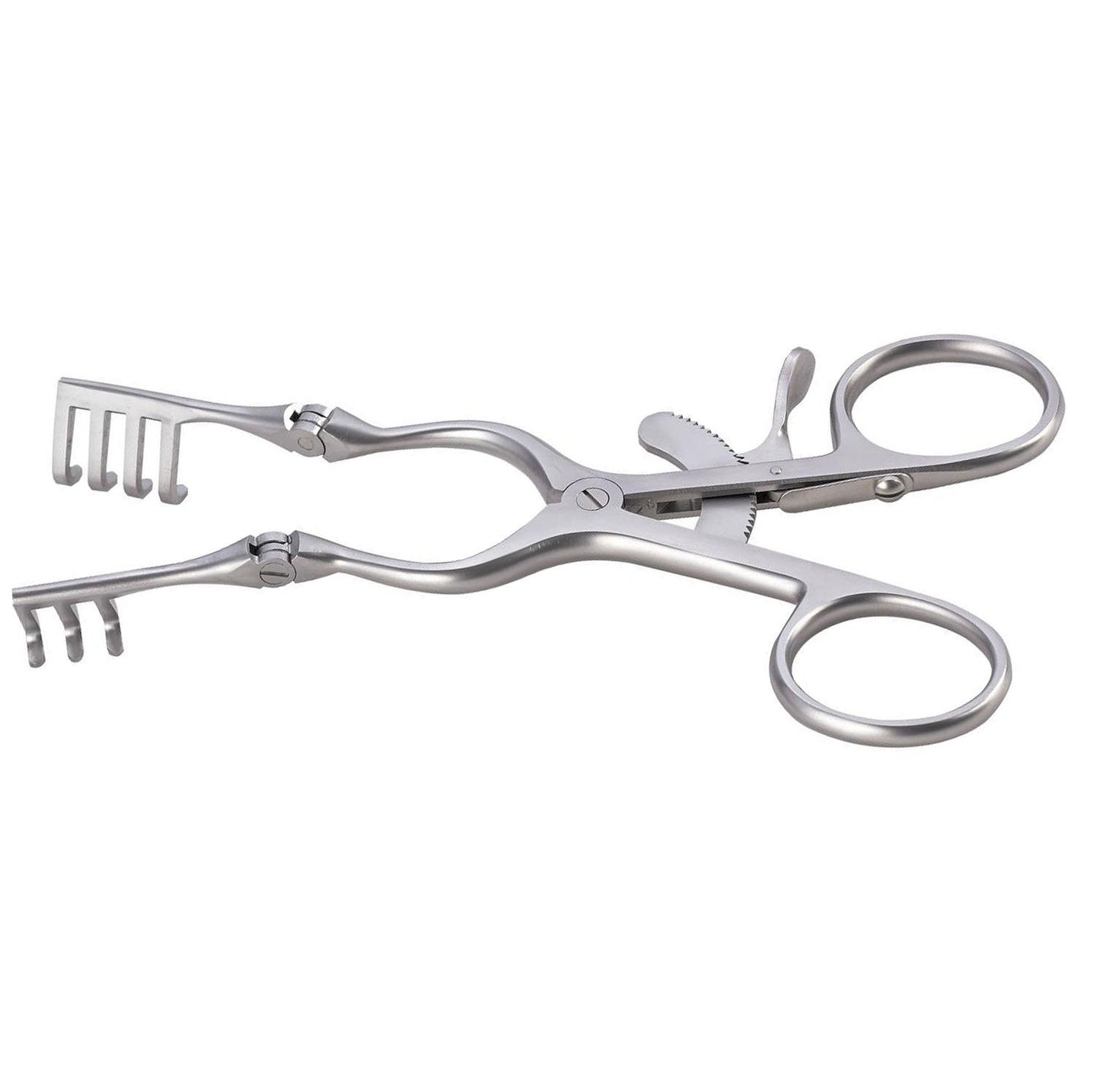
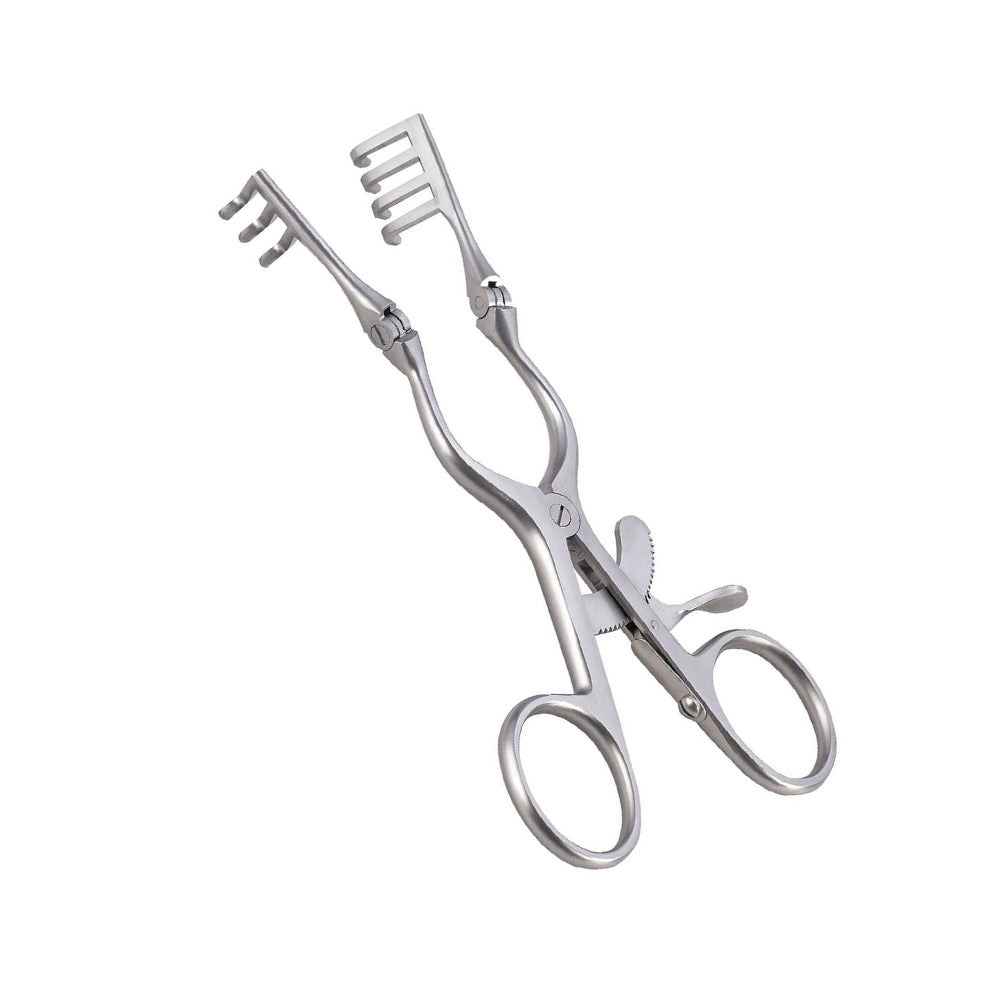
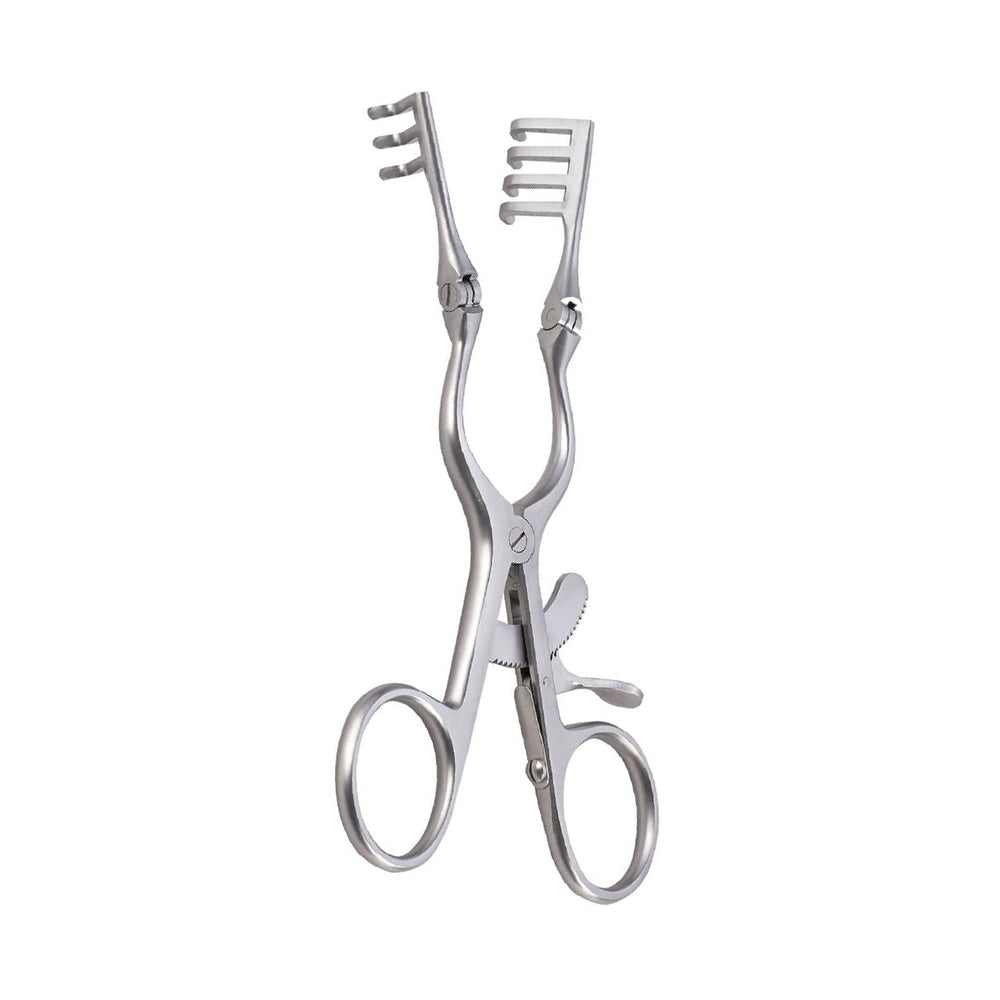
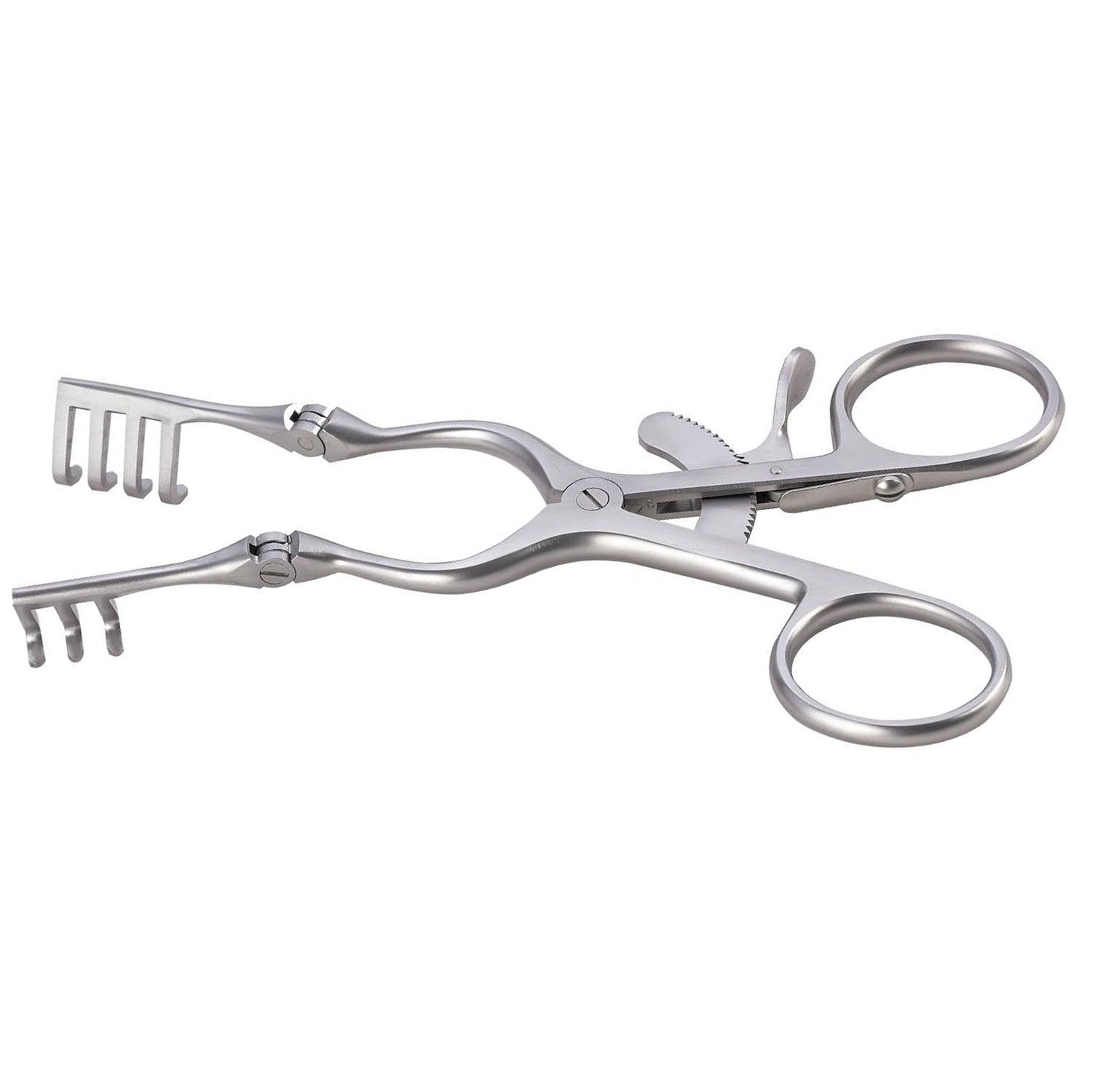
The Beckman Retractors from Peak Surgicals (SKU: PS-8876) are reusable German Stainless Steel self-retaining surgical retractors designed for controlled soft tissue separation during orthopedic, spinal, trauma, plastic, and general surgical exposure. This series includes PS-8876 sharp, overall length 5 1/2" (14cm), PS-8877 sharp, overall length 8" (20.3cm), PS-8878 blunt, overall length 5 1/2" (14cm), and PS-8879 blunt, overall length 6 3/4" (17.1cm), with each instrument priced at $53.90. The instrument includes opposing rake-style pronged blades, hinged blade necks, curved shanks, finger-ring handles, central pivot screw, ratchet locking arc, release lever, and self-retaining handle geometry. Orthopedic surgeons, spine surgeons, trauma surgeons, plastic surgeons, hospital operating rooms, ambulatory surgical centers, and procurement departments use Beckman Retractors during laminectomy exposure, discectomy, spinal fusion approach, tendon repair, fracture exposure, small joint surgery, fasciotomy, soft tissue dissection, wound edge separation, and layered closure. The sharp and blunt rake options allow controlled engagement of skin, fascia, muscle, paraspinal tissue, tendon sheath, and subcutaneous planes according to tissue density and operative depth.
The Beckman pattern works through two opposing rake blades that separate tissue as the finger-ring handles are closed. Each blade has multiple prongs to distribute traction across the wound edge rather than concentrating force at one single point. The sharp rake version penetrates firm fascia, dense fibrous tissue, paraspinal muscle, and scarred planes, giving secure purchase when tissue recoil is strong. The blunt rake version engages subcutaneous tissue, superficial muscle, tendon sheath, and delicate wound margins where surface holding is preferred over prong penetration. The hinged necks allow the blade heads to adapt to the angle of the wound, reducing awkward shaft positioning during exposure. The central pivot screw transfers handle movement into blade separation, while the ratchet locking arc holds the selected opening once the field is exposed. The release lever disengages the lock when retraction must be reduced or repositioned. Finger-ring handles give precise control during placement, and the self-retaining mechanism reduces the need for continuous hand-held traction.
During laminectomy and discectomy, the Beckman Retractors are used after the incision and fascial opening to hold paraspinal muscle away from the spinous process, lamina, facet joint, and interlaminar space. The sharp pattern is useful when muscle and fascia require firm holding during deeper posterior spine exposure. The blunt pattern is selected when the surgeon needs retraction along softer superficial layers or when the wound edge must be held without puncturing tissue. In spinal fusion exposure, the ratchet lock maintains the working corridor while the surgeon proceeds with dissection, cautery, bone preparation, implant placement, and closure. In orthopedic trauma surgery, the instrument supports exposure around fracture sites, periosteal planes, tendon borders, and fascial windows. During tendon repair or small joint procedures, the shorter versions maintain access while leaving room for forceps, suction, needle holders, and fixation tools. In plastic and general soft tissue surgery, the retractor keeps wound edges separated for debridement, flap elevation, hemostasis, and layered suturing.
The PS-8876 sharp 5 1/2" (14cm) model is selected for compact orthopedic and soft tissue fields where firm prong engagement is needed in a smaller incision. It suits localized fascia exposure, superficial trauma work, tendon access, and limited spinal approaches. The PS-8877 sharp 8" (20.3cm) model provides deeper reach and stronger holding capacity for paraspinal exposure, posterior spine work, dense fascial planes, and larger orthopedic wounds. The PS-8878 blunt 5 1/2" (14cm) version is used for smaller superficial fields where tissue separation is required without sharp prong penetration. It is useful in plastic surgery, tendon sheath exposure, minor orthopedic access, and layered soft tissue handling. The PS-8879 blunt 6 3/4" (17.1cm) version gives more working length for moderate-depth exposure while keeping the blade contact atraumatic. This size and tip sequence allows the surgical team to choose between penetration, surface holding, compact access, and deeper retraction using the same self-retaining Beckman mechanism.
German Stainless Steel gives the Beckman Retractors the rigidity, corrosion resistance, and mechanical stability required for repeated operating room use. A self-retaining retractor must maintain alignment at the prongs, hinged necks, pivot screw, ratchet arc, and handle rings because distortion can create uneven traction or unreliable locking. Sharp prongs require clean geometry for secure tissue engagement, while blunt tips must remain smooth to prevent unnecessary tissue marking. Satin and dull finishes reduce glare under operating room lights, headlights, and microscope illumination, while mirror finish provides a smooth surface for inspection after cleaning. After use, the blades are decontaminated, prong spaces are brushed, hinged joints are cleaned, ratchet teeth are cleared, the pivot screw is inspected, and the instrument is steam sterilized by autoclave after complete drying. The Class I classification, CE marking, ISO-13485 certification, and FDA compliance support hospital procurement files, distributor documentation, and tender review. The 1-year warranty, MOQ of 1 piece, OEM availability, and return and replacement service support reusable orthopedic retractor tray replacement.
| SKU | PS-8876 |
|---|---|
| Product Name | Beckman Retractors |
| Price | $53.90 per piece |
| Size/Gauge Variants | PS-8876 Sharp, overall length 5 1/2" (14cm); PS-8877 Sharp, overall length 8" (20.3cm); PS-8878 Blunt, overall length 5 1/2" (14cm); PS-8879 Blunt, overall length 6 3/4" (17.1cm) |
| Instrument Category | Orthopedic Instruments / Self-Retaining Retractors |
| Procedure | Laminectomy, Discectomy, Spinal Fusion Exposure, Orthopedic Trauma Exposure, Tendon Repair, Small Joint Surgery, Fasciotomy, Soft Tissue Retraction |
| Material | German Stainless Steel |
| Finish | Satin, Dull, Mirror |
| Sterilization | Steam sterilizable / Autoclave compatible |
| Instrument Classification | Class I |
| Reusable | Yes |
| Certifications | CE, ISO-13485, FDA |
| Warranty | 1 Year |
| MOQ | 1 Piece |
| OEM / Custom Orders | Available |
| After-Sale Service | Return and Replacement |
How do Beckman Retractors compare with Weitlaner Retractors?
Beckman Retractors are larger and stronger self-retaining rake retractors used when deeper or firmer soft tissue exposure is required. Weitlaner Retractors are commonly used for smaller superficial wounds, minor procedures, and compact soft tissue separation. The Beckman pattern has longer shanks, broader handle leverage, and more substantial rake heads, making it better suited to orthopedic, spinal, and trauma exposure. Weitlaner instruments remain useful for shallow incisions, but they do not provide the same working reach in paraspinal or deeper fascial fields. Beckman Retractors also offer sharp and blunt variants that allow the surgeon to choose tissue penetration or atraumatic surface holding. In spine and orthopedic trays, Beckman is selected when the wound requires stronger self-retaining traction and more stable exposure.
Which Beckman Retractor variant is selected for each procedure?
The sharp 5 1/2" version is selected for compact orthopedic wounds, fascia exposure, tendon access, and localized soft tissue fields where secure tissue purchase is required. The sharp 8" version is used for deeper exposure, including laminectomy, discectomy, spinal fusion approach, and dense paraspinal retraction. The blunt 5 1/2" version is selected for superficial wounds, plastic surgery exposure, tendon sheath work, and tissue planes where prong penetration is not needed. The blunt 6 3/4" version provides more reach for moderate-depth fields while maintaining smoother tissue contact. Beckman Retractors allow the team to match tip style and length to tissue density, incision size, and surgical depth. Sharp prongs improve holding in firm tissue, while blunt tips reduce focal marking in softer structures. This variant range supports complete orthopedic and soft tissue retractor tray planning.
What do CE, ISO 13485, and FDA compliance mean for procurement?
CE marking supports conformity documentation for hospitals, clinics, and distributors sourcing reusable surgical instruments. ISO 13485 indicates that manufacturing is managed under a medical device quality management system with controlled production, inspection, and traceability. FDA compliance supports procurement files for buyers sourcing reusable stainless steel instruments for regulated markets. Beckman Retractors are Class I reusable instruments, which fits standard purchasing categories for non-powered orthopedic retractors. These credentials help procurement officers compare the item against tender requirements, internal sourcing policies, and distributor documentation needs. German Stainless Steel construction, 1-year warranty, MOQ of 1 piece, and OEM availability strengthen the ordering record for repeat supply. For orthopedic and spine departments, the documentation aligns clinical function with regulated purchasing expectations.
How is the ratchet locking mechanism used intraoperatively?
The ratchet locking mechanism is used after the rake blades are placed into the wound edges and the handles are closed to create exposure. As the handles approximate, the ratchet teeth engage and hold the selected blade spread without continuous hand pressure. This keeps fascia, muscle, subcutaneous tissue, or wound edges separated while the surgeon performs dissection, cautery, drilling, suturing, implant positioning, or closure. The lock is especially useful in laminectomy, discectomy, and orthopedic trauma exposure because the field must remain stable while both hands are used for the main operative step. Beckman Retractors can be reopened or released by disengaging the ratchet lever when the blade position needs adjustment. The mechanism reduces assistant fatigue and maintains a consistent wound window. Proper ratchet function is central to safe self-retaining exposure.
How should Beckman Retractors be cleaned and sterilized after use?
After surgery, the instrument is decontaminated promptly so blood, tissue residue, fat, saline, and coagulum do not dry around the prongs, hinges, pivot screw, ratchet teeth, or handle rings. The rake teeth are brushed carefully because tissue debris can remain between the prongs. The hinged blade necks are cleaned and inspected so the blade heads articulate smoothly during the next procedure. The ratchet arc and release mechanism are cleared of residue to preserve reliable locking. German Stainless Steel supports steam sterilization by autoclave after complete cleaning and drying. Beckman Retractors should return to the orthopedic tray only after the prongs align correctly, the pivot moves smoothly, and the ratchet holds securely. Proper reprocessing preserves reliable exposure and repeated operating room readiness.