
Featured Collection
Your cart
Featured Collection

PEAK SURGICALS
SKU:PS-OT-0387
Couldn't load pickup availability
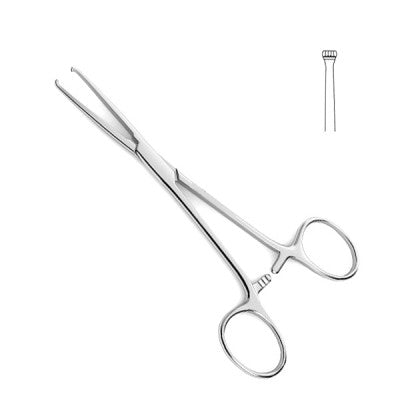
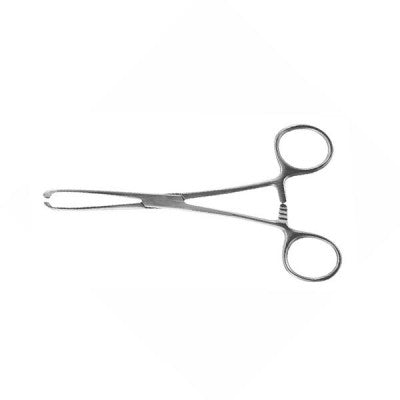
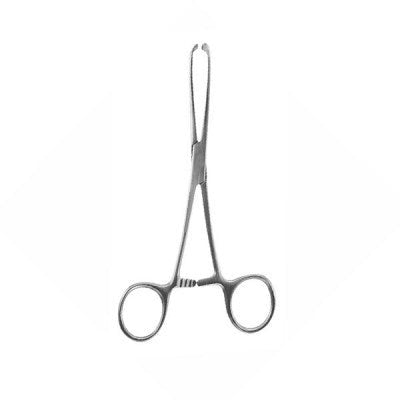
The professional clinical solution for high-accuracy grasping and stable traction in delicate surgical fields. The Baby Allis Tissue Forceps are specialized surgical instruments engineered to solve the problem of managing thin or fragile tissue layers that require the security of a toothed grip without the excessive trauma of standard-sized heavy clamps. Characterized by their fine interlocking teeth and downsized "Baby" profile, these forceps act as a mechanical necessity for surgeons who require localized, high-precision fixation. Its design is specifically optimized to provide a "locking-grip" shear, ensuring that delicate fascia and mucosal layers are held with mathematical accuracy while maintaining the visibility required for microsurgical or pediatric maneuvers.
The Baby Allis Tissue Forceps represent the pinnacle of small-scale surgical ergonomics and dependable tissue fixation. In any professional environment—from plastic surgery theaters to specialized pediatric units—the ability to securely lift and retract delicate tissue layers is a critical success factor.
At its core, the instrument is built for professional-grade longevity. The interlocking teeth are diamond-honed to ensure they meet with perfect alignment every time, providing a consistent "lock" that prevents the tissue from sliding. .
Feature Details
Tip Configuration Fine Interlocking Teeth (Baby Pattern)
Closure Type Multi-Position Ratchet Lock
Joint Type High-Stability Box Joint
Material Core Premium Surgical-Grade Stainless Steel
Maintenance Fully Autoclavable / Reusable
Standard ISO Microsurgical Grade
Primary Use Cases:
Q: What is the main difference between standard Allis and Baby Allis?
A: Baby Allis forceps are shorter in overall length and feature much finer, more delicate teeth. They are designed for smaller surgical fields and more fragile tissues than the standard version.
Q: Are these forceps suitable for grasping blood vessels?
A: No. While they are "Baby" pattern, they still feature sharp teeth. For blood vessels, specialized atraumatic vascular clamps (like DeBakey) should be used.
Q: Can these be used in general abdominal surgery?
A: They are often used in general surgery for grasping thin layers like the peritoneum or for skin edge retraction, but are generally too small for heavy fascia.
Q: How do I maintain the fine teeth?
A: Always store them in a way that prevents the teeth from touching other heavy instruments. Use a soft-bristled brush for cleaning to ensure no bioburden remains in the micro-serrations.
