
Featured Collection
Your cart
Featured Collection

PEAK SURGICALS
SKU:PS-OP-5646
Couldn't load pickup availability
 CE Certified
 FDA Certified
 ISO Certified
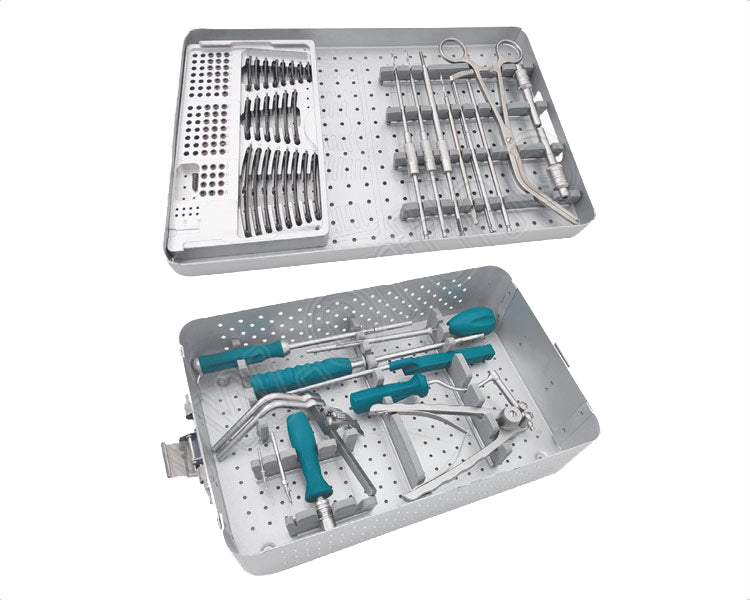
The Anterior Cervical Plate Bone Set from Peak Surgicals (SKU: PS-OP-5646, PS1709 series) is a complete anterior cervical plate instrumentation set in stainless steel, designed for the intraoperative workflow of anterior cervical plate placement during anterior cervical discectomy and fusion (ACDF) and anterior cervical corpectomy and fusion (ACCF) — covering bone screw preparation with a Drill Bit Quick Coupling Ø2.5mm and two Adjustable Drill Bits Ø2.5mm; cervical cortex threading with an Adjustable Tap Ø4.0mm; safe screw management with two Bone Screw Holding Sleeves; plate positioning with a Plate Holder; provisional plate fixation with two Plate Holding Screws; intervertebral distraction with two Distraction Screws and a Distraction Screw Holder; disc space and endplate preparation with a Curette 3mm; plate contouring with a Plate Bender; and initial cortical entry with an AWL. It is used by spine surgeons and neurosurgeons in hospital operating theatres performing anterior cervical plate fixation for cervical disc herniation, cervical spondylotic myelopathy and radiculopathy, traumatic cervical fractures and dislocations, and cervical instability requiring anterior plate-and-screw stabilisation at one or more levels.
Anterior cervical discectomy and fusion is one of the most commonly performed spinal operations — the intervertebral disc is removed through an anterior approach to the cervical spine via a longitudinal incision along the anterior neck, the disc space is decompressed, a bone graft or cage is placed, and an anterior cervical plate is applied to the anterior surface of the vertebral bodies above and below the treated level to provide immediate stability during fusion. The plate spans the treated disc space and is secured to the adjacent vertebral bodies with cortical screws inserted through the plate holes into the anterior cortex of each vertebral body. The anterior plate reduces the risk of graft or cage migration, maintains decompressed disc height and segmental lordosis, and protects the fusion from the flexion-extension loads of the cervical spine during healing. For anterior cervical corpectomy (ACCF), where the vertebral body is partially or completely removed to decompress the spinal cord, a longer anterior plate spanning from the intact vertebra above to the intact vertebra below the corpectomy defect provides anterior column support. The PS1709 Anterior Cervical Plate Bone Set provides the complete instrument set for plate positioning, screw preparation, distraction, and plate bending steps of both procedures.
The Drill Bit Quick Coupling Ø2.5mm (PS1709.025) is the primary power-drill attachment for drilling pilot holes in the anterior vertebral body cortex through the plate screw holes. The quick-coupling mechanism allows rapid attachment and detachment from the power drill without additional tools, reducing instrument exchanges during the critical plate-and-screw fixation phase. The two Adjustable Drill Bits Ø2.5mm (PS1709.037) provide manual drilling with calibrated depth stops — the adjustable stop controls drill penetration through the anterior cortex of the cervical vertebral body to prevent inadvertent posterior cortex breach in the small vertebral bodies of the cervical spine, where the anterior-to-posterior body depth at C3–C7 is typically only 14–18mm in standard adult anatomy. Pre-setting the drill depth to approximately 12–14mm provides bicortical purchase in the anterior cortex while maintaining a safety margin from the posterior cortex and the spinal canal.
The Adjustable Tap Ø4.0mm (PS1709.031) threads the 2.5mm pilot hole to the 4.0mm screw thread diameter, preparing the cortical purchase channel for the anterior cervical plate screws. Pre-tapping is important in dense cortical bone where the combination of hard cortex and small screw head creates high insertion torque without pre-cut threads. The adjustable design allows tap depth to match the pilot hole depth, preventing over-tapping at the posterior cortex. The two Bone Screw Holding Sleeves (PS1709.001) hold the anterior cervical screw on the screwdriver tip during introduction through the plate hole and into the pilot hole — in the limited access of the anterior cervical exposure, a dropped screw requires wound re-exploration and adds operative time and risk. The AWL (PS1709.073) creates the initial cortical entry point at each screw site before the drill bit is advanced, providing a guided start on the smooth curved anterior cortex of the vertebral body where the drill tip would otherwise skate laterally without a pre-established entry point.
The Plate Holder (PS1709.013) grips the anterior cervical plate and introduces it into the narrow anterior cervical exposure at the correct vertebral body level, maintaining the plate against the anterior vertebral body surface during positioning and initial screw insertion. The two Plate Holding Screws (PS1709.055) provide provisional plate-to-bone fixation through the pilot holes before definitive plate screws are placed, holding the plate in its confirmed position while remaining screw holes are drilled, tapped, and screwed. The Plate Bender (PS1709.067) contours the anterior cervical plate to match the lordotic curvature of the anterior vertebral body surface at the treated level — a flat plate placed on a lordotic anterior cervical surface contacts only at the plate ends, creating a stress-riser and risking screw pullout from end-point overloading; the bender creates the correct lordotic contour before placement, ensuring uniform plate-to-bone contact and load distribution across all screw positions. The Curette 3mm (PS1709.049) prepares the anterior disc space and endplate surface, removing cartilage endplate remnants and soft tissue to provide the clean cancellous bone surface required for bone graft or cage-to-endplate contact and fusion.
The two Distraction Screws (PS1709.061) and Distraction Screw Holder (PS1709.043) provide controlled vertebral body separation after discectomy and before graft or cage insertion. After disc removal, the vertebral bodies subside under the compressive load of the cervical musculature, collapsing the disc space. The distraction screws are inserted into the anterior cortex of the vertebral bodies above and below the treated level, and the holder applies a spreading force between them to restore pre-operative disc height. This distraction reopens the intervertebral foramina to the correct height, allows the correctly sized graft or cage to be inserted under light compression, and re-establishes the segmental lordosis that will be maintained by the anterior plate. The distraction screws are removed after graft seating and before plate positioning.
The Anterior Cervical Plate Bone Set is manufactured under CE Mark, ISO 13485, and FDA compliant quality standards. ISO 13485 certification confirms Peak Surgicals operates a documented quality management system covering design control, material traceability, and production consistency for spinal surgical instruments. CE Mark confirms conformity with European medical device regulations, and FDA compliance supports procurement for US-based hospitals, spine surgery centers, and neurosurgical departments requiring verified regulatory documentation for anterior cervical plate instrumentation purchases.
| SKU | PS-OP-5646 |
|---|---|
| Product Name | Anterior Cervical Plate Bone Set |
| Price | $1,747.90 USD |
| Instrument Series | PS1709 |
| Instrument Category | Spine Surgery — ACDF / ACCF Anterior Cervical Plate Instrumentation |
| Procedure | Anterior cervical discectomy and fusion (ACDF), anterior cervical corpectomy and fusion (ACCF) |
| Bone Screw Holding Sleeve | ×2 (PS1709.001) |
| Plate Holder | ×1 (PS1709.013) |
| Drill Bit Quick Coupling Ø2.5mm | ×1 (PS1709.025) |
| Adjustable Tap Ø4.0mm | ×1 (PS1709.031) |
| Adjustable Drill Bit Ø2.5mm | ×2 (PS1709.037) |
| Distraction Screw Holder | ×1 (PS1709.043) |
| Curette 3mm | ×1 (PS1709.049) |
| Plate Holding Screw | ×2 (PS1709.055) |
| Distraction Screw | ×2 (PS1709.061) |
| Plate Bender | ×1 (PS1709.067) |
| AWL | ×1 (PS1709.073) |
| Certifications | CE Mark, ISO 13485, FDA |
| Warranty | 1 Year |
| MOQ | 1 Set |
| OEM / Custom Orders | Available |
| After-Sale Service | Return and Replacement |
What surgical procedures is the Anterior Cervical Plate Bone Set used for?
The Anterior Cervical Plate Bone Set is used for anterior cervical plate-and-screw fixation during ACDF and ACCF. ACDF is performed for cervical disc herniation causing radiculopathy or myelopathy, cervical spondylotic myelopathy from osteophyte and disc-based anterior cord compression, cervical pseudarthrosis requiring revision anterior plating, and traumatic cervical disc injuries with instability. ACCF is performed for multilevel cervical stenosis from OPLL or spondylosis where corpectomy provides wider cord decompression than multilevel discectomy, and for vertebral body fractures with retropulsed bone causing anterior cord compression. In both procedures, the anterior cervical plate is placed after discectomy or corpectomy and graft or cage insertion, providing immediate stability that reduces the risk of implant migration and maintains decompression while fusion occurs.
Why is the Plate Bender necessary for anterior cervical plate surgery?
The anterior cervical spine has a natural lordotic curvature, and anterior cervical plates must be contoured intraoperatively to match the exact lordotic curve of the anterior vertebral bodies at the levels being plated. A flat plate placed on a lordotic anterior cervical surface contacts only at the plate ends, creating a fulcrum effect — tightening the end screws pulls the plate ends against the bone while the mid-plate gaps away from the vertebral surface. This places all bending load on the end screws, increasing the risk of screw pullout or plate fracture at stress risers. The Plate Bender (PS1709.067) applies controlled three-point bending to create the correct lordotic contour before placement, ensuring uniform contact across the full plate length and distributing load evenly across all screw positions.
What is the role of the Distraction Screws in ACDF?
The Distraction Screws (PS1709.061) and Distraction Screw Holder (PS1709.043) restore disc height after discectomy before graft or cage insertion. After disc removal, the vertebral bodies subside under the compressive load of the cervical muscles and ligaments. Distraction restores the intervertebral foramen to the correct height, relieving nerve root compression; allows the correctly sized graft or cage to be inserted under light compression; and re-establishes segmental lordosis that will be maintained by the anterior plate. The distraction screws are removed after graft seating and before plate positioning.
How does the Adjustable Drill Bit differ from the Quick Coupling Drill Bit?
The Drill Bit Quick Coupling Ø2.5mm (PS1709.025) is a power-drill attachment for faster drilling through the plate hole in the primary screw preparation sequence. The two Adjustable Drill Bits Ø2.5mm (PS1709.037) are manually operated with an adjustable depth stop — the stop is set to the safe drilling depth for each vertebral body level before drilling begins, limiting penetration to prevent inadvertent passage through the posterior cortex of the vertebral body toward the spinal canal. In cases where precise manual depth control is preferred or power drill access is limited by the narrow anterior cervical exposure, the adjustable drill bits provide controlled drilling with built-in depth protection.
How does this set relate to the Anterior Thoracic Plate System also available from Peak Surgicals?
Both sets are anterior spinal plate instrumentation sets, but for completely different spinal regions and approaches. The Anterior Cervical Plate Bone Set (PS-OP-5646, PS1709 series) is specifically configured for the anterior cervical spine — it uses a Ø2.5mm drill bit and Ø4.0mm tap sized for the small cortical screws of anterior cervical plates, includes a Distraction Screw system for intervertebral height restoration in the cervical disc space, and a Curette for endplate preparation. The Anterior Thoracic Plate System is configured for the thoracic and thoracolumbar spine via anterior thoracotomy, with larger drill bits, taps in 6.0mm and 6.5mm, and a Compression Clamp and Distractor Clamp for vertebral body-level compression and distraction. The two sets are not interchangeable and each is specific to its spinal region.
What certifications does this set carry?
The Anterior Cervical Plate Bone Set is manufactured under CE Mark, ISO 13485, and FDA compliant quality standards. ISO 13485 certification confirms Peak Surgicals operates a documented quality management system covering design control, material traceability, and manufacturing consistency for spinal surgical instruments. CE Mark confirms conformity with European medical device regulations, and FDA compliance supports procurement for US hospitals, spine surgery centers, and neurosurgical departments requiring verified regulatory documentation for anterior cervical plate instrumentation purchases.
