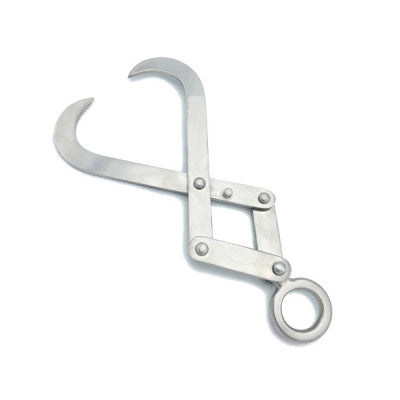
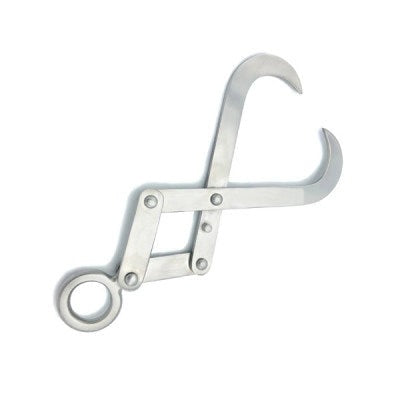
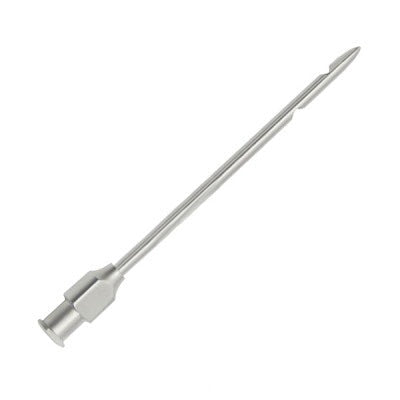
Large animal veterinary instruments are a scale problem before they are a technique problem. A bovine reproductive tract sits at a depth no human instrument reaches, and none of it can be approached until an animal several times the clinician's weight is safely restrained. Peak Surgicals manufactures 110 patterns for large animal practice, in German stainless steel and CE marked and built under ISO 13485. Compare the full range in the grid below.
Restraint First, Then Scale
Restraint comes first, and it is not an accessory to the procedure. A cow that moves during a teat procedure or a horse that kicks during a tendon examination turns a routine intervention into an injury. Bull leads and nose clamps control the head through the nasal septum, where a small applied force translates into reliable control of a large animal. Twitches apply pressure to the upper lip, hog holders and snares secure swine, and anti-kickers immobilise a hind limb before anyone works near it.
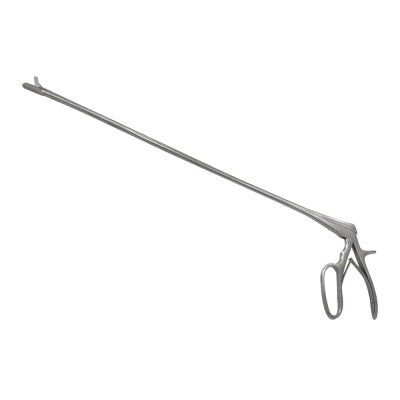
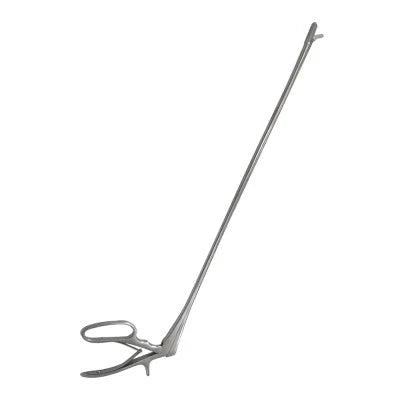
Scale governs everything else. Equine Allis Tissue Forceps and Equine Babcock Intestinal Forceps run 55cm, and a tungsten carbide needle holder at the same length exists because a surgeon working in an equine abdomen is operating at arm's depth. Obstetrical chains reach 60 inches. These are not enlarged theatre instruments; they are built for a working distance human surgery never encounters.
Obstetrics: The Largest Group
Obstetrics is the largest single group here, because a dystocia in cattle is a time-limited emergency solved almost entirely by hand and by leverage. Chains and snares are placed around the fetal limbs, handles convert those chains into controlled traction, and the pull is applied along the axis of the birth canal rather than straight back.
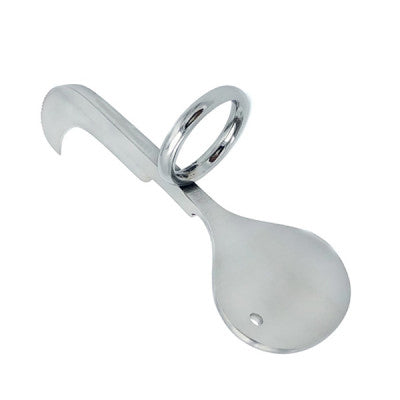
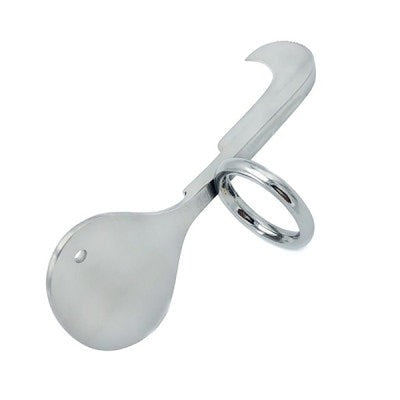
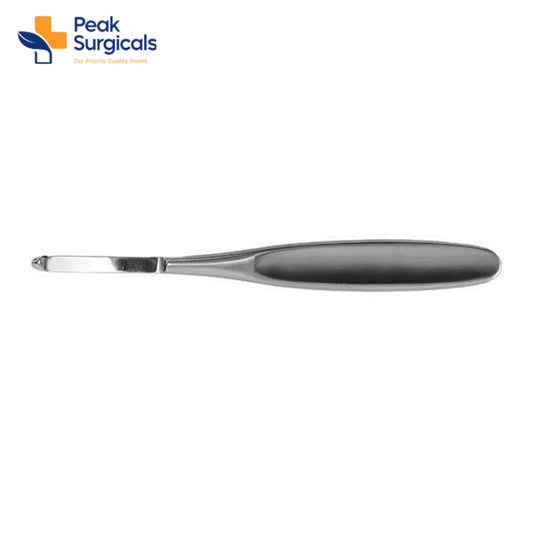
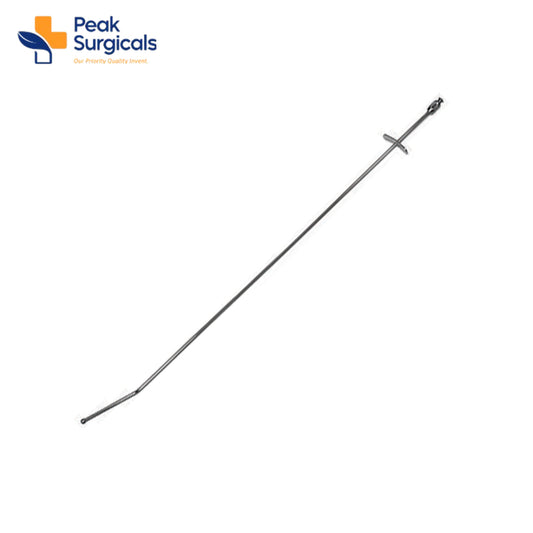
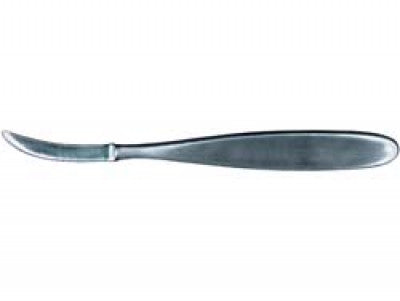
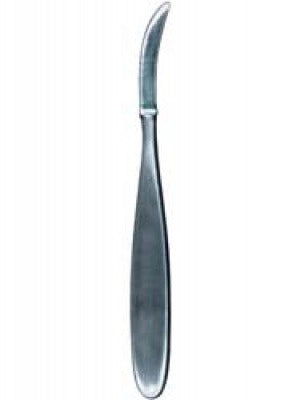
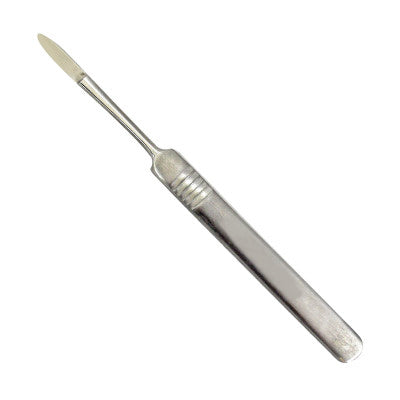
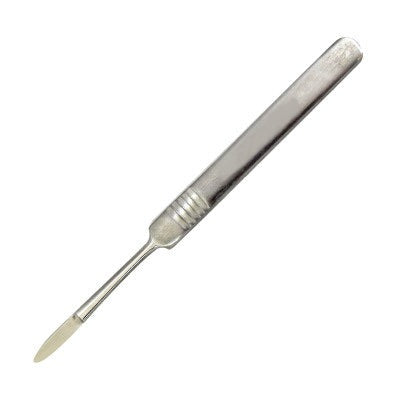
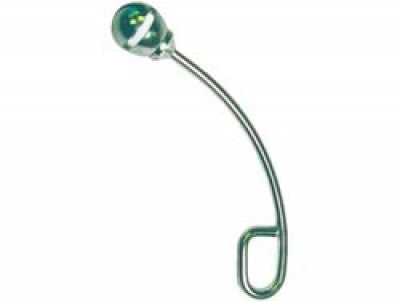
Obstetrical Chains in 30, 45 and 60 inch lengths cover the range, with handles including a T-bar pattern and the Sutter handle, plus dedicated swine and porcine snares. Where a live delivery is no longer possible, embryotomy instruments take over: Embryotomy Knife Linde and Embryotomy Knife Gunther, wire guides with ball ends, wire handles and containers, and Buhner Needle for the retention suture that follows a prolapse repair.
Equine, Diagnostic and Airway
Equine work has its own instruments because the horse presents problems no other species does. Tenotomes in blunt and sharp, straight and curved patterns address tendon work, and a double-edged tendon splitter serves the same field. Horsley's Trephine opens the equine skull for sinus access, an equine trocar cannula punctures the cecum in colic, and urethane stomach tubes in foal, small, medium and large sizes cover nasogastric intubation across the age range.
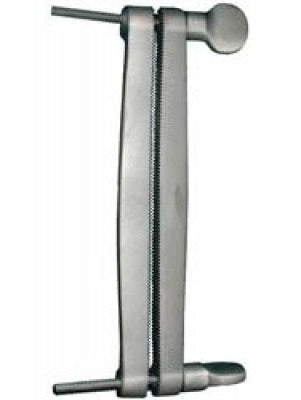
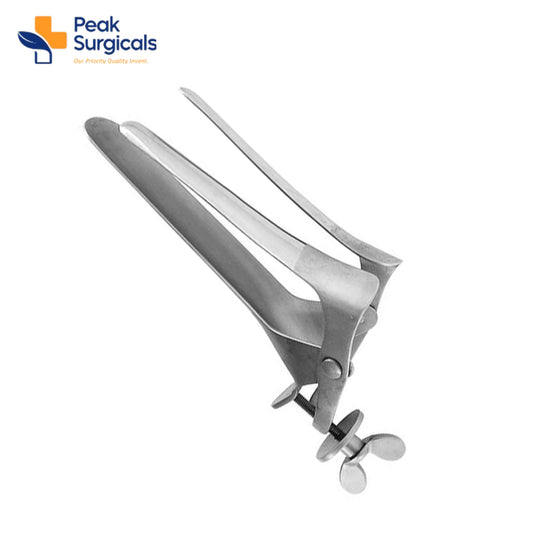
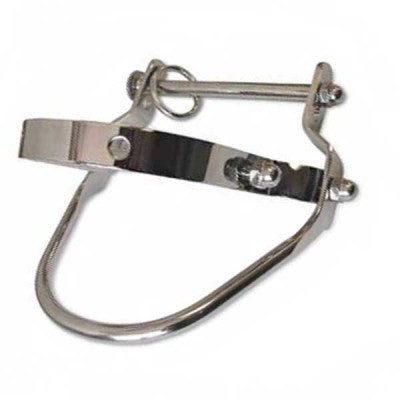
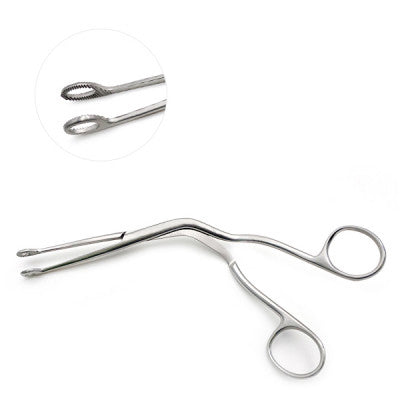
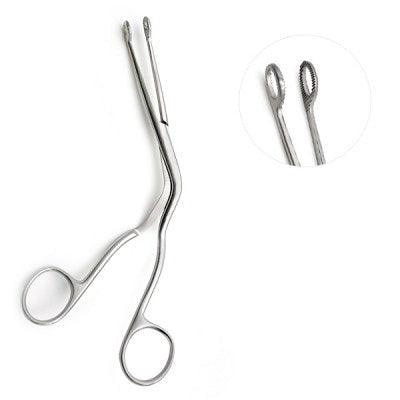
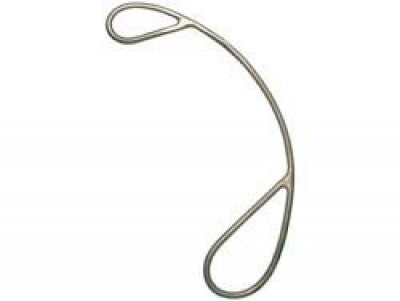
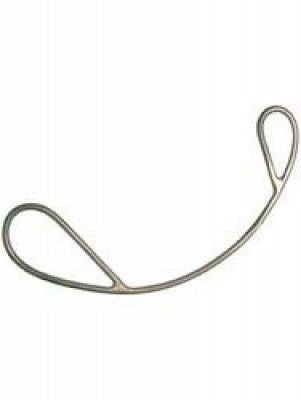
Diagnosis and airway management complete the range. Vaginal and mouth specula run to 19.5 inches, and Weingart and Polansky patterns hold the equine mouth open for dental work. Laryngoscopes are supplied in MacIntosh and Miller patterns across conventional, gold line, G-profile and fibre optic configurations, with handles and blades available separately, and full sets of five and six blades.
Herd Health: Dehorning, Teat and Dosing
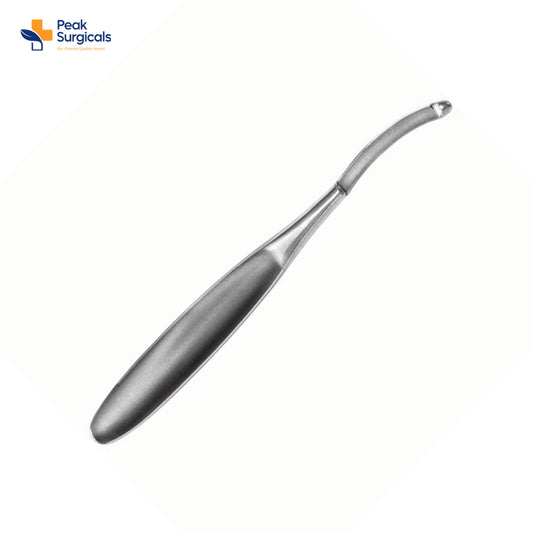
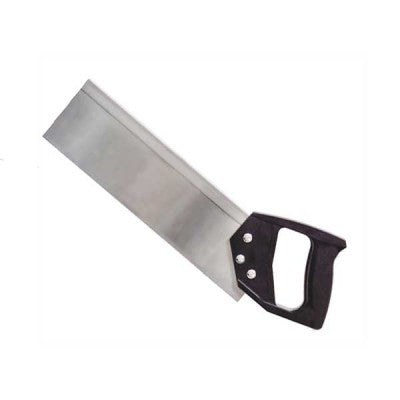
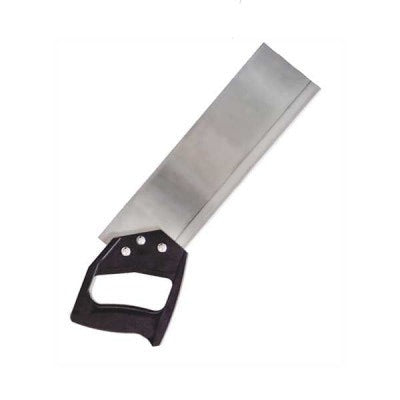
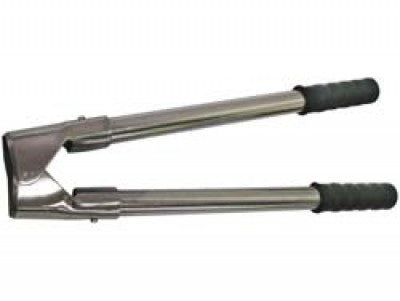
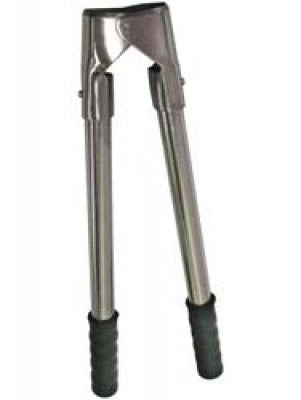
Herd health accounts for the rest. Dehorning is done with Barnes-type dehorners in steel and wooden handle patterns, tube dehorners for calves, and a 14 inch dehorning saw, with Jones Artery Forceps standing by for the vessel that bleeds afterwards. Teat instruments run to Lichty teat knives in sharp and blunt patterns and a teat curette.
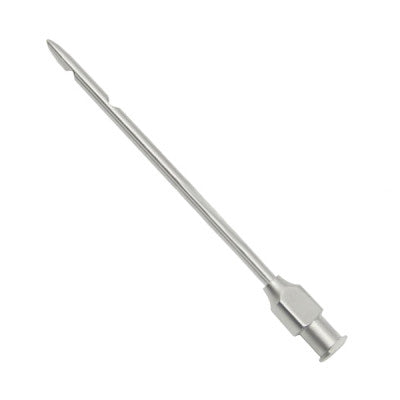
Drenching and dosing use balling guns, drench pumps and rumen drenching systems, and udder infusion cannulae are supplied in packs because they are used per quarter rather than per animal. Trocars, umbilical clamps, hernia clamps and reverse cutting needles cover the abdominal and closure work that follows.
Material, Reprocessing and Certification
Every pattern is manufactured from German stainless steel and passivated for corrosion resistance across repeated cycles. Large animal instruments carry loads that theatre instruments do not, and the inspection reflects that: on chains, snares and leads check every link, weld and swage for deformation, because these carry the full traction of an assisted delivery and fail under load rather than in storage; on long-shafted forceps and needle holders sight down the shaft and confirm it is true, since a 55cm instrument amplifies any set in the shank; and on dehorners and cutting instruments check every edge for chipping. Clean immediately with a neutral-pH enzymatic solution, brushing thoroughly into joints, chain links and cannula lumens before residue dries, then rinse with deionised water and dry fully, following the reprocessing instructions supplied.
These are Class I reusable devices, supplied non-sterile, CE marked and built under ISO 13485, with a one-year manufacturing warranty. We ship at MOQ 1 with free shipping over $99, and OEM production is available for distributors. Browse the narrower ranges directly: Veterinary Obstetrical Instruments, Diagnostic and Restraint Instruments, Equine Special Instruments, Anesthesia Instruments, Dehorners and Teat Instruments. Talk to us about OEM and volume terms.
Our Hot Selling Products :-
Weingart Mouth Speculum | Obstetrical Chain 30" | Lichty Teat Knife Blunt | Caesarian Forceps | Obstetrical Handle | Obstetrical Double Action Hook | Save-A-Calf Obstetrical Snare | Vaginal Speculum 14"X1 1/4" | Embryotomy Knife Linde 12cm.