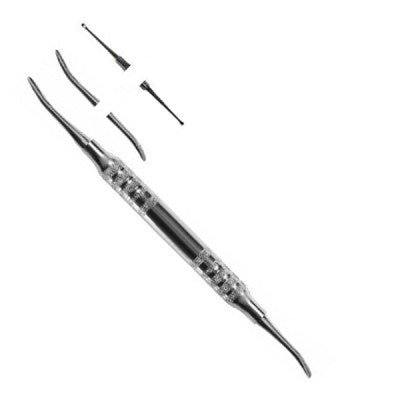
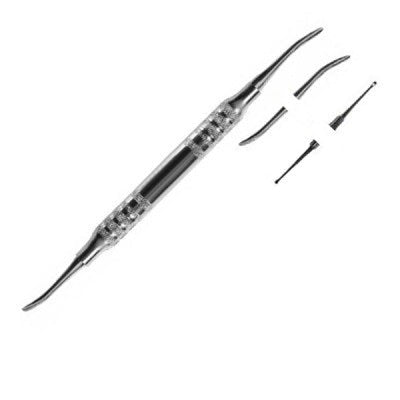
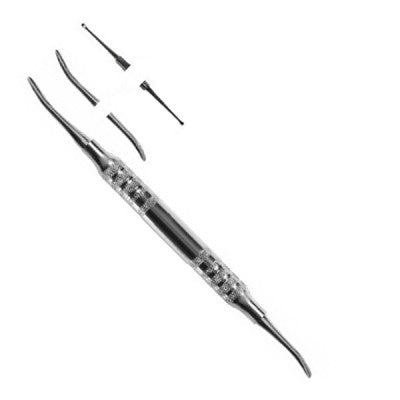
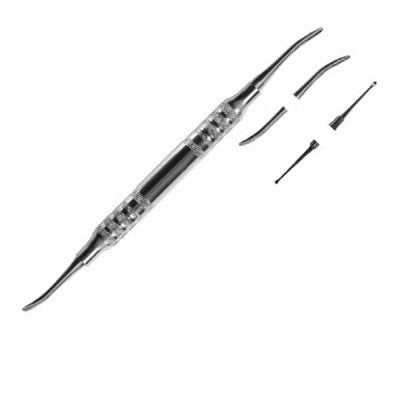
Feline & Canine Dental Elevators — Curette Style
Curette-style dental elevators share the same core function as standard dental elevators — severing the periodontal ligament to loosen a tooth before extraction — but use a rounded, scooped working tip rather than a flat wedge blade. That scooped shape can give a different engagement against the curved root surface, which some clinicians prefer for specific tooth shapes or extraction techniques.
What's in This Collection
The Feline Elevator is sized for cat dental anatomy, suited to the finer, more delicate roots found in feline extractions. The Canine Double-Ended Elevator offers two working ends on one instrument, sized for dog dental work rather than cats, despite its placement in this "feline" collection.
Choosing the Right Elevator
Species-specific sizing matters here: a feline-sized elevator is built for smaller, more delicate roots, while a canine instrument is scaled for larger tooth and root structures. The curette-style tip is generally chosen based on clinician preference and the specific tooth being extracted, rather than being a universal substitute for a standard elevator blade.
Related Instruments
For the broader veterinary extraction toolkit, pair these with our general Dental Elevators collection, which covers root tip picks, named patterns (Seldin, Holmstrom, Warwick James, Apexo), and additional feline-specific sets. See also Luxation Elevators and American Pattern Forceps for the extraction steps that typically follow. Browse the full Small Animal Dental Instruments catalog for the complete range.
Ordering
Peak Surgicals manufactures and supplies veterinary dental elevators in bulk for clinics and distributors worldwide, with international shipping — contact our team for a wholesale quote.
Frequently Asked Questions
What's the difference between a curette-style and a standard dental elevator?
A curette-style elevator uses a rounded, scooped tip rather than a flat wedge blade, which can give different engagement with curved root surfaces depending on the extraction technique and tooth shape.
Is this collection only for cats?
No, despite its name — it includes one feline-sized elevator and one canine-sized elevator, so check the product description to confirm which is right for your patient.
Why would I choose a curette-style elevator over a standard one?
The choice is largely clinician preference and tooth-specific — a curette-style tip may engage certain root shapes more effectively, but it's not a universal replacement for a standard elevator blade.