
Featured Collection
Your cart
Featured Collection

PEAK SURGICALS
SKU:PS-Or_00024
Couldn't load pickup availability
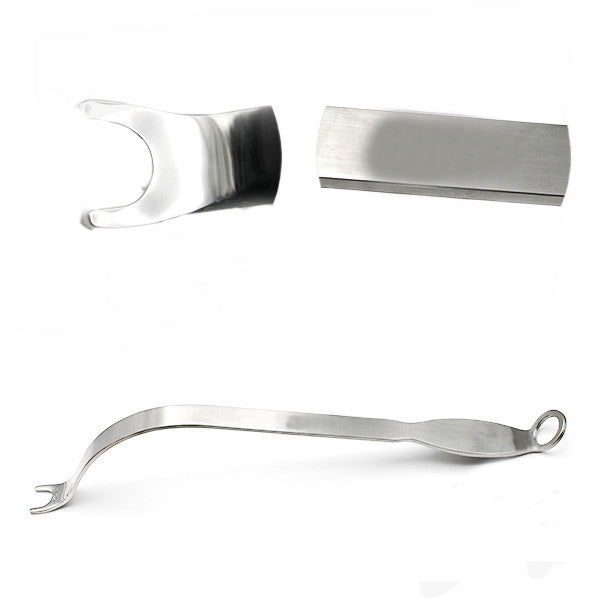
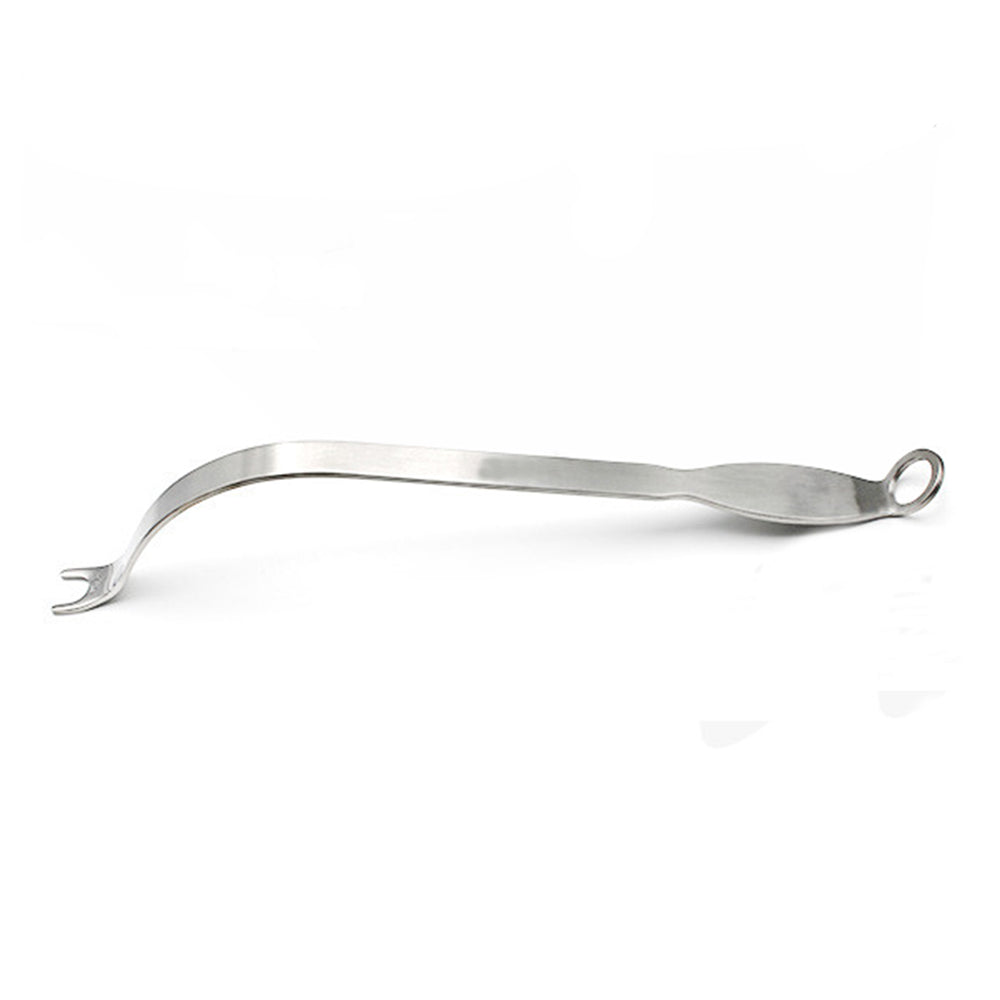
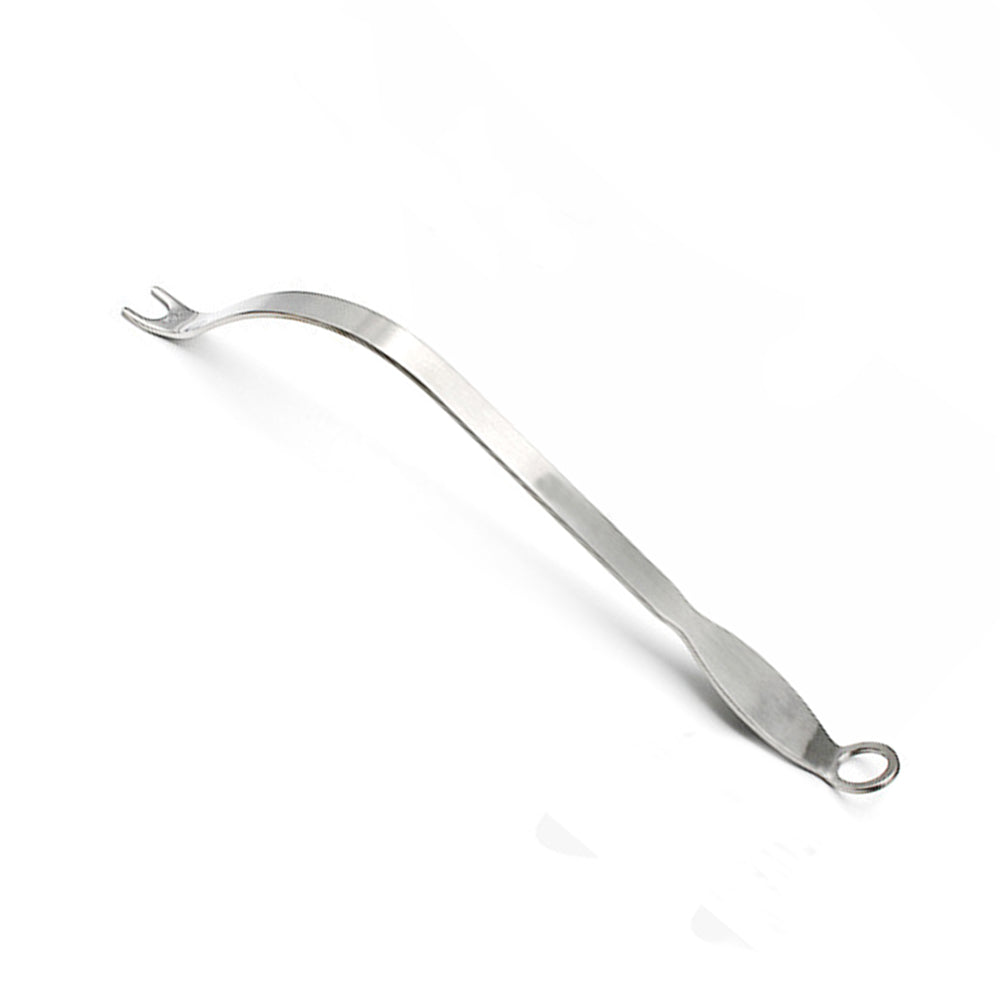
Femoral Calcar Retractor, SKU PS-Or_00024, is a reusable orthopedic retractor manufactured from German stainless steel for controlled exposure of the proximal femur during hip arthroplasty. The instrument uses a long curved shaft, a forked distal blade, and a ring-style proximal handle to position the working end around the medial proximal femur while keeping the operator’s hand away from the surgical corridor. Its geometry is intended for the femoral-exposure phase of direct anterior and other limited-access hip approaches, where the calcar and proximal femur must be elevated and soft tissue displaced without placing a broad retractor directly across the operative field. The pattern is used during total hip arthroplasty and hip hemiarthroplasty, particularly when preparing the femoral canal after capsular release, limb positioning, and mobilization of the proximal femur. The forked blade engages around the calcar region near the lesser trochanter while the curved shaft clears the wound edge and accommodates external rotation, extension, and adduction used for femoral delivery. Orthopedic hip surgeons and arthroplasty teams use this instrument in hospital operating rooms and ambulatory orthopedic facilities during primary hip replacement procedures requiring focused calcar-level retraction and femoral elevation.
The Femoral Calcar Retractor functions as a manually controlled levered retractor rather than a self-retaining device. Its distal working end is formed as a forked blade with two rounded prongs separated by a central recess. This shape allows the blade to straddle the calcar region and gain purchase around the medial proximal femur without requiring a wide solid blade to occupy the same space. A pronounced curve transitions from the distal end into the elongated shaft, creating clearance over the skin, fascia, and wound margin while the surgeon or assistant maintains traction from outside the incision. The shaft transmits controlled lifting force from the handle to the blade and helps direct the line of retraction along the proximal femoral axis. At the opposite end, the ring-style handle gives the operator a defined point for finger engagement and directional control during insertion, elevation, and release. There is no ratchet, pivot, spring, or locking mechanism; the amount of retraction is determined continuously by hand. During use, the forked end is seated deliberately against the calcar region, and force is increased only after the blade position is secure. This geometry is designed to improve femoral visualization while preserving central access for broaches, rasps, trial components, and implant instruments.
During direct anterior total hip arthroplasty, the Femoral Calcar Retractor is most relevant once the acetabular phase is complete and the surgeon turns to femoral exposure and canal preparation. The operative limb is positioned to bring the proximal femur toward the wound, commonly using extension, external rotation, and adduction according to the chosen technique. Capsular and soft-tissue releases are performed as required to mobilize the proximal segment. The forked blade is then placed at the medial calcar, near and proximal to the lesser trochanter, so controlled traction can elevate the femur and maintain a working corridor to the neck and canal. With the proximal bone delivered, the surgeon can introduce a box osteotome, canal finder, broaches, rasps, trial stems, and final femoral components without the retractor body occupying the center of the incision. The same principle can be used during anterior-based hip hemiarthroplasty for femoral neck fracture when the proximal femur must be exposed for stem preparation. Placement is especially important in osteoporotic bone because excessive force or a poorly seated blade can increase the risk of cortical or periprosthetic injury. The instrument therefore supports exposure; it does not substitute for adequate capsular release, appropriate limb positioning, or controlled femoral mobilization.
This product is supplied as the Femoral Calcar Retractor pattern under SKU PS-Or_00024, with the clinical selection centered on its key working components rather than a gauge-based system. The forked distal blade is the tissue and bone-contacting element. Its paired prongs create two points of contact around the calcar region while the central recess helps accommodate the contour of the proximal femur. The curved distal shaft moves the main body away from the wound edge, which is important when femoral broaches and trial stems must pass centrally through a limited anterior incision. The elongated mid-shaft provides reach to the deep medial femoral surface while allowing the assistant’s hand to remain outside the immediate operative corridor. The proximal ring handle gives a secure location for traction and allows subtle changes in the direction of lift without moving the hand toward the wound. Selection of this pattern is most appropriate when focused calcar-level support is required during femoral elevation rather than broad superficial soft-tissue retraction. It should be positioned according to patient anatomy, femoral size, incision depth, and the amount of proximal femoral mobilization achieved after release. The blade should sit securely before sustained traction is applied, and the operator should avoid using the retractor as an uncontrolled pry against cortical bone.
German stainless steel provides the stiffness required for a long orthopedic retractor to transmit traction from the proximal handle to the distal blade without unwanted flex at the working end. A satin surgical finish reduces glare from operating-room illumination and provides a surface that can be visually inspected during cleaning and instrument-set preparation. Because the device is reusable, reprocessing should begin promptly after surgery so blood, marrow residue, and tissue debris do not dry around the forked blade or along the curved shaft. Manual or automated cleaning should follow the facility’s validated reusable-instrument process, with particular attention to the recess between the distal prongs. After rinsing and drying, the device should be inspected for corrosion, surface defects, shaft distortion, damaged prongs, or loss of symmetry at the blade. Steam sterilization is appropriate within a validated hospital cycle compatible with reusable stainless steel instrumentation and the manufacturer’s reprocessing instructions. Peak Surgicals supports CE and ISO 13485 procurement requirements and FDA-compliant purchasing documentation for applicable markets. ISO 13485 relates to the manufacturer’s medical-device quality-management system, while CE and FDA documentation should be reviewed within the hospital or distributor’s supplier-qualification process. Regulatory references should not be converted into an unsupported claim that an individual manual retractor is FDA approved.
| SKU | PS-Or_00024 |
|---|---|
| Product Name | Femoral Calcar Retractor |
| Price | $104.50 USD |
| Size/Gauge Variants | PS-Or_00024 single-pattern configuration with forked calcar blade, long curved shaft, and ring handle |
| Instrument Category | Orthopedic Hip Retractor |
| Procedure | Total hip arthroplasty and hip hemiarthroplasty femoral exposure and canal preparation |
| Material | German Stainless Steel |
| Finish | Satin Surgical Finish |
| Sterilization | Reusable; suitable for steam sterilization following validated cleaning and reprocessing protocols |
| Instrument Classification | Reusable Manual Orthopedic Retractor |
| Reusable | Yes |
| Certifications | CE, ISO 13485, FDA-compliant procurement context |
| Warranty | 30-Day Money-Back Guarantee |
| MOQ | 1 Piece |
| OEM / Custom Orders | Available for institutional and distributor requirements |
| After-Sale Service | Return and replacement support under Peak Surgicals service policy |
How does the Femoral Calcar Retractor differ from a Hohmann Retractor?
The Femoral Calcar Retractor uses a forked distal blade shaped to engage around the medial calcar region during proximal femoral elevation. A conventional Hohmann Retractor typically uses a single solid blade or pointed lip that is placed against bone to retract surrounding soft tissue. The forked design provides two contact points with a central recess, while the Hohmann pattern concentrates contact along one blade profile. The long curve of the calcar pattern is specifically useful for keeping the shaft away from the anterior hip wound while the femur is delivered for preparation. Hohmann retractors remain useful around the acetabular rim, femoral neck, and other bony margins depending on blade design. Selection should follow the intended contact site, required direction of traction, and whether focused calcar elevation or broader bone-edge retraction is needed.
When is this retractor used during anterior total hip arthroplasty?
The Femoral Calcar Retractor is primarily used during the femoral-exposure and canal-preparation phase of anterior total hip arthroplasty. After the femoral head has been removed and the necessary capsular releases are completed, the limb is positioned to mobilize the proximal femur toward the incision. The forked blade is seated at the medial calcar near the lesser trochanter so controlled traction can elevate the bone. This exposure creates room for canal-opening instruments, broaches, rasps, trial stems, and the final femoral component. The retractor should support the exposure created by soft-tissue release and limb positioning rather than compensate for inadequate mobilization with excessive force. Careful placement is particularly important in osteoporotic bone and femoral neck fracture patients because uncontrolled leverage can increase the risk of cortical injury.
What do CE, ISO 13485, and FDA references mean for hospital procurement?
Peak Surgicals supports CE and ISO 13485 documentation and FDA-compliant procurement requirements for applicable markets. ISO 13485 addresses the quality-management system used for medical-device manufacturing and controlled production processes. CE documentation is relevant to conformity assessment within markets where the applicable European medical-device framework is used. In the United States, procurement teams should review the appropriate FDA establishment, listing, and device documentation required for the instrument category. These terms should not be rewritten as an unsupported statement that the Femoral Calcar Retractor is individually FDA approved. Hospitals and distributors can retain supplier certificates, product identification, purchasing records, and applicable regulatory documents within their vendor-qualification files.
How is traction controlled when the instrument has no ratchet or locking mechanism?
The Femoral Calcar Retractor is controlled manually through its ring handle, elongated shaft, curved profile, and forked working end. The operator seats the distal blade at the calcar before applying sustained lifting force. The ring provides a defined grip point, while the shaft transmits traction to the blade without placing the hand inside the central operative corridor. Small changes in wrist position alter the direction of lift and allow the assistant to maintain exposure as broaches or trial components are introduced. Because there is no ratchet, spring, or self-retaining lock, force changes immediately when the operator changes hand pressure. This continuous manual control allows rapid release if blade position changes or if the surgeon needs the femur lowered during the next step of the procedure.
How should hospitals reprocess and order the Femoral Calcar Retractor?
The Femoral Calcar Retractor should be ordered using SKU PS-Or_00024 so purchasing, sterile processing, and orthopedic inventory records remain aligned. Peak Surgicals lists the product at $104.50 and provides a 30-day money-back guarantee on the live product page. For routine reprocessing, gross soil should be removed promptly, with focused cleaning around the forked blade and the recess between its prongs. The instrument should then be rinsed, dried, and inspected for corrosion, shaft distortion, damaged tips, or asymmetry before packaging. Steam sterilization should follow the healthcare facility’s validated reusable-instrument cycle and the applicable reprocessing instructions. OEM and institutional supply requests can be handled through Peak Surgicals, while returns are managed under the company’s return and replacement support process.


