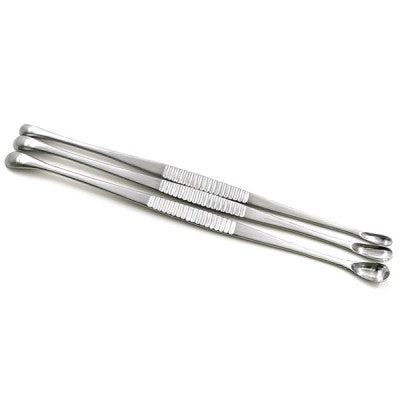
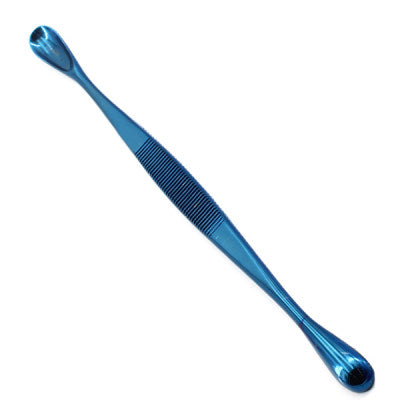
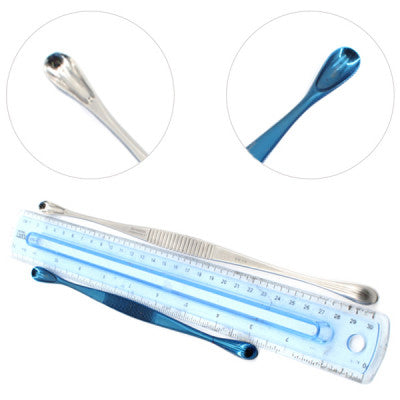
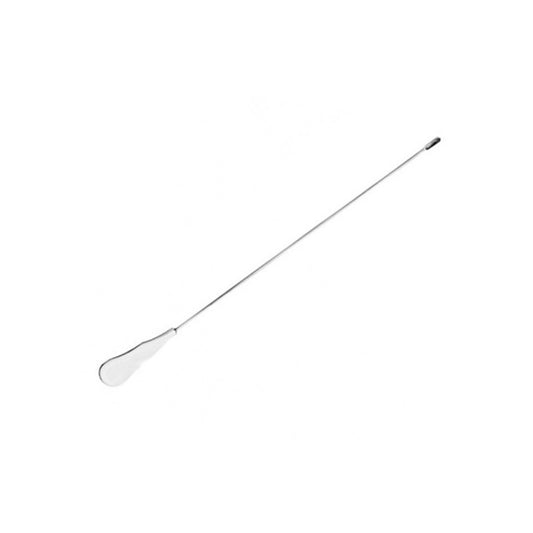
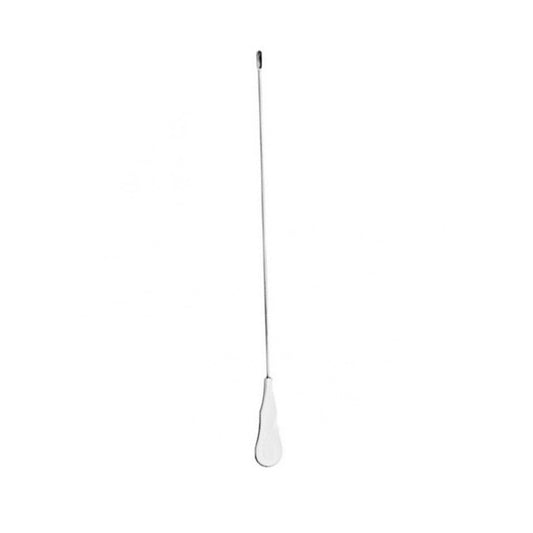
The opening made in a bile duct is sized to the largest stone, and forcing an instrument through an opening that is too small tears the duct. That constraint shapes every gallstone scoop in this collection. Peak Surgicals stocks four patterns, in German stainless steel and CE marked and built under ISO 13485. Compare all four patterns in the grid below.
Where the Scoop Comes In
Stone retrieval runs in a fixed order, and the scoop is not the first instrument used. Manual expression comes first: the duct is milked toward the opening and most stones come out that way. Only when that fails does an instrument go in, and at that point the requirement is a working end that can reach past the stone, sit behind it and draw it back out without touching the duct wall harder than it has to.
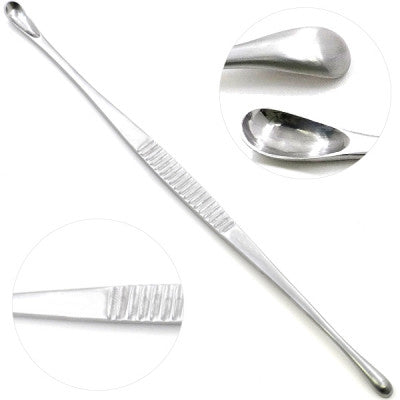
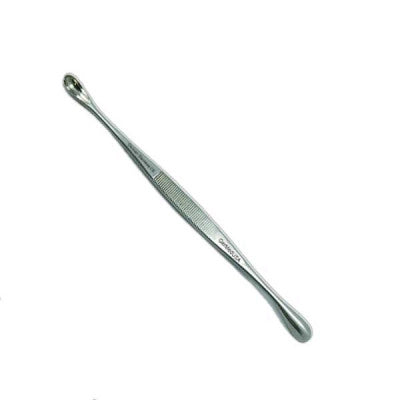
That is what a scoop is for. A cupped, blunt working end passes the stone rather than gripping it, then lifts it out on withdrawal. Ferguson Gall Stone Scoop ($13.20) and Mayo Gall Stone Scoop ($33.00) cover the standard retrieval patterns, and Gall Bladder Cystotomy Spoon ($15.40) serves the same purpose through a cholecystotomy where the gallbladder itself is opened. We supply every pattern at MOQ 1.
Width and Malleability Are Safety Features
Two specifications matter more than any other here, and both are safety features rather than conveniences. The first is scoop width. The working end has to pass the choledochotomy, and that opening was cut to match the stone, not the instrument. A scoop wider than the opening either will not enter or will be forced, and the common bile duct is thin-walled enough to tear rather than stretch.
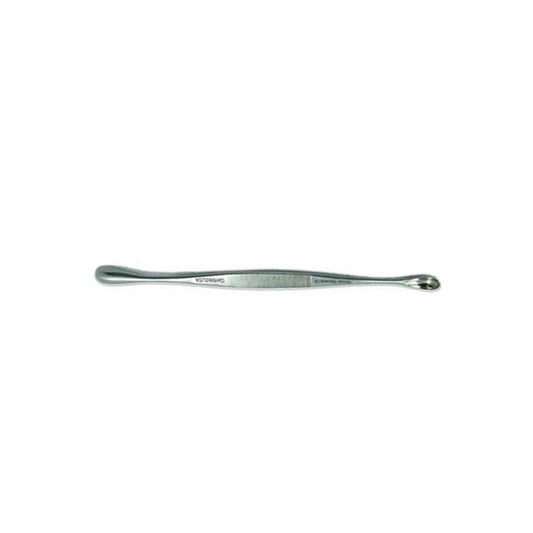
The second is shaft malleability. The duct does not run straight, and a rigid shaft cannot follow a curve it was not made for. Common Duct Scoop Malleable ($11.00) is bent by the surgeon to the anatomy in front of them, which lets the working end reach a stone beyond a bend without levering against the duct wall to get there. Every working surface on these patterns is blunt and polished for the same reason: nothing on a biliary instrument should have an edge.
Material, Reprocessing and Certification
Every pattern is manufactured from German stainless steel and passivated for corrosion resistance across repeated cycles. The inspection point is the rim and the shaft: run a gloved finger around the full circumference of the cup and confirm it is smooth and rounded, because a burr raised in reprocessing turns an atraumatic instrument into a sharp one against ductal mucosa. On malleable patterns, check the shaft for cracking at points where it has been bent repeatedly, since repeated cold working eventually fatigues the metal. Clean immediately with a neutral-pH enzymatic solution, brushing the inside of the cup where bile and debris collect, then rinse with deionised water and dry fully before autoclaving at 134°C.
These are Class I reusable devices, CE marked and built under ISO 13485, with a one-year warranty. We ship at MOQ 1 with free shipping over $99, and OEM production is available. See Surgical Forceps for gall duct and gall stone forceps patterns, or browse all Veterinary Surgical Instruments. Talk to us about OEM terms.
Our Gallbladder Surgical Instruments include