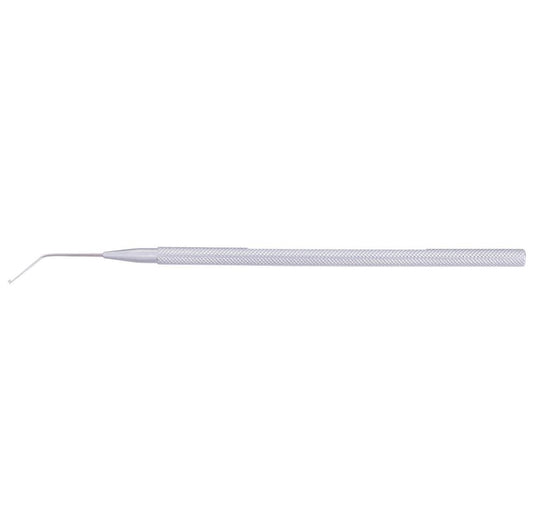
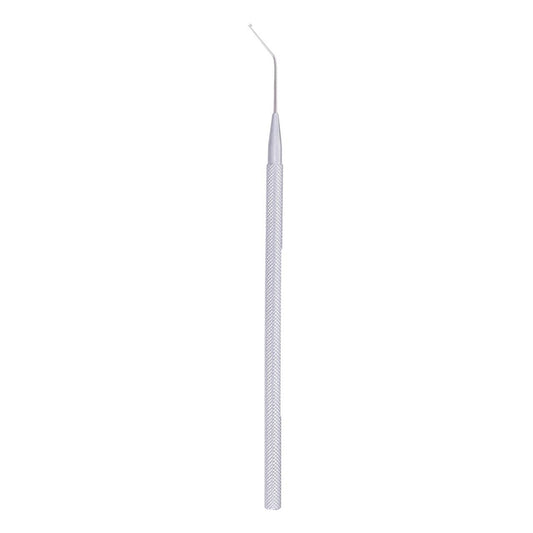
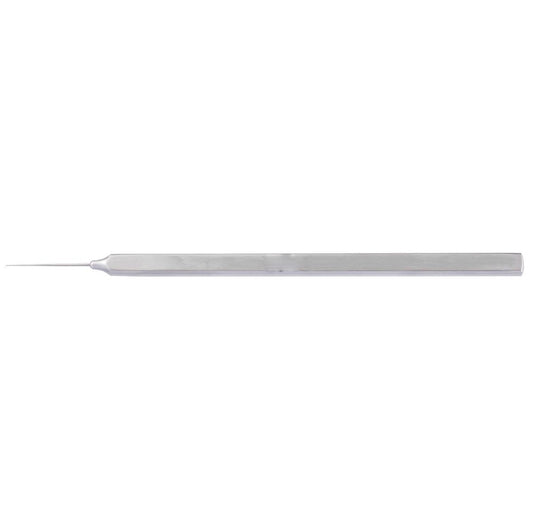
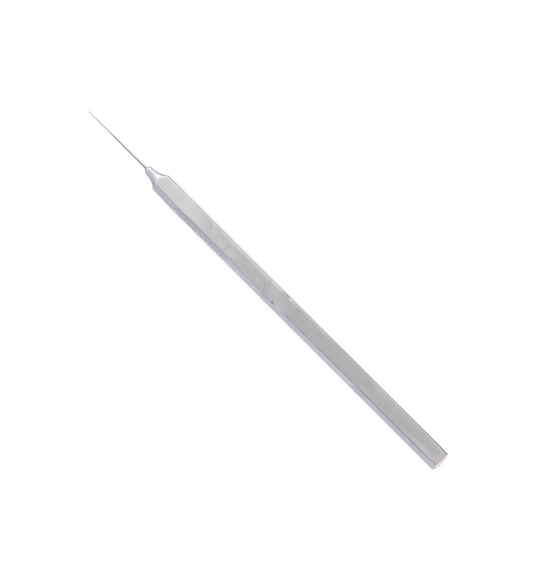
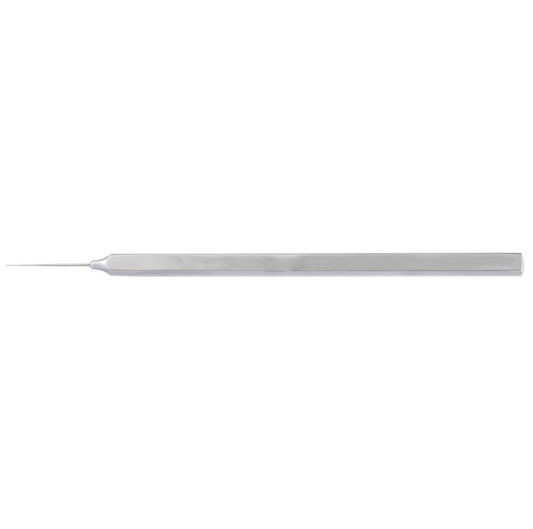
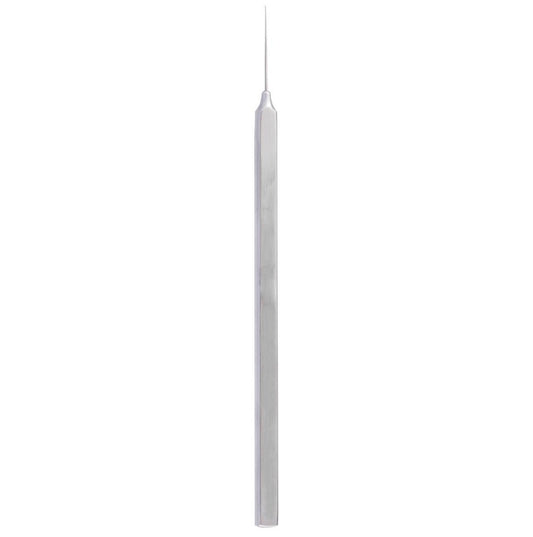
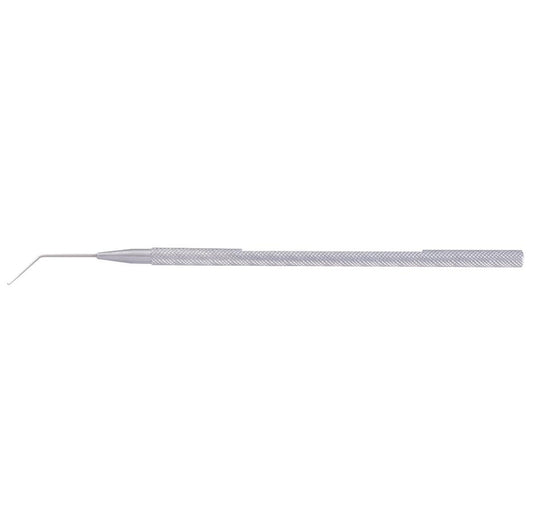
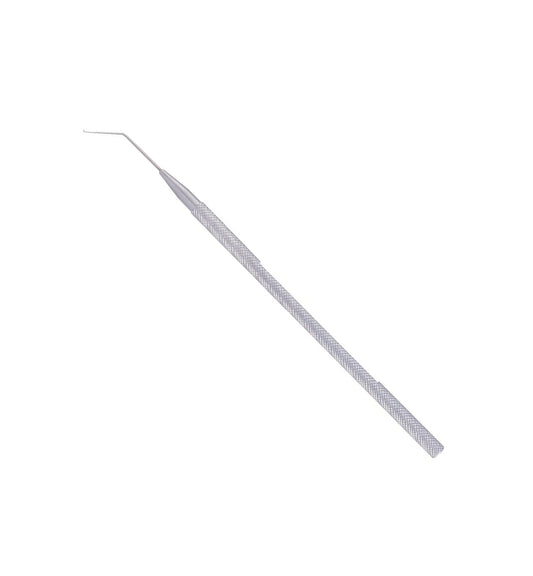
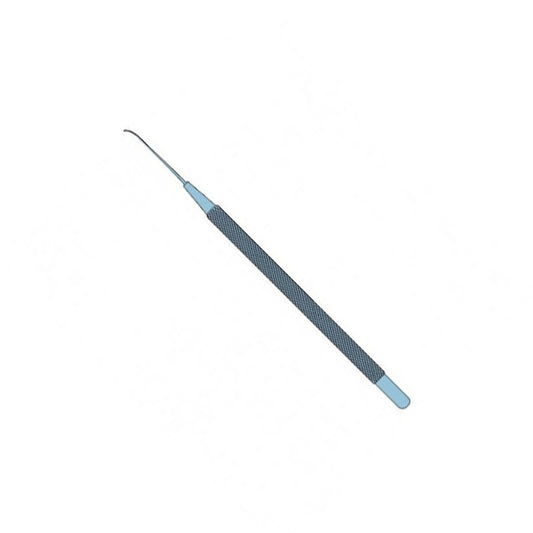
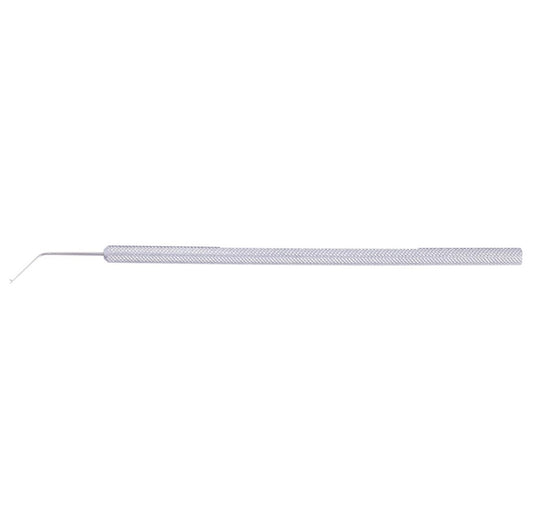
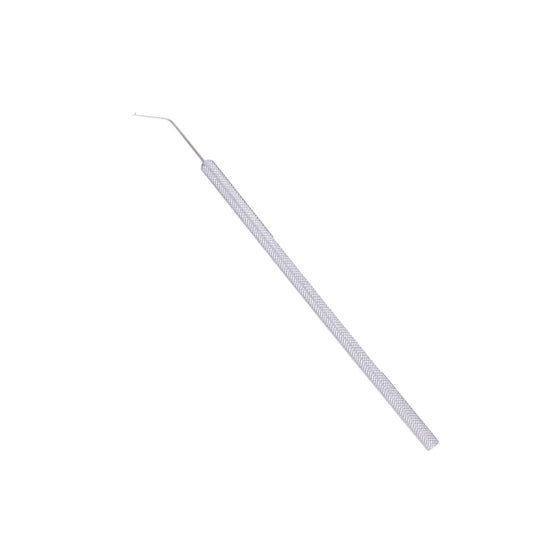
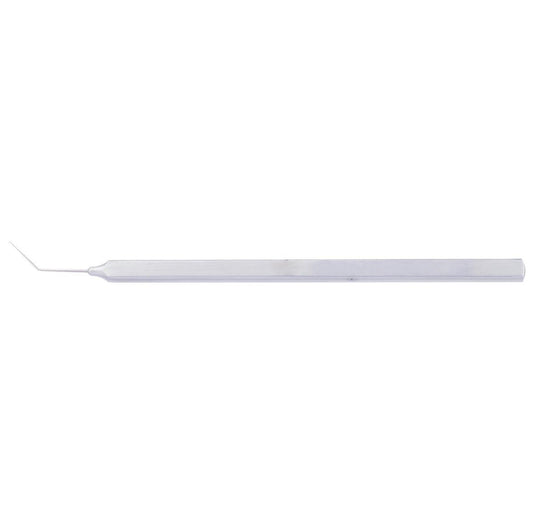
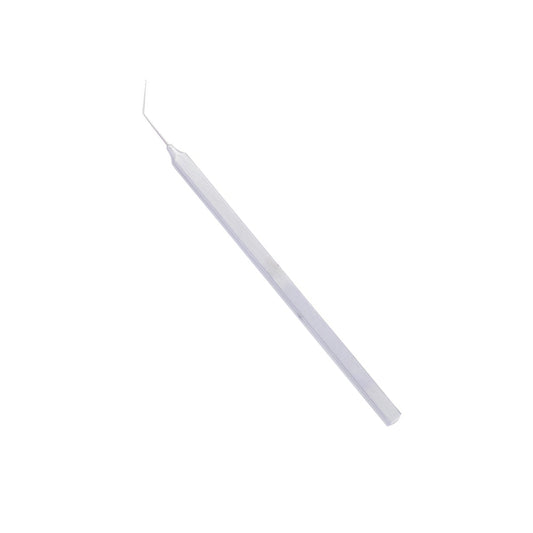
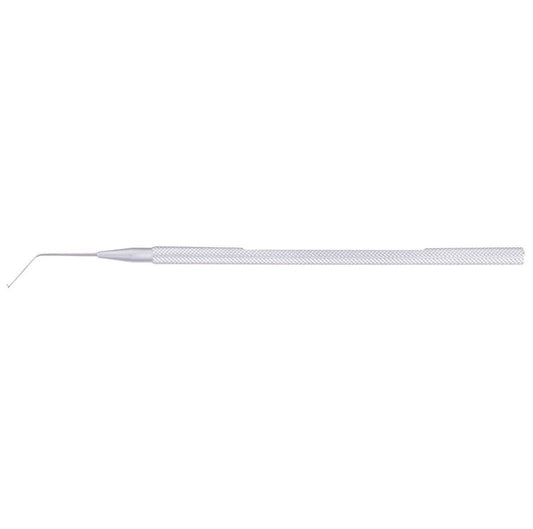
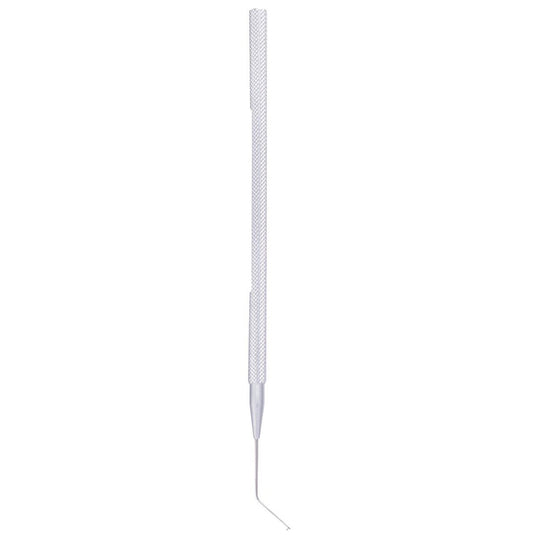
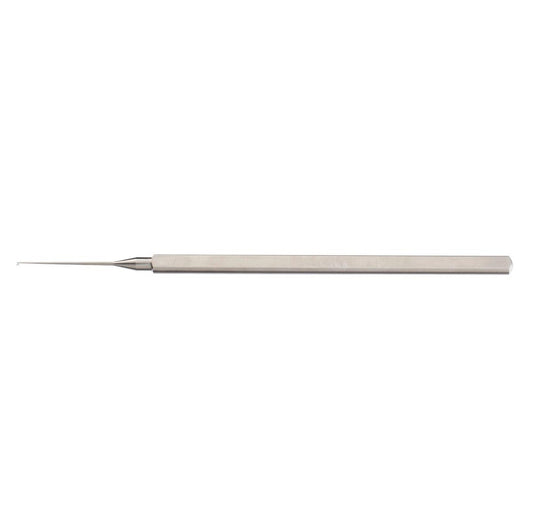
An IOL manipulator positions a lens rather than holding it. The implant is already inside the eye and already supported; what remains is to rotate it, centre it and seat its haptics, and that is done by pushing at points on the optic rather than by gripping anything. Peak Surgicals stocks nine lens hook and manipulator patterns, from $4.73, in German stainless steel and CE marked and built under ISO 13485. Compare the full range in the grid below.
Why Every Tip on This Page Is Blunt
The reason these instruments are blunt is the posterior capsule behind them. It is among the thinnest structures the surgeon will work against, and once it is torn the operation changes: vitreous can present, the lens may no longer sit where it was placed, and the procedure that was routine is no longer routine. An instrument working millimetres in front of that membrane cannot carry a point.
So the working end holds by shape instead. A blunt hook engages a positioning hole or the edge of the optic and pushes; a rounded manipulator tip presses on the optic surface without marking it. Neither grips, and neither needs to, because the lens is not being lifted or carried. It is being turned in a space where the whole task is to move something into position without touching what sits behind it. We supply every pattern at MOQ 1.
Hook or Rounded Tip?
Tip geometry separates the patterns and decides what each is used for. Sinskey Lens Manipulating Hooks (PS-9839, $4.73) and Sinskey II Lens Manipulating Hooks (PS-9841, $4.73) carry the angled blunt hook that engages a positioning hole to rotate an optic, and Sinskey Micro Lens Hook (PS-9837, $11.00) and Sinskey II Micro Lens Hook (PS-9838, $11.00) run the same principle on a finer tip for smaller incisions.
Kuglen Iris Hook and Lens Manipulators (from $4.95) combine iris retraction with lens positioning on one instrument, which suits a small pupil where both are needed in the same step. Lester IOL Manipulators (PS-9847, from $4.95) present a rounded manipulating tip for pressing on the optic rather than hooking it. Fenzl Micro Lens Insertion Hook (PS-9834, $11.00) is configured for guiding a lens through the incision, and Clayman Jaffe Lens Manipulating Hook (PS-9845, $11.00) completes the range.
Material, Reprocessing and Certification
Every pattern is forged from German stainless steel and passivated for corrosion resistance across repeated cycles. The inspection point is the tip under magnification, and on these instruments it is the whole of the inspection: run the tip across a gloved fingertip and it should slide rather than catch, because a hook that has developed any point at all is a hook that can engage a posterior capsule instead of an optic. Check the tip has not bent, since these shafts are fine enough to take a set from a single awkward withdrawal, and confirm the angle at the tip is unchanged. Clean immediately with a neutral-pH enzymatic solution, then rinse with deionised water and dry fully, following the reprocessing instructions supplied.
These are Class I reusable devices, supplied non-sterile, CE marked and built under ISO 13485, with a one-year warranty. We ship at MOQ 1 with free shipping over $99. See Ophthalmic Choppers and Manipulators for phaco chopping patterns, or browse all Ophthalmology Instruments.