


Orthopedic Instruments: Types, Names & Uses
Orthopedic surgery relies on a large family of specialized instruments, and many of them look alike at first glance. An osteotome and a chisel share a similar profile, a rongeur can be mistaken for a heavy forceps, and a bone curette resembles scoops used in other specialties. Knowing what each instrument is called, how to recognize it and what it is generally used for makes it easier to read instrument lists, build trays and order the right patterns.
This guide covers common orthopedic instruments with names, pictures and uses. It groups them by function, explains how instrument needs change from one procedure to another, and separates surgical instruments from implants and examination tools. One point applies throughout: there is no single universal orthopedic kit. The instruments on a tray depend on the procedure, the anatomy involved, the implant system in use and the surgical team's preferences.
What Are Orthopedic Instruments?
Orthopedic instruments are surgical tools designed to cut, shape, hold, expose, drill and measure bone and the surrounding tissue during musculoskeletal procedures. They are used in surgery on bones, joints, the spine, tendons and ligaments, and they are generally built heavier than soft-tissue instruments because bone resists far more force than skin or muscle.
It helps to separate three groups that are often mixed together:
- Handheld instruments such as osteotomes, rongeurs, retractors, elevators, curettes and hand drills, which are operated manually.
- Powered surgical devices such as electric or pneumatic drills, saws and reamers, which form a separate equipment category with their own operating and maintenance requirements.
- Implants such as plates, screws, nails and joint components, which are intended to remain in the body rather than perform a task and be removed.
Within each instrument type, the working end varies widely. The same basic tool can come in different widths, curves, angles, jaw shapes and lengths because bone size, surgical access and anatomy differ between procedures. Many patterns carry the name of the surgeon or instrument maker who designed or popularized them, which is why you will see names such as Hohmann, Luer and Verbrugge on instrument lists.
Common Orthopedic Instruments: Names, Pictures and Uses
The table below lists common orthopedic instruments that appear frequently on general trays, many of which you will find among our general orthopedic instruments. Functions are described in general terms only. How an instrument is used in a specific case always depends on the procedure and the manufacturer's instructions.
| Instrument | General function | How to identify it |
|---|---|---|
| Osteotome | Cuts and shapes bone, usually driven with a mallet | Flat straight or curved blade beveled on both sides to a central cutting edge |
| Orthopedic chisel | Shaves, trims and shapes bone surfaces | Flat blade beveled on one side only |
| Bone gouge | Carves curved channels and removes bone in strips | Blade with a curved, trough-shaped cross-section |
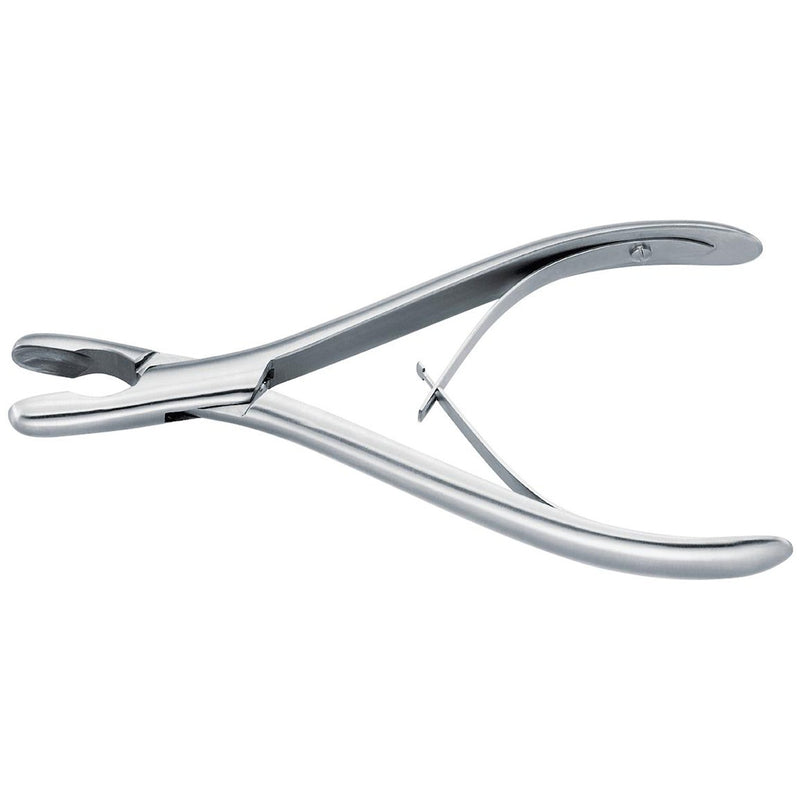
| Bone rongeur | Bites away small pieces of bone | Hinged handles with sharp, cup-shaped jaws; single-action or double-action joint |
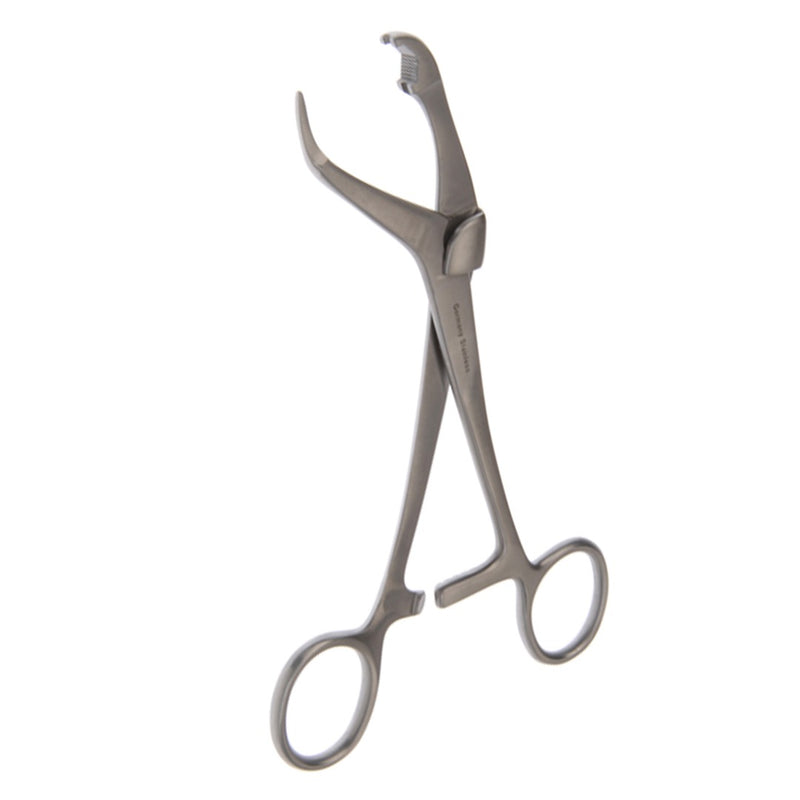
| Bone-holding forceps | Grasps and stabilizes bone or bone fragments | Heavy serrated, toothed or lion-jaw tips with a ratchet or speed-lock |
| Reduction forceps | Helps hold fracture fragments in their reduced position | Pointed or specially shaped tips, usually with a locking ratchet |
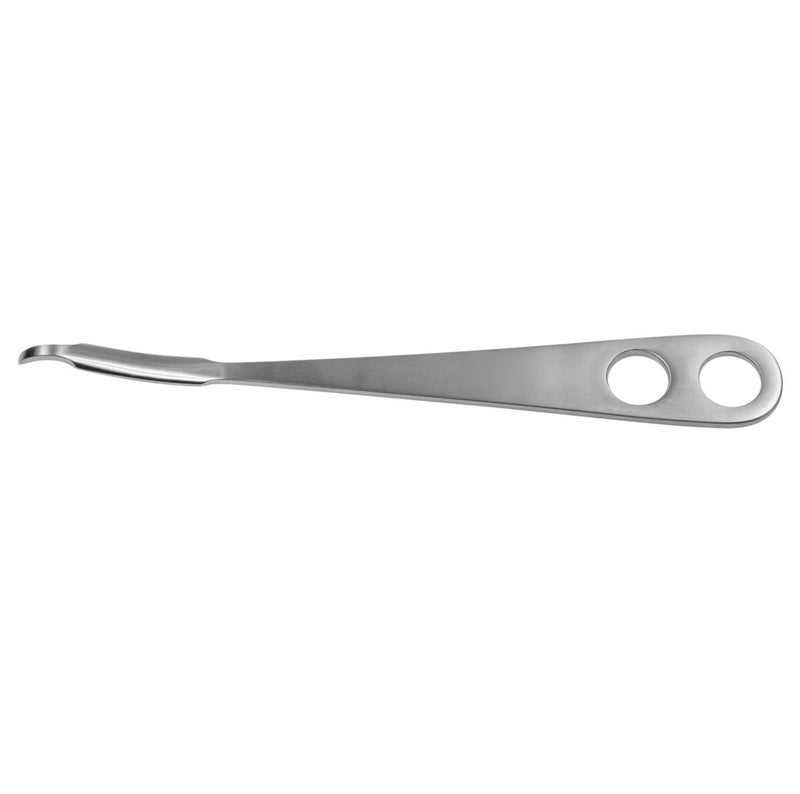
| Hohmann retractor | Retracts soft tissue around bone to expose the operative field | Broad blade tapering to a narrow, often hooked tip that sits around the bone |
| Periosteal elevator | Lifts the periosteum and attached tissue from the bone surface | Flat or slightly curved blade with a sharp or blunt edge on a sturdy handle |
| Bone curette | Scrapes and removes tissue or bone material from cavities and surfaces | Spoon- or cup-shaped working end with a sharpened rim |
| Bone rasp / file | Smooths and contours bone edges | Working surface covered with rows of teeth or a coarse cutting pattern |
| Bone saw | Cuts through bone | Toothed blade on a manual handle or frame, or a blade fitted to a powered unit |
| Orthopedic mallet | Delivers controlled impact to osteotomes, chisels and impactors | Weighted head with metal or polymer striking faces on a handle |
| Drill guide | Directs a drill bit along the intended path and shields nearby tissue | Sleeve or barrel with a defined internal diameter, often specific to one system |
| Depth gauge | Measures the depth of a drilled hole to help select screw length | Graduated scale with a sliding probe that usually ends in a small hook |
| Bone reamer | Enlarges or shapes a bone canal or cavity | Fluted cylindrical, tapered or spherical cutting head on a shaft or T-handle |
| Kirschner wire (K-wire) | Fixation or guide-wire component, not a hand instrument | Thin smooth or threaded metal wire with a pointed tip |
| Pin and wire cutter | Cuts K-wires and pins to length | Short, heavy cutting jaws paired with long handles for leverage |
Instrument names usually combine the instrument type, the pattern name and a size, for example "Hohmann retractor, 18 mm blade" or "Luer rongeur, curved." When two products share a type but differ in pattern, the working end is where the difference shows. That is why pictures and dimensions matter as much as the name itself.
K-wires need a separate note. They often appear on orthopedic tray lists, but they are fixation components rather than reusable hand instruments. Depending on the case, a K-wire may be removed during surgery, removed later or left in place, and it is handled under different rules from the instruments used to insert or cut it.
Many orthopedic trays also contain general surgical instruments such as scalpel handles, scissors, tissue forceps and needle holders. Those are covered in our guide to medical instrument names and uses. This article stays focused on the instruments that are specific to bone and joint work.
Types of Orthopedic Surgical Instruments
Grouping orthopedic surgical instruments by function is the most practical way to understand them. Most trays, whether general or procedure-specific, draw from the five groups below.
Bone Cutting and Shaping Instruments
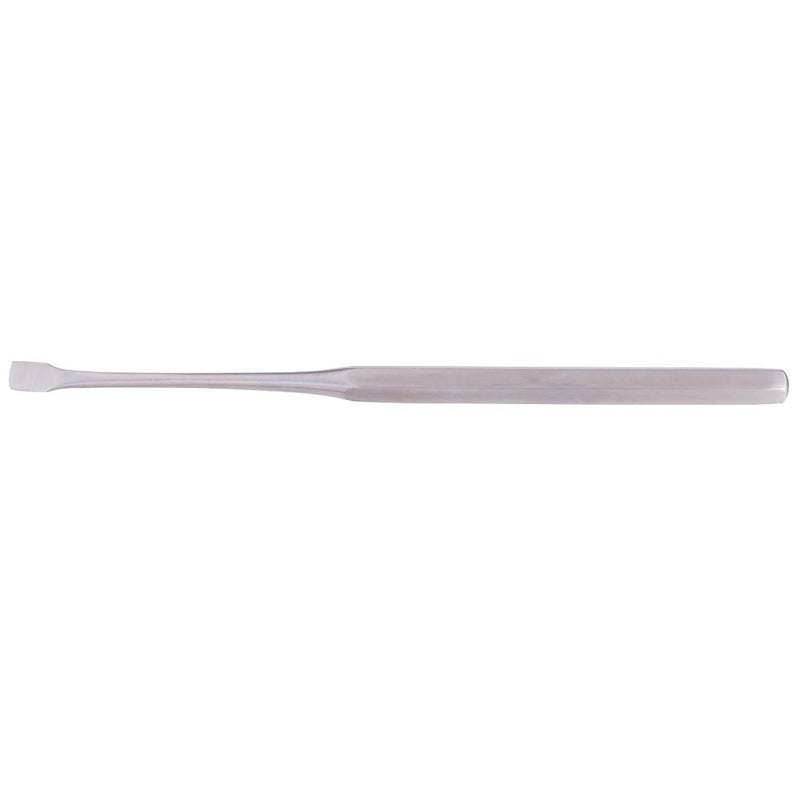
Cutting instruments fall into two broad groups. Osteotomes, chisels and gouges are typically driven with an orthopedic mallet, while rongeurs, rasps and manual saws work through hand pressure and leverage. A Hibbs osteotome, an Alexander bone chisel and an orthopedic gouge show how blade bevel and cross-section separate these three similar-looking tools.
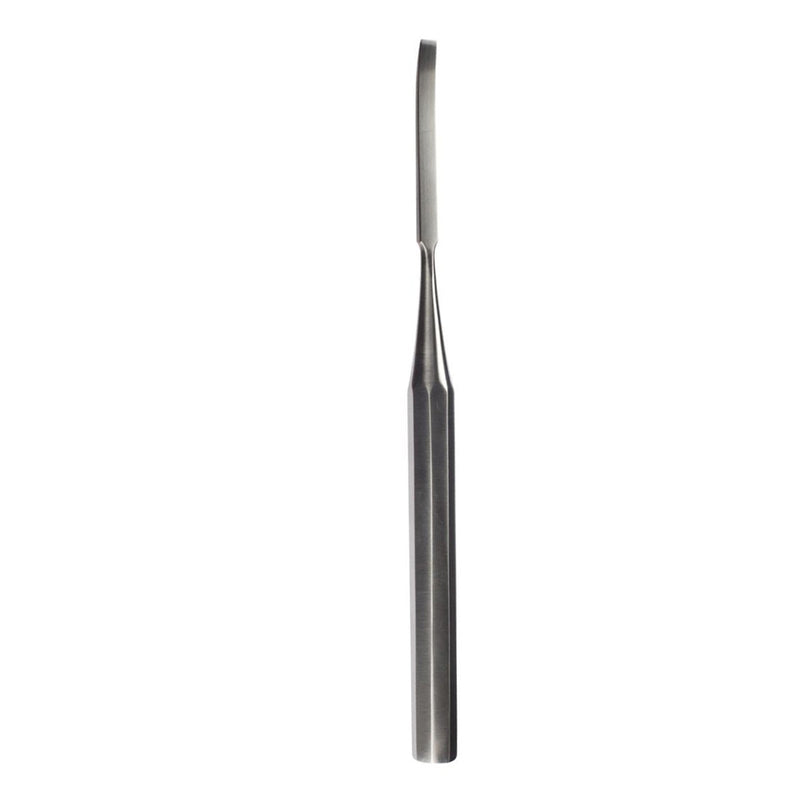
Rongeurs remove bone in small bites. Single-action rongeurs pivot on one hinge, while double-action patterns such as the Luer rongeur add a compound joint that increases cutting force. A Miller bone rasp smooths edges after cutting, and a manual instrument such as the Satterlee bone saw divides bone without a power source. Bone curettes, with their spoon-shaped ends, scrape material from cavities and surfaces. For a closer look at this group, see our article on orthopedic instruments used for bone removal.
Bone Holding and Reduction Instruments
Bone-holding forceps grip bone so it stays steady while other steps are carried out. Patterns differ mainly in jaw shape and locking mechanism. Verbrugge bone-holding forceps, for example, use a ratchet to keep their grip once closed. Reduction forceps and clamps have a related but different job: they help bring fracture fragments back into alignment and hold that position until fixation is in place. Some are sold as dedicated systems, such as a collinear reduction clamp instrument set.
Retractors and Elevators
Retractors hold soft tissue away so the bone can be seen and reached. The Hohmann retractor is one of the most recognizable orthopedic patterns, with a narrow tip that hooks around bone and a broad blade that levers tissue aside. Elevators work at the bone surface itself. A Key periosteal elevator has a flat blade for lifting the periosteum, while a broader Cobb elevator is often associated with spinal exposure.
Drilling, Reaming and Measuring Instruments
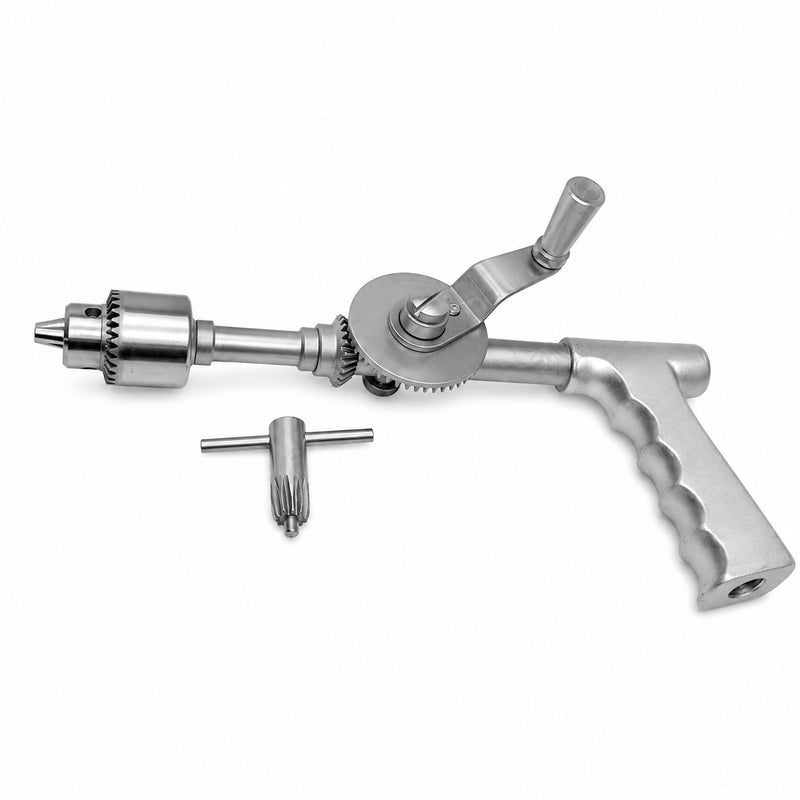
This group prepares bone to receive screws, pins or other components. Drilling can be done with powered units or with a manual instrument such as a universal open hand drill. Drill guides keep the bit on its intended path, and a depth gauge measures the drilled hole so the correct screw length can be selected. Reamers enlarge or shape bone; a hand instrument such as the Perthes bone reamer uses a T-handle for manual control.
Wire and Fixation-Related Instruments
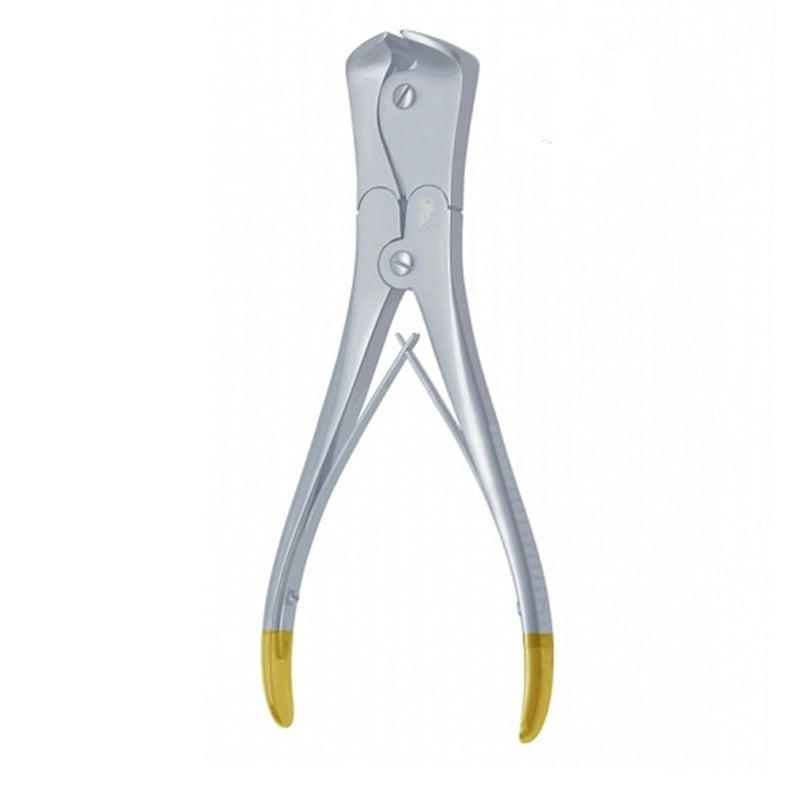
These instruments insert, adjust and finish fixation components. They include wire and pin cutters, wire-tightening instruments, pliers, screwdrivers, taps, countersinks and plate benders. A pin and wire cutter trims K-wires and pins to length. Compatibility is critical in this group: a screwdriver must match the screw head, a tap must match the screw thread, and many of these tools are designed for one specific implant system.
Orthopedic Instruments Used in Different Procedures
The instruments used in orthopedic surgery come from the same functional groups described above, but the mix, size and design of those instruments change with the procedure. The overview below is general and is not a description of surgical technique.
Fracture Fixation and Trauma Surgery
Trays for orthopedic trauma surgery lean heavily on bone-holding and reduction forceps, drills, drill guides, depth gauges, taps and screwdrivers, along with plate benders where plates are contoured. Many are organized into system-specific sets, such as mini fragment instrument sets and cannulated screw instrument sets.
Hip and Knee Replacement
Joint replacement uses retractors, saws, reamers, broaches, impactors and trial components. Much of this instrumentation is designed to match a particular implant system, so it is not interchangeable between systems.
Spine Surgery
Spinal procedures commonly call for Kerrison and pituitary rongeurs, Cobb elevators, curettes and specialized retractors. See our spine surgery instruments for typical patterns.
Hand and Foot Surgery
Small bones call for scaled-down versions of standard tools, such as mini osteotomes, small Hohmann retractors, fine rongeurs and small-diameter wire instruments. Exact sizing matters, so check dimensions rather than assuming any smaller pattern will do. Browse hand and foot surgery instruments and sets.
Arthroscopic and Minimally Invasive Procedures
Arthroscopy works through small portals with a camera, so its instruments are long and slender: probes, graspers, punches, cannulas and shavers. Other minimally invasive approaches follow a similar logic, using narrower instruments designed to work through smaller incisions, often matched to a specific access system. Explore our arthroscopy instruments, or read about common orthopedic procedures for more background.
Orthopedic Instruments vs Implants and Examination Tools
The phrase "orthopedic devices" is often used loosely, but it covers several distinct categories:
| Category | Examples | Role |
|---|---|---|
| Surgical instruments | Osteotomes, rongeurs, forceps, retractors, elevators | Perform surgical tasks; reusable ones are reprocessed between cases |
| Implants and fixation components | Bone plates, screws, intramedullary nails, joint components, K-wires | Intended to remain in the body, at least for a period of time |
| Powered surgical equipment | Surgical drills, saws and reamers | Perform powered cutting and drilling tasks |
| Examination tools | Goniometers, reflex hammers, measuring tapes | Support clinical assessment outside the operating room |
A goniometer, for example, measures a joint's range of motion during an examination; it has no role in cutting or holding bone. Likewise, a plate implanted for fixation is not the same thing as the reusable tool used to bend or position it. Keeping these groups separate avoids confusion when reading product specifications, writing purchase requests or organizing trays.
How to Identify and Select Orthopedic Instruments
When two instruments look similar, or when you are matching a replacement to an existing tray, check the following points:
- Name and pattern: the instrument type plus its pattern name, such as Hohmann or Luer.
- Intended use: the task and anatomy the pattern is designed for.
- Working-end geometry: blade width, bevel, curve, jaw shape, tip style and angle.
- Dimensions: overall length and working-end measurements, stated in both inches and millimeters where possible.
- Alignment and finish: jaws that meet evenly, joints that move smoothly and a finish suited to the setting.
- Material specification: the grade of stainless steel or other material, as stated by the manufacturer.
- System compatibility: whether the instrument must match a particular implant, screw size or accessory.
- Manufacturer documentation: product descriptions, dimensions and reprocessing instructions.
Photographs are useful for a first match, but a close-up of the jaws or blade can hide the overall length, hinge style and handle shape. Look at the full instrument profile alongside the working end, and compare stated dimensions against the instrument already in use. For repeat orders, a short record of each item's name, pattern, size and the department that uses it helps avoid ordering a similar but different pattern.
Stainless steel grades differ in hardness and corrosion resistance, so not every steel instrument behaves the same way. Our guide to surgical instrument alloys explains these differences, and our overview of types of surgical instruments places orthopedic tools in the wider context of surgical instrumentation.
Cleaning, Inspection and Reprocessing
Reusable orthopedic instruments must be reprocessed correctly before every clinical use, and the manufacturer's device-specific instructions for use (IFU) are the reference for how to do it. A few principles apply broadly:
- Cleaning comes before sterilization. Cleaning removes blood, bone fragments and other debris; sterilization is a separate step and cannot work properly on an instrument that has not been cleaned.
- Hinged instruments need extra attention. Rongeurs, forceps and cutters should be cleaned in the open position so debris does not stay trapped in joints and serrations.
- Multi-component and cannulated instruments may need to be disassembled or have their channels cleaned, where the IFU allows.
- Inspection is part of reprocessing. Check cutting edges for dullness or chips, jaws for alignment, joints for stiffness and all surfaces for cracks or corrosion.
Sterile status also needs to be confirmed rather than assumed. Peak Surgicals' reusable hand instruments are supplied non-sterile and must be cleaned and sterilized according to a validated process before first use; check the sterile status stated on each product listing. For a full walkthrough, see our complete guide to instrument cleaning, and for the differences between instrument types, read reusable vs disposable surgical instruments.
Frequently Asked Questions
What instruments do orthopedic surgeons use?
Orthopedic surgeons use instruments from five main groups: bone cutting and shaping tools such as osteotomes, chisels, rongeurs and saws; bone-holding and reduction forceps; retractors and periosteal elevators; drilling, reaming and measuring instruments; and wire and fixation-related tools such as cutters, screwdrivers and taps. The exact selection depends on the procedure.
What are examples of orthopedic devices?
"Orthopedic devices" can refer to surgical instruments, such as retractors and rongeurs; implants, such as bone plates, screws, nails and joint replacement components; powered equipment, such as surgical drills and saws; and external supports, such as braces. Each category has a different purpose and different handling requirements.
What instruments are used in an orthopedic examination?
An orthopedic examination typically uses simple assessment tools, such as a goniometer to measure range of motion, a reflex hammer and a measuring tape. These are separate from operating room instruments, which are designed for surgical tasks on bone and tissue.
Are orthopedic instruments reusable?
Most orthopedic hand instruments, such as osteotomes, rongeurs, forceps, retractors and elevators, are designed to be reused after cleaning, inspection and sterilization according to their IFU. Not every item is, though. K-wires, and some drill bits, saw blades and other cutting accessories, may be labeled single-use, and a single-use item should not be reprocessed just because it looks durable.
Are all orthopedic instruments used in every orthopedic procedure?
No. Each procedure calls for its own selection. A small-bone fracture fixation tray looks very different from a hip replacement tray or a spinal tray, and many instruments are specific to one implant system. That is why orthopedic instruments are usually organized into procedure-specific sets.
Conclusion
Identifying orthopedic instruments correctly comes down to four things: the name and pattern, the intended function, the working-end design and dimensions, and the manufacturer's documentation. With those in view, it becomes much easier to read tray lists, compare similar patterns and order the right replacement, whether you need a single instrument or a complete set. Peak Surgicals manufactures its instruments in Sialkot, Pakistan, and inspects them before dispatch; its reusable hand instruments are supplied non-sterile. To explore available patterns, browse our orthopedic instruments or view complete orthopedic instrument sets.