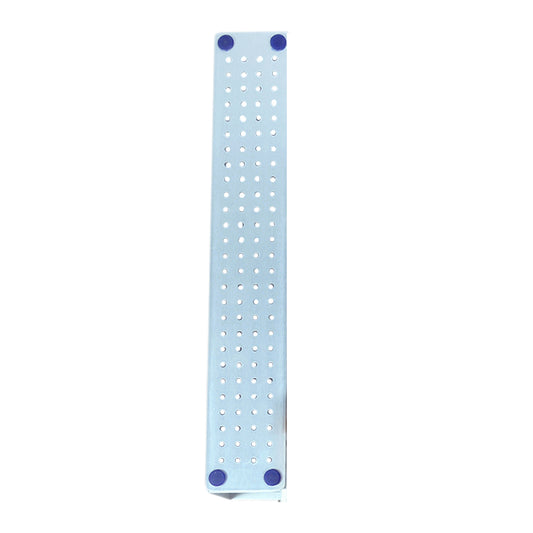
Orthopedic Fragment Sets for Internal Fixation
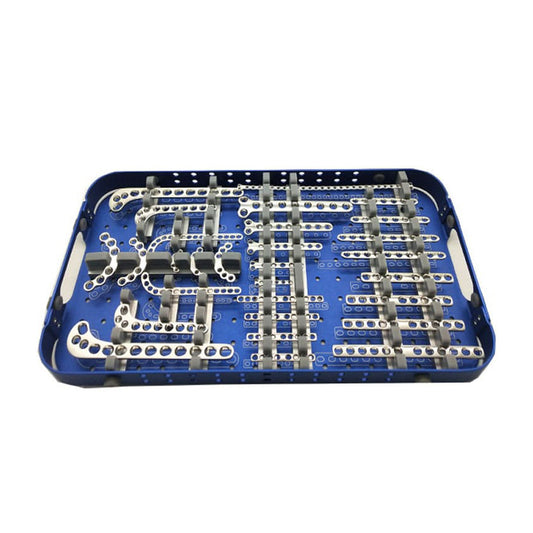
Orthopedic fragment sets are scaled to bone size, not procedure preference — screw diameter and plate profile follow the anatomy being fixed. Peak Surgicals supplies eleven fragment and fixation sets covering small, large and micro fracture fixation, distal radius, pelvic, rib and hip (DHS/DCS) systems, plus reduction and screw-removal instrumentation, from $605.00 to $1,430.00, each carrying a model number. Every set is CE marked and built under ISO 13485. Compare all sets in the grid above.
Small, Large or Micro: Which Fragment Set?
Small fragment sets handle radius, ulna, fibula and clavicle fixation in the 3.5mm screw range, large fragment sets address femur, tibia and humerus with 4.5mm cortical and 6.5mm cancellous screws, and micro plate sets cover hand, foot and facial bones where screws run 1.5mm to 2.7mm. Bone diameter sets the system, and using the wrong tier either leaves hardware prominent under thin skin or under-fixes a load-bearing bone.
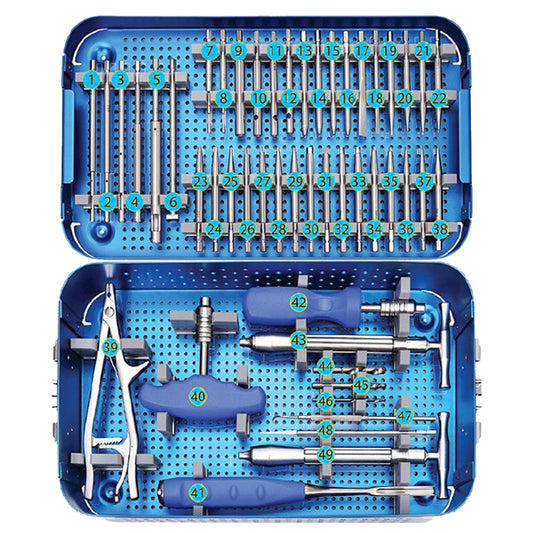
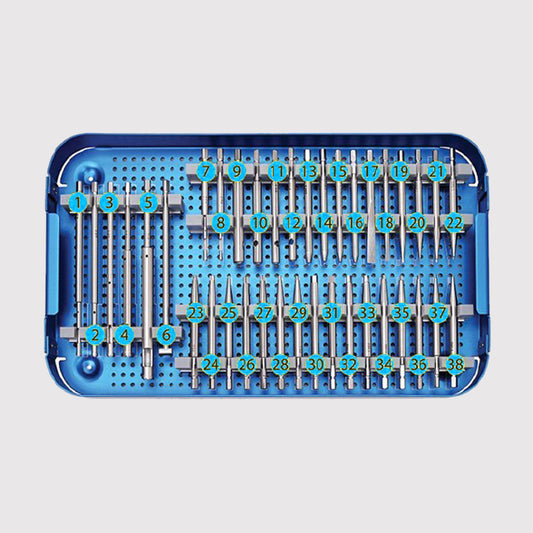
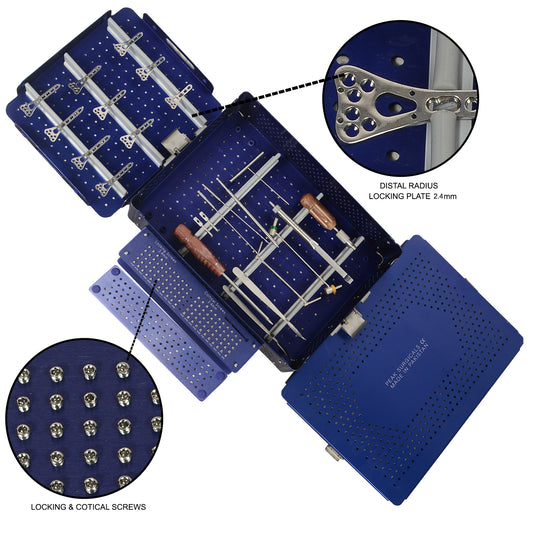
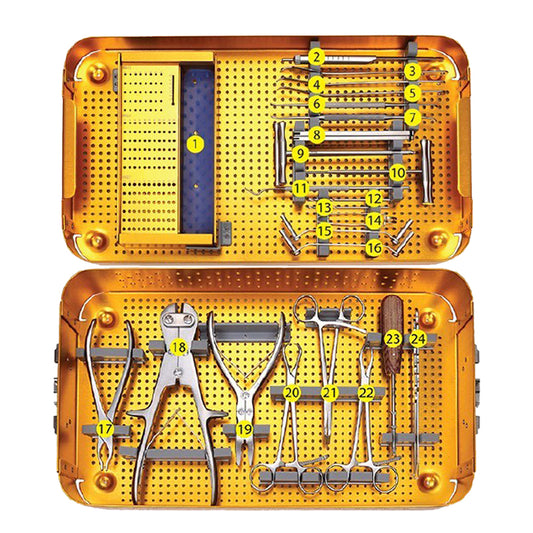
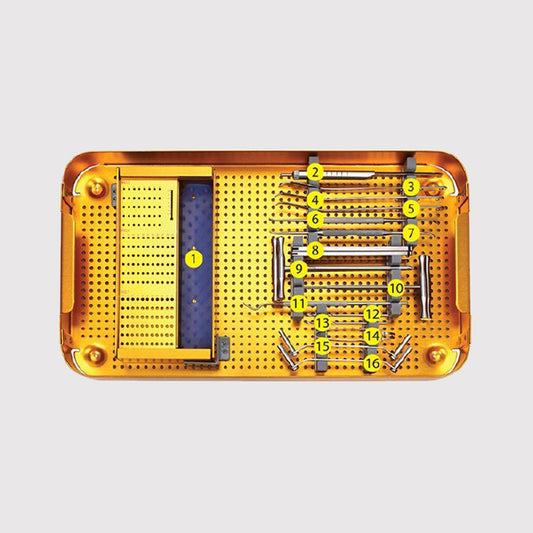
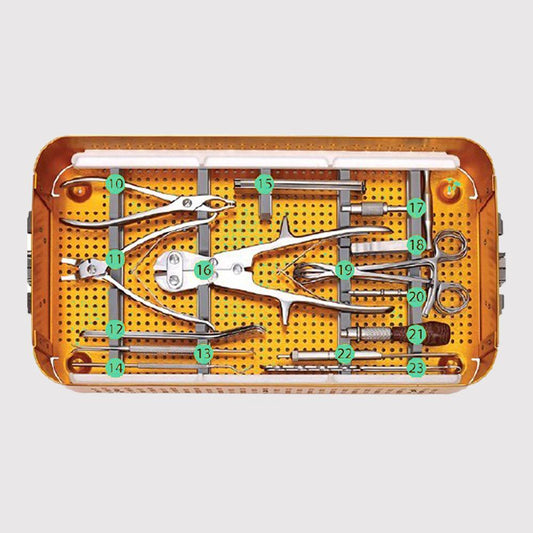
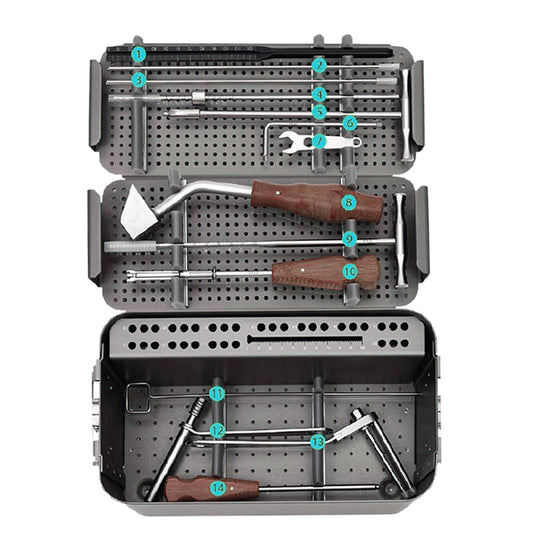
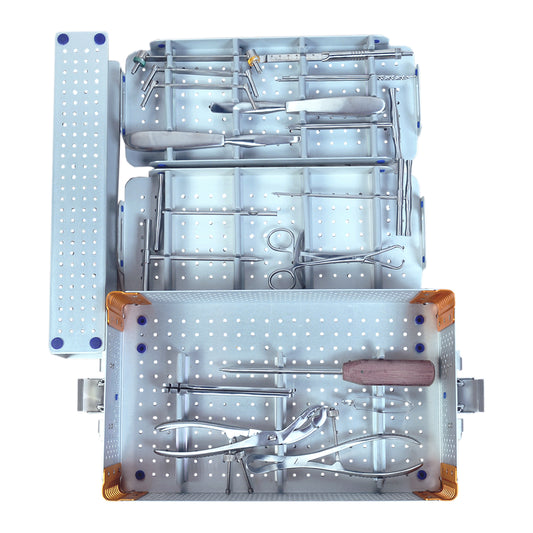
Orthopedic Small Fragment Set (PS-CSS-00100, from $605.00) is the entry point and the most-used tray in upper-limb trauma, narrow plates, matched taps, drill bits and depth gauges scaled for bones where precision matters more than mass. Large Fragment Instrument Set (PS-LFIS-00112, from $715.00) carries the heavier instrumentation for weight-bearing shafts. Micro Plate Instrument Set (PS-MPIS-00113, $880.00) works the confined anatomy of metacarpals, phalanges and facial fractures. For wrist-specific work, Distal Radius System 2.4mm (PS-DRS-0068, $768.90) is purpose-built rather than adapted. We supply every set at MOQ 1.
Site-Specific Systems: Pelvic, Hip and Rib
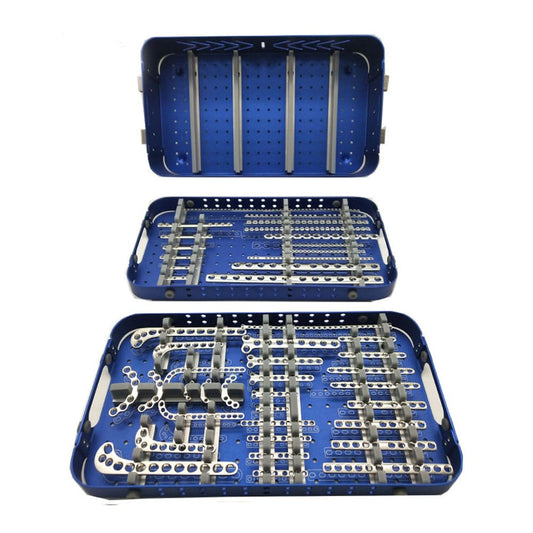
Beyond general bone-diameter sizing, several sets are built for a single anatomical site. Pelvic Reconstruction Plate Set ($1,100.00) covers acetabular and pelvic ring fixation. DHS and DCS Plate Instrument Set ($990.00) handles dynamic hip and condylar screw fixation for proximal and distal femur fractures. Rib Plate Instrument Set ($658.90) is sized for rib fixation in chest trauma and thoracic reconstruction. 6.5mm Cannulated Screw Instrument Set ($935.00) covers cannulated fixation across the hip, knee and ankle. For broader plating needs outside a single fragment tier, Bone Screw Locking Plates – Bone Plate Collection ($1,430.00) bundles 48 plates spanning 1.5mm to 3.5mm.
When hardware needs to come out rather than go in, the Surgical Screw Removal Set (from $1,100.00) is stocked separately from the fixation sets above, built around extraction rather than placement.
Reduction Before Fixation
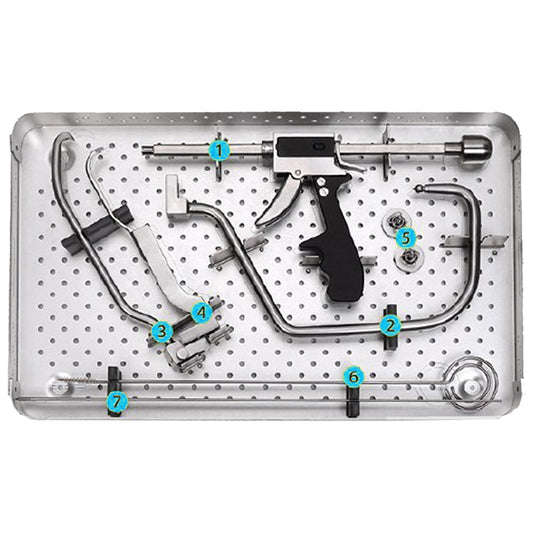
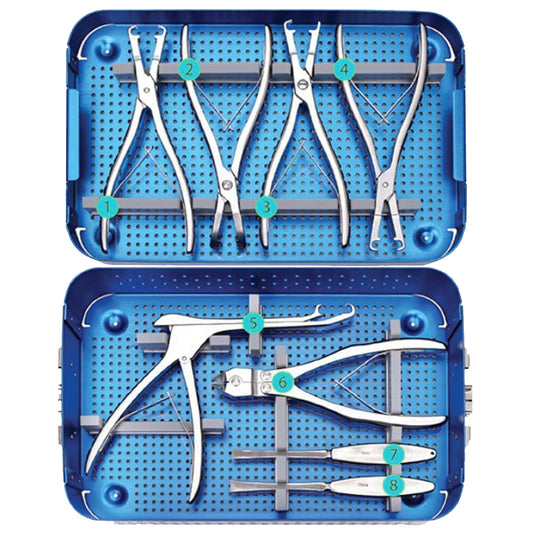
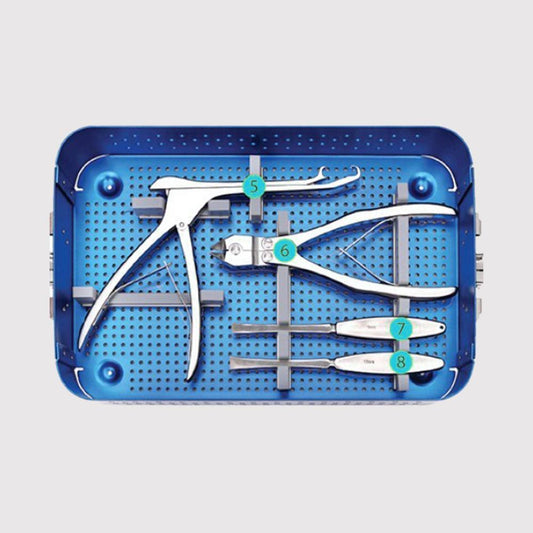
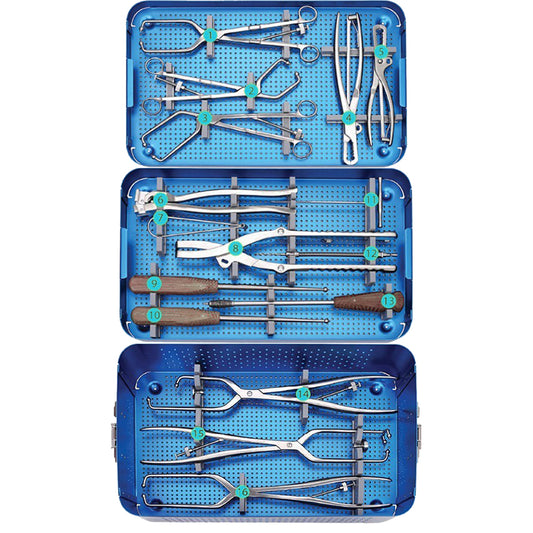
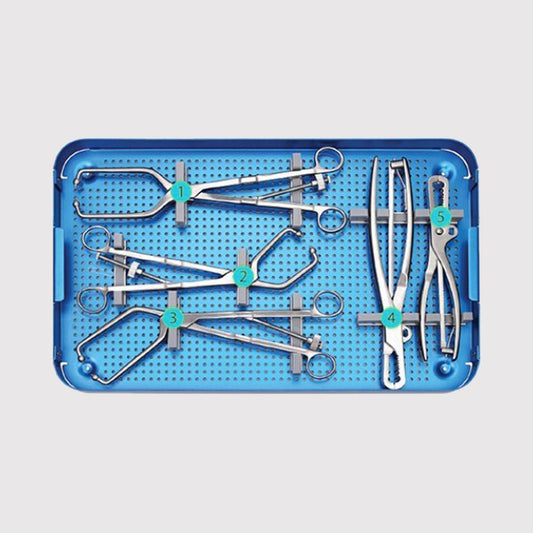
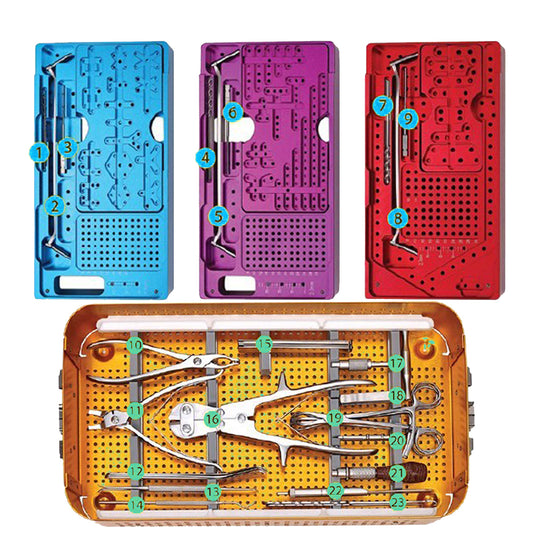
Fixation only holds what reduction has already aligned. The Collinear Reduction Clamp Instrument Set (PS-CRCIS-00110, $1,098.90) exists for that first step — collinear clamps apply compression along the axis of the bone rather than across it, which lets a surgeon close a fracture gap through a small incision without the clamp arms occupying the working field the way conventional reduction forceps do.
That matters most in percutaneous and minimally invasive plating, where the exposure is deliberately limited. Conventional bone-holding and reduction forceps grip from either side of the bone; the collinear design brings the force in line with the shaft, so the clamp sits low and out of the plate's path. It is the instrument that makes indirect reduction practical.
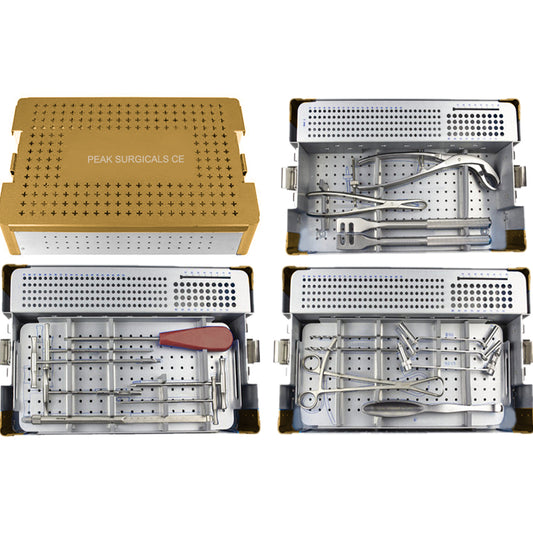
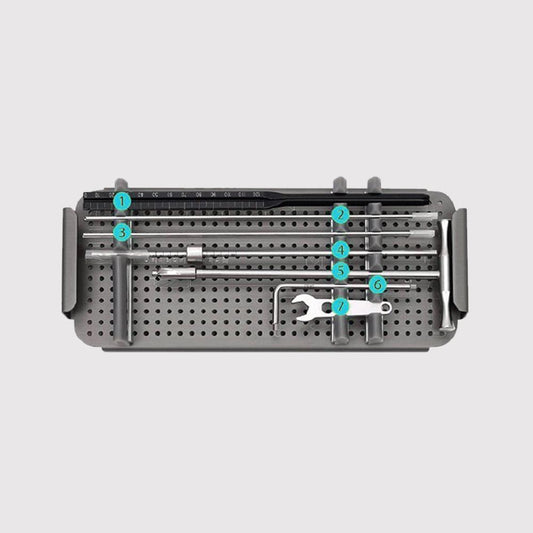
Each system arrives in a sterilization case sized for autoclave throughput, with instruments seated so a scrub tech can verify a complete tray before the case starts — the check that prevents an intraoperative gap when a specific tap or drill guide is missing.
Reprocessing, Tray Integrity and Certification
Instrument sets carry a reprocessing burden that single instruments do not: every item must be accounted for, cleaned individually, and returned to its seat. Cannulated instruments and drill guides need lumen brushing before ultrasonic cleaning, since bone debris packing a cannulation is not reached by immersion alone. Taps and drill bits are the wear items — inspect cutting flutes each cycle, because a dulled tap generates heat in cortical bone rather than cutting thread.
Every instrument is forged from German stainless steel, Class I, reusable, CE marked and built under ISO 13485 — the documentation a hospital supply team verifies before qualifying a vendor. Warranty is one year with return-and-replacement, MOQ is 1 piece, orders over $99 ship free, and OEM marking is available for distributors. Related systems sit in locking plate instrument sets and orthopedic instrument sets; browse all orthopedic instruments, or start from the Peak Surgicals homepage for the full catalog. Talk to us about OEM and volume terms.