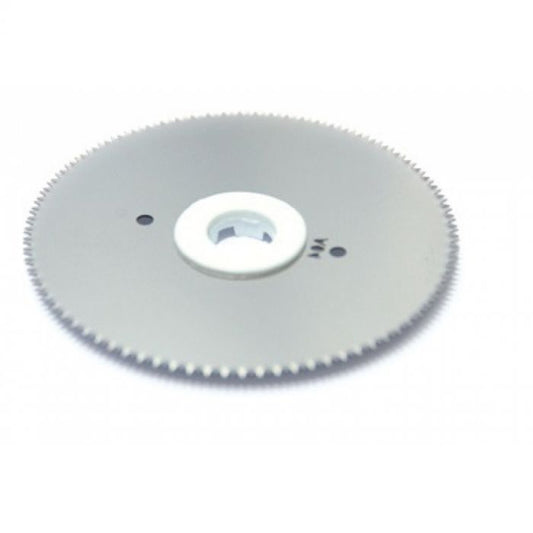
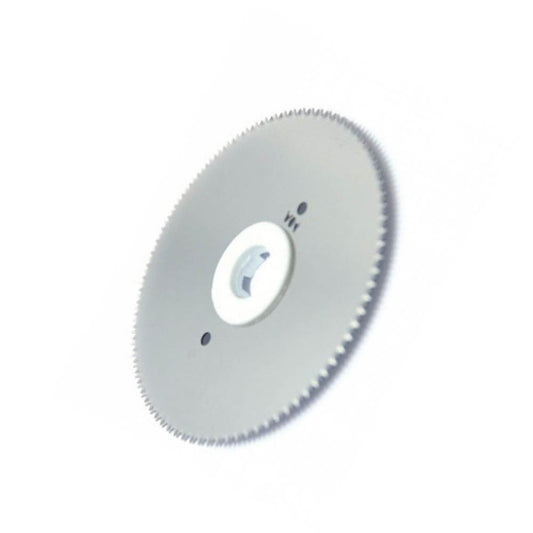
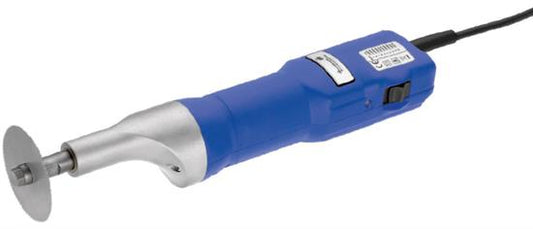
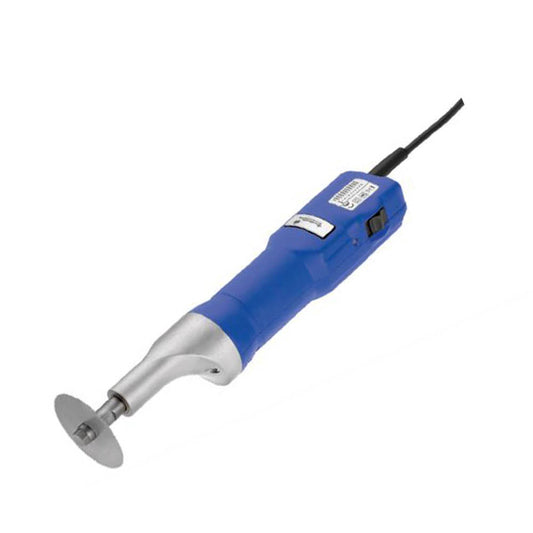
An electric plaster saw removes a cast with an oscillating blade that moves side to side at high frequency rather than spinning, so it cuts rigid plaster and fiberglass but stops at soft skin. Peak Surgicals supplies the Tiger 120V system and a PTFE-coated 2.56-inch blade, from $38.50 to $658.90. Both are CE marked and built under ISO 13485. See the system and blade in the grid below.
How an Oscillating Cast Saw Cuts Safely
An oscillating cast saw blade moves back and forth at high frequency rather than rotating, which lets it cut through rigid cast material while soft tissue moves with the blade instead of being cut the mechanism that makes cast removal safe against skin. A rotating blade would not make that distinction; the oscillation is the whole safety principle.
The Tiger Electric Plaster Saw 120V ($658.90) drives that oscillation through a handheld motor, cutting both plaster and fiberglass at the working speed the material needs — higher for fiberglass, lower near skin for control. The PTFE Coated Blue Core Saw Blade 2.56 inch (PS-8710, $38.50) is the consumable that does the cutting: the PTFE coating reduces friction and heat buildup against synthetic cast material, which matters because blade temperature is the real risk in cast removal, not the cutting edge. We supply both at MOQ 1.
Blade Temperature, Vacuum and Burn Prevention
The documented hazard in cast removal is heat, not laceration. Clinical testing on a standard cast saw found blade temperature climbing through repeated cuts, reaching burn-capable levels after roughly forty casts split without dust extraction which is why blade condition and cutting technique matter more than raw power. A blade run past its service life or held too long against one spot transfers heat to the skin beneath.
Two practices reduce that risk. The first is blade replacement on schedule: a worn blade cuts slower, stays in contact longer, and runs hotter, so a coated blade like the PTFE pattern is changed on wear rather than pushed. The second is dust extraction — a vacuum drawing cast debris away keeps the blade cooler and the field clear, and clinical guidance is to use extraction wherever possible to minimise burn risk. The blade lifts clear between cuts rather than dragging along the cast line.
Reprocessing, Compatibility and Certification
The blade is the wear item and the inspection point: check for missing or dulled teeth before each use, confirm it seats correctly on the arbor, and replace it on wear rather than running it to failure. The motor unit is wiped down rather than immersed, and blades are handled per the saw's reprocessing instructions. Confirm blade arbor compatibility before ordering, since a blade must match the saw's mount to seat safely.
Both items are CE marked and built under ISO 13485 — the documentation a hospital supply team verifies before qualifying a vendor. Warranty is one year with return-and-replacement, MOQ is 1 piece, orders over $99 ship free in carton box packing, and OEM marking is available for distributors. For the manual cast-room instruments, see plaster shears and plaster spreaders; browse the full bandage and plaster cast range. Talk to us about OEM and volume terms.