Ear Instruments for Otology and Middle Ear Procedures
Ear instruments work through a canal a few millimetres wide, so every pattern here trades bulk for reach and visibility. Peak Surgicals supplies alligator forceps, curettes, specula, hooks, rongeurs and micro scissors in German stainless steel, from $27.50 to $245.30. Each is CE marked and built under ISO 13485. Compare all patterns in the grid below.
Which Ear Instrument for Which Procedure?
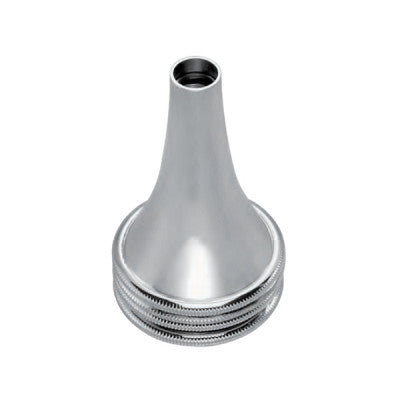
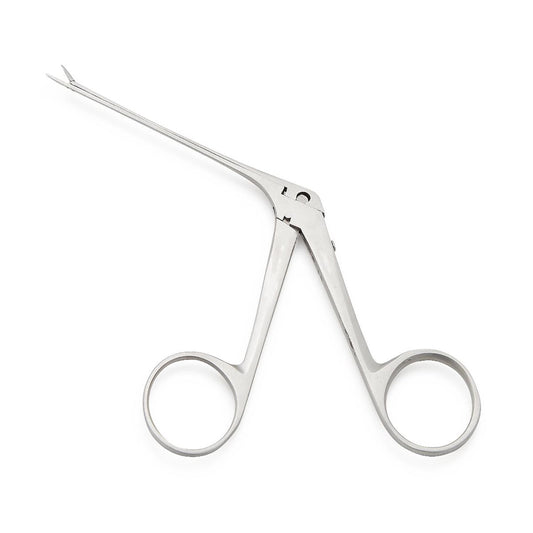
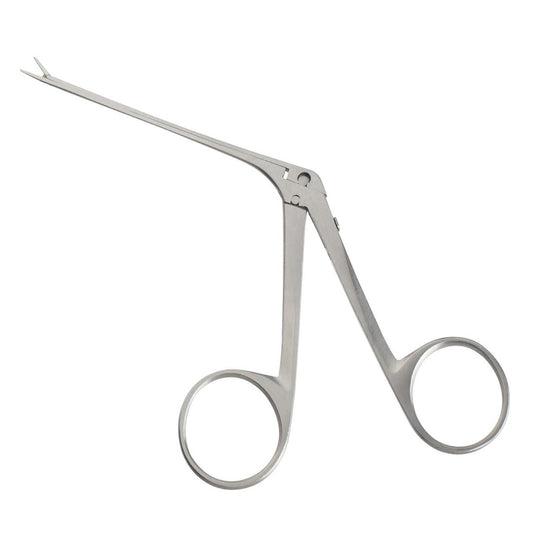
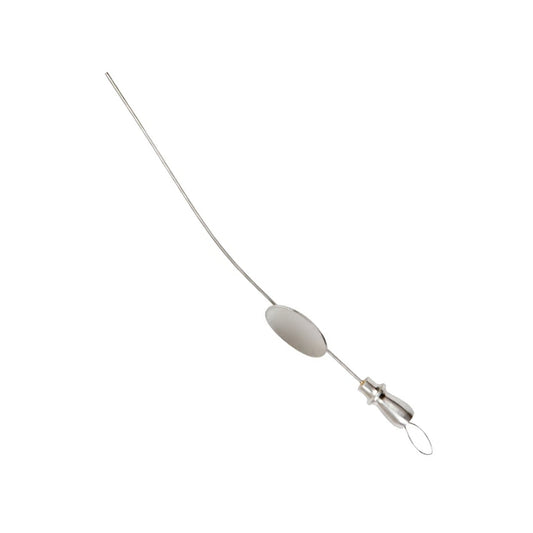
Alligator forceps grasp and withdraw foreign bodies or tissue from the ear canal, Buck curettes scoop cerumen and debris under direct vision, ear specula hold the canal open, and Bellucci micro scissors divide tissue inside the middle ear. The canal dictates the choice, its diameter limits what fits, and its depth limits what the clinician can see past.
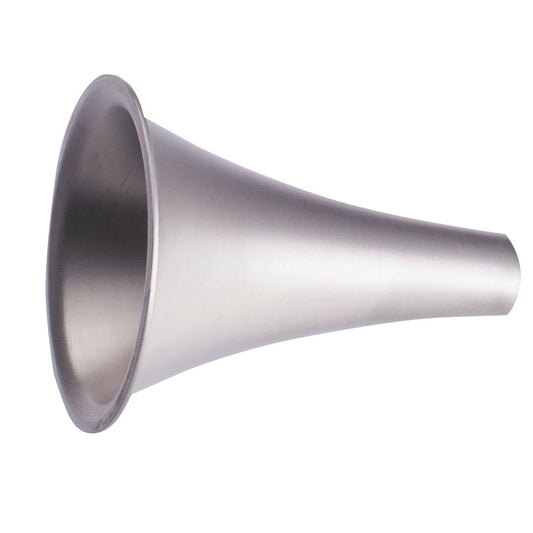
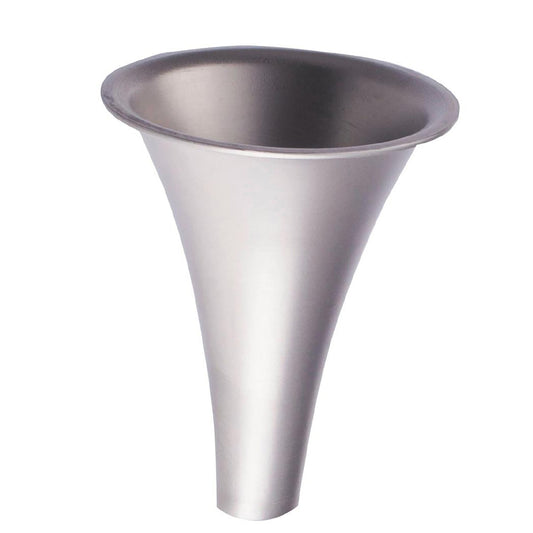
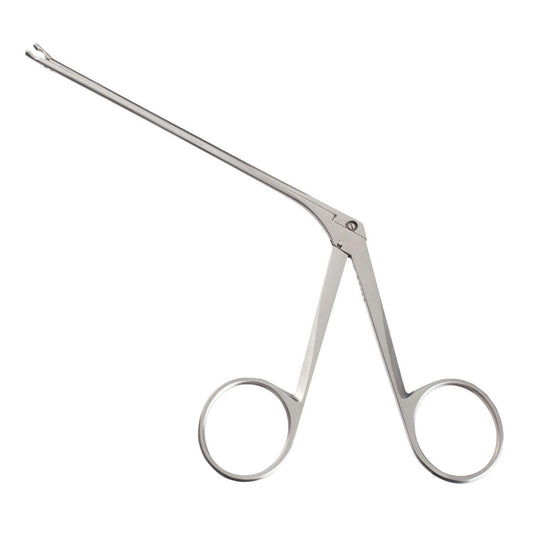
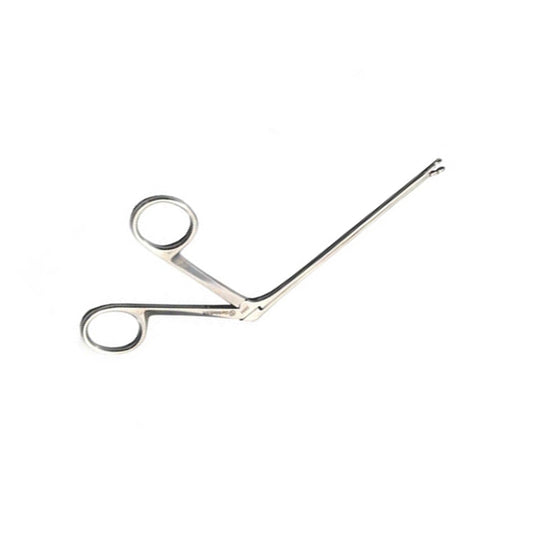
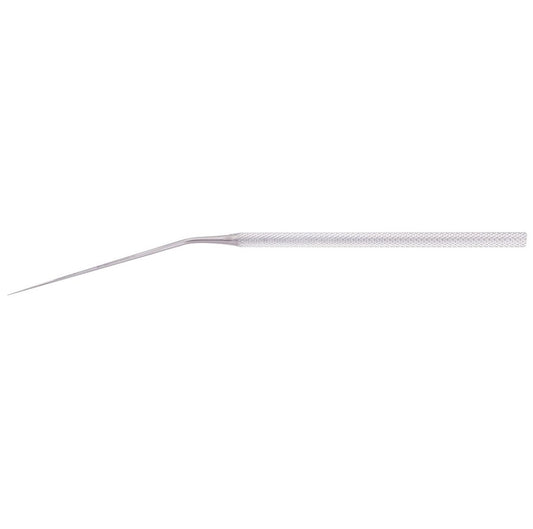
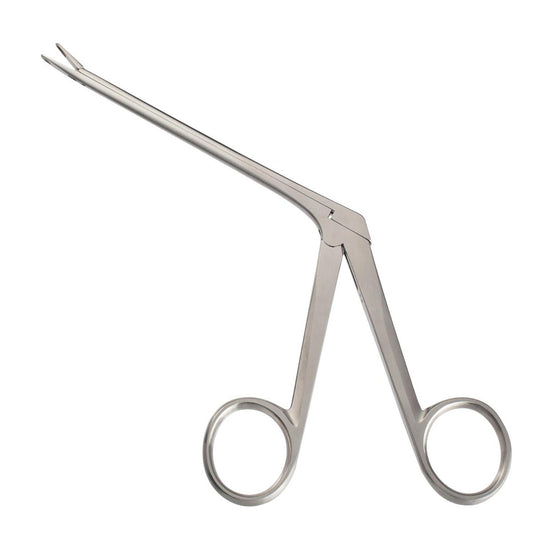
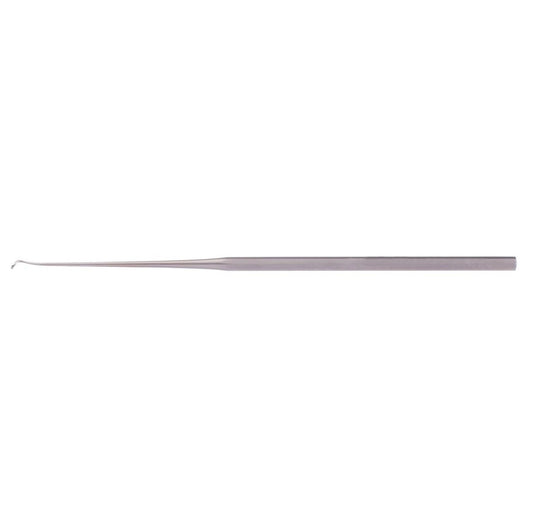
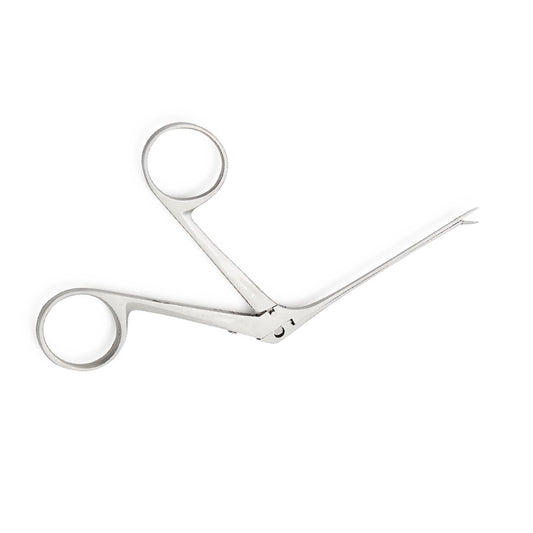
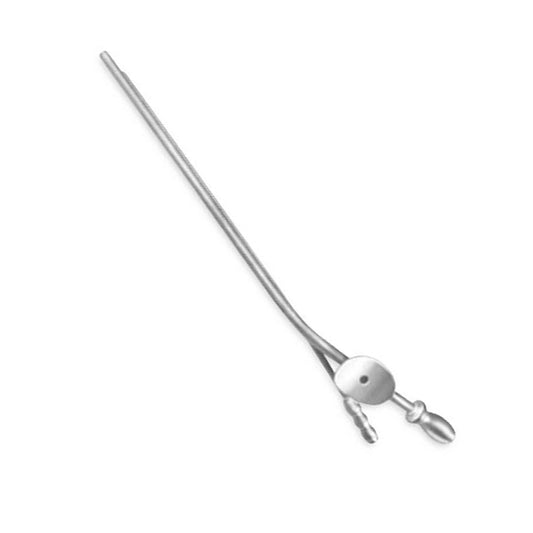
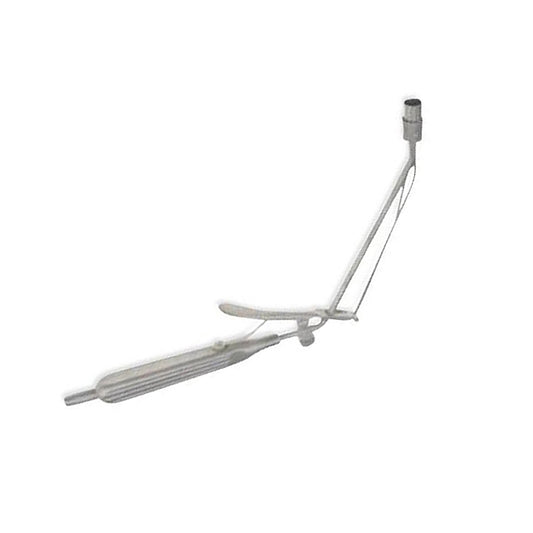
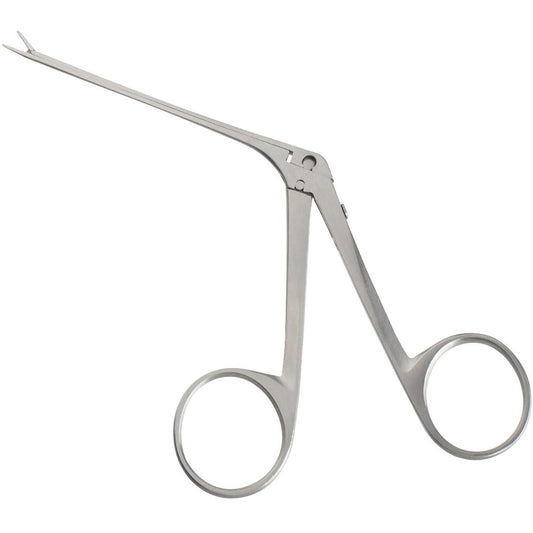
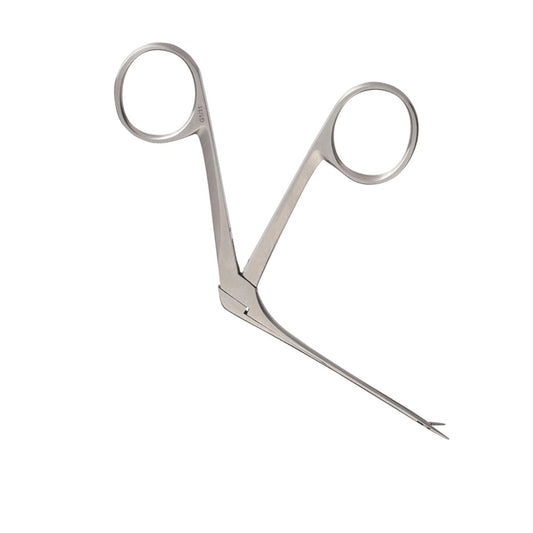
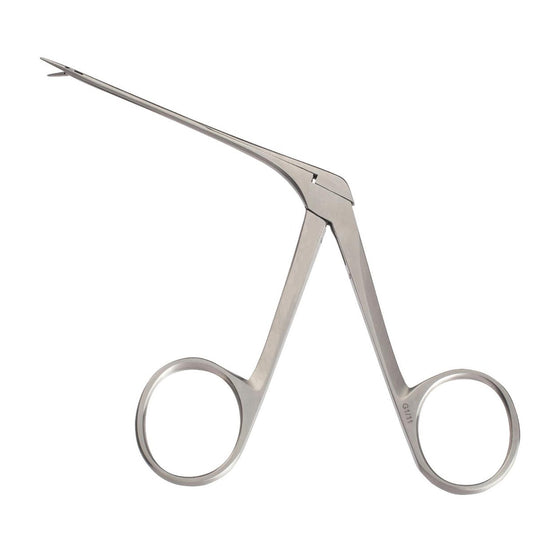
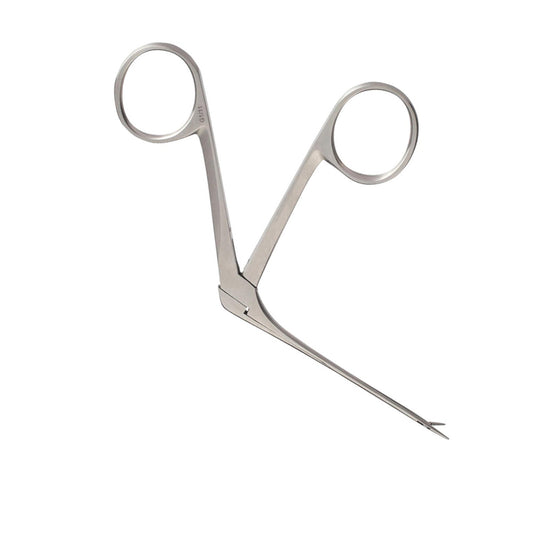
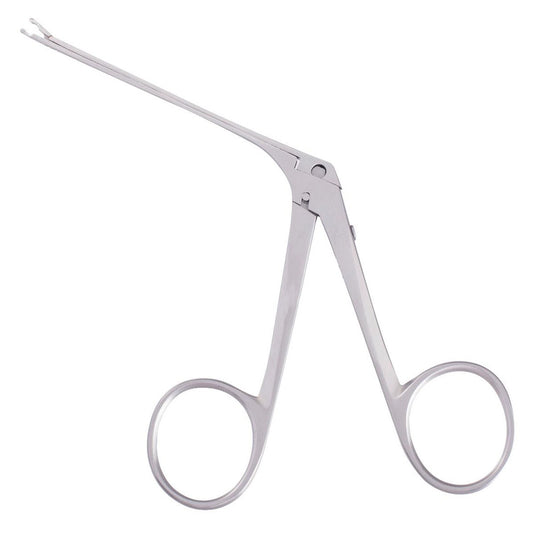
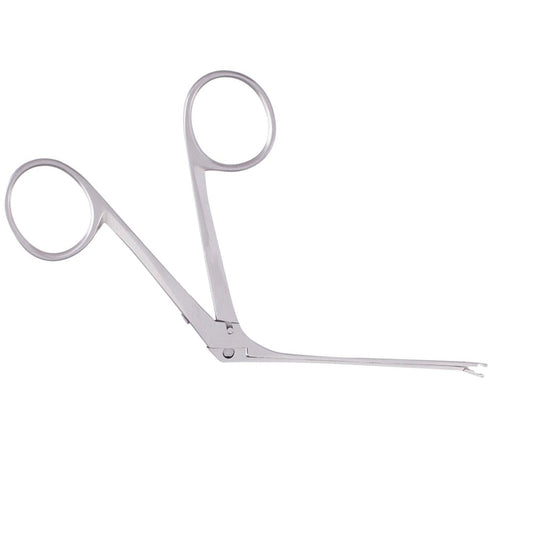
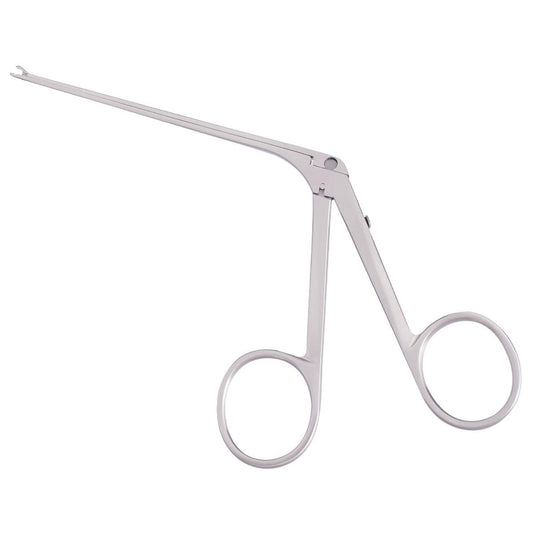
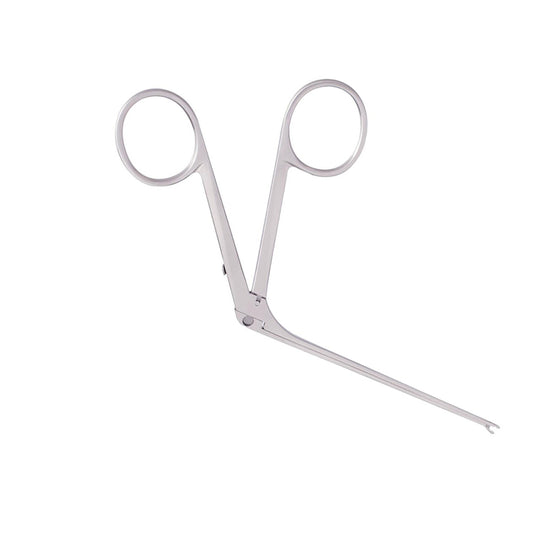
For retrieval, the Micro Alligator Ear Forceps ($61.60) and Hartman Noyes Ear Forceps ($110.00, PS-VS-0042) carry serrated alligator jaws on a slim shaft, so the working tip opens deep in the canal while the finger rings stay outside it. Alligator Forceps with Ratchet ($231.00, PS-VS-0049) hold grip through myringotomy work without continuous finger pressure. For cerumen and debris, the Buck Ear Curette 5¾" ($41.80) delivers a blunt straight loop, while Day Ear Hooks (from $27.50) work behind an object a curette would push deeper. Ear Specula (from $38.50) open the canal for all of it. We supply each at MOQ 1.
Bayonet, Alligator and Curette Geometry
Three geometries solve the same problem — see past your own hand. The bayonet shank steps the instrument sideways so the shaft clears the sightline down the canal; Jansen Bayonet Forceps 7½" ($57.20) and Lucae Forceps 5½" ($46.20, PS-VS-0045) both use it, at different working lengths for different depths.
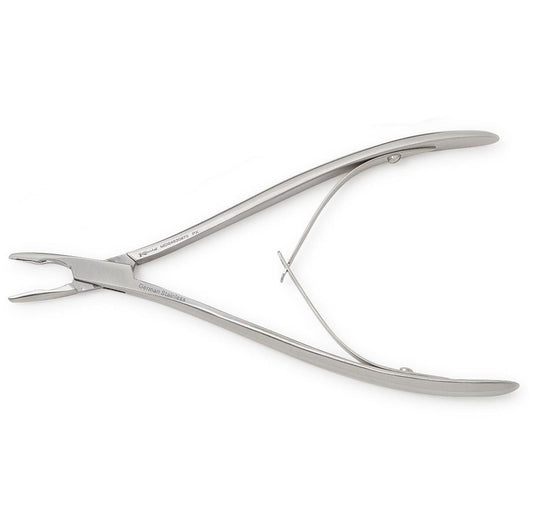
The alligator mechanism separates jaw action from shaft position: the finger rings sit outside the canal and a linkage runs down the shaft to open a jaw only millimetres wide. That is what makes retrieval possible in a space too narrow for a conventional forceps hinge. Curettes work differently again, a blunt loop or cup is drawn back along the canal wall, scooping rather than grasping, so cerumen is removed without pressing it against the tympanic membrane. For bone work, Bane Mastoid Rongeur Curved 7" ($165.00, PS-VS-0046) and Beyer Stille Rongeur 7" ($110.00) carry a 4×15mm bite for mastoid access, and the Volkman Curette ($70.40) handles double-ended bone curettage.
Material, Reprocessing and Certification
These ENT ear instruments are forged from German stainless steel, corrosion-resistant across repeated steam autoclave cycles and holding tip alignment where a softer instrument would splay. Alligator jaws are the reprocessing point that matters: the shaft linkage traps debris, so ultrasonic cleaning before autoclaving is what keeps the jaw action from stiffening. Micro tips need protectors in a mixed tray, since a bent alligator jaw no longer meets.
Every instrument is Class I, reusable, CE marked and built under ISO 13485, the documentation a hospital supply team verifies before qualifying a vendor. Warranty is one year with return-and-replacement, MOQ is 1 piece, and orders over $99 ship free in carton box packing. OEM marking is available for distributors. For narrower ranges, see aural forceps, ENT curettes and middle ear instruments, or browse all ENT instruments. Talk to us about OEM and volume terms.
Frequently Asked Questions
What is an alligator forceps used for in ear surgery?
An alligator forceps is used to grasp and withdraw foreign bodies, tissue, or debris from the ear canal. Its hinged jaw sits at the tip of a slim shaft, controlled by a linkage running back to the finger rings, which lets the working end open inside a canal too narrow for a conventional forceps hinge.
What's the difference between an ear curette and alligator forceps?
A curette removes cerumen or debris by scooping along the canal wall with a blunt loop or cup, without grasping. An alligator forceps grasps and lifts an object out directly. Curettes are generally preferred for wax removal, since they don't risk pressing debris against the eardrum the way a grasping motion might.
What size ear specula do I need?
Ear specula are sized to the ear canal diameter being examined — smaller sizes for infant and pediatric canals, larger sizes for adult examination. Most collections, including patterns like the Farrior specula, cover a size range (e.g. 3mm to 8.5mm) in a single set so the clinician can match the speculum to the patient during the same exam.
What is a bayonet-shaped ear instrument for?
The bayonet shank steps the instrument's shaft sideways, clearing it from the clinician's direct line of sight down the ear canal. This geometry is common in ear forceps used for deeper canal work, where an in-line shaft would otherwise block the view.
Can these ear instruments be used for foreign body removal?
Yes — alligator forceps and cup forceps are the standard instruments for retrieving foreign bodies from the ear canal, chosen based on the object's size and position and the canal's diameter.
Are these ear instruments reusable or single-use?
These are reusable German stainless steel instruments, CE marked and built under ISO 13485 for repeated steam autoclave sterilization, rather than single-use disposables.
Our Top Selling Products:
Kerrison Rongeur Forceps for 3-6mm Spinal Lamina Bone Removal | Lateral Distal Femur Safety Lock Plate | Deep Gelpi Retractors | Olecranon Safety Lock Plate 3.5 | Tearse Meibum Expressor Forceps | FUE Serrated Punch 0.9mm | Formby Suction Tube Angled | Safety Lock Duraline Distal Radius Kopis Plate 2.4mm | Variable Angle Safety Lock Anterolateral Distal Tibia Plate 2.73.5mm | Variable Angle Safety Lock Lateral Distal Fibula Plate 2.7mm