DHS / DCS & Pediatric Implants
DHS (Dynamic Hip Screw) and DCS (Dynamic Condylar Screw) systems share the same core mechanism: a lag screw that slides within a barrel fixed to a side plate, allowing controlled compression at the fracture site as the patient bears weight, rather than holding the fragments rigidly fixed. A DHS system is angled for proximal femur fractures — femoral neck and intertrochanteric fractures — while a DCS system uses a different angle (typically 95°) suited to distal femoral and supracondylar fractures.
What's in This Collection
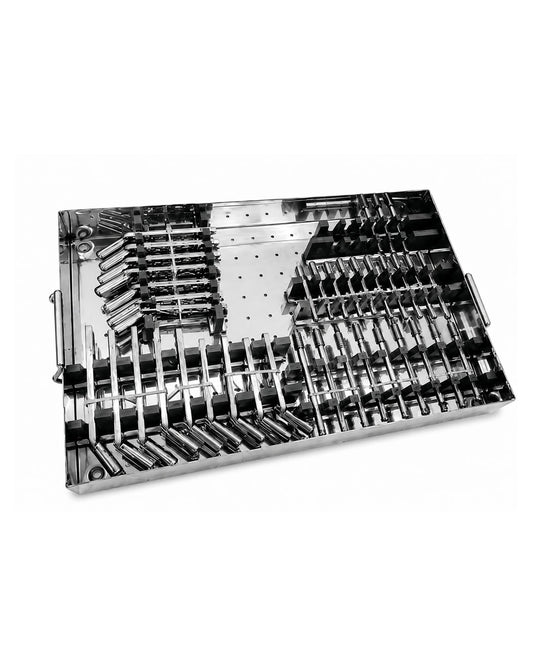
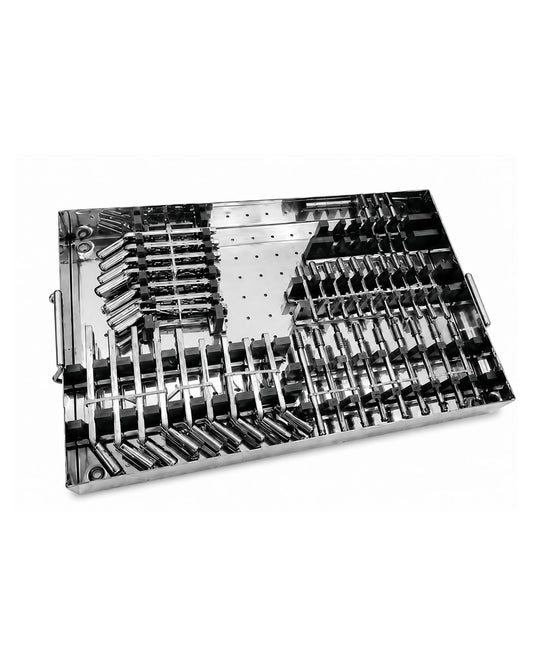
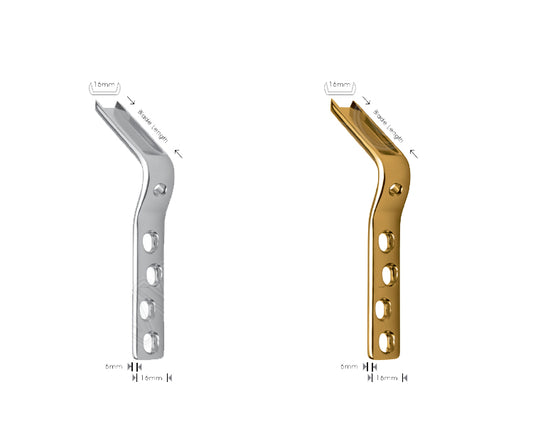
The core Dynamic Hip Compression Plate range covers variable angle, short barrel, and 38mm barrel configurations, each with dynamic compression holes, alongside the DHS Safety Lock Plate in 38mm and short barrel options. Trochanter Stabilization Plates — both DHS-specific and non-locking — add additional lateral support at the trochanter. The Angled Blade Plate (130°, with Dynamic Compression Holes) covers fixed-angle fixation for cases where a sliding screw construct isn't the chosen approach.
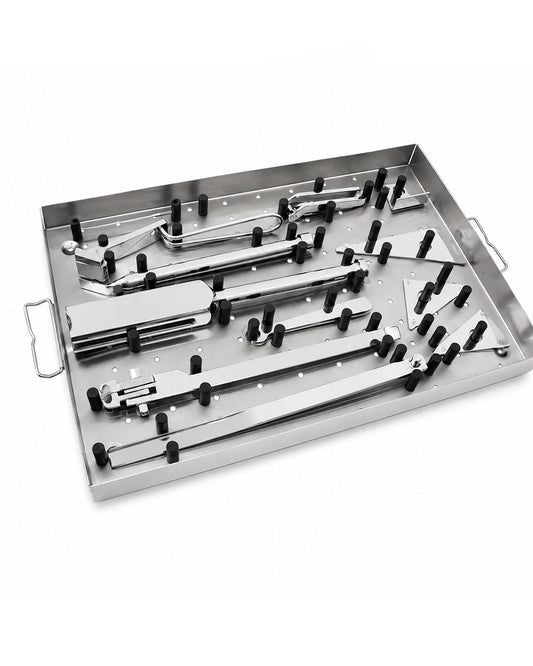
For an older, non-dynamic alternative, the Jewett Nail Plate (130°) is a fixed-angle nail-plate device, supported here by its own Starter, Impactor Extractor, and Driver Handle instruments. A related but distinct system, the Femoral Neck System (Plate, Bolt, and Anti-Rotation Screw), offers a more minimally-invasive option for femoral neck fixation.
Pediatric-specific components include the Pediatric DHS Plate (with Dynamic Compression Holes) and Pediatric Lag Screw with Compression Screw, sized down from the adult range for smaller proximal femur anatomy in pediatric hip fracture and reconstruction cases. The Standard Lag Screw (Ø12.5mm) and Safety Lock Screw (Ø5.0mm, Star-Like, Self-Tapping) round out the fixation hardware.
Choosing Between Systems
A DHS construct suits proximal femur fractures where controlled dynamic compression is wanted as the patient mobilizes. A DCS construct applies the same sliding principle at the distal femur. A Jewett nail plate is a fixed-angle alternative without the dynamic sliding mechanism, still used in some settings. The Femoral Neck System offers a separate, less invasive fixation approach for femoral neck fractures specifically, distinct from the plate-and-barrel DHS construct.
Related Products
Pair these implants with our Headless Compression / Cannulated Screws for adjunct fixation, and with Screw Holding Forceps, Taps & Countersinks and Bone Drills for placement. For broader hip fixation and reconstruction work, browse Hip Surgery Instruments and Hip Prosthesis. For alternative fixation methods, see Interlocking Nails and Locking Screws Self Tapping. To browse the complete implant catalog, visit Orthopedic Implants.
Ordering
Peak Surgicals manufactures and supplies DHS/DCS and pediatric hip fixation implants for hospitals and distributors worldwide, with international shipping — contact our team for current stock on complete instrument sets and wholesale pricing.
Frequently Asked Questions
What's the difference between DHS and DCS?
Both use a sliding screw-and-barrel mechanism for dynamic compression, but a DHS (Dynamic Hip Screw) is angled for the proximal femur — femoral neck and intertrochanteric fractures — while a DCS (Dynamic Condylar Screw) is angled for distal femoral and supracondylar fractures.
What is a Jewett nail plate used for?
A Jewett nail plate is a fixed-angle device used for intertrochanteric hip fracture fixation, offering an alternative to the sliding, dynamic-compression mechanism of a DHS construct.
What's the difference between a DHS system and a femoral neck system?
A DHS uses a plate-and-barrel construct with a sliding lag screw. A femoral neck system uses a separate plate, bolt, and anti-rotation screw configuration, typically offering a less invasive approach to femoral neck fixation specifically.
Is the pediatric DHS plate the same as the adult version?
It follows the same dynamic compression principle but is sized down for smaller pediatric proximal femur anatomy, used in pediatric hip fracture and reconstruction procedures.
Does Peak Surgicals sell Synthes-branded DHS/DCS systems?
No. "DHS" and "DCS" are generic, industry-standard terms for this fixation technique used across manufacturers. Peak Surgicals manufactures its own DHS/DCS and pediatric hip fixation line, separate from any specific branded system.