
Featured Collection
Your cart
Featured Collection

PEAK SURGICAL
SKU:
Couldn't load pickup availability
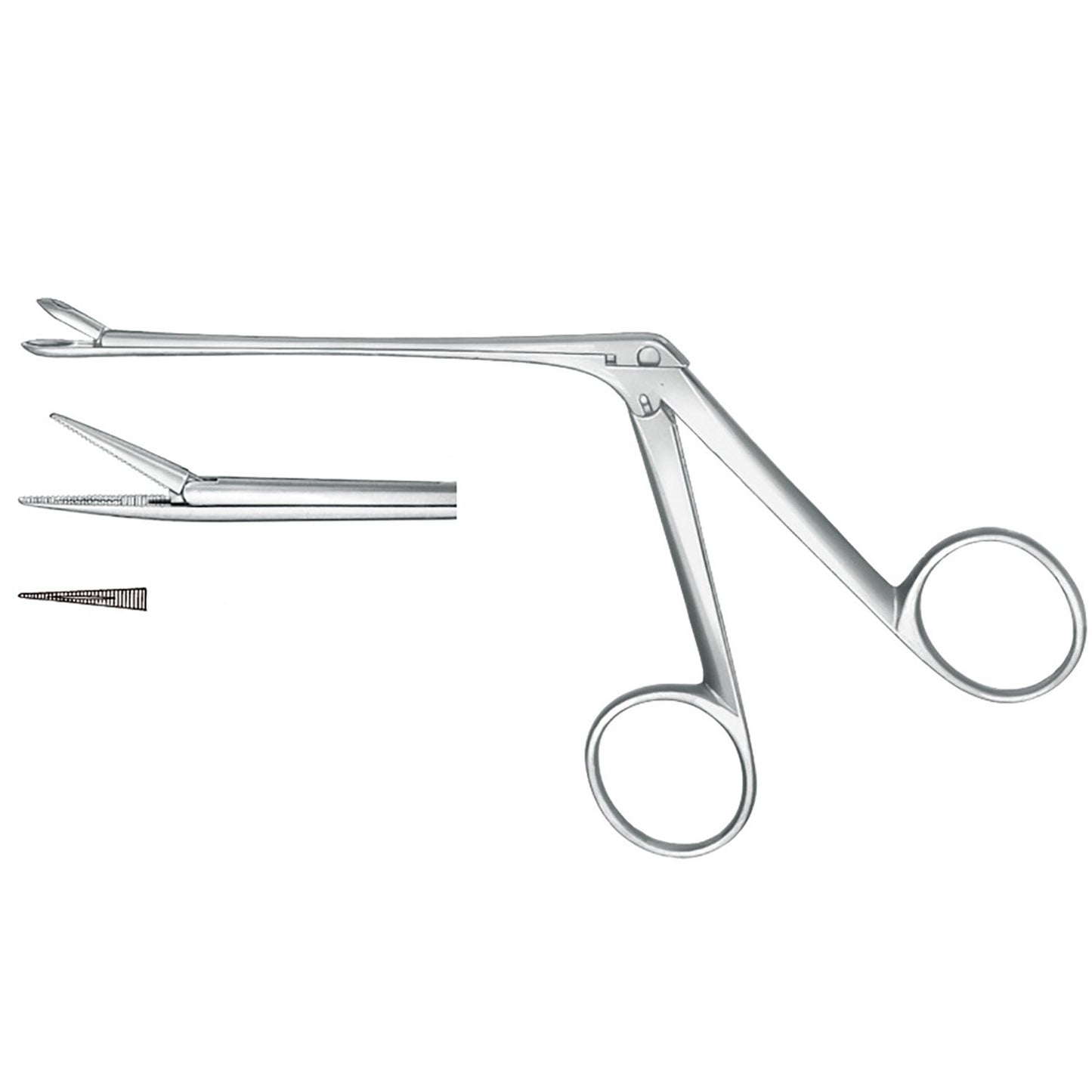
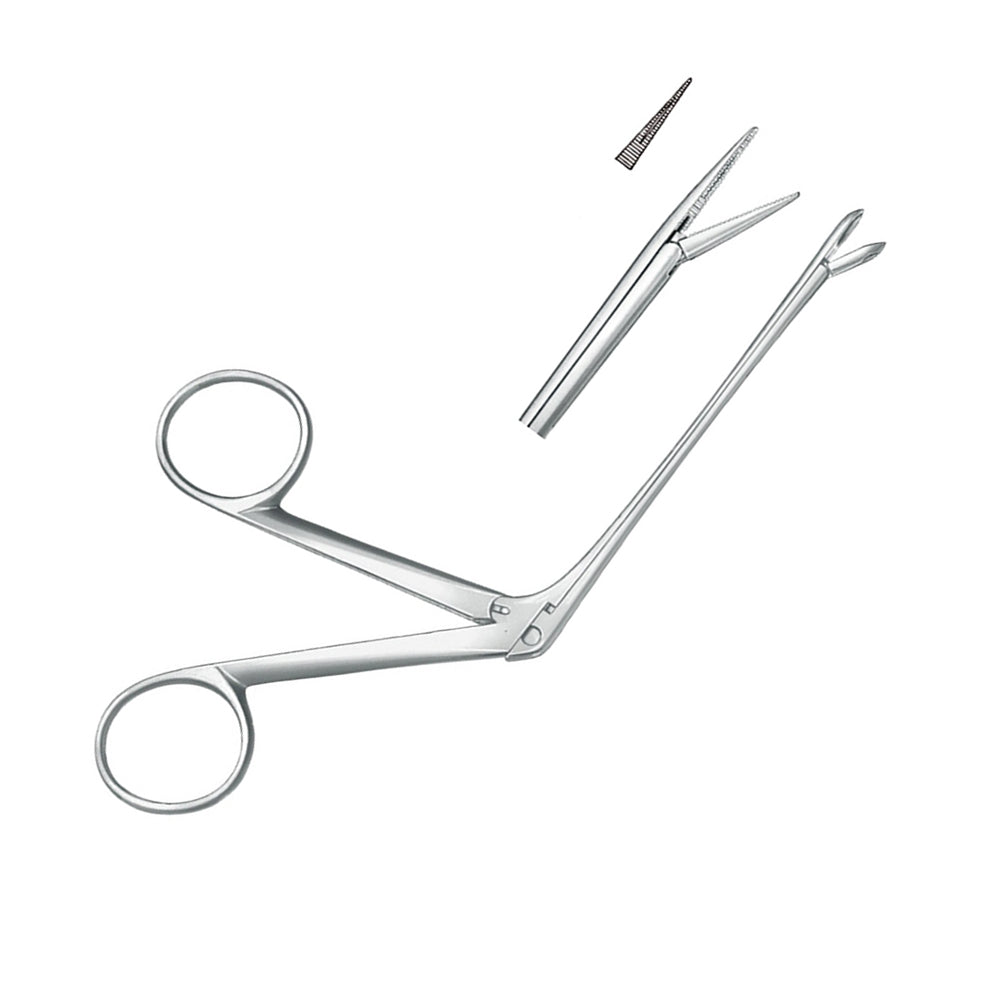
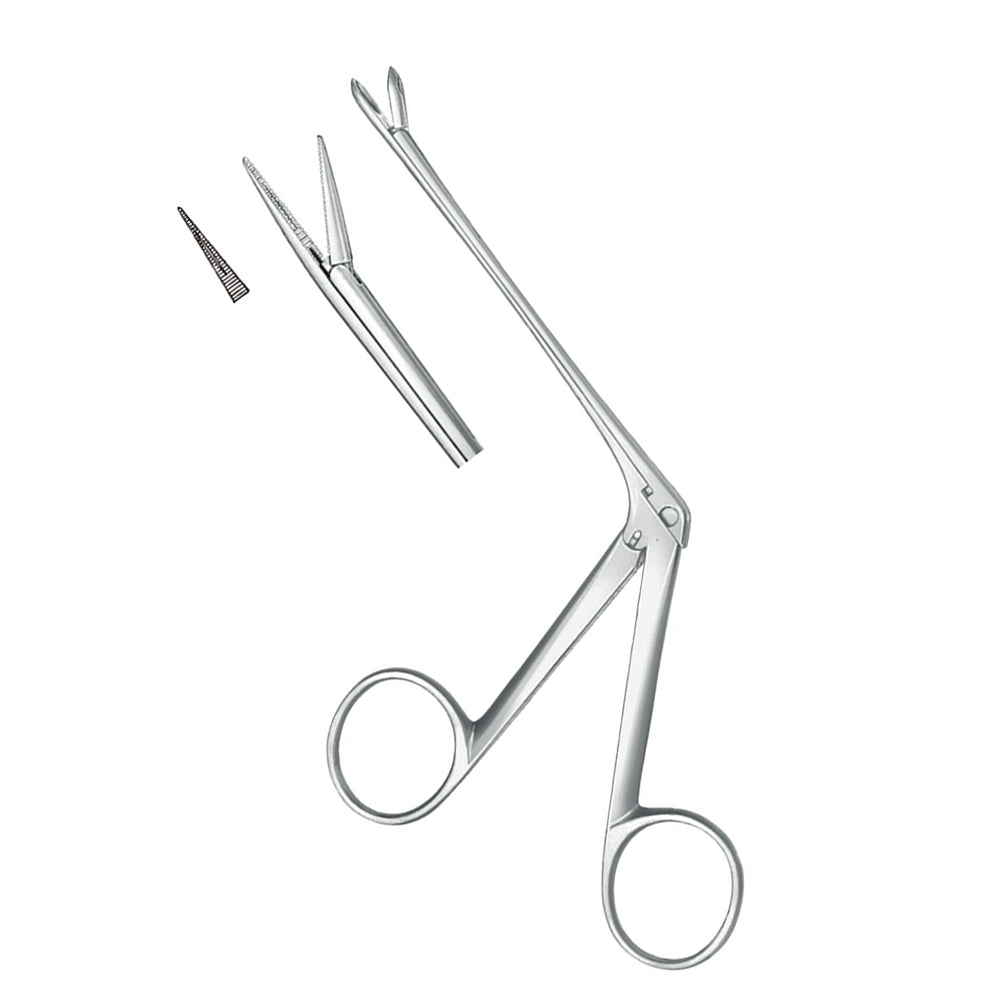
Watson Williams Polyp Forceps PS-5227 are reusable ENT forceps manufactured from German stainless steel for controlled nasal polyp grasping, tissue retrieval, and intranasal handling during rhinology procedures. The available variants are PS-5227 small jaw length 6.5mm and PS-5227 large jaw length 10mm, allowing selection between compact access and broader tissue purchase. These forceps are used in nasal polypectomy, endoscopic sinus surgery support, middle meatal tissue retrieval, ethmoid polyp removal, turbinate-adjacent mucosal handling, and extraction of soft tissue fragments from the nasal cavity. The long shaft, distal grasping jaws, box joint, pivoted handle, and ring-handle control allow the surgeon to capture polypoid tissue under direct or endoscopic visualization while keeping the hand outside the nasal entry. ENT surgeons, rhinologists, otolaryngology teams, hospitals, ambulatory surgery centers, and nasal surgery clinics select this Class I reusable forceps pattern for controlled polyp handling, stainless steel sterilization workflow, and regulated procurement documentation.
The Watson Williams pattern uses an elongated shaft to reach intranasal polypoid tissue while keeping the surgeon's hand clear of the nostril, suction, speculum, and endoscopic line of sight. The distal jaws are shaped to capture soft tissue fragments with a stable grasp, making the instrument useful when polyp tissue must be held, removed, or repositioned during staged ENT workflow. The smaller jaw supports fine capture in restricted spaces, while the larger jaw provides broader purchase on bulkier tissue. The box joint keeps the arms aligned during closure so the distal jaw meets predictably at the target. The pivot transfers ring-handle compression into controlled closure, giving tactile feedback as the tissue is secured. Finger rings stabilize the hand during repeated placement and withdrawal. This geometry supports tissue retrieval in narrow nasal corridors where standard dressing forceps lack the required reach and controlled distal purchase.
During nasal polypectomy, the forceps are introduced after visualization, decongestion, and localization of the polypoid tissue. The jaws are opened at the target, closed around the tissue mass, and withdrawn or repositioned according to the operative step. In endoscopic sinus surgery, the instrument can retrieve fragments from the middle meatus, ethmoid region, maxillary antrostomy area, or nasal cavity after cutting, biting, or debridement with complementary instruments. In revision procedures, it assists with controlled removal of residual polypoid tissue, scarred soft tissue, or loose mucosal fragments that obstruct visualization. During turbinate-adjacent work, the distal jaw helps handle tissue near the lateral nasal wall without requiring broad shaft movement. The instrument functions as a grasping and retrieval forceps rather than a cutting punch. It is used alongside suction tubes, Blakesley forceps, Takahashi forceps, punches, scissors, and curettes in staged ENT tissue management.
The small 6.5mm jaw variant is selected for narrower intranasal corridors, confined middle meatal access, smaller polyp fragments, and retrieval near delicate endoscopic landmarks. Its shorter jaw length helps preserve visibility when suction and an endoscope share the same working pathway. The large 10mm jaw variant is selected when the surgeon needs broader purchase on larger nasal polyps, thicker mucosal fragments, or tissue requiring firmer control during withdrawal. The wider working surface improves capture when a compact jaw would take repeated passes. Both variants share the same Watson Williams forceps design, long shaft, ring-handle actuation, box joint alignment, reusable German stainless steel construction, and Class I instrument classification. Selection depends on tissue volume, nasal cavity width, access depth, visualization angle, and the stage of polyp removal. ENT teams may stock both sizes to cover precise fragment retrieval and larger tissue handling within the same procedure category.
German stainless steel construction supports repeated clinical handling, jaw alignment, and autoclave sterilization in ENT operating rooms and clinic procedure areas. The material provides shaft rigidity for intranasal access while maintaining corrosion resistance during cleaning, drying, inspection, and heat sterilization cycles. Satin, dull, or mirror finish options support visual assessment after reprocessing and help staff inspect the jaws, box joint, pivot, and handle surfaces. The reusable design allows integration into nasal surgery trays, rhinology sets, and facility-managed ENT inventories. CE marking, ISO 13485 alignment, and FDA procurement support help hospitals, clinics, and distributors maintain documentation for regulated purchasing. MOQ is 1 piece, allowing single-instrument replacement without ordering a complete set. OEM availability supports distributor programs and institutional sourcing. Return and replacement after-sale service with a 1-year warranty gives procurement teams clear commercial terms for inventory planning.
| SKU | PS-5227 |
|---|---|
| Product Name | Watson Williams Polyp Forceps |
| Price | From $25.30 |
| Size/Gauge Variants | Small jaw length 6.5mm; large jaw length 10mm |
| Instrument Category | ENT nasal polyp forceps |
| Procedure | Nasal polypectomy, endoscopic sinus surgery support, ethmoid polyp removal, middle meatal tissue retrieval, intranasal soft tissue handling |
| Material | German stainless steel |
| Finish | Satin, dull, or mirror finish |
| Sterilization | Reusable and autoclavable after standard surgical instrument cleaning |
| Instrument Classification | Class I surgical instrument |
| Reusable | Yes |
| Certifications | CE, ISO 13485, FDA procurement support |
| Warranty | 1 year |
| MOQ | 1 piece |
| OEM / Custom Orders | OEM available for distributor and institutional supply orders |
| After-Sale Service | Return and replacement service |
How are Watson Williams Polyp Forceps different from Takahashi nasal forceps?
Watson Williams Polyp Forceps are selected for grasping and retrieving nasal polyp tissue during ENT procedures. Takahashi nasal forceps are commonly used for broader intranasal tissue handling and removal. The Watson Williams pattern is focused on polypoid tissue capture with small and large jaw length options. Takahashi wide jaws provide a broader surface for mucosal folds, turbinate fragments, and larger tissue masses. Watson Williams Polyp Forceps are useful when the surgeon needs controlled capture of polyp fragments in a narrow corridor. The choice depends on tissue type, jaw purchase needed, and access depth.
Which jaw size is selected for nasal polyp removal?
The 6.5mm small jaw is selected for confined middle meatal work, smaller polyp fragments, and areas where endoscopic visibility must remain open. It is useful when the surgeon needs careful tissue capture near narrow access points. The 10mm large jaw is selected for broader purchase on larger nasal polyps or thicker tissue fragments. It reduces repeated passes when the target tissue volume is larger. Watson Williams Polyp Forceps support both fine retrieval and stronger grasping through these jaw options. Selection depends on polyp size, access corridor, tissue consistency, and visualization angle.
Does this product support CE, ISO 13485, and FDA procurement context?
Yes, Watson Williams Polyp Forceps are listed with CE, ISO 13485, and FDA procurement support. CE marking assists facilities that require conformity records for surgical instrument purchasing. ISO 13485 alignment supports medical device quality management expectations for manufacturing and supply. FDA procurement support helps hospitals, clinics, and distributors maintain regulated vendor documentation. The product is listed as a Class I reusable surgical instrument. These details support ENT tray approval, distributor onboarding, and institutional purchasing records.
How does the box joint and pivot support intraoperative control?
The box joint keeps the forceps arms aligned as the handle closes. The pivot converts ring-handle compression into controlled distal jaw movement. This allows the surgeon to position the jaws around polypoid tissue before applying grasping pressure. Watson Williams Polyp Forceps use this mechanism to capture tissue in a narrow nasal corridor with limited shaft movement. The ring handles stabilize finger position during opening, closure, withdrawal, and repositioning. This control is important during endoscopic nasal polyp retrieval and intranasal tissue handling.
Are Watson Williams Polyp Forceps suitable for hospital sterilization and distributor supply?
Watson Williams Polyp Forceps are reusable and designed for standard surgical instrument reprocessing. Sterile processing teams can clean the distal jaws, shaft, box joint, pivot, and handles before autoclave sterilization. German stainless steel construction supports repeated use in ENT operating room and clinic trays. MOQ of 1 piece allows hospitals and clinics to replace a single polyp forceps pattern as needed. OEM availability supports distributor-managed sourcing and institutional supply programs. The 1-year warranty with return and replacement service provides clear procurement terms for surgical inventory teams.


