
Featured Collection
Your cart
Featured Collection

PEAK SURGICALS
SKU:
Couldn't load pickup availability
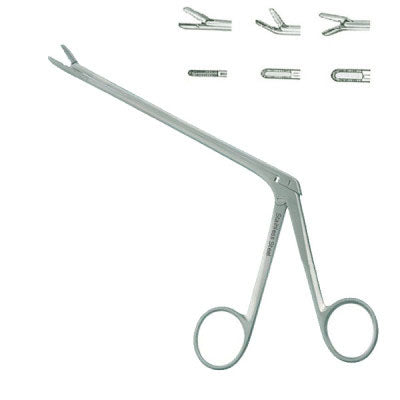
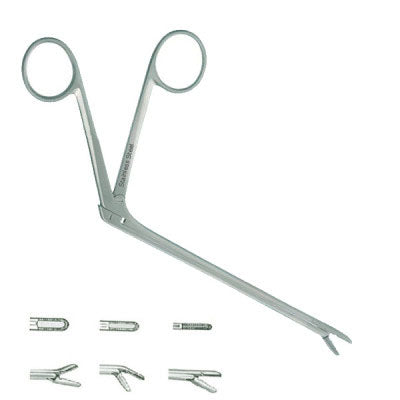
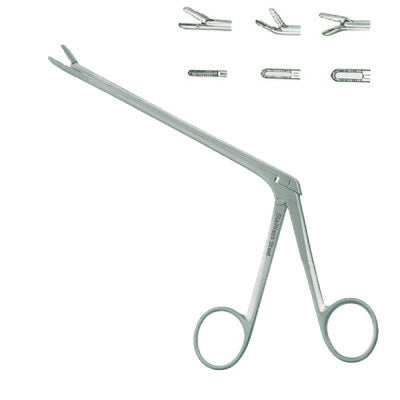
Introduction to Schlesinger Rongeur IVD Up
This Schlesinger Rongeur IVD is a surgical instrument extensively employed in neurosurgical and spinal procedures, specifically to aid in intervertebral disk (IVD) elimination and compression. It is designed for precise and controlled tissue extraction. This instrument plays a crucial part in procedures like diskectomy and laminectomy.
In the field of spinal surgery, precision is essential. The spinal cord, as well as the surrounding nerves, can be delicate and require care in handling. A Schlesinger Roongeur IVD is designed to enable surgeons to efficiently remove disc material while minimizing the risk of injury to adjacent tissues. The upward-biting design allows for greater visibility and accessibility, particularly in tight surgical rooms.
What Is a Schlesinger Rongeur?
Design and Structure
A Schlesinger Rongeur is a double-action surgical instrument featuring sharp-edged jaws designed to cut and eliminate bones or soft tissue fragments. Its "IVD Up" variation specifically includes an upward-facing jaw structure designed for accessing and removal of intervertebral disc material.
Important structural components include:
Jaw mechanism that bites upwards
An ergonomic handle that allows for a controlled grip
Double-action hinge to increase cutting force
Construction of stainless steel with high-quality
Spring-loaded mechanism that allows for smooth operation
This technique permits exact tissue removal while minimizing hand fatigue during long procedures.
Key Features of Schlesinger Rongeur IVD Up
Upward-Biting Jaw
The tip that faces upwards allows surgeons to reach the disc from beneath, which makes it especially useful for procedures to the posterior spine.
Double-Action Mechanism
The double-action hinge system increases cutting force while requiring less pressure from the hand, thereby increasing effectiveness and ensuring control.
Precision Cutting Edges
The sharp, well-crafted jaws allow for a smooth removal of disc fragments without crushing tissue around them.
Durable Construction
Made of stainless steel that is surgical grade, the instrument is resistant to corrosion and can withstand repeatedly sterilizing cycles.
Advantages of Using Schlesinger Rongeur IVD Up
Enhanced Surgical Precision
The upward-biting arrangement increases visibility and accessibility within spinal spaces that are small, allowing for the precise removal of discs.
Reduced Tissue Trauma
Precision jaws prevent unnecessary injuries to nearby nerves as well as soft tissues, resulting in more positive outcomes for patients.
Improved Efficiency
The double-action mechanism permits efficient elimination of the disc using less effort, thus reducing the fatigue of surgeons.
Long-Term Reliability
The robust design guarantees consistent performance, even after repeated usage and sterilization.
Common Applications
Discectomy Procedures
A Schlesinger Rongeur IVD is commonly used during discectomy to remove disc material compressing spinal nerves.
Laminectomy
During decompression procedures, it aids in the removal of bone fragments as well as soft tissue to ease the pressure on nerves.
Spinal Decompression Surgery
This instrument is crucial to remove disc debris as well as to create a healthy distance around nerve roots.
Neurosurgical Applications
In delicate cases of neurosurgery, it allows for the ability to control the removal of tissue with precision and safety.
Maintenance and Care
To maintain optimal performance:
After use, wash thoroughly to get rid of biological debris.
Examine cutting edges for any damage or dullness.
Use surgical-grade lubricant to lubricate hinge joints. fluid.
Sterilize as per hospital guidelines.
Regular inspections and regular maintenance will prolong the lifespan of the device and ensure that the instrument's cutting efficiency is maintained.
Conclusion
The Schlesinger Rongeur IVD is a crucial instrument used in neurosurgical and spinal procedures, specifically designed to ensure the precise removal of intervertebral discs. The jaw's upward-facing bite, the double-action mechanism and robust construction make it a vital instrument for surgeons who perform discectomy and decompression procedures. With its improved control, less tissue trauma, and dependable performance This instrument is a significant contributor to the accuracy of surgery and improves outcomes for patients.
