
Featured Collection
Your cart
Featured Collection

PEAK SURGICALS
SKU:PS-VS-00311
Couldn't load pickup availability
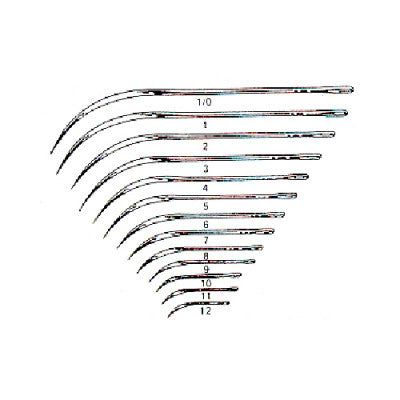
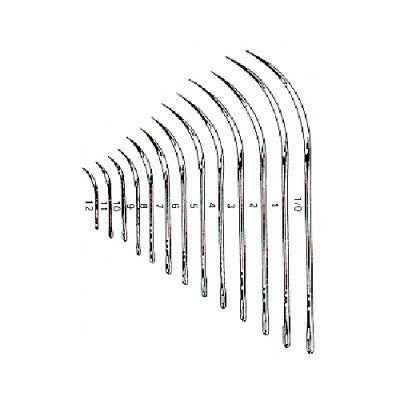
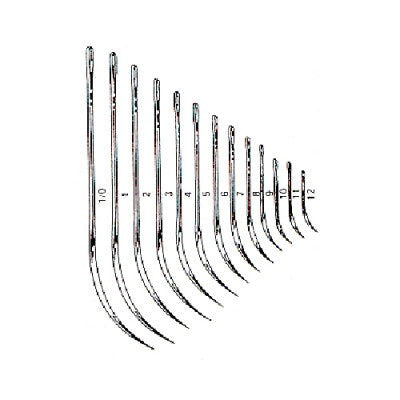
The clinical standard for high-torque suturing in dense anatomical structures. Half Circle Cutting Edge Needles are specialized surgical components engineered for procedures where the combination of a sharp "arc" and aggressive penetration is required. Featuring a triangular cutting point and a 180-degree curvature, these needles act as a mechanical necessity for suturing tough tissues such as skin, tendons, and fibrous fascia. The half-circle design is specifically calibrated for confined surgical fields, allowing the clinician to complete a full stitch cycle with a simple rotation of the wrist, ensuring consistent depth and superior tissue approximation.
[Available in Sets – Professional Surgical Series]
Half Circle Cutting Edge Needles are foundational assets in general surgery, orthopedics, and veterinary medicine. Their primary utility lies in their "geometric efficiency." By following a natural 180-degree path, the needle enables the surgeon to transition from entry to exit with a single, fluid rotational movement. While taper-point needles are preferred for delicate organs, the Cutting Edge variant is the indispensable tool for the outer layers of the body and dense musculoskeletal structures where penetration power is paramount.
Built to exceed the rigorous hygiene standards of modern surgical centers, these needles are fully autoclavable and designed for dependable, repeatable performance in clinical environments.
Feature Details
Material Premium Surgical-Grade Stainless Steel
Tip Configuration Cutting Edge (Triangular Point)
Curvature Half Circle (180°)
Sizes Included Range 1 (Largest) to 8 (Smallest)
Maintenance Fully Autoclavable / Reusable
Primary Use Cases:
Q: What is the benefit of a "Half Circle" over a "3/8 Circle" needle?
A: A half-circle needle has a tighter arc. This makes it much better for deep, narrow cavities where you don't have enough room to swing a shallower 3/8 circle needle. It allows you to enter and exit the tissue in a more vertical, compact fashion.
Q: Why use a cutting-edge instead of a round (taper) needle?
A: Round needles are designed to push tissue fibers aside, which is great for delicate organs like the intestines. However, they struggle to penetrate tough tissues like skin. The cutting-edge needle actually slices a small path, allowing the needle and suture to pass through dense material without requiring excessive force.
Q: How do the sizes (1–8) correlate to needle dimensions?
A: In most surgical needle scales, the smaller numbers (like Size 1) represent the largest, most robust needles. As the numbers increase (up to Size 8), the needles become progressively smaller and finer, allowing for more delicate work.
Q: Are these needles reusable?
A: Yes. These are forged from high-quality stainless steel and are designed to be cleaned, sterilized (autoclaved), and reused. It is important to inspect the cutting edges for dullness regularly, as a blunt cutting needle can increase tissue trauma.
