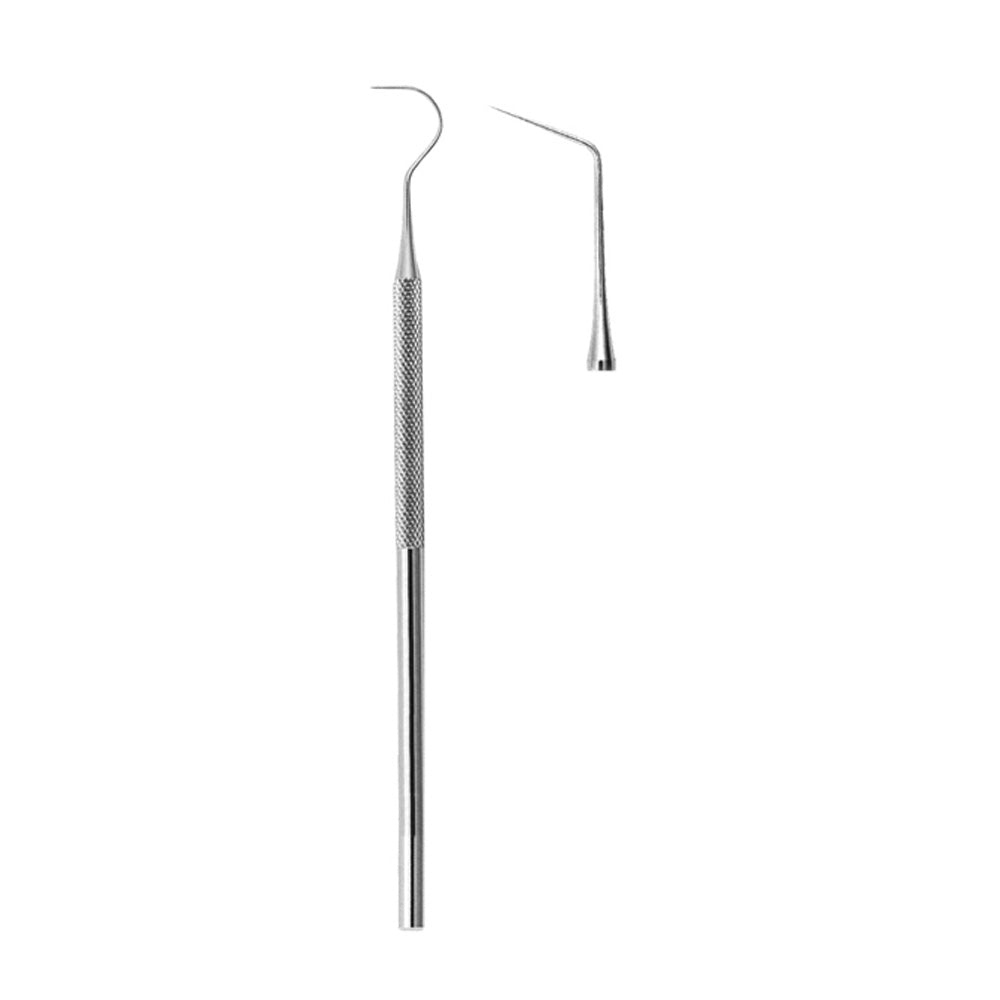
Adea Periodontal Explorer: Enhancing Subgingival Detection and Patient Care
The success of periodontal treatment is largely dependent on the ability of a dentist to feel below the gumline. It is the Adea Periodontal Explorer, constructed from top-quality stainless steel, which is a unique instrument for diagnosing and is designed to offer maximum tactile sensitivity within a small space of the pocket for periodontal therapy. Through bridging the gap between the visual inspection and subgingival realities, this instrument is vital to detect early issues and ensure the maintaining gum health.
The Importance of Stainless Steel in Periodontics
In the sensitive surroundings of the periodontium, the material used in the instrument is of paramount importance. Adea uses high-grade stainless steel to make sure that each instrument provides a high-quality "image" of the root surface.
-
Maximum flexibility and strength: Periodontal explorers must be small enough to travel through deeper pockets and not cause injury, but robust enough to transmit vibrations emanating from the surface of the root. Adea's stainless steel is the ideal balance.
-
Chemical Resistance and Corrosion: Periodontal tools are often exposed to saliva, blood, and harsh disinfectants. The high content of chromium in Adea's stainless-steel prevents pitting and rusting, providing an unharmed and smooth surface for each patient.
-
Ultra-Fine Tips The stainless steel alloy allows the creation of incredibly thin, sharp tips that detect tiny "clicks" of calculus or the first signs of surface irregularities on the roots.
Key Features of the Adea Periodontal Explorer
Adea has redesigned the look of its periodontal explorers to satisfy the requirements of periodontists and hygienists:
-
extended Shank Geometry The explorers (such as the 11/12 and 3CH designs) come with long, complicated-angled shanks. This lets the instrument get to the bottom of deep pockets that are located in the posterior region while maintaining the handle in an ergonomic and neutral position.
-
light-weight handle to increase sensitivity. To provide the best feedback on the tactile side, Adea offers hollow or light stainless-steel handles. The lighter handles ensure that the vibrations generated by cementum roughness or calculus don't get diminished due to the mass of the device.
-
Satin-Finish Stainless Steel: The finish has been created to block out glare from bright lights in the operatory, which allows for greater visibility when exploring subgingival areas.
Essential Clinical Applications
The Adea Periodontal Explorer is the "eyes" of the clinician in a variety of critical procedures:
-
Subgingival Calculus Identification: Identifying the exact area of tartar buildup on the surface of the root to aid in the scaling and root planning.
-
Assessing Smoothness of the Root: After treatment, the explorer is employed to determine if the surface of the root is clean and free of leftover deposits.
-
Pocket Depth Scouting: While not a substitute for a graded probe, the explorer can help detect the surface of the pocket as well as detect furcation-related involvement (the part of the pocket in which roots branch out).
-
Reviewing Restoration Margins Finding Subgingival "overhangs" in fillings or crowns, which could cause an infection of the periodontal tissues.
Conclusion
Periodontics are something that is a matter of touching. It is the Adea Periodontal Explorer utilises the exceptional qualities of stainless steel to provide clinicians with the confidence needed to treat and diagnose periodontal problems precisely. Its strength as well as its ergonomic design and unparalleled sensitiveness make it an essential part of the current dentist's kit.