Featured Collection
Your cart
Featured Collection

PEAK SURGICAL
SKU:PS-DT-021
Couldn't load pickup availability
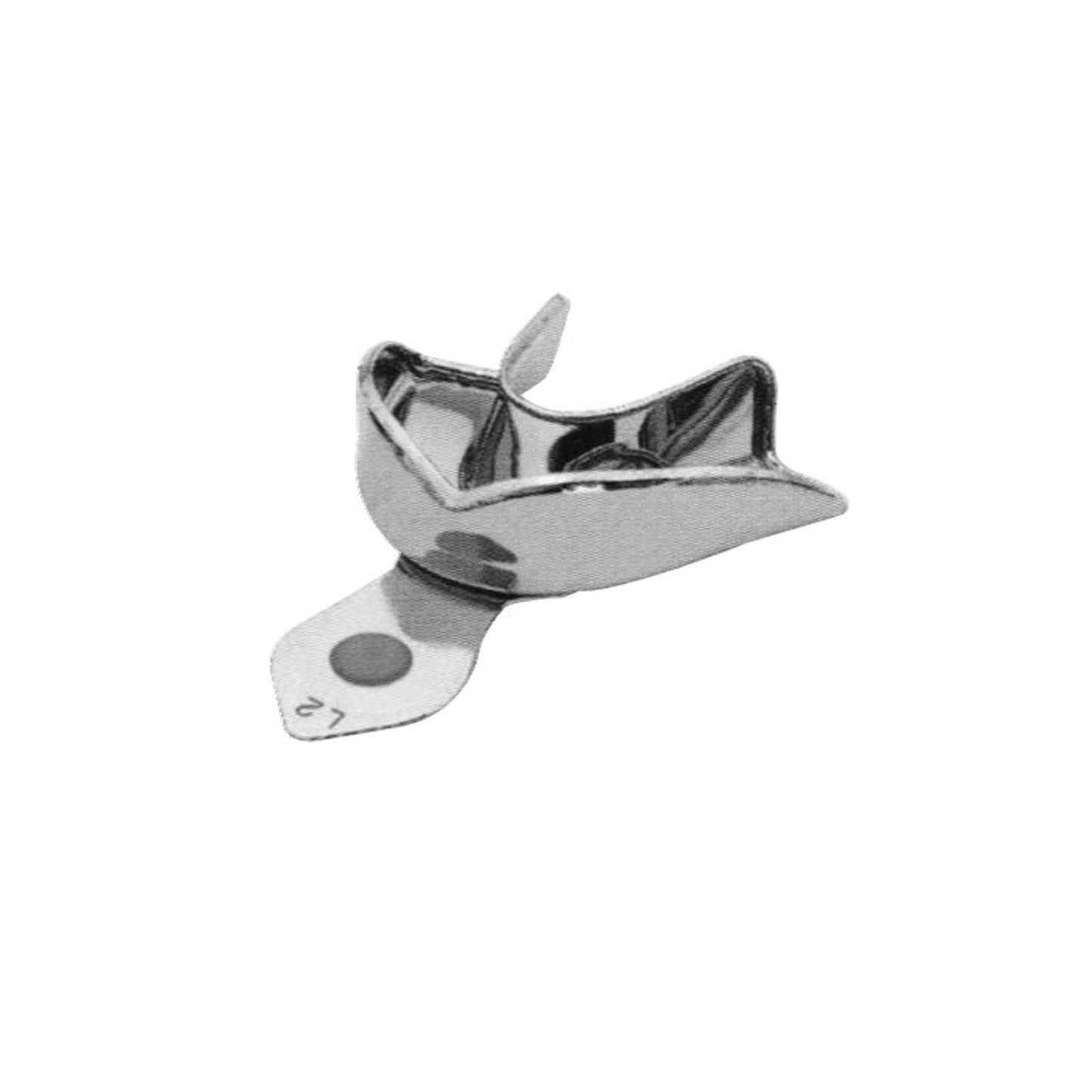
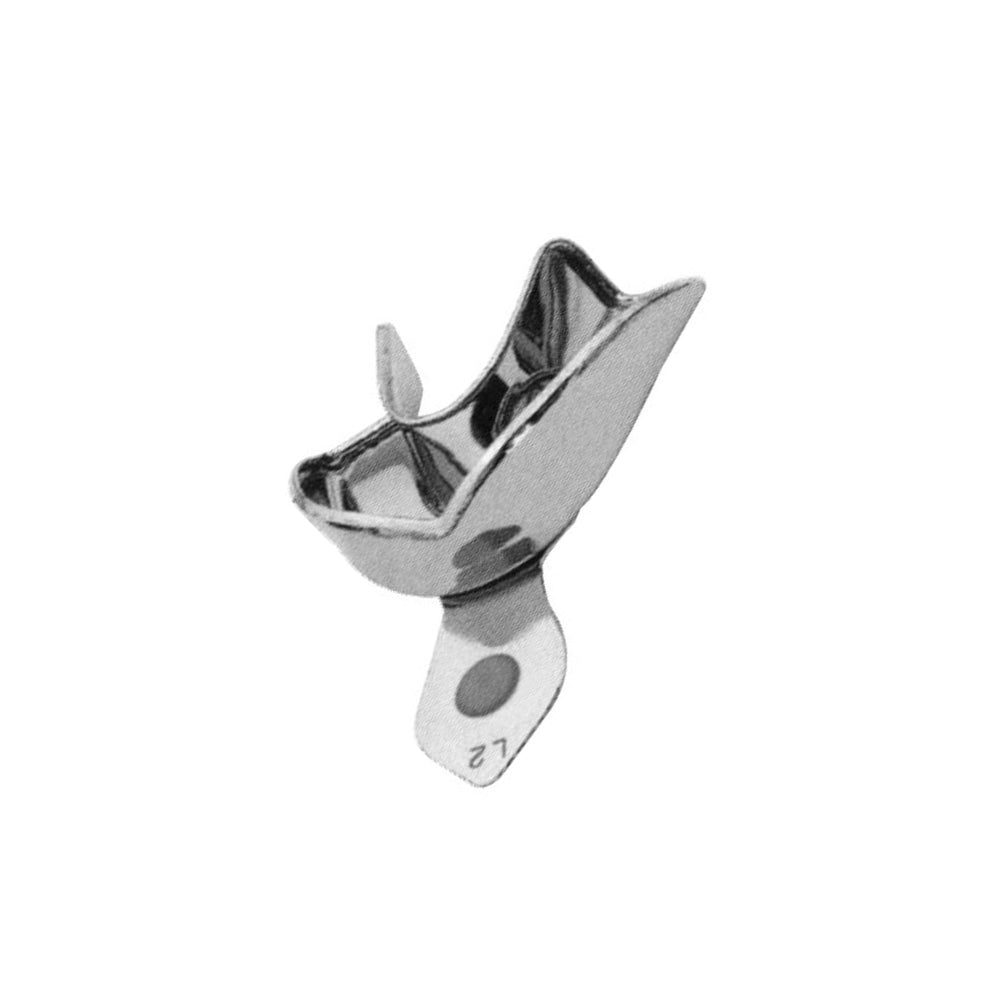
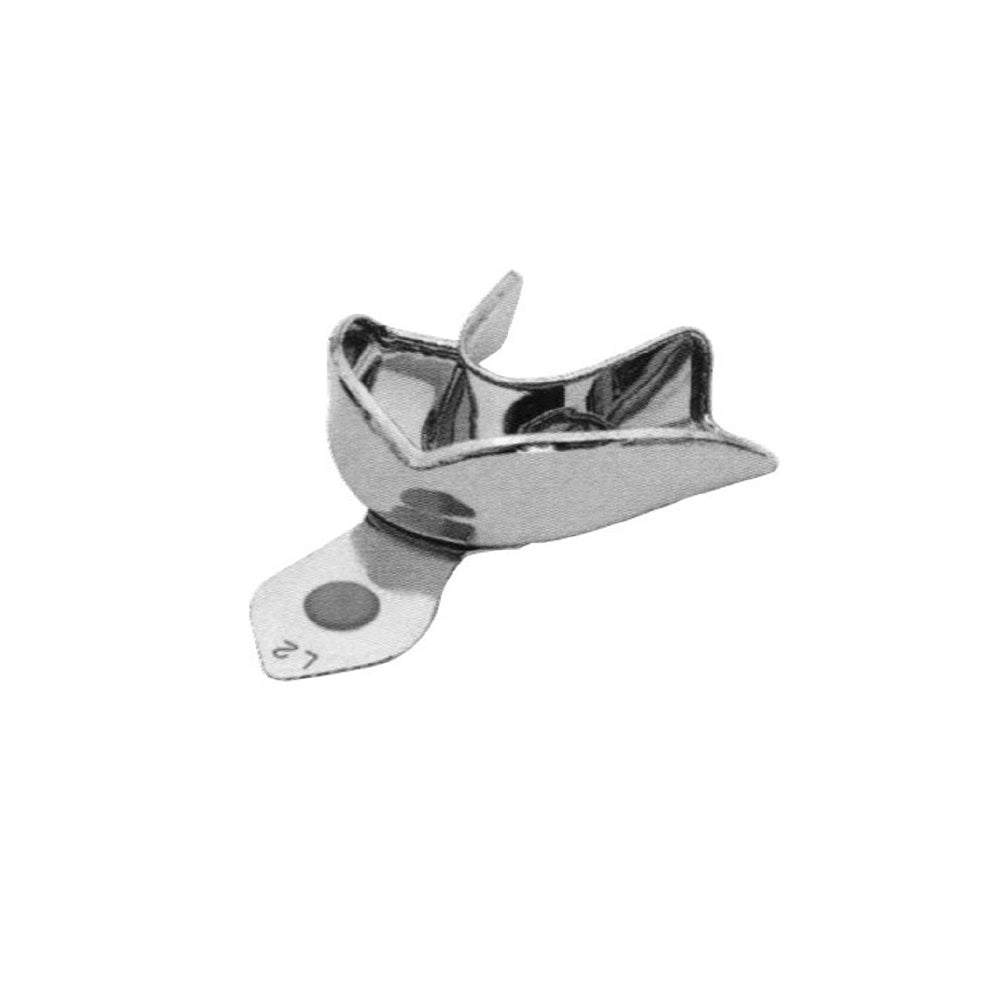
The Perforated Impression Tray Multiple Sizes (PS-DT-021) is a German stainless steel dental impression tray available in a complete range of six arch-specific sizes — Upper Large, Upper Medium, Upper Small, Lower Large, Lower Medium, and Lower Small — designed for carrying alginate, polyvinyl siloxane, polyether, and zinc oxide eugenol impression materials over the maxillary and mandibular dental arches in the full spectrum of adult patient arch dimensions encountered in general dental practice, specialist prosthodontic clinics, orthodontic offices, dental schools, and dental laboratory supply programs. The "Multiple Sizes" designation identifies this PS-DT-021 series as a purpose-stocked, full-range impression tray offering spanning all six arch and size combinations required for complete adult patient coverage, addressing the clinical reality that correct tray size selection — matching the tray arch width and anteroposterior length to the patient's specific arch dimensions — is a primary determinant of impression accuracy, and that a practice stocking only one or two tray sizes will routinely encounter patients for whom the available size is clinically suboptimal. The perforations across the tray base and lateral walls provide mechanical retention of the set impression material without chemical adhesive in alginate protocols: impression material extrudes through the perforations during tray seating and locks into the perforation holes on setting, preventing tray-material separation during impression removal. The arch-specific tray geometries — wider horseshoe profile with higher lateral walls for the upper maxillary variants, narrower and lower-flanged for the lower mandibular variants — ensure proper arch coverage for each jaw without flange impingement or ridge overhang. Manufactured from German stainless steel for rigidity, corrosion resistance, and autoclave compatibility. Sold as 1 piece per size variant selected.
The PS-DT-021 "Multiple Sizes" designation addresses a fundamental but frequently underappreciated determinant of dental impression quality: the match between tray size and patient arch dimensions. A correctly sized perforated impression tray produces an impression with consistent material thickness of 3–5mm between the tray floor and the occlusal surfaces of the teeth, and with the tray flanges positioned 3–5mm lateral to the buccal and labial surfaces of all teeth from first molar to first molar bilaterally. This material thickness range is clinically significant because it controls two critical impression quality parameters. First, impression material thickness determines dimensional stability of the set impression: below approximately 3mm, alginate and PVS impression materials are prone to tearing and distortion during removal from undercut tooth surfaces; above approximately 6–7mm, alginate tends to slump and deform under its own weight in the tray before setting, introducing voids and dimensional error at the tray margins. Second, even material thickness across the arch ensures that the setting contraction of the impression material — a predictable dimensional change that occurs in all elastic impression materials as they polymerize — is uniform across the arch, so the contraction vector cancels out symmetrically rather than distorting the arch relationship. A tray that is too small for the arch concentrates material in some regions while leaving adjacent teeth uncovered; a tray that is too large creates excessive, uneven material thickness with variable setting contraction. The PS-DT-021 six-variant range ensures that the practitioner can always select the size that produces the correct 3–5mm working clearance for each patient, whether they present with a narrow, medium, or wide arch in either jaw — a clinical capability that a single-size or two-size tray inventory cannot provide.
The three size variants within each arch — Small, Medium, and Large — address the substantial natural variation in adult dental arch dimensions that makes a single universal tray size clinically inadequate for a diverse patient population. Adult maxillary arch widths measured at the first molar positions range from approximately 50mm in patients with narrow, high-vaulted palates to over 65mm in patients with wide, flat arches — a 30% variation that spans the full Small-to-Large tray range. Mandibular arch widths at the first molar level range from approximately 45mm to 58mm. Anteroposterior arch length — from the labial surfaces of the central incisors to the distal surface of the second molar — varies similarly, from approximately 45mm to 58mm in the maxilla across the adult population. These dimensional ranges mean that the Large upper tray appropriate for a broad-arched adult male patient would be so oversized for a narrow-arched female patient as to create excessive material bulk at the flanges that distorts the sulcus anatomy and triggers a gag response. Conversely, the Small tray that correctly fits the narrow-arched patient would fail to cover the second molars of the broad-arched patient, producing an incomplete impression that cannot be used for any restorative or prosthetic purpose requiring second molar representation. The clinical protocol for size selection in any of these tray series is the dry try-in: before loading the tray with impression material, the practitioner tries each candidate tray size over the arch without material, checking that the posterior extent of the tray reaches 2–3mm distal to the last molar, that the lateral flanges clear all teeth bilaterally by approximately 3–5mm, and that the palatal vault (upper) or floor of the mouth (lower) is not contacted by the tray. The PS-DT-021 range provides all three size options per arch to ensure the correct size is always available for this try-in selection process.
The PS-DT-021 perforated impression tray serves the complete range of clinical impression applications in general and specialist dental practice. In fixed prosthodontic procedures — crown, inlay, onlay, bridge, and veneer preparation — the tray carries PVS or polyether impression material with tray adhesive to record the prepared tooth margin and surrounding anatomy for working cast fabrication. For single- or multiple-unit crown and bridge work, a medium tray in the appropriate arch is the most commonly selected size in adult general dental practice, providing adequate working clearance and sulcus representation without the gag-triggering posterior extension of an oversized large tray. In orthodontic practice, the full-arch alginate impression in a perforated stock tray is used for diagnostic study model fabrication at treatment start, during active treatment monitoring, and at debond, where the before-and-after model comparison provides the documentation required by treatment protocols and patient record requirements. For these study impressions, the size selection is particularly important because the resulting plaster models are measured, analyzed on an articulator, and photographed for records — distortion from an ill-fitting tray produces models that give false angular and linear measurements for cephalometric and arch analysis. Implant planning impressions for fabricating surgical stents or radiographic templates require the full-arch coverage of a correctly fitted perforated tray to capture the complete edentulous ridge and remaining dentition anatomy that the laboratory needs for stent fabrication. The PS-DT-021 multiple-size range ensures that the clinician can select the precisely correct size for each of these applications across the full adult patient population.
The PS-DT-021 is manufactured from German stainless steel, which provides the structural rigidity essential for maintaining impression dimensional accuracy through the forces of removal. The physics of impression removal require the tray to remain dimensionally unchanged while the impression material — mechanically interlocked in the tooth undercuts and locked into the tray perforations — is peeled from the arch in a single progressive removal stroke. During this stroke, removal forces act on the tray body as a bending moment, with the anterior handle serving as the force application point and the posterior tray flanges as the fulcrum zone. In a tray of insufficient stiffness, this bending moment produces elastic deflection of the tray arch, which translates into differential movement of the impression material at different positions across the arch, producing a size distortion — the arch relationships captured in the set impression are stretched or compressed at the deflection zone. The German stainless steel construction provides the rigidity to resist this bending moment across the full clinical range of removal forces, from the modest force needed to unseat an alginate impression from a well-prepared study model to the significant force required to remove a fully set polyether impression from a dentition with pronounced cervical undercuts and tight embrasures. The six size variants maintain this rigidity at the tray dimensions appropriate for each arch size, ensuring that neither a narrow Small tray nor a wide Large tray exhibits clinically significant deflection under normal removal forces.
The Perforated Impression Tray Multiple Sizes PS-DT-021 is manufactured under a quality management system certified to ISO 13485, governing German stainless steel material sourcing, precision tray forming and perforation stamping, dimensional inspection across all six arch-size variants, surface finishing, and packaging. CE Mark certification confirms conformity with European Medical Device Regulation requirements for Class I reusable dental instruments. FDA compliance documentation is maintained for United States distribution. These certifications satisfy the procurement and tender documentation requirements of institutional buyers in the USA, India, Pakistan, Vietnam, and across international dental supply frameworks. Certificates of conformity and quality management system documentation are available on request. OEM manufacturing is available within the same certified framework.
| SKU | PS-DT-021 |
|---|---|
| Product Name | Perforated Impression Tray Multiple Sizes |
| Price | $1.10 USD per piece |
| Available Variants | Upper Large, Upper Medium, Upper Small, Lower Large, Lower Medium, Lower Small |
| Upper Tray Application | Maxillary arch — fixed prosthodontics, orthodontic study models, implant planning, complete/partial denture, opposing arch records |
| Lower Tray Application | Mandibular arch — fixed prosthodontics, orthodontic study models, implant planning, complete/partial denture, opposing arch records |
| Size Selection Guidance | Dry try-in before loading: tray should extend 2–3mm distal to last molar, clear all teeth laterally by 3–5mm, and not contact palate or floor of mouth |
| Retention Type | Mechanical perforation retention — no adhesive required for alginate; tray adhesive recommended for PVS/polyether |
| Compatible Impression Materials | Alginate, polyvinyl siloxane (PVS), polyether, zinc oxide eugenol, plaster of paris |
| Instrument Classification | Class I Reusable Dental Instrument |
| Material | German Stainless Steel |
| Surface Finish | Satin / Dull / Mirror |
| Certifications | CE Mark, ISO 13485, FDA |
| Reusability | Reusable |
| Quantity | 1 Piece |
| Rust Resistance | Yes |
| Warranty | 1 Year |
| MOQ | 1 Piece |
| OEM / Custom Orders | Available |
| Packing | Carton Box |
| Place of Origin | Pakistan |
| Brand | Peak Surgicals |
| Primary Use | Full-range perforated dental impression tray covering all six arch-size variants (Upper/Lower S/M/L) for accurate impression recording across the complete spectrum of adult patient arch dimensions in any dental clinical or educational setting |
| After-Sale Service | Return and Replacement |
Why is tray size selection so important for impression accuracy, and how does "Multiple Sizes" address this?
Tray size selection is one of the two most controllable variables in dental impression accuracy — the other being impression material mixing and handling technique. A tray that is correctly sized for the patient's arch produces an impression with 3–5mm of uniform material thickness between the tray floor and the tooth occlusal surfaces, which is the range that provides maximum dimensional stability in both alginate and PVS: thick enough to resist tearing at undercuts during removal, thin enough to prevent the sag and void formation that occurs in overly thick alginate. A tray that is too small for the arch leaves posterior teeth uncovered — the resulting impression cannot be used for any procedure requiring full-arch records because the missing second molar anatomy cannot be reconstructed. A tray that is too large creates uneven material thickness across the arch, with excessive bulk at some positions and normal thickness at others; the differential setting contraction at these zones produces arch distortion that appears in the stone model as a systematic size or shape error. The PS-DT-021 "Multiple Sizes" designation explicitly identifies this product as a full six-variant range stocked specifically so that the correct size is always available — Upper Small for the narrow-arched patient, Upper Large for the broad-arched patient, and Upper Medium for the majority, with the same three sizes available for the lower arch. Stocking all six sizes in the PS-DT-021 range ensures that no patient presents with an arch size for which the appropriate tray is absent, eliminating the clinical compromise of using a marginally sized tray and accepting a suboptimal impression.
What is the correct dry try-in protocol before loading the tray with impression material?
The dry try-in is the mandatory size verification step performed before every impression, regardless of how experienced the clinician is or how familiar the patient's arch anatomy appears from prior visits. The protocol is as follows: select the arch-appropriate tray (upper for maxillary, lower for mandibular) and start with the Medium size. Place the tray over the dental arch without any impression material, positioning it with the tray midline aligned with the dental midline. Check the posterior extension first — the distal edge of the tray should reach approximately 2–3mm beyond the distal surface of the last erupted molar in the arch, ensuring complete posterior arch coverage including the tuberosities (upper) or retromolar pads (lower). Check the lateral clearance — the buccal flanges should be positioned approximately 3–5mm lateral to the buccal surfaces of the posterior teeth bilaterally, providing space for impression material without the flanges contacting the teeth. Check the anterior clearance — the anterior tray wall should be positioned approximately 3–5mm labial to the labial surfaces of the incisor teeth. Check for vertical clearance — the tray floor should not contact the incisal or occlusal surfaces of any teeth. If the tray fails any of these checks, select the next size up or down and repeat. Only when a tray passes all four checks should it be loaded with impression material for the clinical impression. The PS-DT-021 range provides all three sizes per arch so that this try-in process always has a correctly fitting option available.
How does the PS-DT-021 differ from the other perforated impression trays in the Peak Surgicals range?
The Peak Surgicals impression tray catalogue includes four perforated stainless steel tray series — PS-DT-007, PS-DT-008, PS-DT-025, and this PS-DT-021 — all manufactured in German stainless steel with perforation retention and the same six arch-size variants. The PS-DT-007 (at $1.32) focuses on complete denture primary impressions and edentulous arch recording. The PS-DT-008 (at $1.32) is positioned for crown and bridge, orthodontic, and general dentition impressions. The PS-DT-025 (at $1.10) offers a Complete Set purchasing option of all six variants in a single order, suited for institutional procurement. The PS-DT-021 (at $1.10) is positioned as the "Multiple Sizes" range — the series explicitly stocked for full-range coverage of the adult patient arch size spectrum, emphasising the clinical importance of correct size selection and the need to have all three sizes per arch available. Practitioners who build their impression tray inventory from the PS-DT-021 range are specifically addressing the size-selection precision requirement, with each of the six variants readily available for the dry try-in protocol. The $1.10 per-piece price makes stocking all six variants cost-effective compared to the $1.32 per-piece series.
What sterilization protocols are compatible with this tray series?
The PS-DT-021 is fully compatible with steam autoclave sterilization at 134°C pre-vacuum parameters, the standard method for reusable dental impression trays. All impression material residue, tray adhesive, and organic debris must be removed from the perforation channels and tray surfaces using enzymatic ultrasonic cleaning before terminal sterilization — PVS and polyether adhesive residue polymerizes in the perforations and must be fully removed to maintain the mechanical retention function. Dry heat and chemical vapor sterilization are also compatible with the German stainless steel construction. Trays should be inspected at each reprocessing cycle for deformation, perforation blockage, and surface pitting; any tray showing permanent arch deformation from patient biting during impression setting should be replaced, as dimensional distortion of the tray body introduces proportional distortion in all impressions subsequently taken in that tray.
What certifications does this tray carry, and are bulk orders available?
The PS-DT-021 is manufactured under an ISO 13485-certified quality management system covering material procurement, tray forming, perforation stamping, dimensional inspection across all six variants, and packaging. CE Mark and FDA compliance documentation support distribution in the EU and United States respectively. Certificates of conformity are available on request. Bulk orders are accepted with a minimum of 1 piece per size, and volume pricing is available for dental practices, dental schools, hospital dental departments, dental distributors, and procurement organizations. OEM manufacturing is available within the certified framework. For practices wishing to order all six variants together, the PS-DT-025 series offers an explicit Complete Set purchasing option. Free shipping applies on orders of $99 or more.