
Featured Collection
Your cart
Featured Collection

PEAK SURGICALS
SKU:
Couldn't load pickup availability
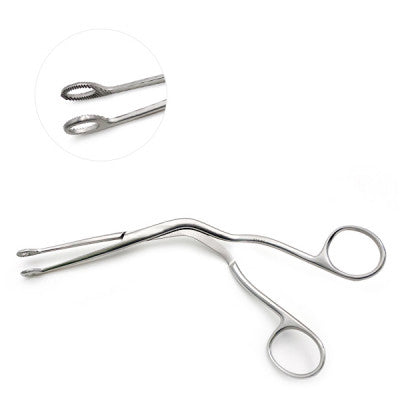
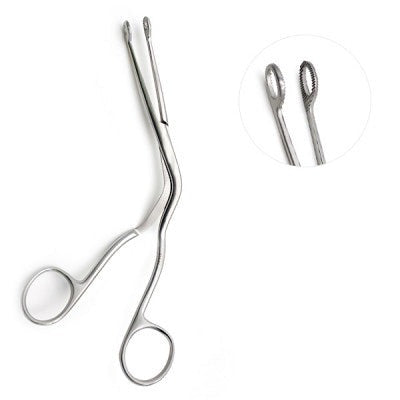
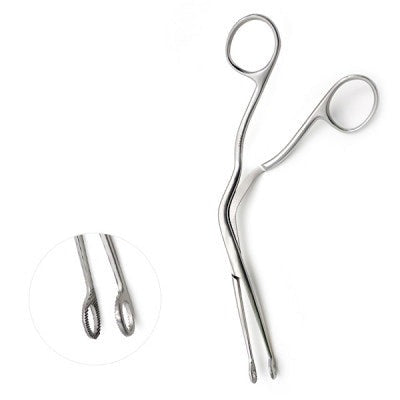
Precision in critical care. Our Magill Catheter Forceps are the industry standard for anesthesia, emergency medicine, and airway management. Engineered with a signature offset angle, these forceps provide clinicians with the unobstructed visibility and tactile control necessary to guide endotracheal tubes, catheters, and packing with absolute confidence.
[Shop Professional Airway Management Tools]
The Magill Catheter Forceps are a fundamental component of every "difficult airway" kit and anesthesia cart. When seconds count, these forceps provide the mechanical advantage needed to direct an endotracheal tube into the trachea accurately or to facilitate the placement of nasogastric tubes.
The primary advantage of the Magill design is its tactile feedback. The instrument is balanced to ensure that the user can "feel" the resistance of the airway, reducing the risk of mucosal trauma. Beyond intubation, these forceps are the preferred tool for removing foreign bodies from the airway and for placing throat packs during oral or maxillofacial surgery.
Built to withstand the rigorous sterilization protocols of modern hospitals and clinics, our Magill forceps are manufactured from premium stainless steel. They maintain their hinge tension and jaw alignment through thousands of cycles, making them a reliable, life-saving investment for any medical or veterinary facility.
Feature Details
Material : High-Quality Surgical Stainless Steel
Available Sizes Small (Infant), Medium (Child), Large (Adult)
Jaw Type Serrated for Secure Tube Handling
Handle Ergonomic Finger Rings
Maintenance Fully Autoclavable / Reusable
Primary Use Cases:
Q: Which size Magill Forceps should I choose?
A: Adult (Large) is standard for most human patients; Child (Medium) and Infant (Small) are essential for pediatric care or small animal veterinary use where oral space is highly restricted.
Q: Can these be used to remove foreign objects?
A: Yes. The serrated jaws and angled reach make them the primary tool for safely removing obstructions from the pharynx.
Q: Are they safe for use with all types of catheters?
A: Absolutely. They are designed to grip PVC, silicone, and rubber tubes without slipping or causing structural damage to the catheter.
Q: How do I maintain the hinge action?
A: We recommend standard ultrasonic cleaning and a drop of medical-grade lubricant on the box-lock (hinge) before autoclaving to ensure a lifetime of smooth operation.
