
Featured Collection
Your cart
Featured Collection

PEAK SURGICAL
SKU:PS-9307
Couldn't load pickup availability


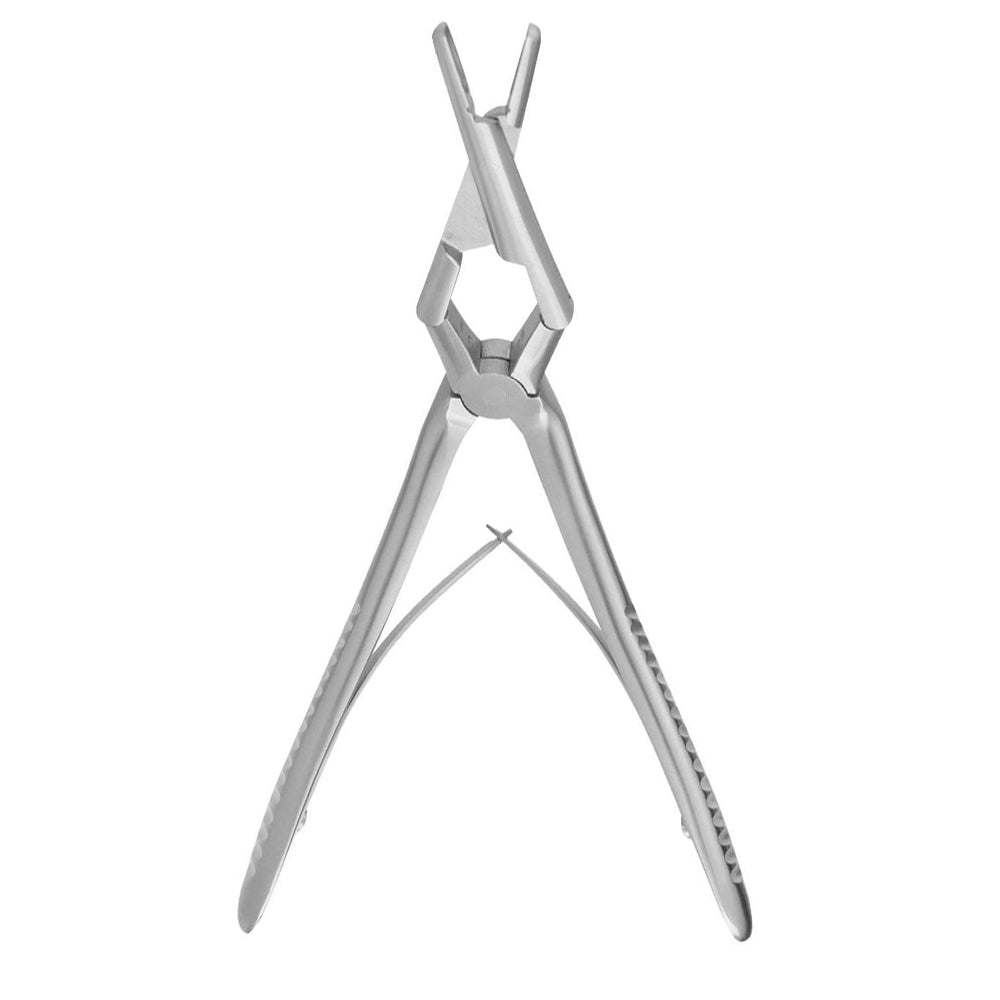
Jansen Middleton Septum Bone Forceps, SKU PS-9307, Model PS-9307, is an ENT bone-cutting forceps manufactured from German stainless steel for controlled septal bone removal, vomer trimming, and perpendicular plate reduction during nasal septal surgery. The available variants are Spoon Shaped 5.0mm x 12.5mm Working Length 3-5/8", Large 4.6mm x 15.0mm Working Length 4-1/8", and Small 3.6mm x 15.0mm Working Length 3-7/8". The instrument has long bayonet-style alignment, opposed cutting jaws, a box-style pivot, serrated grip handles, and a spring return mechanism that reopens the handles after each bite. It is used in septoplasty, submucous septal resection, rhinoplasty septal correction, vomerine crest reduction, bony septal spur removal, and nasal airway surgery where incremental removal of septal bone is required. This forceps supports ENT surgeons, facial plastic surgeons, rhinoplasty teams, hospital operating rooms, ambulatory surgical centers, and procurement teams maintaining reusable nasal surgery trays.
The instrument works through a spring-handle cutting mechanism that transfers handle compression into closure at the distal septal jaws. The long shaft keeps the surgeon’s hand outside the nasal aperture while the working end reaches the bony septum under direct visualization, headlight illumination, or endoscopic guidance. The opposing jaws are designed to capture thin septal bone, vomer, perpendicular plate fragments, or bony spurs before removing the selected segment through a controlled bite. The angled distal profile supports access along the septal plane without forcing the wrist into a straight anterior path. The box-style pivot maintains alignment between the two arms during closure and stabilizes the cutting axis during repeated bite cycles. The spring return reopens the handles after compression, allowing rapid repositioning for sequential removal. Serrated grip areas support instrument control when gloves are wet from saline irrigation or mucosal bleeding. The mechanism is selected for controlled septal bone cutting rather than broad cartilage dissection or heavy orthopedic bone removal.
In operative workflow, Jansen Middleton Septum Bone Forceps is introduced after mucoperichondrial and mucoperiosteal flap elevation, exposure of the bony septum, and identification of the osseous deviation or spur requiring removal. During septoplasty, the surgeon positions the working end along the vomer, perpendicular plate, or maxillary crest region and removes bone in incremental bites while preserving soft tissue control. In submucous septal resection, the forceps assists bony septal reduction after cartilage work and flap protection have created access to the posterior septal framework. In rhinoplasty, it supports refinement of bony septal deviations that affect internal nasal airway geometry or dorsal alignment planning. During septal spur removal, the jaws are placed around the projecting bone and closed in measured steps until the obstructing margin is reduced. The instrument is used with Freer elevators, Cottle elevators, Killian specula, suction tubes, septum scissors, nasal rasps, osteotomes, and hemostatic forceps in ENT and facial plastic operating room trays.
The Small 3.6mm x 15.0mm Working Length 3-7/8" variant is selected for narrow septal access, smaller nasal cavities, posterior bony spurs, and fine removal where precise jaw placement is required. The Large 4.6mm x 15.0mm Working Length 4-1/8" option provides a broader bite for accessible vomerine or perpendicular plate margins where increased working surface improves removal efficiency. The Spoon Shaped 5.0mm x 12.5mm Working Length 3-5/8" variant is selected when the surgeon needs a concave working profile to engage a septal ridge, bony crest, or localized protrusion with controlled containment of the removed fragment. Across all variants, the jaws provide the cutting function, the shaft preserves access, the pivot coordinates closure, and the spring handle returns the instrument to an open position. In tray planning, this instrument occupies the septal bone-biting role beside septum elevators, nasal specula, Takahashi forceps, Blakesley forceps, Kerrison rongeurs, osteotomes, rasps, suction, and irrigation instruments.
German stainless steel provides the rigidity required for repeated jaw closure, septal bone engagement, spring movement, and operating room reprocessing. The reusable construction supports surgical workflows involving manual cleaning, ultrasonic cleaning where used, drying, inspection, packaging, and steam autoclave sterilization between procedures. Satin, dull, and mirror finish options support operating room and sterile processing preferences; reduced-glare finishes assist visibility under surgical lighting, while mirror surfaces support inspection after cleaning. Reprocessing focuses on the distal cutting jaws, pivot recesses, spring mechanism, shaft surfaces, and serrated grip areas because bone dust, blood, mucus, saline, and tissue debris can collect around these surfaces. The Class I classification reflects a reusable manual surgical instrument with mechanical cutting action. CE marking and ISO 13485 documentation support regulated purchasing records for hospitals, ENT clinics, surgical centers, and distributors. FDA compliance information supports medical device procurement files for regulated healthcare markets. The one-year warranty, MOQ of one piece, OEM availability, carton box packing, rust-free listing, and return or replacement support fit ENT tray replenishment and distributor inventory workflows.
| SKU | PS-9307 |
|---|---|
| Product Name | Jansen Middleton Septum Bone Forceps |
| Price | $58.85 |
| Size/Gauge Variants | Spoon Shaped 5.0mm x 12.5mm Working Length 3-5/8"; Large 4.6mm x 15.0mm Working Length 4-1/8"; Small 3.6mm x 15.0mm Working Length 3-7/8" |
| Instrument Category | ENT Septum Bone Forceps |
| Procedure | Septoplasty, submucous septal resection, rhinoplasty septal correction, vomer trimming, perpendicular plate reduction, bony septal spur removal |
| Material | German Stainless Steel |
| Finish | Satin, dull, mirror |
| Sterilization | Reusable and autoclavable after cleaning, drying, inspection, and packaging |
| Instrument Classification | Class I |
| Reusable | Yes |
| Certifications | CE, ISO 13485, FDA |
| Warranty | 1 year |
| MOQ | 1 piece |
| OEM / Custom Orders | Available |
| After-Sale Service | Return and replacement support |
How does Jansen Middleton Septum Bone Forceps differ from Takahashi nasal forceps?
Jansen Middleton Septum Bone Forceps is designed for biting and removing septal bone, vomer fragments, and bony spurs during septoplasty. Takahashi nasal forceps is commonly used for grasping and removing nasal tissue fragments, polyps, or delicate intranasal structures depending on the selected pattern. The Jansen Middleton pattern uses stronger opposed jaws and a spring-return handle for sequential bone bites. Takahashi forceps usually functions as a grasping or cutting nasal forceps rather than a septal bone biter. Jansen Middleton Septum Bone Forceps is selected when the surgical target is bony septal framework rather than soft tissue. The two instruments can appear in ENT trays but their working mechanisms and tissue targets are different.
How are the Spoon Shaped, Large, and Small variants selected?
The Small 3.6mm x 15.0mm variant is selected for narrow nasal access, posterior septal spurs, and fine trimming of thin osseous margins. The Large 4.6mm x 15.0mm variant is selected when the surgeon needs a wider bite on accessible vomerine or perpendicular plate bone. The Spoon Shaped 5.0mm x 12.5mm variant is used when a concave jaw profile helps engage a septal ridge or localized bony crest. Jansen Middleton Septum Bone Forceps is selected according to jaw width, working length, septal deviation pattern, and exposure achieved after flap elevation. Smaller jaws favor precision, while larger jaws increase bone captured per bite. Variant choice depends on the exposed target and intended amount of septal bone removal.
How do CE, ISO 13485, and FDA documentation support procurement?
CE marking supports product conformity documentation for hospital purchasing and distributor review. ISO 13485 indicates that the manufacturing system follows medical device quality management and traceability requirements. FDA compliance information supports procurement records for regulated healthcare supply channels. Hospitals, ENT clinics, surgical centers, and instrument distributors use these documents during vendor approval, tender documentation, and nasal surgery tray standardization. Jansen Middleton Septum Bone Forceps can be entered into purchasing systems with recognized compliance references. This documentation supports international healthcare buyers comparing reusable ENT septum instruments across multiple suppliers.
How is the spring handle and pivot mechanism used intraoperatively?
The pivot links both arms and directs handle compression into jaw closure at the distal working end. During use, the surgeon places the jaws around a selected septal spur, vomer edge, or perpendicular plate fragment. As the handles close, the jaws bite and remove a controlled section of bone. The spring handle reopens the instrument after each compression, allowing quick repositioning for the next bite. This return action supports repeated septal bone trimming without interrupting hand position. Jansen Middleton Septum Bone Forceps depends on the pivot and spring system for controlled sequential bone removal.
What should ENT operating room teams know about sterilization and ordering?
This instrument is reusable and suitable for standard surgical instrument reprocessing workflows. Cleaning focuses on the distal jaws, cutting margins, pivot recesses, spring mechanism, shaft, and serrated grip surfaces before sterilization. The jaws are opened, brushed, rinsed, dried, and inspected for alignment before packaging. Steam autoclave processing follows the facility’s approved cycle for reusable stainless steel surgical instruments. Clinics and hospitals can order one piece because the MOQ is one piece. Jansen Middleton Septum Bone Forceps is supplied with OEM availability, one-year warranty coverage, and return or replacement after-sale support.


