
Featured Collection
Your cart
Featured Collection

PEAK SURGICAL
SKU:
Couldn't load pickup availability


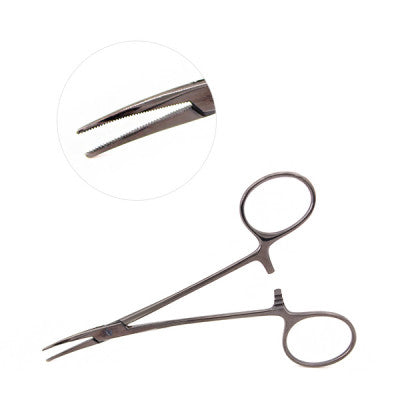
The professional clinical solution for micro-vessel stabilization and rapid instrument identification. The Halsted Mosquito Forceps 4 3/4" Color Coated Curved are foundational surgical instruments engineered to solve the problem of managing tiny bleeders in highly delicate anatomical sites. Characterized by their extra-compact profile, curved serrated jaws, and high-contrast color finish, these forceps act as a mechanical necessity for surgeons who require absolute precision without obstructing the surgical field. Its design is specifically optimized to provide a "low-profile" grip, ensuring that vascular structures are managed with mathematical accuracy while the color coating streamlines instrument organization in complex clinical environments.
The Halsted Mosquito Forceps 4 3/4" Color Coated Curved represent the pinnacle of refined surgical ergonomics and organized sterile field management. In any professional environment—from neonatal intensive care to high-precision dermatological surgery—the ability to definitively secure small vessels while maintaining rapid instrument recognition is a critical success factor. These forceps act as a high-durability mechanical extension of the surgical team’s organization, offering a level of reliability and "visual clarity" that standard stainless steel instruments cannot provide.
At its core, the instrument is built for professional-grade longevity. The "Halsted" pattern is universally favored for its delicate tips, which are designed to clamp the smallest vascular pedicles with minimal collateral tissue trauma. The box-lock joint is precision-milled to ensure the jaws remain perfectly aligned, preventing lateral torque and ensuring a reliable seal every time the ratchet is engaged.
Built to exceed international standards for medical hardware, these color-coded Mosquito Forceps are fully reusable and intended for high-frequency professional use. Their robust yet delicate construction and specialized "High-Visibility" profile make them an indispensable asset for ensuring safe, organized, and high-precision results in comprehensive patient care.
Halsted Mosquito Forceps 4 3/4" Color Coated, Curved
Halsted Mosquito Forceps 4 3/4", Color Coated, and Curved are used to clamp and hold blood vessels during Surgery.
| Product Name | Halsted Mosquito Forceps 4 3/4" |
| Properties | Veterinary Surgical Instruments |
| Model Number | PS-VS-0065 |
| Type | Veterinary Surgical Instruments |
| Brand Name | Peak Surgicals |
| Instrument classification | Class I |
| Warranty | 1 YEAR |
| After-sale Service | Return and Replacement |
| Material | Medical Stainless Steel |
| Feature | Reusable |
| Certificate | CE, ISO-13485, FDA |
| Usage | Operating Room, etc |
| OEM | Available |
| Finish | Satin. Dull. MIRROR |
| Quality | Reusable |
| Packing | Carton Box, Others |
| Rust Free | Yes |
| MOQ | 1 Piece |
Feature Details
Total Length 4 3/4" (120mm)
Jaw Pattern Curved / Fully Serrated
Identification Medical-Grade Color Coating
Closure Type Precision Ratchet Lock
Material Core Premium Surgical-Grade Stainless Steel
Maintenance Fully Autoclavable / Reusable
Primary Use Cases:
Q: How do these differ from Kelly Forceps?
A: Halsted Mosquito forceps are smaller (4 3/4") and have much finer tips than Kelly forceps (usually 5.5"). Mosquitoes are intended for small vessels, whereas Kellys are for mid-sized vessels and tissue.
Q: Does the color coating interfere with the fine serrations?
A: No. The coating is applied with industrial precision to the handles and shanks, ensuring the serrated jaw surfaces remain sharp and mechanically accurate for secure clamping.
Q: Are these suitable for clamping sutures?
A: They can be used for very fine sutures, but their primary purpose is hemostasis. Using them on heavy needles or thick sutures may eventually misalign the delicate tips.
Q: How should I maintain the color finish?
A: Clean with pH-neutral detergents and soft brushes. Avoid abrasive metal scrubbers, which can scratch the coating over time.
Q: Can they be used in robotic surgery?
A: They are frequently used as bedside manual instruments for hemostasis or suture management during robotic-assisted procedures due to their small size and easy identification.


