
Featured Collection
Your cart
Featured Collection

PEAK SURGICAL
SKU:PS-GS-009-1
Couldn't load pickup availability
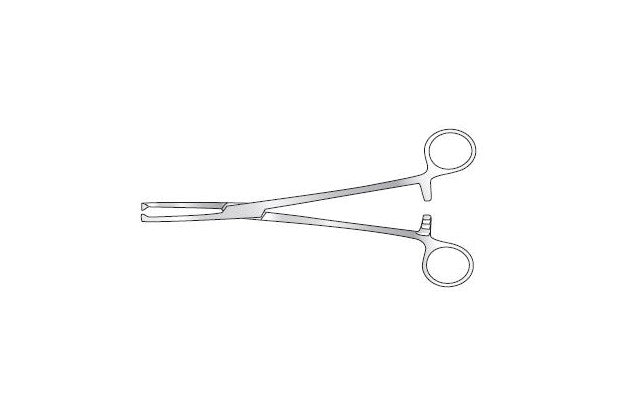
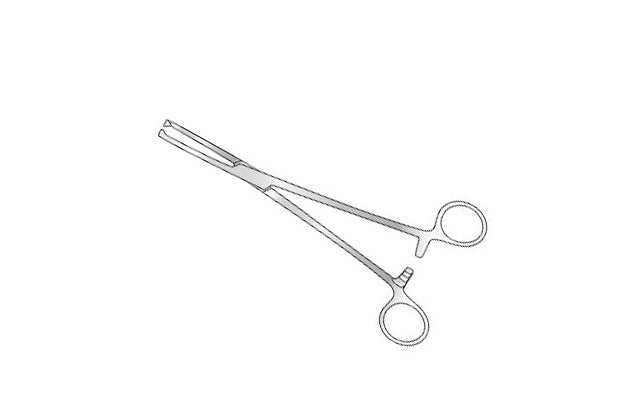
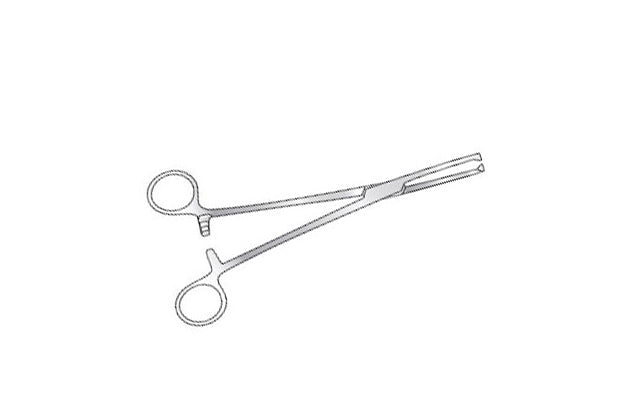
The professional standard for high-traction, linear pelvic stabilization. The Gwilliam Hysterectomy Forceps are specialized surgical instruments engineered for the robust clamping of heavy tissue and ligaments during gynecological surgery. Featuring a 203mm (8") chassis and straight jaws with a 1x2 "tooth-and-socket" configuration, this tool acts as a mechanical necessity for surgeons requiring maximum axial grip. The combination of longitudinal serrations and interlocking teeth ensures that dense pelvic structures are held with absolute security, providing the stable platform needed for safe tissue division and hemostasis.
[Add to Cart – Professional Gynecology Series]
The Gwilliam Hysterectomy Forceps (203mm) are a vital asset for any gynecological surgical tray. Their primary utility lies in their "security under load." During the mobilization of the uterus, the Gwilliam clamp provides a fail-safe grip on the parametrium and associated vascular pedicles. The straight design makes them an intuitive choice for procedures where the anatomical structures can be brought into a neutral, linear plane, providing a predictable and stable "bite" every time.
Built to exceed the rigorous standards of modern surgical centers, these forceps are fully autoclavable. The precision alignment of the 1x2 teeth ensures they meet perfectly without "scissoring," supporting the highest levels of procedural safety and clinical efficiency.
Feature Details
Material Premium Surgical-Grade Stainless Steel
Total Length 203mm (8 Inches)
Tip Profile 1x2 Interlocking Teeth
Serration Type Longitudinal (Vertical)
Maintenance Fully Autoclavable / Reusable
Primary Use Cases:
Q: What is the specific advantage of 1x2 teeth?
A: When clamping dense ligaments, tissue can often "squirt" out of the front of the forceps as pressure is applied. The 1x2 teeth pierce the tissue and interlock, creating a physical barrier that prevents any forward or lateral movement of the specimen.
Q: Why use longitudinal serrations instead of cross-serrations?
A: Longitudinal serrations provide a superior grip when pulling or applying traction along the axis of the instrument. They are also generally easier to clean and cause less "crushing" trauma to the tissue fibers compared to cross-hatched patterns.
Q: Are these forceps suitable for both abdominal and vaginal approaches?
A: While the straight profile is most commonly used in open abdominal hysterectomies for direct access, it can be used in vaginal procedures depending on the patient's anatomy and the surgeon's preference for linear reach.
Q: How do I maintain the alignment of the interlocking teeth?
A: Proper care is essential. Avoid using these forceps to grasp needles or hard materials, as this can damage the 1x2 teeth. Clean in an ultrasonic bath and check the alignment of the tips during each inspection. If the teeth do not interlock perfectly, the instrument should be serviced to prevent tissue trauma.
