
Featured Collection
Your cart
Featured Collection

PEAK SURGICAL
SKU:PS-1429
Couldn't load pickup availability


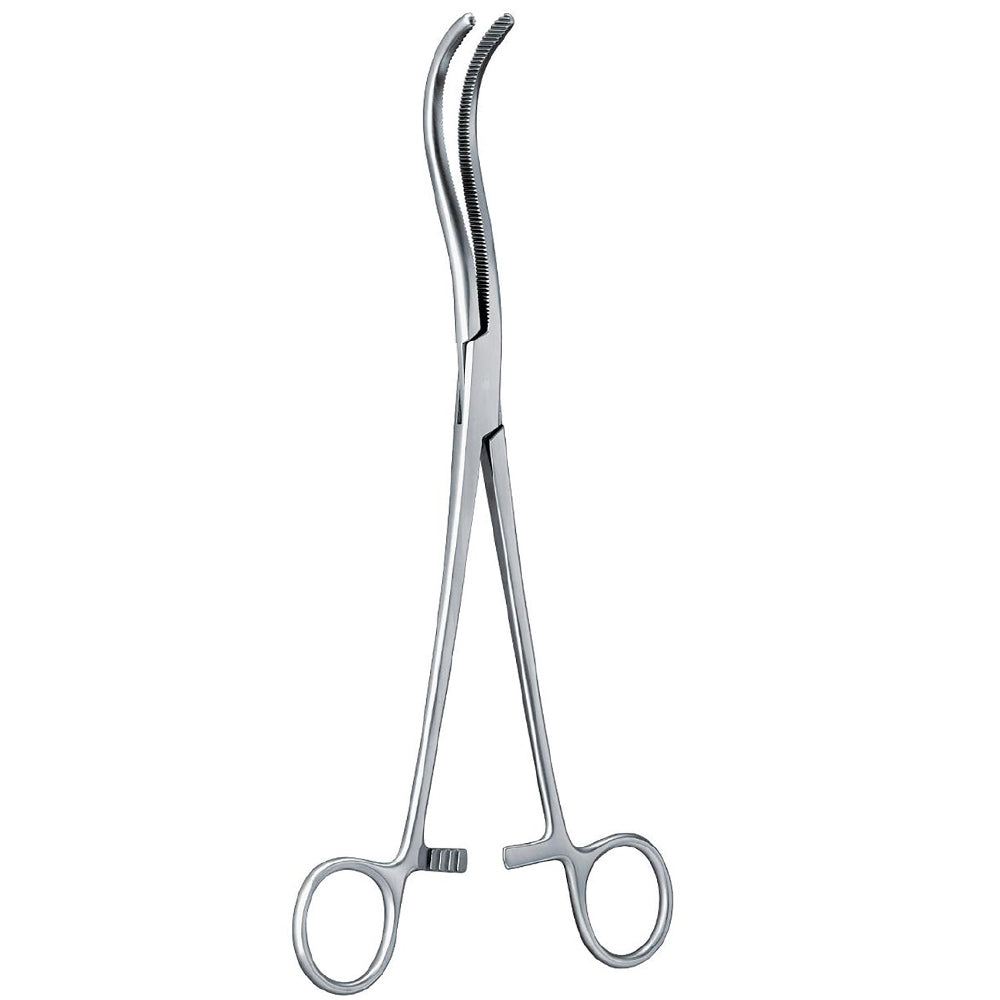
The Guyon Pean Vessel Clamp from Peak Surgicals (SKU: PS-1429) is a reusable 8-3/4 inch German Stainless Steel surgical clamp designed for vessel occlusion, pedicle control, tissue traction, and secure hemostatic handling during open surgical procedures. Each instrument is priced at $9.90 and features long curved jaws, serrated internal gripping surfaces, smooth rounded outer jaw margins, a box-lock joint, long shanks, ring handles, and a ratchet locking mechanism for maintained clamping pressure. General surgeons, urologists, gynecologic surgeons, vascular assistants, hospital operating room teams, ambulatory surgical centers, and procurement departments use this clamp during open abdominal surgery, renal pedicle exposure, hysterectomy pedicle control, bowel surgery, soft tissue dissection, vascular bundle handling, hemostasis, and ligation workflow. The curved jaw profile allows the instrument to approach vessels and pedicles from a controlled angle while preserving hand clearance outside the operative field. The serrations provide firm purchase during clamping, traction, and ligature placement.
The Guyon Pean pattern uses long curved jaws to reach vessel bundles and pedicles in deeper operative fields without forcing the surgeon’s hand directly into the wound. The curvature helps the jaws follow tissue planes around vascular pedicles, broad ligament tissue, renal hilar structures, mesenteric windows, and soft tissue bundles. Serrated internal surfaces increase purchase on clamped tissue and reduce slippage during ligature placement, traction, or controlled occlusion. The smooth rounded outer margins reduce focal pressure against surrounding fascia, peritoneum, bowel surface, ureteral tissue, vessel adventitia, or retroperitoneal fat. The box-lock joint keeps both jaws aligned as closure force is transferred from the handles to the working ends. Long shanks provide reach and leverage, which is important when the target lies below wound level. The ring handles give stable finger control, while the ratchet lock maintains the selected jaw closure during hemostasis, pedicle division, specimen mobilization, and knot placement without continuous hand compression.
During open abdominal surgery, the clamp is used to grasp and secure vascular tissue bundles before ligature placement or division. In urology procedures, it supports renal pedicle handling, hilar soft tissue control, perirenal tissue traction, and vessel-adjacent dissection during nephrectomy or renal exposure. In gynecologic surgery, the curved jaws assist with uterine pedicle handling, adnexal tissue control, broad ligament dissection, and vascular bundle occlusion during hysterectomy or pelvic procedures. In bowel surgery, the instrument may assist with mesenteric vessel control, omental tissue handling, and hemostatic clamping during resection or mobilization steps. During soft tissue surgery, it provides secure temporary retention of bleeding points, tissue pedicles, or fibrous bundles while the surgeon applies sutures, clips, cautery, or ties. The ratchet lock keeps closure consistent while suction, scissors, needle holders, and forceps remain active. The curved shape helps the surgeon work around adjacent tissue instead of approaching every vessel in a straight line.
The 8-3/4 inch size gives the Guyon Pean Vessel Clamp enough reach for open abdominal, pelvic, and urology exposure while keeping the handles outside the deepest part of the operative site. This length is useful when the surgeon needs to approach a vessel or pedicle through layered tissue, peritoneal reflection, retroperitoneal fat, mesentery, or pelvic depth. A shorter clamp can crowd the incision and interfere with ligature placement, suction, or dissection instruments. The 8-3/4 inch profile provides a working balance between reach and hand control. The curved jaws are suited to renal pedicle control, uterine pedicle handling, mesenteric vessel clamping, and soft tissue bundle traction because they approach the target from an angle rather than perpendicular to the wound. The serrated jaw surfaces help maintain grip on tissue during traction and closure. This single size is practical for operating rooms that require a dependable medium-long vessel clamp for general surgical and specialty trays.
German Stainless Steel gives the clamp the rigidity, corrosion resistance, and mechanical stability required for repeated operating room use. A vessel clamp must retain jaw curvature, serration definition, box-lock alignment, shank symmetry, and ratchet engagement because distortion can affect closure accuracy and tissue control. Satin and dull finishes reduce glare under operating lights and headlight illumination, while mirror finish provides a smooth surface for visual inspection after cleaning. After surgery, the clamp is decontaminated, the serrated jaws are brushed, the box-lock joint is opened and cleaned, the ratchet teeth are cleared, and the ring handles are inspected before steam sterilization by autoclave after complete drying. The Class I classification, CE marking, ISO-13485 certification, and FDA compliance support hospital purchasing, distributor documentation, and international tender files. The listed 1-year warranty, MOQ of 1 piece, OEM availability, and return and replacement service support reusable clamp tray replacement planning.
| SKU | PS-1429 |
|---|---|
| Product Name | Guyon Pean Vessel Clamp |
| Price | $9.90 per piece |
| Size/Gauge Variants | 8-3/4 inches |
| Instrument Category | Surgical Instruments / Vessel Clamps / Hemostatic Clamps |
| Procedure | Open Abdominal Surgery, Renal Pedicle Exposure, Hysterectomy Pedicle Control, Bowel Surgery, Soft Tissue Dissection, Vessel Ligation, Hemostasis |
| Material | German Stainless Steel |
| Finish | Satin, Dull, Mirror |
| Sterilization | Steam sterilizable / Autoclave compatible |
| Instrument Classification | Class I |
| Reusable | Yes |
| Certifications | CE, ISO-13485, FDA |
| Warranty | 1 Year |
| MOQ | 1 Piece |
| OEM / Custom Orders | Available |
| After-Sale Service | Return and Replacement |
How does the Guyon Pean Vessel Clamp compare with a standard Pean hemostatic forceps?
The Guyon Pean Vessel Clamp is longer and more suited to deeper vessel and pedicle control than a standard Pean hemostatic forceps. Standard Pean forceps are commonly used for routine hemostasis in superficial or moderate-depth fields. The Guyon Pean pattern provides longer curved jaws and extended shanks, giving better reach around abdominal, pelvic, and urology structures. Its curvature allows the surgeon to approach tissue bundles from an angle during pedicle dissection and ligation. A standard Pean instrument is practical for smaller bleeding points, while this clamp is selected when the target is deeper or requires stronger pedicle handling. The ratchet closure also keeps the jaws fixed during ligature placement. Both instruments support hemostasis, but the Guyon Pean design is better aligned with deeper open surgical exposure.
Why is the 8-3/4 inch length useful for vessel control?
The 8-3/4 inch length gives the surgeon working reach into abdominal, pelvic, and retroperitoneal fields while maintaining hand clearance outside the wound. During renal exposure, hysterectomy, bowel surgery, or soft tissue dissection, vessels and pedicles may lie behind fascia, fat, peritoneal folds, or adjacent organs. A shorter clamp can crowd the operative field and interfere with suction, ties, scissors, and needle holders. The Guyon Pean Vessel Clamp keeps the handles accessible while the curved jaws work at depth. This length also improves leverage during controlled closure of vascular bundles and pedicles. The size is suitable for operating rooms that need one medium-long clamp for multiple open surgical workflows. It supports vessel control without the bulk of larger vascular clamps.
What do CE, ISO 13485, and FDA compliance mean for procurement?
CE marking supports conformity documentation for hospitals, clinics, and distributors sourcing reusable surgical instruments. ISO 13485 indicates that manufacturing is managed under a medical device quality management system with controlled production, inspection, and traceability. FDA compliance supports procurement files for buyers sourcing reusable stainless steel instruments for regulated markets. The Guyon Pean Vessel Clamp is listed as a Class I reusable instrument, which fits standard purchasing categories for non-powered surgical clamps. These credentials help procurement officers compare the item against tender requirements, internal sourcing policies, and distributor documentation needs. German Stainless Steel construction, 1-year warranty, MOQ of 1 piece, and OEM availability strengthen the ordering record for repeat supply. For operating rooms and distributors, the documentation aligns vessel control function with regulated purchasing expectations.
How is the ratchet lock used during pedicle or vessel clamping?
The ratchet lock is engaged after the curved jaws are placed around the selected vessel, pedicle, or tissue bundle. As the ring handles close, the ratchet teeth hold the chosen jaw pressure without continuous hand compression. This allows the surgeon to maintain control while placing ligatures, applying clips, dividing tissue, inspecting hemostasis, or changing instrument position. In renal, pelvic, and abdominal surgery, stable closure is important because the clamped structure may be deep and surrounded by active instruments. The Guyon Pean Vessel Clamp can be released by controlled disengagement of the ratchet when the vessel has been secured or when repositioning is needed. Proper ratchet function prevents gradual jaw opening during hemostatic steps. This mechanism is central to reliable maintained clamping during open surgery.
How should the Guyon Pean Vessel Clamp be cleaned and sterilized after surgery?
After surgery, the clamp is decontaminated promptly so blood, fat, tissue residue, saline, and coagulum do not dry on the jaws, box lock, shanks, ratchet, or ring handles. The serrated internal jaw surfaces are brushed carefully because retained debris can remain between the fine grooves. The box-lock joint is opened and cleaned so the jaws move smoothly during the next procedure. The ratchet teeth are cleared and inspected for secure engagement. The curved jaws are checked for alignment, smooth outer margins, and intact serration before packaging. German Stainless Steel supports steam sterilization by autoclave after complete cleaning and drying. The Guyon Pean Vessel Clamp should return to the surgical tray only after the jaws close evenly, the lock holds securely, and all surfaces are visually clean.


