
Featured Collection
Your cart
Featured Collection

PEAK SURGICALS
SKU:PS-DI-00669
Couldn't load pickup availability
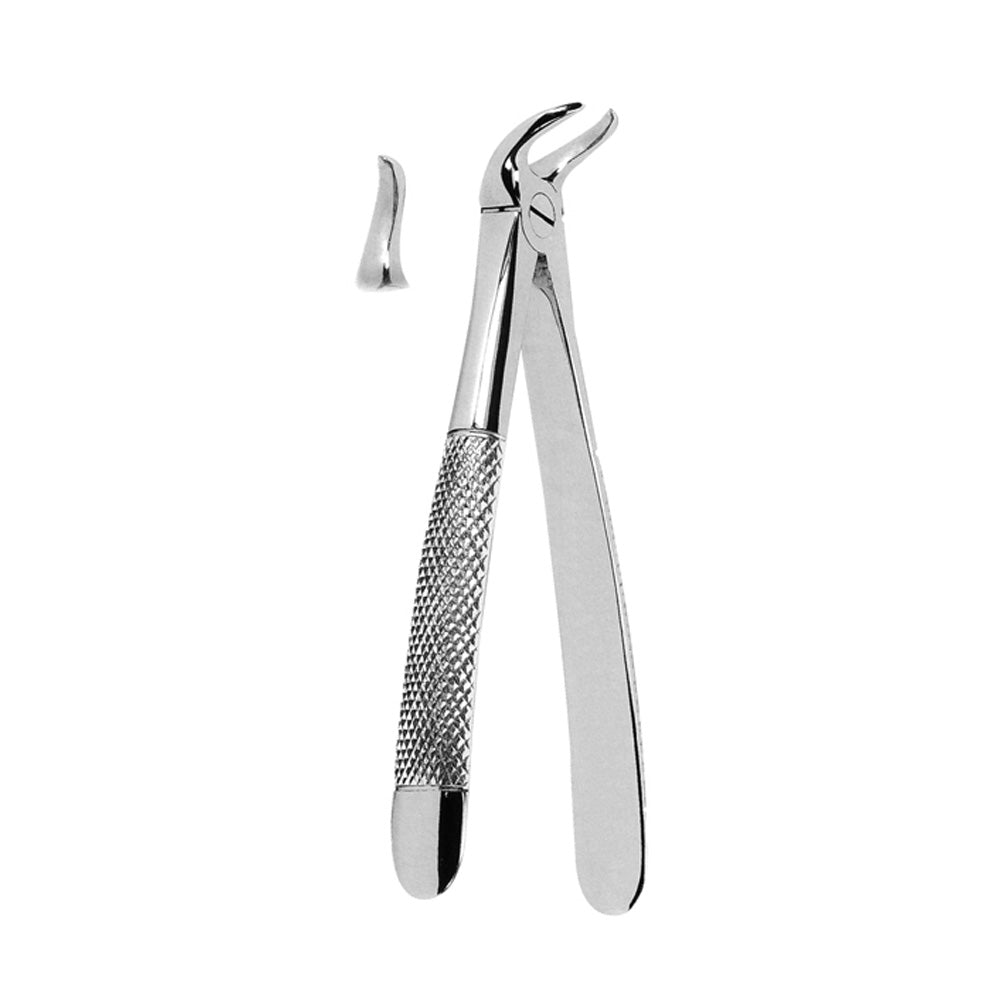
Overview of Lower Molar Extraction Challenges
The process of extracting lower molars that have cracked or damaged crowns poses significant clinical issues because of the limited structure of the crown and mandibular bone, which has restricted access. Forceps for extraction are often ineffective in holding a firm grip on teeth that are damaged and increase the possibility of slippage, root fracture or injury to the adjacent tissues. Extracting Forceps for Lower Decayed Molars of Broken Crown (Fig. 87) is specifically designed to tackle these problems and ensure secure, controlled, safe and controlled extractions.
Purpose and Clinical Applications
The principal function of these forceps for extraction is to effectively grab and remove the lower part of molars with damaged or severely decayed crowns. The unique design of these forceps allows dentists to work with the tooth's remaining cervical structure efficiently, even when minimal crowns are in place.
Forceps are used extensively in:
They are especially useful for extractions that are complex, where traditional instruments are not able to provide complete control.
Design Features for Broken Crown Extraction
The forceps are constructed with strong, anatomically contoured jaws that allow for deep engagement with the tooth's neck or root region. The design improves the leverage and stability of extraction motions.
Key design characteristics include:
This structure allows for effective relaxation of the limbs while minimising pressure on the surrounding bone.
Material and Construction
Made from premium stainless steel of medical grade, the forceps for extraction have high strength, corrosion resistance and long-term durability. The stainless steel construction guarantees that the forceps maintain their precise alignment and perform well through numerous sterilisation cycles.
The strong construction allows for difficult extractions without breaking or losing grip.
Advantages in Dental Practice
Using forceps to extract lower decayed molars that are part of a broken crown can provide several significant advantages:
These advantages can help decrease the risk of complications and increase patient satisfaction.
Role in Modern Dental Surgery
In today's oral and dental surgical practices, specialised instruments that are specialized are necessary to manage difficult extraction cases. Extracting Forceps Lower Decayed Molars of Broken Crown (Fig. 87) are specifically designed to meet the stringent demands of these procedures. Their precision jaw design, sturdy stainless-steel construction and sturdy gripping capabilities are a crucial part of any dental instrument set, which helps ensure safe procedures and more predictable outcomes in clinical practice.
Order Processing: We strive to serve you promptly! Orders placed before the cut-off time of 5:00 PM (GMT -05:00) (Eastern Standard Time) will be processed the same business day. Orders placed after this time will be processed the next business day.
Handling Time: Our standard handling time is 2-4 business days (Monday through Friday). This includes order verification, quality checks, packaging, and dispatch. Please note that orders placed on weekends or holidays will be processed on the following business day.
Transit Time: Once dispatched, the estimated transit time is 7-10 business days (Monday through Friday). However, transit times may vary depending on your location and any unforeseen circumstances.
Shipping Fee: Enjoy free worldwide shipping on all orders over $99! At Peak Surgical Instruments, we cover all import charges for your convenience ( T & C Apply)
Purchase below 99$ we have flat rate of 31.99$ for the worldwide shipping.
Customers will receive a tracking ID as soon as their order is dispatched via FedEx or DHL.
We proudly offer worldwide shipping, ensuring that our premium surgical instruments are accessible to healthcare professionals across the globe. No matter where you are, you can count on us to deliver quality tools right to your doorstep!
To provide you with confidence in your purchase, we offer a 1-year warranty as well as a 30-day money-back guarantee on all non-personalized orders.
We understand that delays can be frustrating. Transit times are estimates based on recent orders and may change. If your package is delayed, we will do everything possible to expedite delivery. In case of significant delays or missing packages, we will reship your order at no extra cost to you
