
Featured Collection
Your cart
Featured Collection

PEAK SURGICALS
SKU:PS-OP-5704
Couldn't load pickup availability


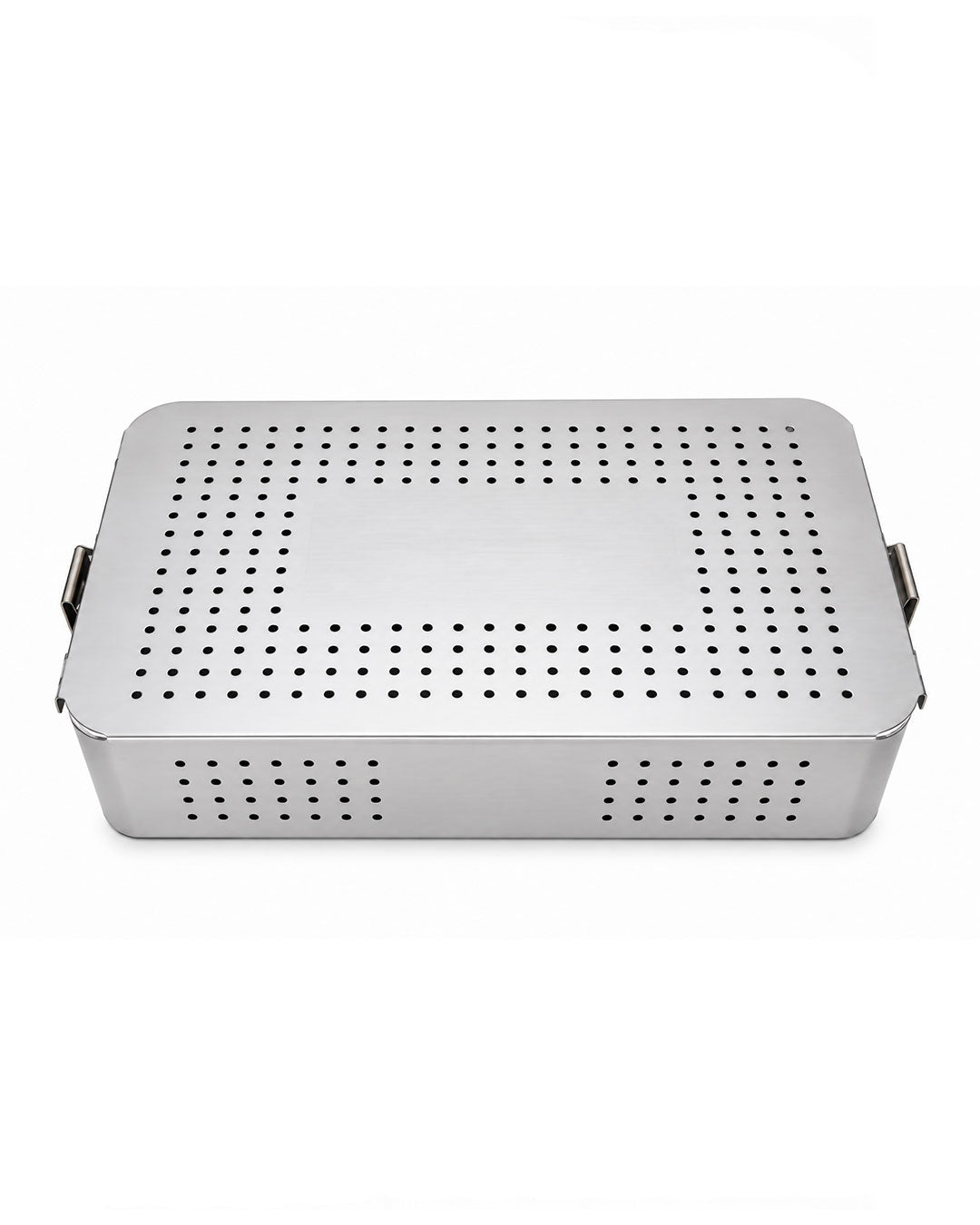
Eco Cage Instrument Set, SKU PS-OP-5704, is a 13-instrument German-forged stainless steel system for sizing, modifying, filling, holding, and positioning compatible spinal mesh cages. The set comprises AS1711.001 mesh cage holding forceps, AS1711.008 small cage cutter, AS1711.015 large cage cutter, AS1711.022 straight pusher, AS1711.029 curved pusher, AS1711.036 10–12 mm sizer, AS1711.043 14–16 mm sizer, AS1711.050 18–20 mm sizer, AS1711.057 osteotribe, AS1711.064 implant support, and 6 mm, 10 mm, and 14 mm graft pushers under codes AS1711.071, AS1711.078, and AS1711.085. It supports implant preparation during selected cervical, thoracic, and lumbar corpectomy reconstruction, vertebral body replacement, and interbody fusion workflows that specify a compatible cut-to-length mesh cage. The cutters adjust cage length before implantation, while the forceps stabilize the component during preparation and transfer. Trial sizers assess the reconstructed space, and the straight or curved impactors advance the implant according to the operative corridor. The osteotribe prepares graft material, and the three graft-pusher diameters pack material within the implant lumen. Spine surgeons, orthopedic surgeons, and neurosurgeons use this reusable set in hospital operating theatres, trauma centers, and specialist spinal units.
The instrument sequence separates cage modification, graft preparation, and insertion into distinct controlled stages. Small and large cage cutters provide different jaw capacities for trimming compatible mesh implants to the required length. Their opposing cutting edges apply concentrated force across the cage wall; the implant must remain supported so the cut does not create uncontrolled deformation. Mesh cage holding forceps secure the component during measurement, cutting, graft loading, and transfer without requiring direct hand contact with its prepared surface. The implant support provides a stable working base while the cage is being packed or positioned. The osteotribe crushes or compacts prepared bone graft into a consistency appropriate for delivery into the implant lumen. Graft pushers then transmit axial force through 6 mm, 10 mm, or 14 mm working ends selected according to the cage opening and available access. During insertion, the straight pusher follows a direct operative trajectory, while the curved model offsets the handle from the visual axis or surrounding anatomy. Each pusher contacts the implant through its distal working face so advancement force is transferred along the selected path. Final placement and orientation are assessed with the imaging method and implant-specific technique used by the surgical team.
During vertebral body reconstruction, decompression and removal of pathological bone precede measurement of the resulting defect. The surgeon selects an implant diameter and planned length according to the endplate dimensions, available osseous support, spinal level, alignment, and compatible cage system. The 10–12 mm, 14–16 mm, or 18–20 mm trial is introduced to evaluate the reconstructed space without committing the definitive implant. Once sizing is established, the small or large cutter trims the mesh cage according to its diameter and required height. The cut margins are examined before the holding forceps transfer the component to the implant support. Prepared autograft, allograft, or another graft material authorized by the operative protocol is introduced and compacted using the osteotribe and appropriately sized graft pusher. The straight inserter supports an axial route through an open anterior, lateral, or posterior corridor where direct access is available. The curved pattern is selected when the exposure requires hand clearance or an offset line of approach. The implant is advanced into the prepared defect while its relationship to the adjacent endplates, neural structures, and reconstruction hardware is monitored. This set does not include the cage implant, decompression instruments, supplemental fixation system, imaging equipment, or patient-specific alignment tools.
AS1711.036 covers the 10–12 mm implant range and is intended for the smallest cage diameters represented in this configuration. AS1711.043 assesses the intermediate 14–16 mm range, while AS1711.050 corresponds to 18–20 mm implants used where the reconstructed space and endplate footprint accommodate the larger profile. Trial selection is determined by the operative level, corpectomy defect, canal and vascular relationships, endplate dimensions, and specifications of the compatible implant. AS1711.008 is the small cutter for lower-profile mesh cages, whereas AS1711.015 provides the jaw capacity required for larger components. The 6 mm graft pusher enters narrow openings and supports localized packing within smaller lumens. The 10 mm model covers the intermediate working diameter, and the 14 mm option distributes force across a broader graft column in larger cages. Pusher diameter should permit controlled passage without binding against the implant wall. AS1711.022 is used when a direct line exists between the operative access and implant face. AS1711.029 provides an offset approach where the surgeon must work around the wound margin, retractor, fixation hardware, or adjacent anatomy. The forceps and support stabilize the prepared cage while each sizing, cutting, filling, and transfer decision is completed.
German-forged stainless steel provides the rigidity and corrosion resistance required for reusable cutters, forceps, impactors, sizers, and graft-compaction instruments. The cage cutters require particular attention because edge deformation, jaw misalignment, or retained metal fragments can affect the cut surface. Holding-forceps jaws should be examined for symmetrical closure and secure control of the compatible implant. Straight and curved pushers require inspection of their shafts and distal contact faces for bending, cracking, or impact damage. Graft tools must be cleared of bone residue before material dries inside recesses or against working ends. After use, the instruments should undergo prompt decontamination, detergent cleaning, brushing, rinsing, and complete drying under the healthcare facility’s validated protocol. Hinges and concealed gripping surfaces should remain accessible to the cleaning process. The reusable configuration can be steam sterilized according to the institutional cycle and Peak Surgicals reprocessing instructions. CE documentation supports European conformity review, while ISO 13485 addresses the manufacturer’s medical-device quality management system. United States buyers should evaluate applicable FDA establishment, listing, classification, labeling, and import records without interpreting registration as device approval. Hospitals should retain instrument inspection, sterilization release, lot traceability, and service records under SKU PS-OP-5704.
| AS1711 Eco Cage Instrument Set | Set Consisting of | Units |
|---|---|---|
| AS1711.001 | Mesh Cage Holding Forceps for Eco Cage | 1 |
| AS1711.008 | Cage Cutter, Small, for Eco Cage | 1 |
| AS1711.015 | Cage Cutter, Large, for Eco Cage | 1 |
| AS1711.022 | Pusher, Straight, for Eco Cage | 1 |
| AS1711.029 | Pusher, Curved, for Eco Cage | 1 |
| AS1711.036 | Implant Sizer, 10–12 mm, for Eco Cage | 1 |
| AS1711.043 | Implant Sizer, 14–16 mm, for Eco Cage | 1 |
| AS1711.050 | Implant Sizer, 18–20 mm, for Eco Cage | 1 |
| AS1711.057 | Osteotribe for Eco Cage | 1 |
| AS1711.064 | Implant Support for Eco Cage | 1 |
| AS1711.071 | Graft Pusher, 6 mm, for Eco Cage | 1 |
| AS1711.078 | Graft Pusher, 10 mm, for Eco Cage | 1 |
| AS1711.085 | Graft Pusher, 14 mm, for Eco Cage | 1 |
| SKU | PS-OP-5704 |
|---|---|
| Product Name | Eco Cage Instrument Set |
| Price | $768.90 USD |
| Size/Gauge Variants | 10–12 mm, 14–16 mm, and 18–20 mm implant sizers; 6 mm, 10 mm, and 14 mm graft pushers |
| Instrument Count | 13 instruments |
| Instrument Category | Spinal mesh cage preparation and insertion instrumentation |
| Procedure | Selected cervical, thoracic, and lumbar corpectomy reconstruction and interbody fusion using a compatible mesh cage |
| Material | German-forged stainless steel |
| Finish | Satin surgical finish |
| Sterilization | Reusable; clean and steam sterilize under the validated institutional process and supplied reprocessing instructions |
| Instrument Classification | Reusable manual orthopedic and spinal surgical instruments |
| Reusable | Yes |
| Certifications | CE and ISO 13485 documentation; FDA-compliant procurement documentation for the applicable destination market |
| Warranty | 30-day money-back guarantee under Peak Surgicals return terms |
| MOQ | 1 set |
| OEM / Custom Orders | Available for agreed branding, packaging, and instrument-set requirements |
| After-Sale Service | Order support, return assistance, replacement support, and procurement-document assistance |
How does a mesh cage instrument set differ from an expandable cage system?
A mesh cage is generally trimmed to the required length before implantation and does not expand after placement. Its instrument set therefore includes cage cutters, external holding forceps, graft-packing tools, and impactors. An expandable vertebral body replacement cage is inserted in a collapsed configuration and enlarged in situ through a system-specific expansion driver. That alternative commonly requires dedicated endplate-angle, expansion, and locking instruments rather than cut-to-length preparation tools. The Eco Cage Instrument Set uses small and large cutters to modify a compatible mesh component outside the reconstructed space. Implant selection must follow the fixation system’s technique and the surgeon’s assessment of the operative level and defect.
How should the three implant sizer ranges be selected?
The 10–12 mm sizer evaluates the smallest diameter range included in the system. The 14–16 mm model assesses an intermediate footprint, while the 18–20 mm trial represents the largest listed range. Selection depends on the cervical, thoracic, or lumbar level, measured endplate dimensions, corpectomy defect, available working corridor, and compatible implant specifications. A trial should sit within the prepared reconstruction space without inappropriate contact with the neural or vascular boundaries. The selected footprint must correspond to the definitive cage rather than serving as a universal spinal dimension. The Eco Cage Instrument Set sizers support dimensional assessment but do not determine implant height, lordotic angle, or supplemental fixation.
What do CE, ISO 13485, and FDA compliance mean for procurement?
CE documentation supports conformity assessment for the applicable European medical-device framework. ISO 13485 certification relates to the manufacturer’s documented quality management system. United States procurement requires review of relevant FDA establishment, listing, classification, labeling, and import documentation. Registration or listing does not mean that the FDA has approved the individual instrument set. Buyers evaluating the Eco Cage Instrument Set should match documents to the legal manufacturer, product identity, validity period, and destination market. These records should be retained with supplier qualification, incoming inspection, purchase, and traceability documentation.
How do the forceps and straight or curved pushers control the cage?
The holding forceps grip the mesh implant during cutting, graft filling, transfer, and initial presentation to the operative corridor. Its joint converts handle movement into controlled jaw closure around the cage wall. The surgeon maintains only the pressure required to retain the implant without deforming its mesh structure. The straight pusher delivers axial force through a direct insertion path. The curved version offsets the handle when the wound margin, retractor, anatomy, or supplemental hardware obstructs straight access. Within the Eco Cage Instrument Set, these instruments provide complementary control but do not create a locking connection to every cage design.
How should hospitals clean and sterilize the set?
Visible graft residue should be removed before it dries on cutter jaws, forceps serrations, sizers, and pusher faces. Reprocessing personnel should clean hinged instruments in an open position and brush concealed joint surfaces thoroughly. The cage cutters require inspection for chipped edges, jaw misalignment, or retained metal fragments. Shafts and implant-contact surfaces should be checked for bending, impact damage, corrosion, and surface defects. After rinsing and complete drying, the Eco Cage Instrument Set should be packaged and steam sterilized through the facility’s validated process. Instrument counts and sterilization records should account for all 13 AS1711 components before release to the operating room.


