
Featured Collection
Your cart
Featured Collection

PEAK SURGICALS
SKU:PS-S-00029
Couldn't load pickup availability


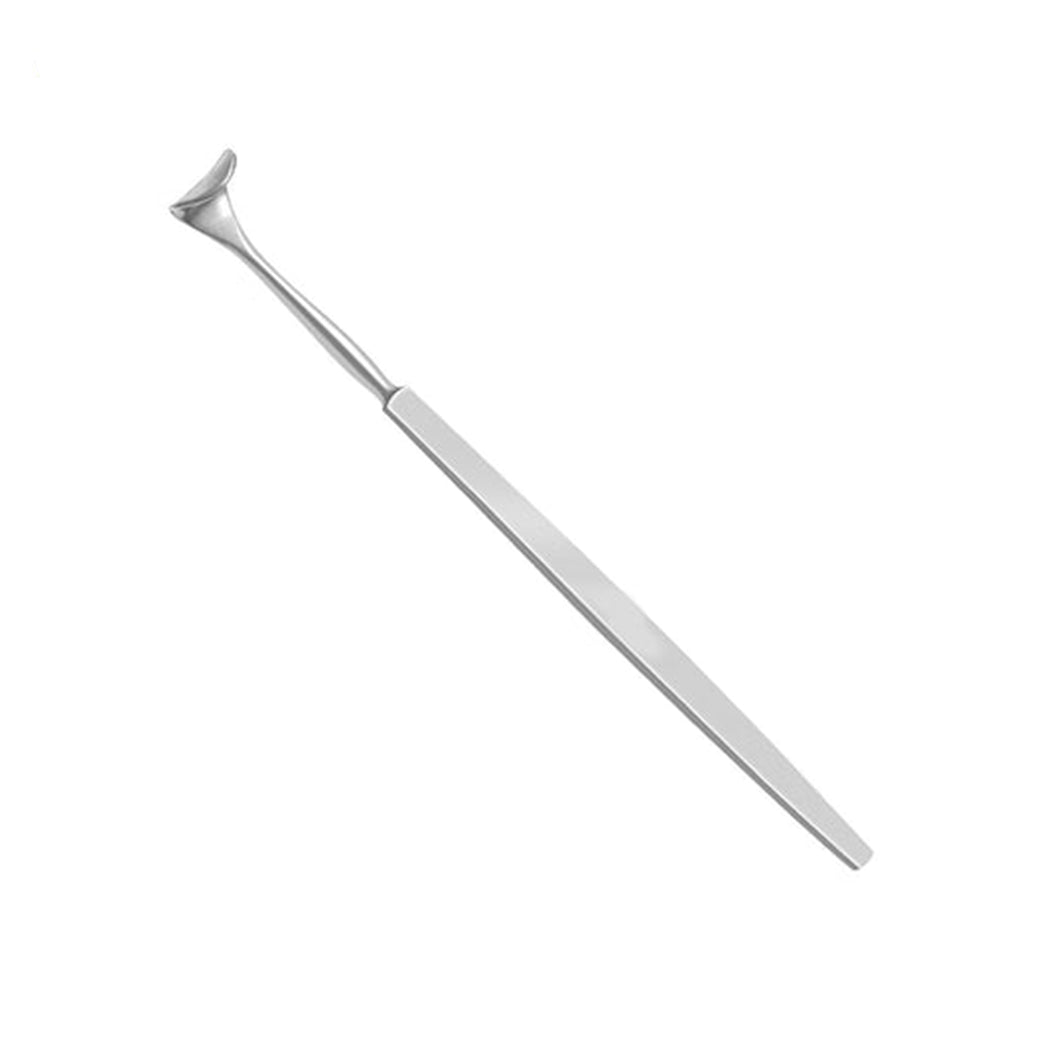
Precision orbital exposure with maximum tissue safety. The Desmarres Eyelid Retractor is a specialized ophthalmic tool engineered for the gentle retraction of the upper or lower eyelid. Featuring a smooth, saddle-shaped blade, this 14cm instrument provides the mechanical necessity for maintaining a clear surgical field during conjunctival procedures, chalazion removals, and comprehensive orbital examinations. It's atraumatic design ensures that the eyelid is lifted and held securely without compromising the delicate vascularity or structural integrity of the palpebral tissues.
[Add to Cart – Professional Ophthalmic Grade]
The Desmarres Eyelid Retractor (12.7mm) is an essential component of the standard ophthalmic tray. Unlike self-retaining speculums, which apply static pressure, the Desmarres allows for "command-and-control" exposure. It is particularly valued in procedures where the eyelid must be everted or retracted deeply into the fornix to access posterior structures.
Built for the rigorous sterilization protocols of modern surgical centers, this retractor maintains its mirror-like finish and structural alignment through thousands of autoclave cycles. Its versatility extends beyond human ophthalmology; the 12.7mm blade width makes it a primary choice for veterinary specialists managing ocular procedures in medium-to-large animal patients. Whether utilized in a high-volume cataract center, a forensic pathology lab, or an emergency clinical setting, the Desmarres Retractor delivers the professional-grade performance and reliability required for successful ocular interventions.
Feature Details
Material Premium Surgical Stainless Steel
Total Length 14cm (5.5 Inches)
Blade Width 12.7mm (0.5 Inches)
Blade Profile Smooth / Saddle-Shaped
Maintenance Fully Autoclavable / Reusable
Primary Use Cases:
Q: Can this be used for both the upper and lower eyelids?
A: Yes. The saddle-shaped blade is designed to work effectively on both the superior and inferior lids, providing deep fornix exposure wherever needed.
Q: Is the blade surface reflective?
A: This model typically features a high-polish surgical finish. While easy to clean, practitioners should be mindful of microscope light angles; for specialized laser procedures, a matte-finish version may be preferred.
Q: How do I clean the curved area of the blade?
A: Use a soft-bristled brush to ensure no biological debris or viscoelastic is trapped in the concave section of the blade before autoclaving.
Q: Is a 12.7mm blade suitable for pediatric patients?
A: The 12.7mm is a standard adult size. For pediatric or neonatal use, smaller blade widths (e.g., 8mm or 10mm) are generally recommended to accommodate smaller orbital dimensions.


