
Featured Collection
Your cart
Featured Collection

PEAK SURGICALS
SKU:PS-J-173
Couldn't load pickup availability
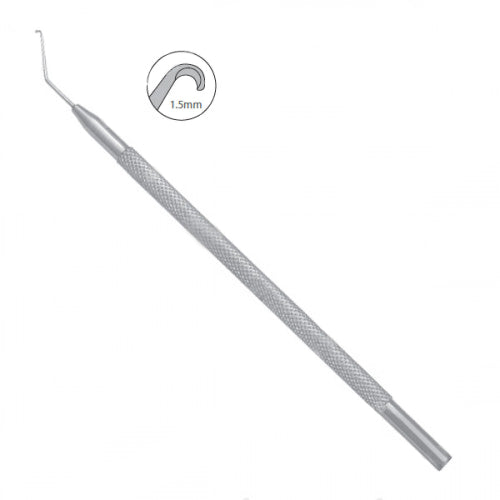
In the ever-changing field of ophthalmic surgery practices, it is evident that the efficiency of cataract elimination depends greatly on the instruments that are used to perform nuclear fragmentation. One of the most sophisticated instruments found in the surgeon's tray is called the Claw Chopper, specifically the 1.5mm claw-shape version. The instrument is now a standard for surgeons using advanced phacoemulsification techniques. It offers the unique combination of grip, safety, and mechanical benefits.
A claw chopper is a small-sized microsurgical instrument that is designed to ease it easier to perform the "chop" phase of cataract surgery. In contrast to standard straight or Nagahara-style choppers, the claw chopper has an angled, hook-like distal edge. The 1.5mm specification is its length. Practical end, which has been designed to allow enough depth to touch the nucleus, without causing damage in the anterior capsule.
The main advantage that comes from the 1.5mm claw design lies in the mechanical traction. Traditional choppers are prone to sliding across the nucleus, which is dense. But using the "claw" design allows the surgeon to:
If you're choosing to source or make use of the 1.5mm claw chopper, a variety of factors affect the results of surgery:
The 1.5mm claw-shaped cutter is not solely used for cutting the nucleus. It is an all-purpose tool for managing the chamber. Surgeons employ the curved tips to manipulate the iris in a safe manner or to place haptics in the capsular bag before IOL (Intraocular lens) implant. The blunt, rounded exterior curve assures that, when it is near the capsule or iris, there is a lower risk of tear or snag, which is less when compared to sharper, more pointed options.
For surgeons in the field of ophthalmology, looking to improve their phacoemulsification techniques using the 1.5mm claw cutter is a vital tool. It blends the security of a blunt-tip tool with the powerful gripping force necessary for effective nuclear disassembly. By selecting the appropriate claw configuration, surgeons can decrease the phaco-time and enhance the recovery rate of patients overall.
