Skip to product information
1 of 3

PEAK SURGICALS

Cervical Retractor Set — 23 × 30–70 mm Toothed Blades for Anterior Exposure

Cervical Retractor Set — 23 × 30–70 mm Toothed Blades for Anterior Exposure

2 total reviews

SKU:PS-OP-5703

Regular price $878.90 USD
Regular price Sale price $878.90 USD
Sale Sold out
Taxes included. Shipping calculated at checkout.
Quantity
Secure Checkout Protected payment flow
Quality Inspected Checked before dispatch
Worldwide Supply International buyer support
Shipping, Returns & Payments Clear buyer information before checkout.
Shipping
Free shipping on orders over $99. See shipping details
Returns
Returns and exchanges are handled according to our return policy. See return policy
Payments
American Express Apple Pay Diners Club Discover Google Pay JCB Mastercard
View full details

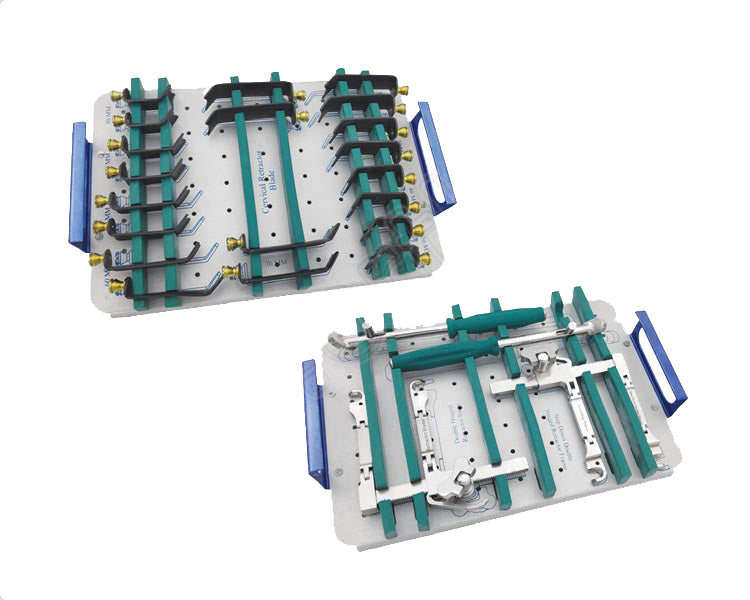
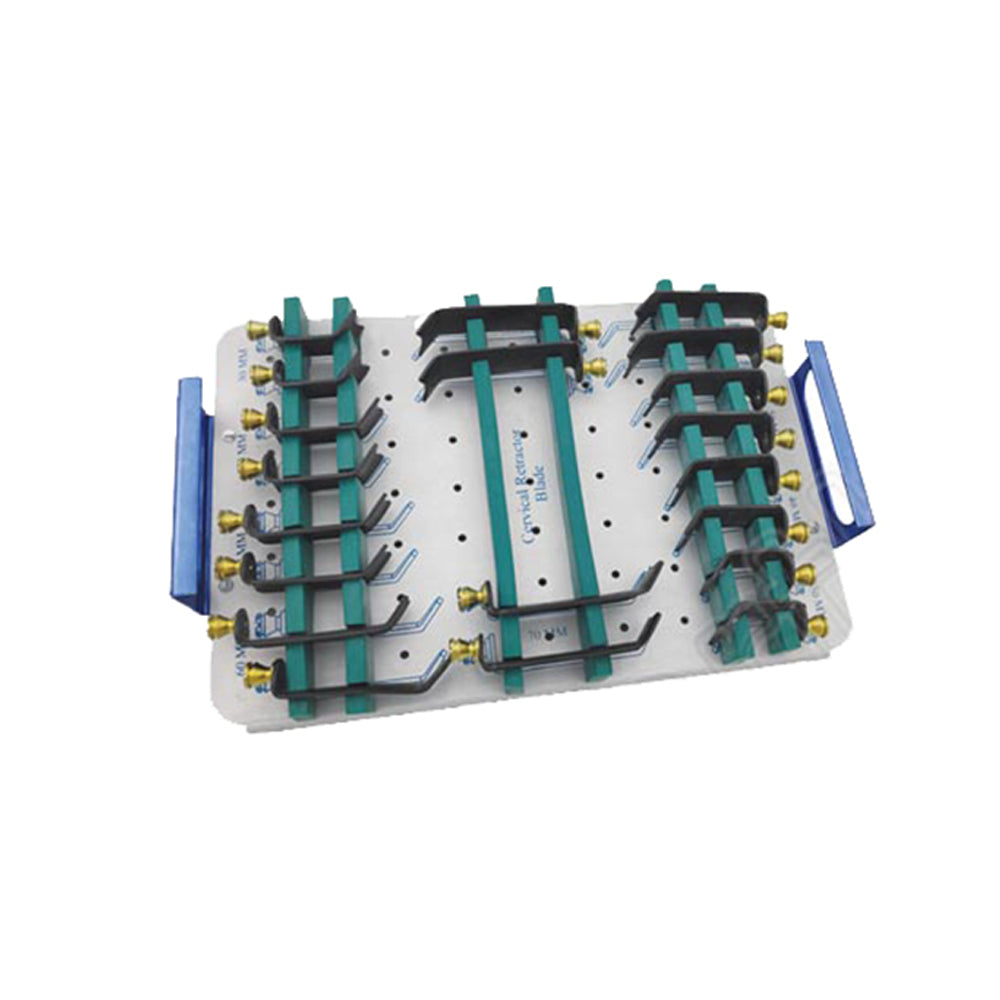
Cervical Retractor Set, SKU PS-OP-5703, is a 24-instrument German-forged stainless steel system for self-retaining anterior cervical spine exposure. The configuration contains four AS1731.001 toothed blades measuring 23 × 30 mm, four AS1731.002 blades measuring 23 × 40 mm, four AS1731.003 blades measuring 23 × 50 mm, four AS1731.004 blades measuring 23 × 60 mm, and four AS1731.005 blades measuring 23 × 70 mm. It also includes one AS1731.011 double-hinged retractor frame, one AS1731.012 step-down double-hinged frame, and two AS1731.013 blade handles. The system supports anterior cervical discectomy and fusion, cervical disc arthroplasty, anterior cervical corpectomy, vertebral body reconstruction, decompression, tumor access, and revision exposure. Its 23 mm blade width establishes consistent tissue contact, while five working depths accommodate differences in incision depth, vertebral level, soft-tissue thickness, and operative corridor. The toothed distal edges maintain engagement after placement beneath the elevated medial margins of the longus colli. Spine surgeons, orthopedic surgeons, and neurosurgeons use the set in hospital operating theatres, ambulatory spine centers, trauma units, and specialist neurosurgical facilities.

Double-Hinged Frame and Toothed Blade Mechanism

The retractor operates by coupling two selected blades to a hinged frame that maintains lateral separation of the anterior cervical corridor. Each blade presents a 23 mm working width and a toothed distal edge intended to resist migration after placement beneath the mobilized longus colli margins. The blade handle provides controlled attachment, introduction, positioning, and removal without requiring the surgeon to manipulate the working end directly. Once the blades are seated, opening the frame increases the distance between them and exposes the targeted disc space or vertebral body. The double-hinged geometry allows the arms to articulate as the opening is adjusted, accommodating the transverse orientation of the wound and differences between superficial and deep tissue planes. The step-down frame positions its working arms below the level of the external mechanism. This offset keeps more of the frame outside the direct instrument path during discectomy, plate placement, corpectomy reconstruction, or implant insertion. Self-retention preserves the selected opening without continuous manual traction. Retraction remains adjustable throughout the procedure so the surgical team can release tension during pauses, reposition a blade if it loses submuscular purchase, or modify exposure before extending the working corridor.

Anterior Cervical Surgical Workflow

Following the anterior cervical approach, the carotid sheath is mobilized laterally and the tracheoesophageal complex medially to reach the prevertebral fascia. The longus colli is elevated from the intended vertebral levels before the selected toothed blades are introduced beneath its medial margins. A 30 mm or 40 mm depth is commonly selected for a superficial single-level corridor, while 50 mm, 60 mm, or 70 mm patterns address progressively deeper exposure according to patient anatomy and operative level. The appropriate frame is connected only after blade seating has been assessed. Controlled opening then maintains the transverse corridor for anterior cervical discectomy and fusion, disc arthroplasty, osteophyte removal, decompression, endplate preparation, graft or cage insertion, and plate fixation. During corpectomy, longer blades can maintain access across the vertebral body while decompression and reconstruction instruments pass between the frame arms. The step-down configuration is useful when the external mechanism would otherwise conflict with fluoroscopy, an operating microscope, implant drivers, or plate instrumentation. Retraction should be periodically reassessed throughout the case, particularly during multilevel procedures and revision exposure. The set provides soft-tissue access and does not replace vertebral body distractors, Caspar pins, decompression tools, implants, or imaging equipment.

Selection of the 30–70 mm Blade Depths

AS1731.001 combines a 23 mm width with a 30 mm working depth for the shallowest exposure represented in the set. AS1731.002 extends to 40 mm for a moderately deeper soft-tissue corridor while retaining the same contact width. AS1731.003 provides 50 mm reach for intermediate anterior cervical access, including deeper disc spaces or patients with greater prevertebral depth. AS1731.004 supplies a 60 mm blade where the frame must remain above a deeper operative field without sacrificing distal engagement. AS1731.005 reaches 70 mm and is selected for the deepest listed corridor, including substantial soft-tissue depth, lower cervical levels, or long anterior reconstructions. Four units of every size permit bilateral placement and immediate replacement or reconfiguration within the sterile field. Blade selection is based on the measured distance from skin level to the elevated longus colli margin rather than vertebral level alone. An excessively short blade can disengage as the frame opens, whereas unnecessary depth can project beyond the intended tissue plane. AS1731.011 provides the standard double-hinged platform. AS1731.012 adds a stepped-down working level for instrument clearance, and the two AS1731.013 handles permit coordinated blade installation from both sides of the exposure.

German Stainless Steel and Reprocessing Control

German-forged stainless steel provides the rigidity required for repeated frame opening while retaining corrosion resistance under validated hospital reprocessing. A satin surgical finish limits disruptive reflection from overhead illumination and permits direct examination for staining, pitting, deformation, or retained material. Blade teeth require close inspection because bent points, damaged edges, or asymmetrical wear can alter engagement with the retracted muscle plane. Hinges must move through their full range without binding, excessive play, or uncommanded closure. Blade interfaces and handles should connect securely before the set is released to the operating room. After surgery, the frames should be opened and all detachable components separated according to the supplied reprocessing instructions. Detergent cleaning and brushing must reach the hinge recesses, toothed ends, blade connections, and stepped portions of the frame. Complete rinsing and drying are required before packaging and steam sterilization through the healthcare facility’s validated cycle. CE documentation supports European conformity review, while ISO 13485 addresses the manufacturer’s medical-device quality management system. United States procurement teams should review applicable FDA establishment, listing, classification, labeling, and import documentation without treating registration as product approval. Inspection and sterilization records should remain traceable to SKU PS-OP-5703.

AS1731 Cervical Retractor Set Set Consisting of Units
AS1731.001 23 × 30 mm Blade with Teeth 4
AS1731.002 23 × 40 mm Blade with Teeth 4
AS1731.003 23 × 50 mm Blade with Teeth 4
AS1731.004 23 × 60 mm Blade with Teeth 4
AS1731.005 23 × 70 mm Blade with Teeth 4
AS1731.011 Double-Hinged Retractor Frame 1
AS1731.012 Step-Down Double-Hinged Retractor Frame 1
AS1731.013 Retractor Blade Handle 2


Specification

SKU PS-OP-5703
Product Name Cervical Retractor Set
Price $878.90 USD
Size/Gauge Variants 23 × 30 mm, 23 × 40 mm, 23 × 50 mm, 23 × 60 mm, and 23 × 70 mm toothed blades
Instrument Count 24 instruments across eight model codes
Instrument Category Self-retaining anterior cervical spine retraction system
Procedure ACDF, cervical disc arthroplasty, anterior corpectomy, decompression, tumor access, and revision exposure
Material German-forged stainless steel
Finish Satin surgical finish
Sterilization Reusable; clean and steam sterilize under the validated institutional process and supplied reprocessing instructions
Instrument Classification Reusable manual orthopedic and spinal surgical instruments
Reusable Yes
Certifications CE and ISO 13485 documentation; FDA-compliant procurement documentation for the applicable destination market
Warranty 30-day money-back guarantee under Peak Surgicals return terms
MOQ 1 set
OEM / Custom Orders Available for agreed branding, packaging, blade assortment, and instrument-set requirements
After-Sale Service Order support, return assistance, replacement support, and procurement-document assistance

How does this system differ from a Cloward handheld cervical retractor?
A Cloward cervical retractor is a handheld instrument that requires an assistant to maintain the selected tissue displacement. Its single blade is repositioned manually as the required viewing angle changes. The Cervical Retractor Set uses paired blades connected to a self-retaining double-hinged frame. This mechanism maintains the transverse surgical corridor without continuous hand pressure. The AS1731 configuration also provides five blade depths and a step-down frame for different exposure requirements. Handheld retractors can supplement initial dissection, but they do not provide the same frame-controlled bilateral opening.

How should the 30–70 mm blade depth be selected?
The surgeon selects blade depth according to the measured distance between the external wound level and the elevated longus colli margin. The 30 mm and 40 mm patterns address relatively superficial access. The 50 mm size provides intermediate reach, while the 60 mm and 70 mm models accommodate deeper operative corridors. Lower cervical levels, substantial soft-tissue depth, multilevel exposure, and revision surgery can require a longer working profile. A blade should seat beneath the prepared muscle margin without projecting unnecessarily beyond the intended plane. The Cervical Retractor Set maintains the same 23 mm width across all five depths, allowing reach to change without changing the nominal contact width.

What do CE, ISO 13485, and FDA compliance mean for procurement?
CE documentation supports conformity assessment under the applicable European medical-device framework. ISO 13485 certification addresses the manufacturer’s documented quality management system. United States purchasing requires review of the relevant FDA establishment, listing, classification, labeling, and importer records. Registration or listing does not constitute FDA approval of the individual set. Buyers evaluating the Cervical Retractor Set should match regulatory documents to the legal manufacturer, product identity, validity period, and destination market. These records should be retained with supplier qualification, incoming inspection, purchase, and traceability files.

How does the double-hinged adjustment mechanism work?
The frame accepts opposing blades after they have been positioned within the operative corridor. Opening the frame separates the working arms and transfers controlled lateral displacement through the attached blades. The two hinge points allow the arms to articulate as the aperture changes. This geometry accommodates differences between the superficial incision and deeper cervical exposure. The step-down frame lowers the blade-supporting arms relative to the external mechanism, leaving additional clearance above the field. During use of the Cervical Retractor Set, the frame position, blade seating, tissue tension, and locking stability require repeated intraoperative assessment.

How should the toothed blades and hinged frames be reprocessed?
The frames should be opened and detachable blades removed immediately after the procedure. Cleaning personnel must brush the toothed ends, hinge recesses, blade connections, and handle interfaces to remove blood and tissue residue. Each blade should be checked for bent teeth, distorted shafts, corrosion, and damaged attachment features. Frame movement should remain smooth through the complete opening range without excessive play or binding. Following rinsing and complete drying, the Cervical Retractor Set should be packaged and steam sterilized through the hospital’s validated process. The sterile-processing count must account for 20 blades, two frames, and two blade handles before release.