
Featured Collection
Your cart
Featured Collection

PEAK SURGICALS
SKU:
Couldn't load pickup availability
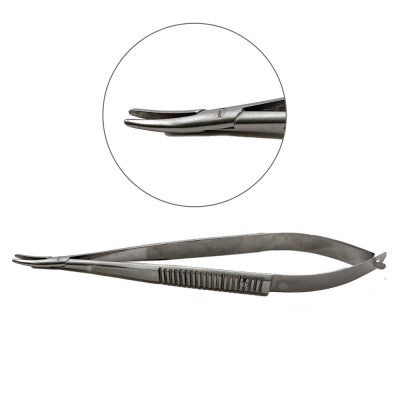
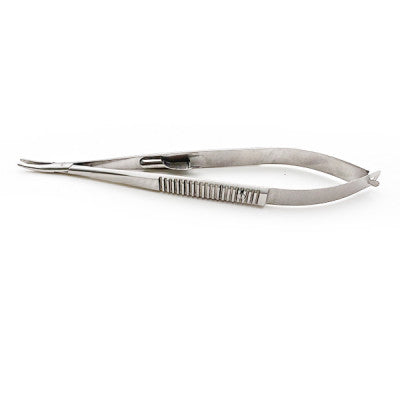
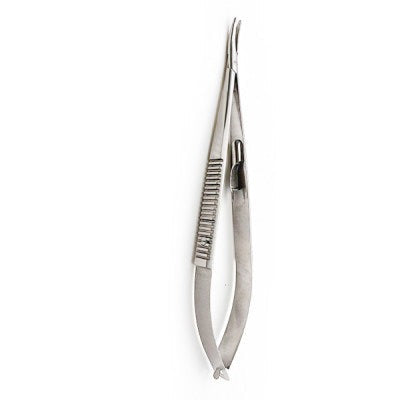
The clinical standard for ophthalmic and micro-vascular suturing. The Castroviejo Needle Holder (Curved) is an elite microsurgical instrument meticulously engineered for the high-stakes environment of ophthalmic and vascular surgery. Featuring a specialized spring-handle chassis and curved jaws, this tool acts as a mechanical necessity for surgeons who require "fingertip-sensitive" control over micro-needles. Unlike traditional ring-handled holders, the Castroviejo design allows for a pencil-grip orientation, enabling the clinician to execute rotation and passage with the highest degree of tactile feedback and precision in confined anatomical spaces.
[Add to Cart – Professional Microsurgery Series]
The Castroviejo Needle Holder (Curved) is a foundational asset for any ophthalmic, plastic, or micro-vascular surgical tray. Its primary utility lies in its "pencil-grip" ergonomics; by holding the instrument like a pen, the surgeon can achieve 360-degree rotation with simple finger movements rather than full wrist rotations. This is critical for delicate procedures such as corneal transplants, cataract repairs, or nerve anastomoses, where even a millimeter of deviation can impact the surgical outcome.
Built to exceed the rigorous standards of modern microsurgery, this instrument is fully autoclavable. The seamless joint and spring architecture ensures a fluid, "stutter-free" operation, supporting a consistent and efficient surgical workflow.
FeatureDetails
Material Premium Surgical-Grade Stainless Steel
Handle Style Spring-Action / Pencil Grip
Jaw Style Curved / Micro-Serrated
Length Standard Microsurgical (Approx. 13cm - 14cm)
Maintenance Fully Autoclavable / Reusable
Export to Sheets
Primary Use Cases:
Q: Why use a spring handle instead of a standard ring handle?A: Standard ring handles require the thumb and ring finger to move the entire instrument, which can introduce slight tremors in microsurgery. The spring handle (Castroviejo style) is held like a pencil, allowing the much more precise muscles of the fingers to control the needle, resulting in smoother, steadier suturing.
Q: Can I use this for standard-sized needles? A: No. The Castroviejo is specifically designed for micro-needles (typically 7-0 gauge and smaller). Using larger, heavier needles can strain the delicate jaws and cause permanent misalignment.
Q: How do I maintain the spring and catch mechanism? A: Clean immediately after use with an enzymatic detergent to remove biological debris from the spring and joint areas. We recommend applying a drop of surgical-grade lubricant to the pivot point before autoclaving to ensure the spring action remains smooth and responsive.
Q: Is the curved tip better for right-handed or left-handed surgeons?
A: The curved tip is generally universal, but it is specifically designed to improve access when approaching tissue from an angle. Right-handed surgeons typically find the curve helpful for navigating the medial or lateral aspects of the eye, depending on their positioning.


