
Featured Collection
Your cart
Featured Collection

PEAK SURGICALS
SKU:PS-000037
Couldn't load pickup availability


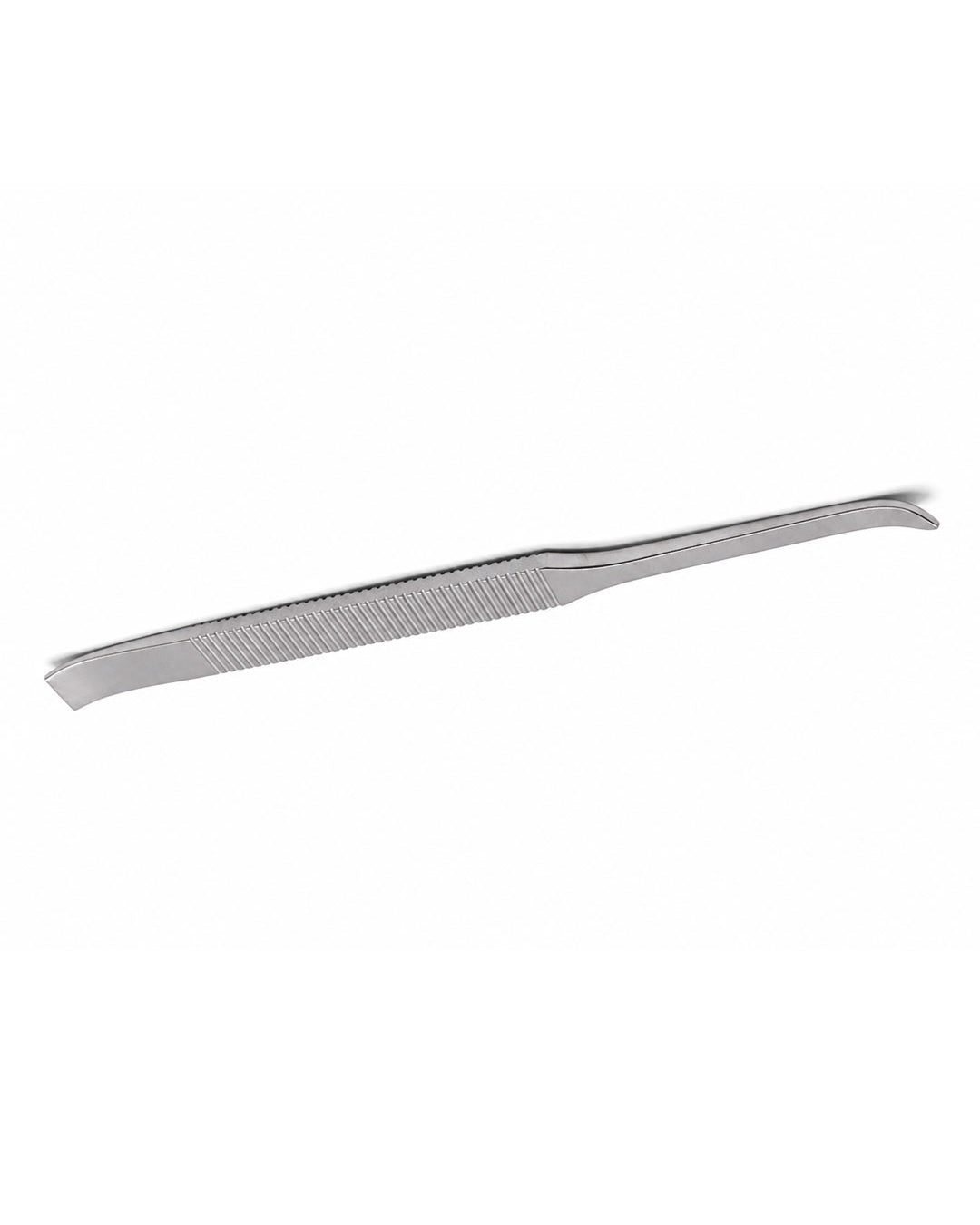
Carroll Periosteal Elevator, SKU PS-000037, is a reusable double-ended orthopedic elevator designed for controlled separation and reflection of periosteum and attached soft tissue from exposed bone. The instrument measures 5 1/2 in (140 mm) overall and combines two distinct working widths within one compact instrument: a 1/8 in (3 mm) narrow blade and a 3/8 in (10 mm) broader blade. This dual-ended configuration allows the surgeon to move between focused and wider periosteal elevation without changing instruments during the operative workflow. The narrower end is suited to localized dissection or restricted bone surfaces, while the broader end increases tissue contact where a wider plane must be reflected. The Carroll pattern is used during orthopedic bone exposure, fracture fixation, osteotomy, reconstructive procedures, and selected spine or other bone-related surgery requiring controlled periosteal separation. Its reusable medical-grade steel construction provides the rigidity required for direct manual elevation, while the compact 5.5-inch length supports precise handling within relatively confined operative fields.
The defining feature of the Carroll Periosteal Elevator is its double-ended design, which places a narrow 3 mm working blade at one end and a broader 10 mm blade at the opposite end. This arrangement gives the surgeon two tissue-contact profiles without adding a second elevator to the working field. The 3 mm end provides localized access where periosteum must be released along a narrow osseous margin or within a confined surgical corridor. The 10 mm end distributes lifting force across a wider surface and is useful once a larger periosteal flap or broader section of attached tissue needs to be elevated. Both ends operate through direct hand-controlled leverage rather than a ratchet, hinge, spring, or powered mechanism. The surgeon introduces the selected working end at a visible tissue-bone interface and develops the plane through measured lifting, pushing, or sweeping movements while keeping the blade close to the cortical surface. Changing from the narrow to the broad end allows the contact area to be adjusted as exposure progresses. Force, depth, and direction remain controlled entirely through handle position, tactile resistance, direct visualization, and the selected working blade.
During orthopedic exposure, the Carroll Periosteal Elevator can be introduced after the incision and initial soft-tissue dissection have provided access to the periosteal layer. The surgeon can begin with the 3 mm end where the entry plane is narrow or where precise localized separation is required. Once the tissue plane has been established, the 10 mm end can be used to reflect a broader section of periosteum and improve visualization of the underlying bone. This sequence can support open fracture fixation, plate application, osteotomy, bone graft preparation, corrective reconstruction, and other procedures requiring clear access to an osseous surface. In restricted areas, the compact 5.5-inch length allows the instrument to be controlled without the handle projection associated with longer periosteal elevators. The working blade should remain close to bone during advancement so soft-tissue elevation follows the intended plane rather than extending unnecessarily into surrounding structures. If tissue resistance changes or the required direction of elevation shifts, the instrument should be withdrawn, rotated, or switched to the opposite working end rather than forced through an inadequately developed plane.
PS-000037 is documented as a 5 1/2 in (140 mm) Carroll Periosteal Elevator with 1/8 in and 3/8 in blade widths, corresponding to approximately 3 mm and 10 mm. This exact dimensional pattern is also established in regulated Carroll periosteal elevator catalogs, where the configuration is identified as a reusable double-ended bone elevator. The 3 mm side provides a narrow contact footprint for focused tissue separation, initial plane development, smaller exposed bone surfaces, or restricted operative access. The 10 mm side contacts a substantially larger area and can increase efficiency when broader periosteal reflection is required after the tissue plane has been established. The two ends should therefore be viewed as complementary rather than interchangeable. The surgeon can select the narrower or broader blade according to tissue attachment, bone contour, required exposure width, and proximity to protected structures. The short overall length further differentiates this instrument from long spinal or large-bone elevators. Hospitals should retain SKU PS-000037 together with the 5.5-inch, 3 mm, and 10 mm specifications in purchasing and tray records so it is not confused with other Carroll or general periosteal elevator listings.
The Carroll Periosteal Elevator is supplied as a reusable medical-grade steel instrument and is documented as latex-free. Its fixed double-ended construction eliminates articulated joints, but both working blades, the central gripping surface, blade transitions, and shaft surfaces still require complete decontamination after clinical use. Reprocessing should begin promptly so blood, tissue, marrow, and other residue do not dry on the 3 mm or 10 mm working ends. Following cleaning, the instrument should be thoroughly rinsed and completely dried before inspection. Sterile-processing personnel should evaluate both blades for bending, nicks, corrosion, surface defects, or unintended changes in profile and confirm that the instrument remains structurally straight. Particular attention should be given to the smaller 3 mm end because deformation of a narrow working blade can materially affect its contact geometry. Terminal sterilization should follow the healthcare facility's validated process and applicable instructions for reusable surgical instrumentation. Peak Surgicals displays CE, ISO, and FDA-related procurement information; CE and ISO 13485 documentation should be maintained through supplier qualification, while FDA records should be tied to an exact manufacturer/catalog identity rather than described as unsupported individual product approval.
| SKU | PS-000037 |
|---|---|
| Product Name | Carroll Periosteal Elevator |
| Price | $18.15 USD |
| Size/Gauge Variants | 5 1/2 in (140 mm) overall; 1/8 in (3 mm) and 3/8 in (10 mm) blade widths |
| End Configuration | Double-Ended |
| Instrument Category | Orthopedic Periosteal / Bone Elevator |
| Procedure | Periosteal elevation, fracture fixation exposure, osteotomy preparation, bone exposure, reconstructive surgery, and related orthopedic procedures |
| Material | Medical-Grade Surgical Steel |
| Finish | Surgical Instrument Finish |
| Sterilization | Reusable; sterilize according to validated healthcare-facility reprocessing protocols |
| Instrument Classification | Reusable Manual Bone Lever / Periosteal Elevator |
| Reusable | Yes |
| Latex-Free | Yes |
| Certifications | CE and ISO 13485 procurement documentation; FDA-related records subject to exact catalog/manufacturer identification |
| Warranty | 30-Day Money-Back Guarantee on eligible purchases |
| MOQ | 1 Piece for standard online ordering |
| OEM / Custom Orders | Contact Peak Surgicals for institutional, bulk, or custom procurement requirements |
| After-Sale Service | Return and replacement support under Peak Surgicals policy |
How does the Carroll Periosteal Elevator differ from a single-ended periosteal elevator?
The Carroll Periosteal Elevator provides two working blade widths within one 5.5-inch instrument. Its 3 mm end supports focused elevation in restricted areas, while the 10 mm end provides broader contact for wider periosteal reflection. A single-ended elevator provides only one working profile and may therefore require a second instrument when the required contact width changes. The double-ended Carroll pattern allows the surgeon to change working width simply by rotating the instrument. Both configurations rely on direct hand-controlled elevation rather than a mechanical locking system. Selection should reflect operative access, bone contour, tissue attachment, and the width of periosteal exposure required.
When should the 3 mm blade be used instead of the 10 mm blade?
The 3 mm end is appropriate when the surgeon needs a localized working surface for initial periosteal-plane development or restricted bone exposure. Its narrow width helps preserve visibility and limits the amount of tissue contacted during each movement. The 10 mm end is better suited after a plane has been created and a broader section of periosteum needs to be reflected. A larger blade can distribute force across more tissue but also requires enough operative space for controlled placement. Carroll Periosteal Elevator PS-000037 provides both options in one instrument. The choice between the two ends should be based on bone dimensions, tissue attachment, operative depth, and surrounding anatomy rather than automatically starting with the wider blade.
What do CE, ISO 13485 and FDA references mean for procurement?
Peak Surgicals displays CE, FDA, and ISO-related information on the Carroll Periosteal Elevator product page. ISO 13485 concerns the manufacturer's medical-device quality-management system rather than proving individual instrument performance. CE documentation supports applicable conformity-assessment requirements within relevant markets. FDA AccessGUDID independently contains a commercially distributed Carroll Periosteal Elevator with the same 5.5-inch, 3 mm, and 10 mm double-ended dimensional pattern. That database record belongs to a specific Aspen Surgical/Symmetry catalog model and should not automatically be assigned to PS-000037 without matching the manufacturer and catalog identifier. Hospitals should therefore retain the Peak SKU, supplier documentation, conformity certificates, and any exact device records used during procurement qualification.
How is the Carroll Periosteal Elevator controlled during tissue elevation?
The Carroll Periosteal Elevator has no ratchet, spring, hinge, or powered mechanism. The surgeon controls the instrument entirely through blade selection, handle position, applied pressure, and direction of movement. The selected 3 mm or 10 mm working end is placed against an appropriate visible bone surface at the periosteal interface. Small lifting, pushing, or sweeping movements then develop the tissue plane while the rigid instrument transmits tactile resistance back to the operator. Keeping the blade close to the cortex helps maintain a controlled periosteal dissection path. If resistance changes unexpectedly, the instrument should be repositioned rather than forced against unseen tissue or protected structures.
How should hospitals order and reprocess the Carroll Periosteal Elevator?
Hospitals should order this product using Peak Surgicals SKU PS-000037 together with the 5.5-inch overall length and double-ended 3 mm and 10 mm blade specification. Peak Surgicals currently lists the instrument at $18.15 and displays a 30-day money-back guarantee. The separate Peak Carroll Type Periosteal Elevator PS-6779 should not automatically be substituted because it is maintained as a different Shopify product listing despite having very similar blade dimensions. Following surgery, tissue and blood residue should be removed promptly from both working ends, blade transitions, and central grip. Cleaning should be followed by thorough rinsing, complete drying, and inspection for tip damage, corrosion, bending, or other surface defects. Final sterilization should follow the healthcare facility's validated reusable-instrument process before PS-000037 returns to the orthopedic periosteal elevator tray.


