
Featured Collection
Your cart
Featured Collection

PEAK SURGICALS
SKU:PS-VS-0040
Couldn't load pickup availability


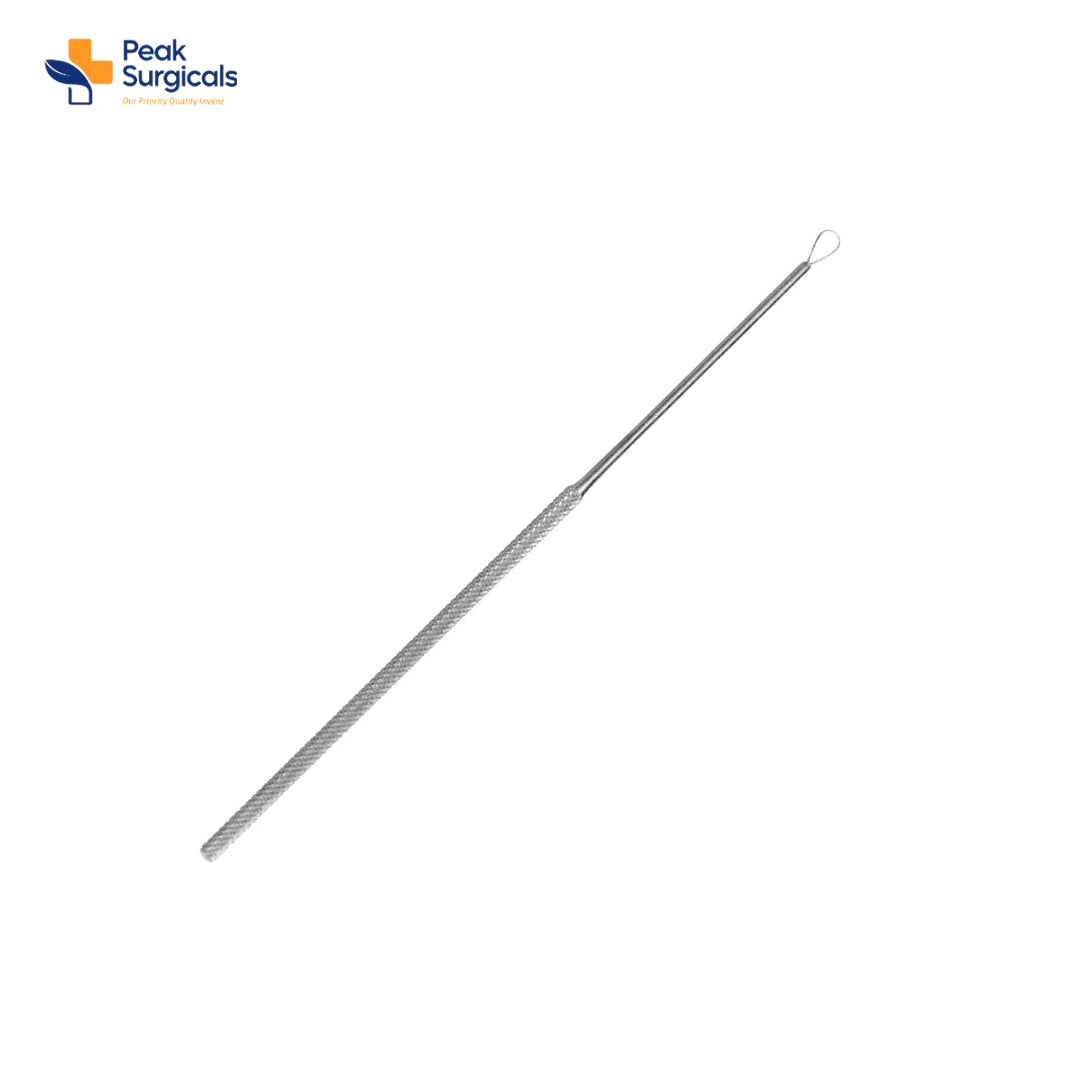
The professional veterinary solution for atraumatic cerumen removal and foreign body extraction in small and large animals. Billeau Ear Loops are specialized veterinary otologic instruments engineered to solve the problem of clearing the narrow, often "L-shaped" ear canal of animals without causing mucosal trauma. Characterized by their flexible yet resilient wire loops and slender access shafts, these loops act as a mechanical necessity for veterinary surgeons and clinicians who require a "scooping" action that is safer than traditional curettes. Its design is specifically optimized to provide mathematical accuracy during the cleaning of the external auditory meatus and the management of otitis externa, ensuring that debris is managed with total visibility and patient safety.
Billeau Ear Loops represent the pinnacle of specialized veterinary ergonomics and dependable optic management. In any professional environment—from general veterinary clinics to specialized animal surgical centers—the ability to definitively clear an ear canal of infectious debris or foreign bodies is a critical success factor. These loops act as a high-durability mechanical extension of the clinician’s skill, offering a level of reliability and "tactile-clarity" that is essential for organized and safe veterinary outcomes.
At its core, the instrument is built for professional-grade longevity and atraumatic performance. The "Billeau" wire loop pattern is a global standard because it provides a "soft-touch" interface with the sensitive ear canal. Unlike solid curettes, the wire loop minimizes the risk of scraping the delicate epithelial lining, which is vital for preventing secondary inflammation in already compromised ears.
Built to exceed international standards for medical hardware, Billeau Ear Loops are fully reusable and intended for high-frequency professional use. Their robust construction and specialized "Multi-Size" profile make them an indispensable asset for ensuring safe, organized, and high-precision results in comprehensive veterinary patient care.
Billeau Ear Loops Multiple Sizes
Billeau Ear Loops Multiple Sizes These reusable ear loops are designed specifically for ear surgical procedures in animals.
| Product Name | Billeau Ear Loops |
| Properties | Veterinary Surgical Instruments |
| Model Number | PS-VS-0040 |
| Type | Veterinary Surgical Instruments |
| Brand Name | Peak Surgicals |
| Instrument classification | Class I |
| Warranty | 1 YEAR |
| After-sale Service | Return and Replacement |
| Material | Medical Stainless Steel |
| Feature | Reusable |
| Certificate | CE, ISO-13485, FDA |
| Usage | Operating Room, etc |
| OEM | Available |
| Finish | Satin. Dull. MIRROR |
| Quality | Reusable |
| Packing | Carton Box, Others |
| Rust Free | Yes |
| MOQ | 1 Piece |
Feature Details
Tip Profile Rounded Wire Loop
Sizing Multiple (Small, Medium, Large)
Shaft Style Slim / Elongated
Material Core Premium Surgical-Grade Stainless Steel
Maintenance Fully Autoclavable / Reusable
Standard CE/ISO Veterinary Grade
Primary Use Cases:
Q: How do I choose the correct size Billeau loop for a patient?
A: The loop should be smaller than the diameter of the ear canal to allow room for maneuverability. Small loops (approx. 2-3mm) are ideal for cats and toy breeds, while larger loops (4-5mm) are suited for larger dogs.
Q: Can these be used for feline ears?
A: Yes, the smaller sizes in the Billeau range are specifically suited for the narrow and sensitive ear canals of feline patients.
Q: How do I maintain the wire loop during cleaning?
A: Use a soft-bristled brush to remove biological material. Avoid using heavy forceps to "straighten" the loop if it becomes bent, as this can weaken the steel. Always inspect for symmetry before sterilization.
Q: Are these loops flexible?
A: They have a slight "spring" to them, which provides tactile feedback, but they are designed to be rigid enough to move impacted debris. They are not intended to be bent into new shapes by the user.
Q: What is the best way to sterilize this instrument?
A: Standard steam autoclaving is the recommended method. Ensure the loops are placed in a manner where they won't be crushed by heavier instruments in the sterilization tray.


