
Featured Collection
Your cart
Featured Collection

PEAK SURGICALS
SKU:
Couldn't load pickup availability
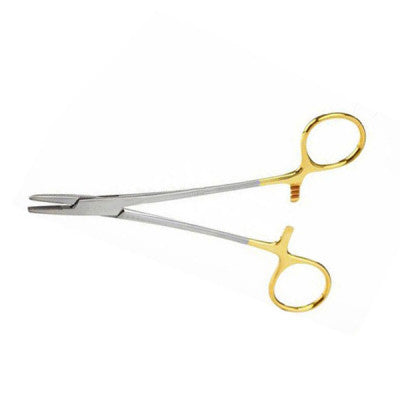
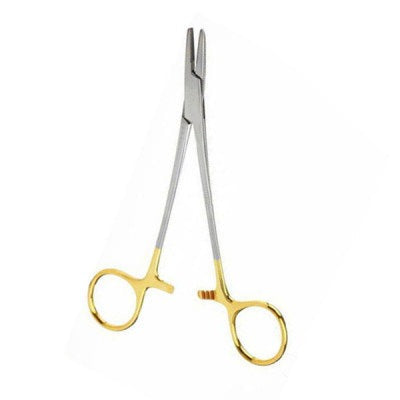
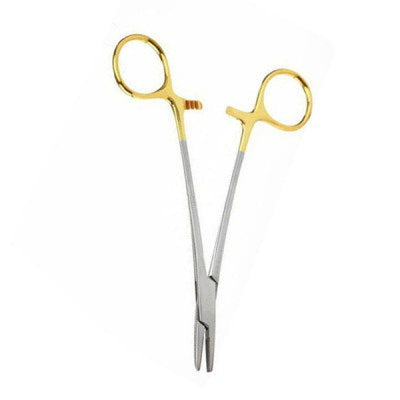
Mayo Hegar Needle Holders Left Hand are reusable veterinary surgical needle holders designed for left-hand suture needle control, wound closure, soft-tissue repair, dental flap suturing, and general veterinary suturing procedures. The instrument has tungsten carbide insert jaws, gold-ring TC identification, finger-ring handles, long shanks, box-lock pivot alignment, and a ratchet locking mechanism for stable needle holding during repeated passes. The left-hand configuration supports surgeons who require reversed hand orientation and controlled grip mechanics during suturing. It is used during skin closure, laceration repair, dental extraction closure, mucoperiosteal flap suturing, biopsy closure, mass excision closure, abdominal closure, orthopedic soft-tissue closure, and emergency wound repair. Veterinary surgeons, small animal practitioners, veterinary dentists, emergency clinics, teaching laboratories, and procurement teams use this pattern where dependable needle purchase, left-hand handling, and reusable tungsten carbide performance are required. The gold handles identify the TC working end quickly during tray setup, sterilization inspection, and instrument selection.
The Mayo Hegar left-hand pattern works through ring handles and a ratchet lock that secure the suture needle between reinforced tungsten carbide insert jaws. The TC jaw surfaces improve grip security and resist working-end wear during repeated needle clamping. Serrated jaw contact helps reduce needle rotation while driving curved needles through skin, fascia, mucosa, gingiva, subcutaneous tissue, and soft-tissue flap margins. The gold-ring handles identify the instrument as a tungsten carbide needle holder, helping staff separate TC instruments from standard stainless steel holders during tray assembly and inspection. The box-lock pivot maintains jaw alignment as the handles close, while the ratchet provides staged locking pressure without continuous hand compression. The left-hand design supports reversed handling ergonomics for left-handed operators, improving wrist position, needle angle, and release control during repetitive suturing. This construction supports secure needle stabilization during interrupted, cruciate, mattress, continuous, and buried closure patterns.
Clinical use begins after tissue preparation, hemostasis, irrigation, wound edge assessment, and suture material selection. During veterinary skin closure, Mayo Hegar Needle Holders Left Hand secure the curved needle while the surgeon places interrupted, mattress, cruciate, or continuous sutures through dermal and subcutaneous layers. During veterinary dental surgery, the TC jaws stabilize fine needles for mucoperiosteal flap closure after extractions, gingival repair, oral laceration closure, and oronasal fistula repair. In biopsy and mass excision procedures, the instrument controls the needle while wound edges are approximated with tissue forceps. During abdominal, orthopedic, and trauma-related soft-tissue closure, the ratchet lock maintains needle orientation as the surgeon works through tissue planes with different resistance. The left-hand pattern supports natural hand mechanics for operators who suture primarily with the left hand. The instrument works alongside Adson forceps, tissue forceps, scissors, hemostats, retractors, suction tips, and suture material.
The left-hand Mayo Hegar configuration is selected when the surgeon needs needle holder mechanics aligned to left-handed suturing technique. Standard right-hand instruments can force awkward wrist rotation, needle loading angles, or release motion for left-handed users. This pattern supports more natural ring-handle control, ratchet release, and needle orientation when the left hand drives the needle. The Mayo Hegar design is selected for general-purpose suturing where the needle holder must provide firm grip, straight jaw control, and a dependable locking mechanism. Tungsten carbide inserts make this version suitable for high-use veterinary trays where standard jaw surfaces may wear faster under repeated needle clamping. It is used in small animal surgery, veterinary dentistry, emergency repair, teaching laboratories, and routine closure trays. Selection follows surgeon handedness, suture needle size, tissue resistance, procedure type, and whether the tray requires reinforced TC jaws for durable needle control.
Medical-grade German stainless steel construction gives the instrument rigidity at the shanks, stable pivot movement, corrosion resistance, and reliable ratchet function through repeated clinical reprocessing. Tungsten carbide insert jaws support long-term working-end performance in high-turnover veterinary, dental, emergency, and soft-tissue trays. The smooth stainless steel and gold-ring handle surfaces support cleaning and inspection after contact with blood, saline, tissue residue, suture material, and surgical debris. The reusable Class I profile fits manually operated veterinary needle holders used for nonpowered suture needle control. Autoclave compatibility supports return to clinical trays after decontamination, jaw brushing, ratchet inspection, drying, wrapping, sterilization, and storage. CE marking, ISO 13485 certification, and FDA compliance support procurement documentation for veterinary clinics, hospitals, distributors, and institutional buyers. The one-year warranty, medical-grade reusable construction, and $109.99 price point support standardized purchasing for left-hand TC needle holder replacement and tray planning.
| SKU | Not listed on product page |
|---|---|
| Product Name | Mayo Hegar Needle Holders Left Hand |
| Price | $109.99 |
| Size/Gauge Variants | Product size selector listed; exact size labels not shown in available indexed page data |
| Instrument Category | Veterinary tungsten carbide needle holder |
| Procedure | Veterinary suturing, skin closure, dental flap closure, laceration repair, biopsy closure, mass excision closure, abdominal closure, soft-tissue repair |
| Material | Medical-grade German stainless steel with tungsten carbide insert jaws |
| Handle Style | Left-hand finger-ring handles with gold TC identification |
| Jaw Profile | Tungsten carbide insert jaws for suture needle control |
| Sterilization | Reusable and autoclavable after standard instrument cleaning |
| Instrument Classification | Class I reusable veterinary surgical hand instrument |
| Reusable | Yes |
| Certifications | CE marked, ISO 13485 certified, FDA compliant |
| Warranty | 1 year |
| After-Sale Support | 30-day money-back policy for eligible orders |
What makes Mayo Hegar Needle Holders Left Hand different from standard Mayo Hegar needle holders? Mayo Hegar Needle Holders Left Hand are configured for left-handed suturing mechanics, allowing more natural ring-handle control, ratchet release, and needle orientation for left-hand use. Standard right-hand needle holders may require awkward wrist positioning for left-handed operators. The left-hand design supports controlled needle loading, driving, and release during repetitive veterinary suturing.
What is the benefit of tungsten carbide insert jaws? Tungsten carbide insert jaws improve needle grip and reduce working-end wear during repeated clamping. The reinforced jaw surface helps stabilize curved suture needles and reduces rotation during passage through skin, mucosa, fascia, and soft-tissue planes. Gold-ring handles identify the instrument as a TC pattern during tray setup, cleaning inspection, and procurement review.
Which veterinary procedures use this needle holder? This instrument is used for veterinary skin closure, dental flap suturing, laceration repair, biopsy closure, mass excision closure, abdominal closure, orthopedic soft-tissue closure, and emergency wound repair. It is commonly used with tissue forceps, Adson forceps, surgical scissors, hemostats, retractors, suction tips, and suture material in small animal surgical trays.
How is the ratchet mechanism used during suturing? The surgeon places the needle between the TC jaws and closes the ring handles until the ratchet holds the selected pressure. The lock maintains needle orientation without continuous hand compression. After the needle pass, the ratchet is released to reload or reposition the needle. This sequence supports interrupted, mattress, cruciate, continuous, and buried suture patterns.
How should the instrument be cleaned and sterilized? After use, the jaws, box-lock area, ratchet teeth, shanks, and ring handles should be cleaned before blood or tissue residue dries. The TC jaw inserts should be inspected for debris, alignment, and grip surface condition. After complete cleaning and drying, the instrument can be wrapped and autoclaved according to the facility reprocessing workflow. Smooth ratchet engagement should be confirmed before the next tray cycle.


