Handles Blade Breakers
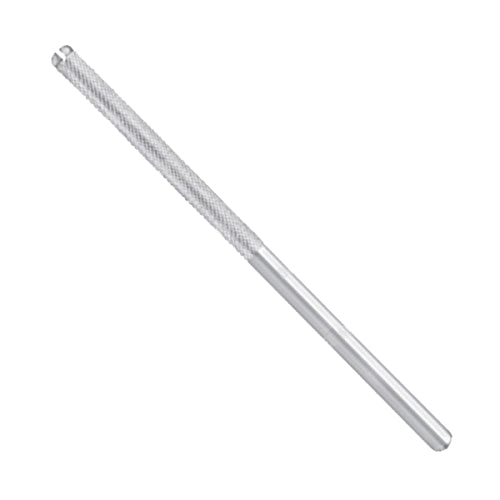
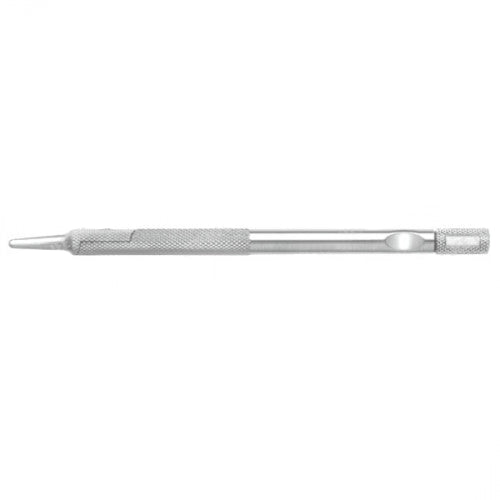
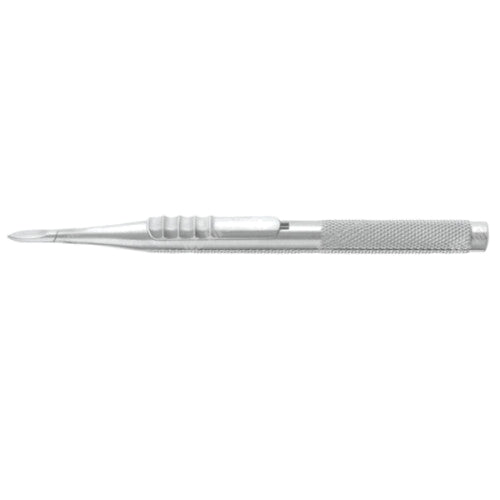
An ophthalmic blade breaker does two jobs on one instrument: it snaps a razor blade fragment to the width the surgeon needs, then holds that fragment as the cutting instrument. Peak Surgicals supplies Blade Breaker and Holder ($16.50) in straight and angled patterns, in German stainless steel and CE marked and built under ISO 13485. See the full range in the grid below.
Why the Blade Is Made Rather Than Chosen
The instrument exists because no manufactured blade is narrow enough for some ophthalmic incisions. A razor blade is scored and snapped between the jaws to produce a fragment of the required width, and that fragment is then clamped in the same jaws and used directly. The surgeon is not selecting from a range of blade sizes; the blade is made to the size the incision needs at the moment it is needed.
That places an unusual demand on the jaws. They have to grip a thin fragment firmly enough that it does not shift under cutting load, and hold it at a repeatable angle, because a blade that rotates a few degrees in the holder changes the plane of the incision. The groove that receives the fragment is the critical surface: it sets both how securely the blade seats and which thicknesses the instrument accepts. We supply every pattern at MOQ 1.
Straight or Angled, Standard or Long
Straight and angled patterns are chosen against the approach rather than the incision. A straight jaw puts the blade in line with the shaft, so the hand sits directly behind the cut and the instrument is used much like a scalpel. An angled jaw drops the blade below the line of the shaft, which keeps the hand and the instrument body out of the microscope's field and lets the blade meet tissue at an angle the wrist would otherwise have to produce.
Length works alongside it. A longer pattern moves the hand further from the eye, useful where a speculum, drapes or an assistant's instrument occupy the space around the field; a standard length gives more direct control. Blade Breaker and Holder ($16.50) is supplied in straight and angled patterns, each in standard and long configurations.
Material, Reprocessing and Certification
The instrument is forged from German stainless steel and passivated for corrosion resistance across repeated cycles. The inspection point is the jaw groove and the closure, and it should be checked under magnification: examine the groove for wear, deposits or rounding at its edges, because a worn groove lets a blade fragment sit loose or off-axis, and confirm the jaws close parallel with no lateral offset so the fragment is gripped along its full seated length rather than at one corner. Check the joint for play through full travel. Clean immediately with a neutral-pH enzymatic solution, brushing the groove clear before residue dries, then rinse with deionised water and dry fully, following the reprocessing instructions supplied.
These are reusable devices, supplied non-sterile, with a one-year warranty. We ship at MOQ 1 with free shipping over $99. For related ophthalmic instruments, see Ophthalmic Sets, Knives, Ophthalmic Scissors, Micro Scissors, Ophthalmic Forceps, Needle Holders, Micro Needle Holder, Calipers and Corneal Markers. For general scalpel handles, see Knives & Handles, and for sterilizing delicate instruments, see Sterilizing Cases. Talk to us about OEM terms.
Frequently Asked Questions
What is an ophthalmic blade breaker used for?
It snaps a razor blade to the fragment width a surgeon needs and then holds that fragment as the cutting instrument, so the blade is made to the size of the incision.
Why does the jaw groove matter?
The groove sets how securely the fragment seats. A worn or rounded groove lets the blade sit loose or off-axis, which changes the plane of the incision.
What’s the difference between a straight and an angled blade holder?
A straight holder puts the blade in line with the shaft, like a scalpel. An angled holder drops the blade below the shaft line, which keeps the hand and instrument out of the microscope field.
What does a Castroviejo blade breaker do differently from a Swiss model?
Both snap and hold razor fragments. They are different patterns, so compare jaw design and length on each product page.
How should a blade breaker be cleaned?
Clean immediately with a neutral-pH enzymatic solution, brush the groove clear before residue dries, rinse with deionised water and dry fully, following the reprocessing instructions supplied.
Are the handles in this collection interchangeable?
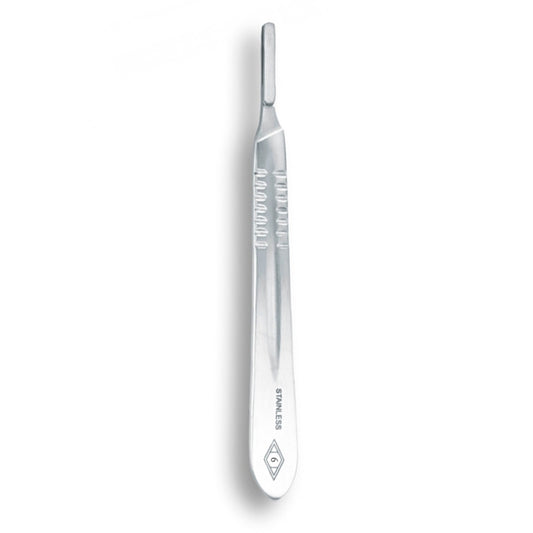
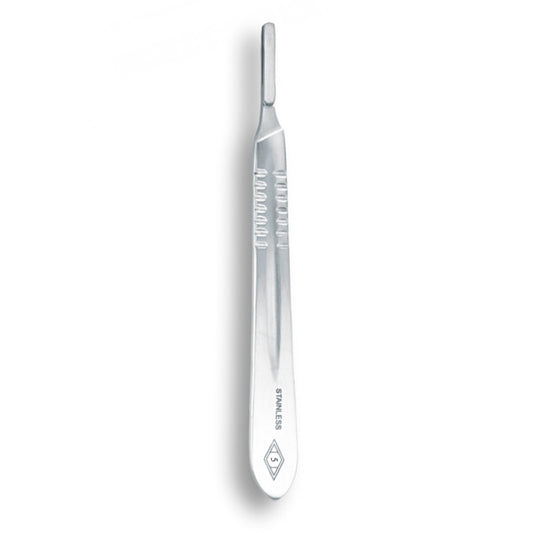
No. Match each handle to the blade series or instrument it is made for, and check the product page for compatibility.
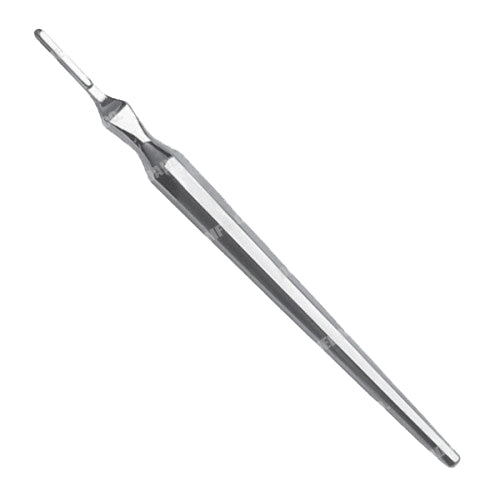
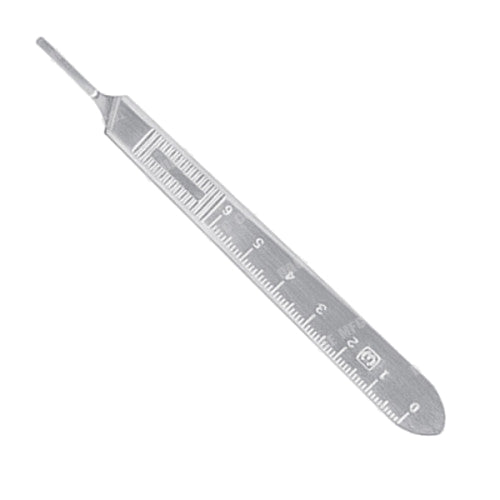
Bard Parker Handle