
Featured Collection
Your cart
Featured Collection

PEAK SURGICALS
SKU:PS-OP-5799
Couldn't load pickup availability


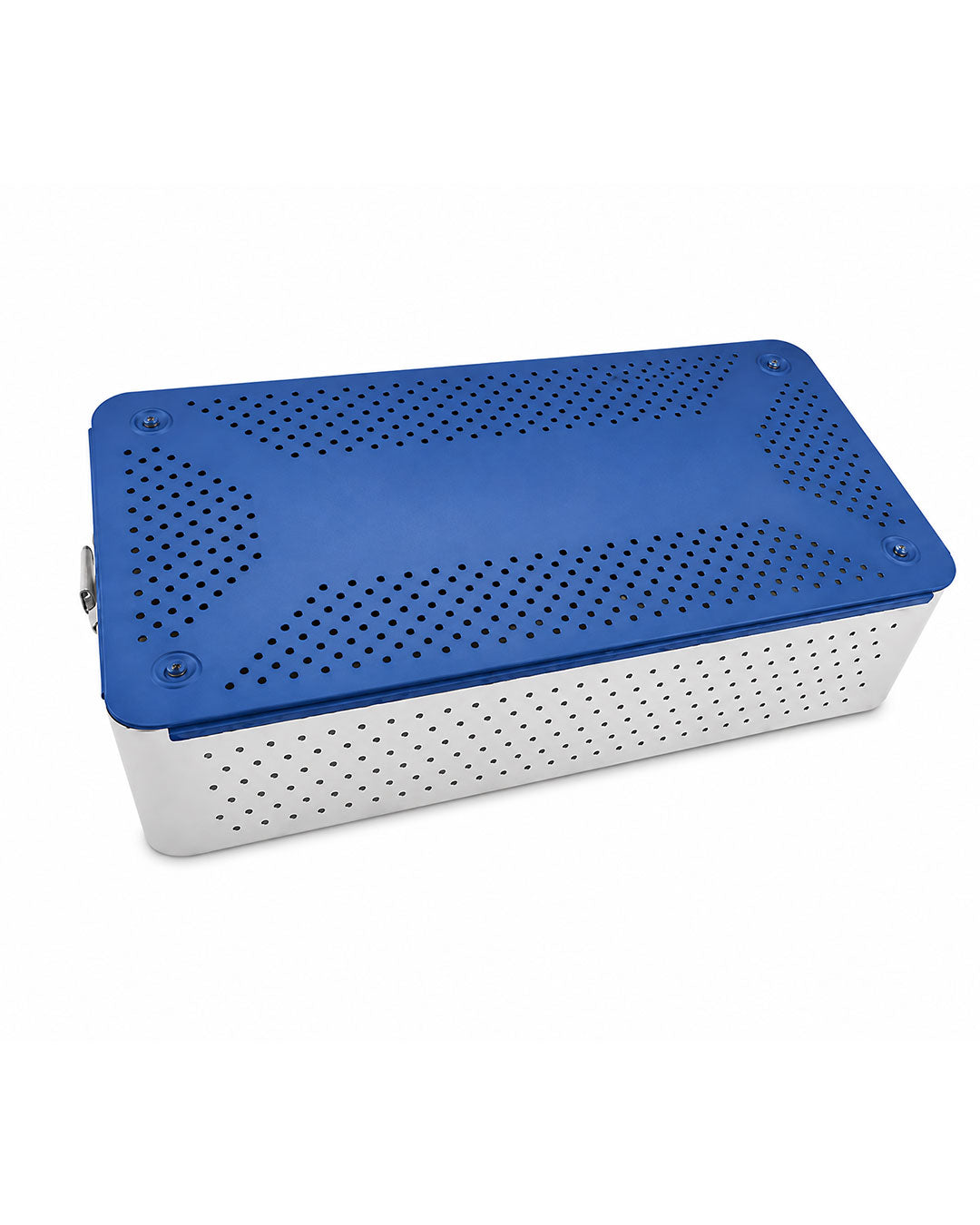
Pedicle Screw System Instruments Set, SKU PS-OP-5799 and system code AS1700, is a reusable German stainless-steel spinal instrumentation platform for posterior monoaxial and polyaxial pedicle screw fixation. The set supports pedicle entry-point preparation, tract development, pedicle-wall assessment, screw-path tapping, implant insertion, rod contouring, rod capture, reduction, compression, distraction, counter-torque control, final tightening, and reduction-tab removal. Its principal instruments include straight and curved pedicle probes and testers, pedicle awl, marker inserter and pins, 4.5 mm, 5.5 mm, 6.5 mm, and optional 7.5 mm taps, dedicated monoaxial and polyaxial screwdrivers, rod template, bender, holder, rocker, rotators, pushers, persuader, compressor, distractor, torque-limiting handle, anti-torque wrench, inner tighteners, reduction tools, and quick-coupling handles. The system is used during posterior thoracic and lumbar fusion, traumatic vertebral stabilization, deformity correction, spondylolisthesis reduction, degenerative instability reconstruction, and revision fixation. It is intended for spine surgeons, orthopedic spine specialists, neurosurgeons, hospitals, tertiary referral centers, and operating-room teams managing open posterior instrumentation. Pedicle screws, rods, connectors, implants, and supplementary trays are included only when specified in the order.
The procedural sequence begins with the pedicle awl establishing the cortical entry point, followed by the straight or curved pedicle probe developing a cancellous trajectory through the pedicle into the vertebral body. Straight and curved testers palpate the tract to assess the medial, lateral, superior, inferior, and anterior boundaries before implant placement. The marker inserter positions radiopaque pedicle marker pins for intraoperative imaging assessment. Taps measuring 4.5 mm, 5.5 mm, 6.5 mm, and optionally 7.5 mm prepare threads when required by the selected screw system. The T-handle quick coupling or ratchet handle transmits controlled rotational force to compatible shafts. Dedicated monoaxial and polyaxial screwdrivers engage their corresponding screw-head geometries; the optional T25 shaft provides an additional polyaxial interface. The inner holder supports component engagement during assembly, while T30 inner tighteners drive the locking element within the screw head. The torque-limiting handle controls final tightening according to the compatible system specification. During final locking, the anti-torque wrench counters rotational force transmitted through the screw-rod construct. These instruments must be used with the matching implant platform, operative technique, screw connection, and torque specification rather than treated as universally interchangeable spinal drivers.
During posterior thoracic or lumbar fixation, pedicle entry points are exposed and prepared after vertebral levels are confirmed. The awl opens the cortex, the selected probe develops each tract, and the tester examines the channel before tapping and screw insertion. After monoaxial or polyaxial screws are seated, the rod template reproduces the required sagittal contour and the rod bender shapes the definitive connecting rod. The rod holder and gripper control transfer and positioning, while left and right rotators correct rod orientation within the operative field. Open and closed rod pushers apply directed pressure to seat the rod toward the screw heads. The rocker and persuader assist when the rod remains elevated relative to the tulip. The compressor shortens the distance between adjacent anchors, whereas the distractor separates them during segmental alignment. Reduction screws permit gradual capture of a displaced rod through extended tabs. Following set-screw tightening, the reduction screw breaker removes the tabs at their designed junction; the cutter and counter-torque instrument support controlled management of the reduction extension. These stages are used in posterior fusion, traumatic instability, scoliosis or kyphosis correction, spondylolisthesis reduction, and revision reconstruction according to the operative plan and implant-system instructions.
The AS1700 configuration contains instruments for monoaxial and polyaxial posterior constructs. Tap diameter is selected according to the corresponding pedicle screw and the system-specific preparation technique: the 4.5 mm tap addresses the smallest listed screw pathway, while 5.5 mm and 6.5 mm options cover progressively larger implants. The 7.5 mm tap and matching screwdriver are listed as optional additions for constructs using that connection and diameter. Tap choice must follow the screw’s thread geometry, vertebral level, pedicle morphology, bone quality, and manufacturer’s operative protocol. Straight probes provide an aligned trajectory where direct access is available; curved patterns assist directional tract development according to anatomy and approach. Monoaxial screwdrivers engage fixed-head implants, whereas polyaxial drivers retain screws with mobile heads during insertion. The rod template establishes the planned contour before the bender shapes the definitive rod. Rod holders, rotators, pushers, rocker, gripper, and persuader manage capture and seating at different stages. The compressor and distractor apply opposing segmental maneuvers. Torque-limiting, anti-torque, counter-torque, and inner-tightening devices control final assembly or reduction-tab processing. The attached composition lists 41 units across rows with specified quantities; three additional instruments are supplied by written configuration.
| Code | Set Consisting of | Units |
|---|---|---|
| AS1700.001 | Rod Rocker | 1 |
| AS1700.005 | Rod Holder | 1 |
| AS1700.009 | Pedicle Tester, Straight | 1 |
| AS1700.013 | Pedicle Tester, Curved | 1 |
| AS1700.017 | Inner Holder | 1 |
| AS1700.021 | Rod Template | 1 |
| AS1700.025 | Screwdriver for Monoaxial Pedicle Screw | 1 |
| AS1700.029 | Screwdriver for Polyaxial Pedicle Screw | 1 |
| AS1700.033 | Rod Rotator, Left and Right | 2 |
| AS1700.037 | Rod Pusher, Open | 1 |
| AS1700.041 | Tap for Pedicle Screw Ø4.5 mm | 1 |
| AS1700.045 | Tap for Pedicle Screw Ø5.5 mm | 1 |
| AS1700.049 | Tap for Pedicle Screw Ø6.5 mm | 1 |
| AS1700.053 | Rod Pusher, Closed | Set of 2 |
| AS1700.057 | Anti-Torque Wrench | 1 |
| AS1700.061 | Counter Torque for Reduction Screw Cutter | 1 |
| AS1700.065 | T-Handle Quick Coupling | 1 |
| AS1700.069 | Inner Tightener, T30 | 2 |
| AS1700.073 | Pedicle Awl | 1 |
| AS1700.077 | Torque-Limiting Handle | 1 |
| AS1700.081 | Pedicle Marker Inserter | 1 |
| AS1700.085 | Pedicle Marker Pin | 6 |
| AS1700.089 | Ratchet Handle | 1 |
| AS1700.093 | Pedicle Probe, Straight | 1 |
| AS1700.097 | Pedicle Probe, Curved | 1 |
| AS1700.101 | Rod Bender | 1 |
| AS1700.105 | Reduction Screw Cutter | 1 |
| AS1700.109 | Compressor | 1 |
| AS1700.113 | Persuader | 1 |
| AS1700.117 | Rod Gripper | 1 |
| AS1700.121 | Distractor | 1 |
| AS1700.125 | Reduction Screw Breaker | 1 |
| AS1700.129 | T25 Shaft for Polyaxial Screw, Available on Request at Additional Cost | 1 |
| AS1700.150 | Reduction Clamp | Optional; quantity defined by quotation |
| AS1700.154 | Screwdriver for Pedicle Screw Ø7.5 mm | Optional; quantity defined by quotation |
| AS1700.158 | Tap for Pedicle Screw Ø7.5 mm | Optional; quantity defined by quotation |
The reusable instruments are manufactured from German stainless steel for the mechanical demands of pedicle preparation, implant insertion, rod manipulation, reduction, and final locking. The metallic surfaces permit examination for retained soil, corrosion, deformation, cutting-edge damage, worn drive interfaces, and impaired moving mechanisms. Reprocessing requires disassembly of modular shafts and handles only where authorized by the manufacturer’s instructions. Personnel must clean cannulations, couplings, ratchets, torque interfaces, tap flutes, screwdriver recesses, hinged joints, and inaccessible channels with the specified accessories before rinsing and drying. Every instrument should undergo visual and functional inspection before tray assembly and validated sterilization. Torque-limiting devices require particular handling, calibration control, and maintenance under the manufacturer’s service procedure; they must not be assumed accurate solely because the handle rotates. Peak Surgicals supports CE and ISO 13485 documentation for institutional procurement assessment. FDA establishment registration, listing, clearance, and approval represent separate regulatory concepts, so purchasing records must use the status applicable to the supplied instruments and destination market. Hospitals and distributors should retain the final component schedule, implant compatibility statement, batch information, reprocessing instructions, calibration records, invoice, and regulatory documents within their quality-management system.
| SKU | PS-OP-5799 |
|---|---|
| Product Name | Pedicle Screw System Instruments Set |
| Price | $1,538.90 USD |
| Size/Gauge Variants | Pedicle screw taps Ø4.5 mm, Ø5.5 mm, Ø6.5 mm, and optional Ø7.5 mm |
| Instrument Category | Posterior spinal fixation instrumentation set |
| Procedure | Thoracic and lumbar pedicle screw fixation, posterior fusion, fracture stabilization, deformity correction, and revision reconstruction |
| Material | German stainless steel |
| Finish | Metallic surgical instrument finish |
| Sterilization | Reprocess according to the manufacturer’s instructions and the healthcare facility’s validated sterilization protocol |
| Instrument Classification | Reusable orthopedic and spinal surgical instrument set |
| Reusable | Yes |
| Certifications | CE and ISO 13485 procurement documentation; FDA-related records supplied according to applicable market requirements |
| Warranty | 30-day money-back guarantee under the published store policy |
| MOQ | One complete standard set for online orders |
| OEM / Custom Orders | Custom component schedules, OEM supply, private labeling, and optional instruments are handled through a written quotation |
| After-Sale Service | Order, documentation, component, and product-support assistance through Peak Surgicals customer service |
How does this set differ from a minimally invasive pedicle screw instrument set?
The Pedicle Screw System Instruments Set is configured for open posterior monoaxial and polyaxial fixation. A minimally invasive pedicle screw set uses cannulated access instruments, guidewires, dilators, working sleeves, percutaneous towers, and extended reduction interfaces. This AS1700 configuration centers on direct pedicle preparation, screw insertion, open rod manipulation, compression, distraction, and reduction-tab management. Its rod holders, rotators, pushers, persuader, rocker, compressor, and distractor operate within an exposed posterior field. MIS instruments address rod passage and implant control through smaller access corridors. The two systems should not be interchanged unless the implant manufacturer documents compatibility.
How are the 4.5 mm, 5.5 mm, 6.5 mm, and 7.5 mm taps selected?
Tap diameter corresponds to the pedicle screw selected for the vertebral level and implant platform. A 4.5 mm pathway can be associated with smaller pedicles, while 5.5 mm and 6.5 mm instruments address progressively larger screw diameters within the listed system. The optional 7.5 mm tap and screwdriver support the corresponding large-diameter implant configuration. Selection also considers pedicle morphology, vertebral level, cortical integrity, cancellous bone quality, planned trajectory, and preoperative imaging. The tap must match the screw thread form and operative technique rather than merely sharing its nominal diameter. Final selection remains part of the surgeon’s implant plan and the compatible system documentation.
What do CE, ISO 13485, and FDA references mean for procurement?
CE documentation supports assessment against applicable European medical-device requirements. ISO 13485 concerns the manufacturer’s medical-device quality-management system rather than serving as approval of each component. FDA establishment registration, device listing, clearance, and approval have different regulatory meanings. The Pedicle Screw System Instruments Set should not be described as FDA approved without a product-specific record supporting that statement. United States procurement teams should review the classification and documentation applicable to the supplied instrumentation and implant interface. Peak Surgicals can provide available commercial and regulatory records for institutional review before order authorization.
How are the torque-limiting and anti-torque instruments used during final locking?
The inner tightener engages the locking element within the pedicle screw head. The torque-limiting handle applies controlled final tightening according to the compatible implant system’s specification. The anti-torque wrench stabilizes the screw-rod interface and counters rotational force during locking. This arrangement limits transfer of tightening force to the implanted construct and surrounding vertebral segment. The device must be assembled with the correct T30 or specified drive interface. Torque handles require functional inspection, calibration control, and maintenance under the manufacturer’s service instructions before intraoperative use.
What should a hospital confirm before ordering and sterilizing the set?
The hospital should confirm SKU PS-OP-5799, AS1700 component codes, quantities, optional instruments, implant compatibility, and tray configuration. The final quotation must identify whether the T25 shaft, reduction clamp, 7.5 mm screwdriver, and corresponding tap are included. Sterile processing personnel need the applicable disassembly, cleaning, inspection, assembly, and sterilization instructions before clinical use. Modular handles, tap flutes, couplings, ratchets, torque devices, and drive recesses require targeted inspection during reprocessing. The Pedicle Screw System Instruments Set should undergo a complete inventory and functional check before packaging. Procurement teams should retain the approved component schedule, batch records, regulatory documentation, calibration information, invoice, and service correspondence.


