
Featured Collection
Your cart
Featured Collection

PEAK SURGICAL
SKU:PS-OS-00300-41
Couldn't load pickup availability
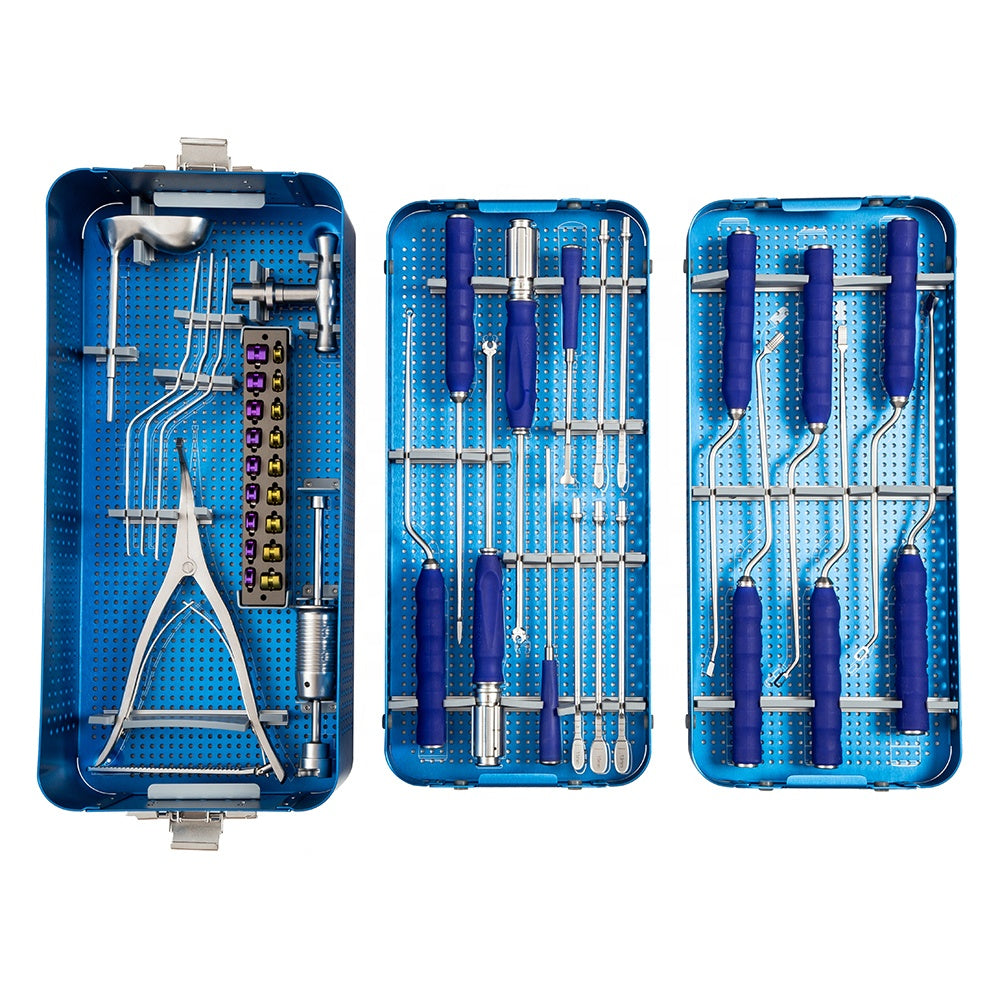
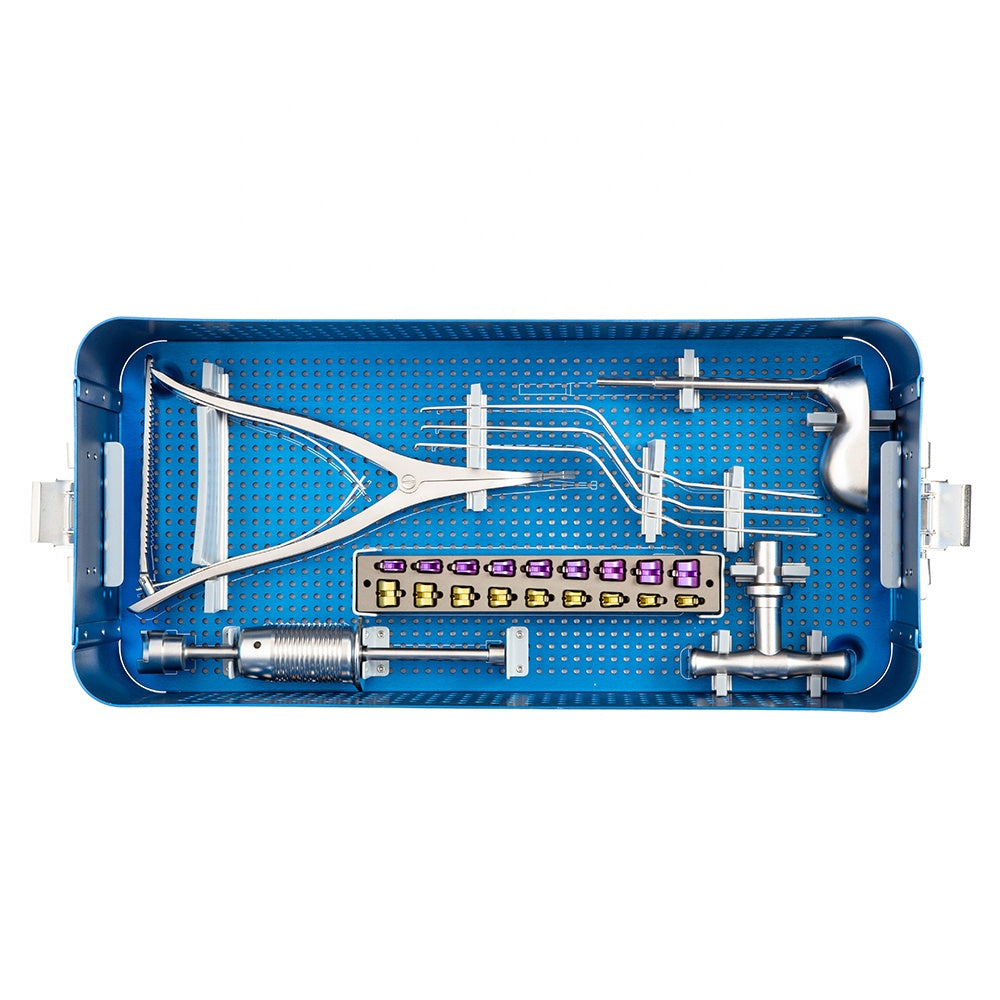
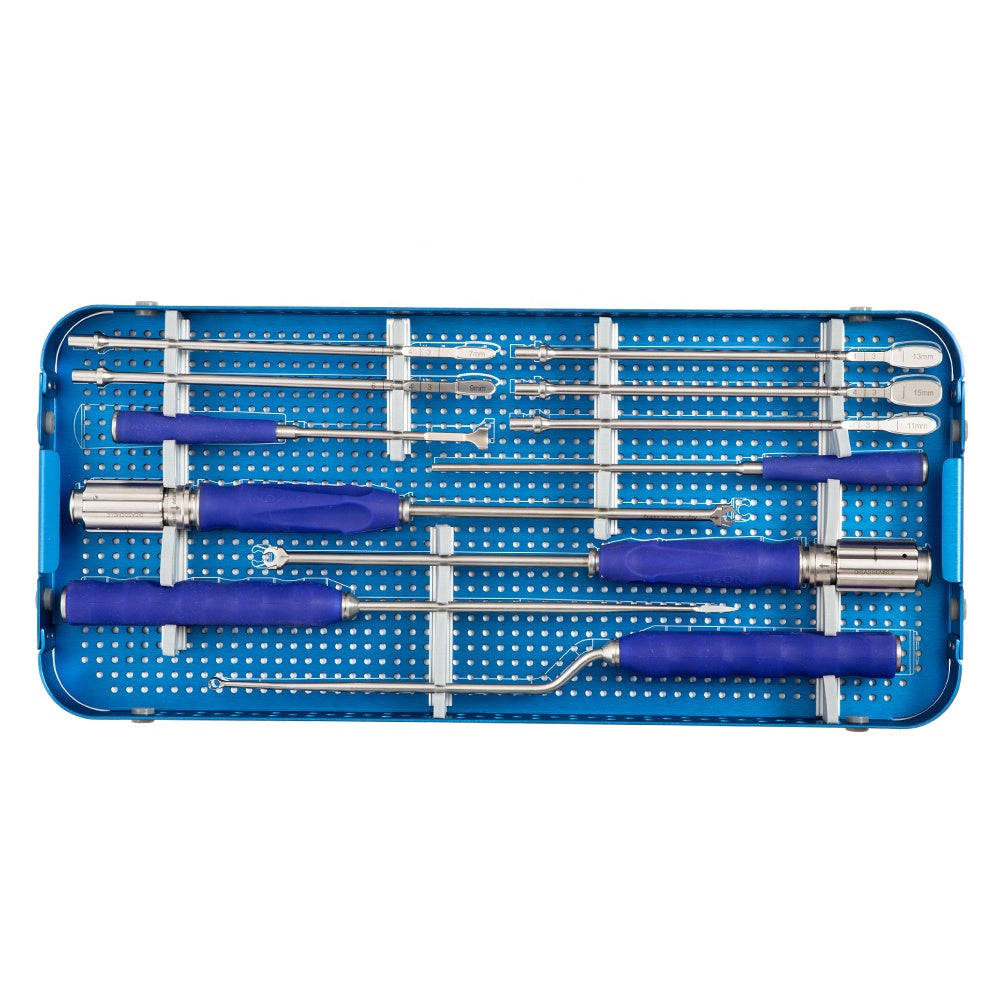
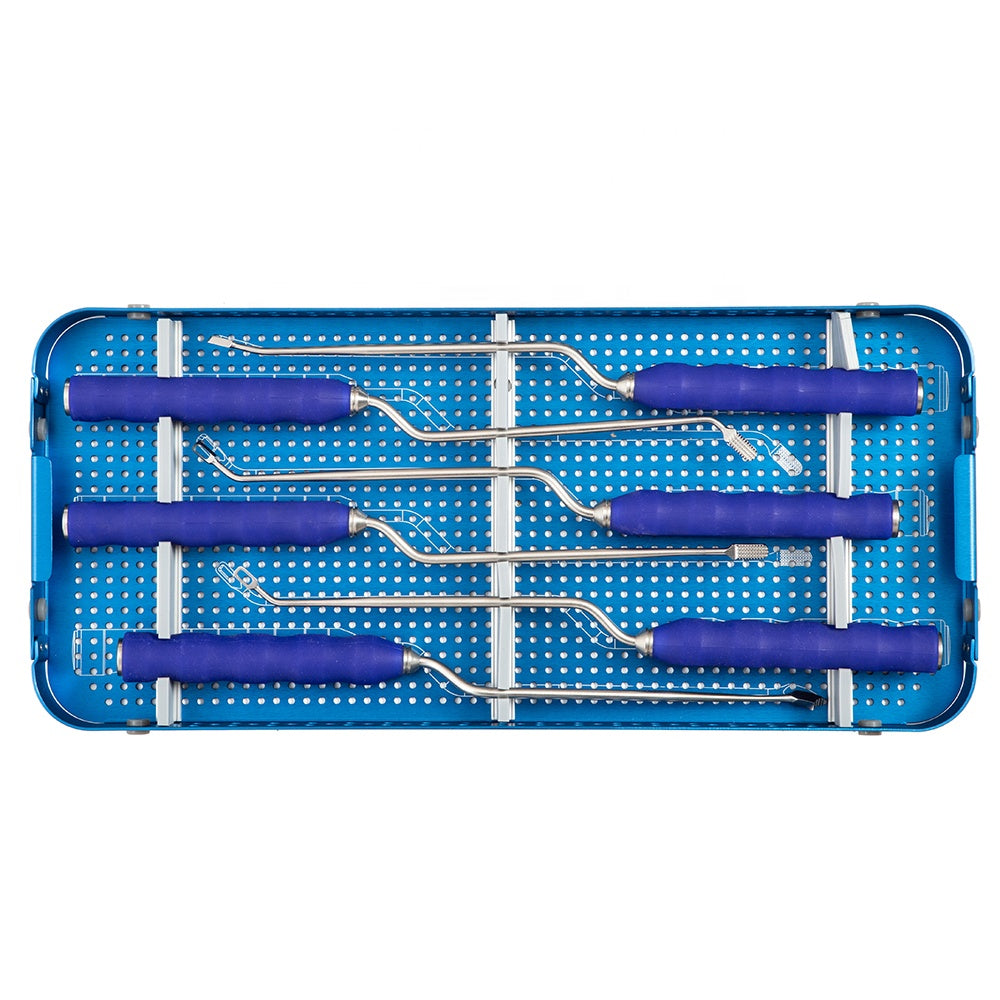
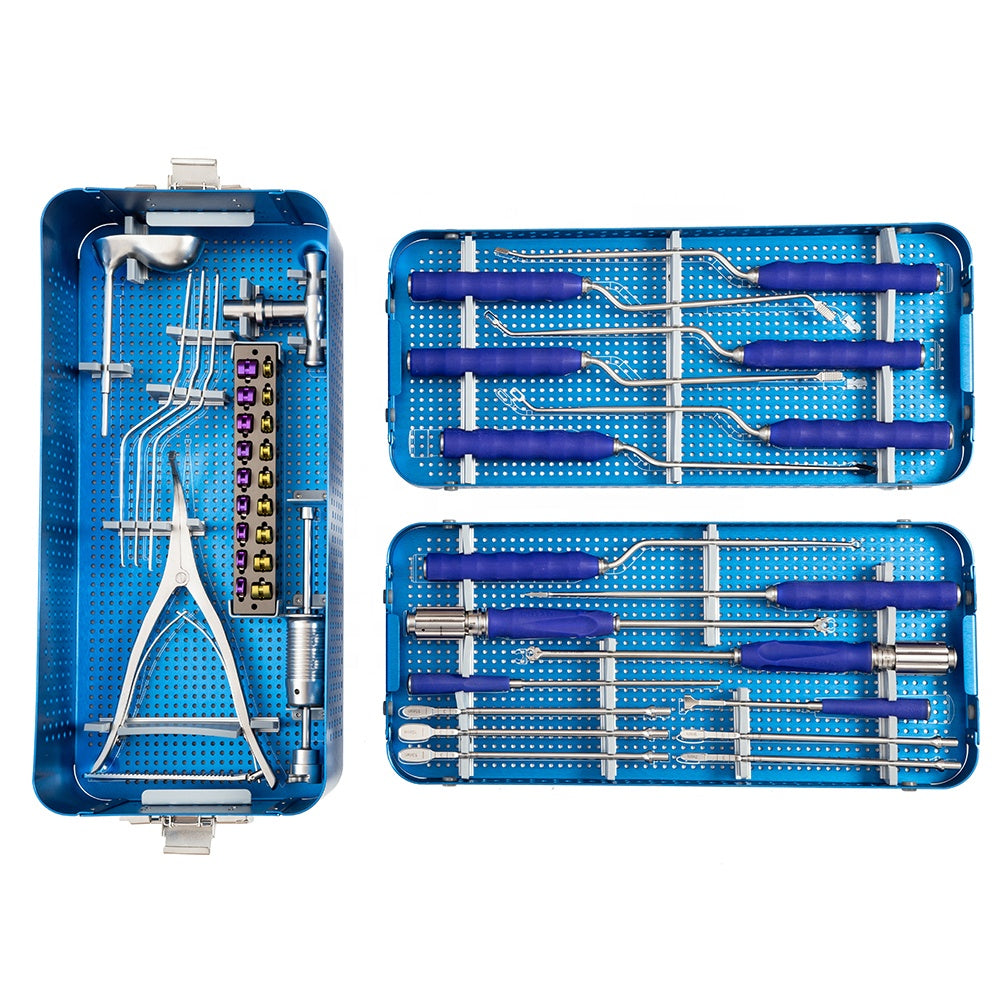
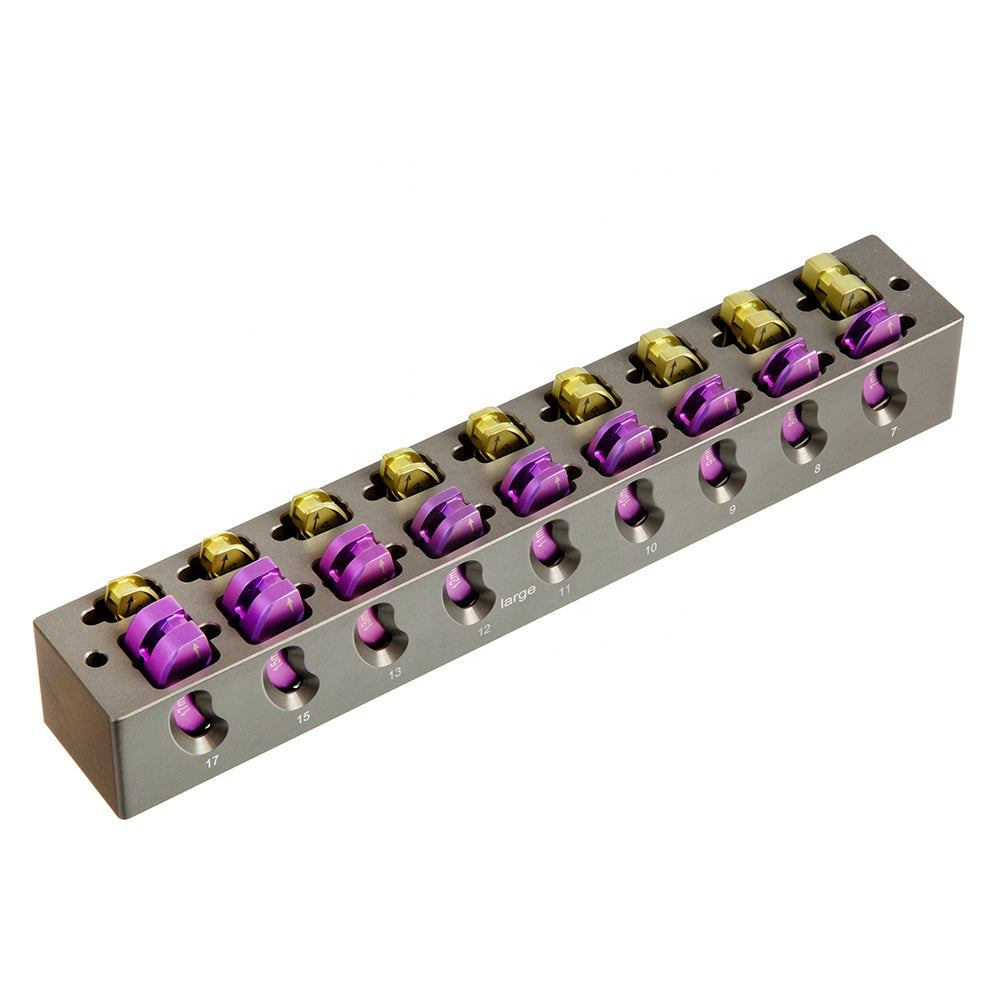
The TLIF PEEK Cage T-PAL Spacer Set with Surgical Instrumentation Kit is a complete transforaminal lumbar interbody fusion (TLIF) implant and instrument system comprising 18 PEEK Cage-II interbody spacers in two footprint widths and nine disc height increments, 18 corresponding trial spacers in large and small configurations, a 6-reamer endplate preparation series (7mm through 15mm), bone curettes, bone files, a curved stuffer, bone graft funnel, soft tissue retractors in three widths (6mm, 8mm, 10mm), a spreader forcep, sliding hammer, compactor, straight osteotome, dual T-PAL spacer applicators, and a quick-coupling T-handle, all housed in a labelled aluminium case with a dedicated trial spacer box. The PEEK Cage-II is offered in the 10mm width / 28mm length footprint for standard posterior access TLIF and the 12mm width / 31mm length footprint for wider approaches, with lordotic angles of 0° at the 7mm height and 5° for all heights from 8mm through 17mm, spanning the disc height restoration range from collapsed degenerative disc to normal disc space in adult patients. Used by spine surgeons, neurosurgeons specializing in lumbar surgery, and surgical scrub technicians in hospital spine surgery suites, ambulatory spine surgery centers, and neurosurgical operating rooms. Sold as 1 complete set.
The TLIF PEEK Cage-II implants in this set are manufactured from PEEK-OPTIMA (polyether ether ketone), the standard interbody fusion material offering an elastic modulus closely matched to cortical bone — approximately 3–4 GPa — that reduces the stress shielding and end-plate subsidence risk associated with stiffer titanium or carbon fiber interbody devices. The cage geometry is designed for TLIF delivery: the kidney-shaped or oblique footprint permits single-level transforaminal insertion through the unilateral facetectomy corridor without requiring complete posterior element removal, and the tapered leading edge facilitates disc space distraction and cage advancement across the disc space under sequential insertion force. Two footprint widths are provided — 10mm wide/28mm long (REF 2100-3301 through 2100-3309) and 12mm wide/31mm long (REF 2100-3310 through 2100-3318) — accommodating both the narrow corridor of a minimally invasive tubular retractor TLIF and the wider access of an open or mini-open posterior approach. The lordotic angle progression — 0° at 7mm height and 5° for all heights from 8mm through 17mm — ensures that disc space restoration at the 7mm minimum does not over-angulate the disc space in already-narrow segments, while the 5° lordosis built into taller cages contributes to local segmental lordosis restoration that is a primary goal of lumbar fusion surgery for sagittal balance correction. Nine disc heights — 7, 8, 9, 10, 11, 12, 13, 15, and 17mm — provide coverage from severely collapsed disc spaces in advanced degenerative disc disease through the restoration of full anatomical disc height, including the supra-normal heights occasionally required in deformity correction cases to achieve anterior column lengthening for sagittal balance improvement.
Transforaminal lumbar interbody fusion is indicated for a broad range of lumbar pathologies where anterior column support, foraminal height restoration, and interbody fusion are required in addition to posterior decompression and pedicle screw-rod stabilization. Primary indications include degenerative spondylolisthesis grades I and II with neurogenic claudication or radiculopathy where dynamic stabilization alone is insufficient; isthmic spondylolisthesis requiring reduction and fusion; symptomatic degenerative disc disease at L4–S1 with disc space collapse, instability on dynamic radiography, or failed conservative management; recurrent disc herniation requiring fusion to prevent further recurrence; adjacent segment disease following prior lumbar fusion; and correction of fixed flat-back or lumbar hypolordosis where segmental cage height selection contributes to sagittal alignment restoration. The TLIF approach — unilateral transforaminal access through the foramen and posterolateral disc space — preserves the contralateral posterior musculature and paraspinal anatomy compared to PLIF (posterior lumbar interbody fusion), reduces epidural bleeding from bilateral neural retraction, and allows the cage to be positioned obliquely across the disc space toward the anterior column, where end-plate loading is biomechanically most favorable for axial load bearing. The instrument set in this system is specifically designed for this transforaminal trajectory: the soft tissue retractors (6/8/10mm) protect neural elements during the transforaminal approach; the reamers prepare the contralateral end-plate surface along the cage insertion axis; the trial spacers confirm height and fit before definitive cage placement; and the T-PAL spacer applicators deliver the cage to its final position across the disc space under fluoroscopic or navigation guidance.
The 44-component instrumentation in this set supports the complete TLIF disc preparation and cage insertion workflow. The six reamers — 7mm, 9mm, 11mm, 13mm, and 15mm (×2) — sequentially decorticate and contour the vertebral end-plates from the transforaminal corridor in progressively larger steps, removing residual disc material and cartilaginous end-plate while preserving the bony end-plate integrity required to resist cage subsidence under axial loading. End-plate preparation quality is directly correlated with interbody fusion rate and cage subsidence risk, making the reamer series a clinically significant component. The ring-type bone curette, square-type bone curettes (straight, left, right), curved bone file, and straight bone file address the manual disc space preparation steps that reamers alone cannot accomplish in narrow or anatomically complex disc spaces — including the contralateral annulus, the posterior annular remnants, and the anterior disc space in the far corner opposite the insertion corridor. The curved stuffer and bone graft funnel enable precise autograft or allograft bone placement into the disc space anterior to the cage position before cage insertion, maximizing the fusion volume within the interbody construct. The 18 trial spacers — nine heights in Large (L) and Small (S) configurations — allow the surgeon to systematically determine the correct cage size by sequential trialing under fluoroscopy before committing to the definitive PEEK cage, which cannot be adjusted after final seating. The spreader forcep provides controlled distraction at the transforaminal corridor and disc space during cage insertion. The sliding hammer, compactor, and quick-coupling T-handle complete the cage advancement and final seating tool group.
The selection of PEEK for the TLIF interbody cage in this system reflects the material's established advantages in lumbar interbody fusion over earlier metallic cage designs. PEEK is radiolucent on plain radiography and CT, allowing the fusion mass within and around the cage to be visualized on post-operative imaging without the beam-hardening artifact that titanium produces — a critical advantage for post-operative fusion assessment at six and twelve months. PEEK is also MRI-compatible, producing minimal susceptibility artifact on standard field-strength MRI, which supports post-operative imaging of the neural elements, adjacent disc levels, and paraspinal soft tissues where clinical concern arises. The elastic modulus of PEEK at 3–4 GPa is substantially lower than titanium (110 GPa) and closer to cortical bone (12–18 GPa), reducing the stress concentration at the cage-end-plate interface that contributes to subsidence in stiffer cages under axial lumbar loading. The porous or roughened cage surface texture on the PEEK Cage-II end-plates provides mechanical interdigitation with decorticated end-plate bone, supplementing the primary stabilization provided by the pedicle screw-rod construct during the fusion period. All PEEK implants in this system are manufactured to biocompatibility standards consistent with ISO 10993 requirements for long-term implanted devices.
The TLIF PEEK Cage T-PAL Spacer Set with Surgical Instrumentation Kit is manufactured under a quality management system certified to ISO 13485, governing all production stages from raw material procurement through PEEK machining, surface treatment, dimensional inspection, sterile packaging, and lot-level traceability via REF numbering across both the 2100-33XX cage series and the 2200-11XX instrument series. CE Mark certification confirms conformity with European Medical Device Regulation requirements for Class III spinal interbody implants and associated instruments distributed within EU and associated regulatory territories. FDA compliance documentation is maintained for United States distribution, supporting procurement by US hospitals, spine surgery centers, and group purchasing organizations operating under applicable 510(k) clearance frameworks for PEEK interbody fusion devices. These three certifications collectively satisfy the procurement and tender documentation requirements of institutional buyers in the USA, India, Pakistan, Vietnam, and across major international tender frameworks. Biocompatibility documentation, material data sheets, dimensional inspection records, and certificates of conformity are available upon request for vendor qualification and tender submission purposes. OEM and custom implant configurations are available within the same certified manufacturing environment.
| SKU (Cage Series) | REF 2100-3301 through 2100-3318 |
|---|---|
| SKU (Instrument Set) | REF 2200-11 (instruments 2200-1101 through 2200-1144) |
| Product Name | TLIF PEEK Cage T-PAL Spacer Set with Surgical Instrumentation Kit |
| Price | $1,857.90 USD |
| Procedure | Transforaminal Lumbar Interbody Fusion (TLIF) |
| Cage Material | PEEK (Polyether Ether Ketone) |
| Cage Footprint Options | 10mm wide × 28mm long (REF 2100-3301 to 2100-3309); 12mm wide × 31mm long (REF 2100-3310 to 2100-3318) |
| Cage Heights Available | 7, 8, 9, 10, 11, 12, 13, 15, 17mm (9 heights per footprint) |
| Lordotic Angle | 0° at 7mm; 5° at 8mm–17mm |
| Total PEEK Cages | 18 implants (9 per footprint size) |
| Trial Spacers | 9mm–17mm Large (L) × 9 + Small (S) × 9 = 18 trials total, in dedicated Trial Spacer Box |
| Reamer Series | 7mm, 9mm, 11mm, 13mm, 15mm (×2) — 6 reamers |
| Soft Tissue Retractors | 6mm, 8mm, 10mm — 3 retractors |
| Bone Curettes | Ring Type, Square Type (straight, L, R) — 4 curettes |
| Bone Files | Curved Bone File, Straight Bone File — 2 files |
| Applicators / Drivers | T-PAL Spacer Applicator (×2), Quick-coupling T-handle, Compactor, Straight Osteotome |
| Graft Instruments | Curved Stuffer, Bone Graft Funnel |
| Additional Instruments | Spreader Forcep, Sliding Hammer |
| Storage Case | Aluminium Box + Trial Spacer Box (included) |
| Instrument Material | Stainless Steel |
| MRI Compatibility | Yes (PEEK implants — minimal susceptibility artifact) |
| Certifications | CE Mark, ISO 13485, FDA |
| Reusability | Implants: Single Use / Instruments: Reusable |
| Rust Resistance | Yes |
| Warranty | 1 Year |
| MOQ | 1 Piece |
| OEM / Custom Orders | Available |
| Packing | Carton Box |
| Place of Origin | Pakistan |
| Brand | Peak Surgicals |
| Primary Use | Transforaminal lumbar interbody fusion using PEEK Cage-II spacers with T-PAL instrumentation for disc space preparation, trial sizing, cage insertion, and bone grafting at L1–S1 |
| After-Sale Service | Return and Replacement |
What is the TLIF PEEK Cage T-PAL Spacer Set and which procedures is it designed for?
The TLIF PEEK Cage T-PAL Spacer Set is a complete transforaminal lumbar interbody fusion system that combines 18 PEEK interbody cages in two footprint widths and nine disc heights with the full instrument set required for disc space preparation, trial sizing, bone grafting, and definitive cage insertion. Transforaminal lumbar interbody fusion is a posterior spinal surgery technique in which a bone graft-loaded interbody cage is introduced through the foramen — the lateral opening of the spinal canal — to support and fuse the disc space between two lumbar vertebrae, restore disc height, decompress the neural foramen, and stabilize the motion segment as part of a posterior instrumented fusion construct. The T-PAL (Transforaminal Posterior Annulus Lumbar) spacer designation refers to the transforaminal insertion trajectory and the posterolateral annular access route through which the cage is delivered to its final position across the disc space. Primary indications include degenerative spondylolisthesis at L4–L5 and L5–S1, isthmic spondylolisthesis, symptomatic degenerative disc disease with instability, recurrent disc herniation at a previously operated level, and adjacent segment disease following prior lumbar fusion. The complete instrument set — including reamers, bone curettes, trial spacers, and cage applicators — supports the full procedural workflow without supplemental instrument sourcing, making this a practical single-case system for spine surgery centers managing a standard TLIF caseload.
How does the surgeon select the correct cage height from the nine available options?
Cage height selection in TLIF is determined through a combination of pre-operative planning and intraoperative trial sizing using the 18 trial spacers included in this set. Pre-operatively, the surgeon measures the target disc space height on standing lateral radiographs or MRI sagittal sequences and identifies the desired post-operative disc height based on the goals of neural decompression, foraminal height restoration, and segmental lordosis correction. At operation, after disc space preparation and end-plate decortication using the reamer series and bone curettes, the trial spacers are inserted sequentially in increasing height to identify the largest trial that fits the disc space without requiring excessive distraction force and without gapping the end-plates or over-tensioning the posterior ligamentous complex. The trial spacers in this set are provided in both Large (L) and Small (S) footprint configurations, matching the two cage width options. Once the trial size is confirmed under fluoroscopy with acceptable end-plate contact and disc space height, the definitive PEEK cage of the same height is loaded with autograft bone or bone substitute and inserted to the final position. The sliding hammer and spreader forcep assist with final seating when the cage meets resistance from the disc space's natural elastic recoil after distraction. The nine height increments — 7mm to 17mm — provide adequate granularity for precise disc height restoration across the range of degenerative disc heights encountered in lumbar fusion surgery.
What are the clinical advantages of PEEK over titanium for TLIF interbody cages?
PEEK (polyether ether ketone) offers several clinically significant advantages over titanium in lumbar interbody fusion, which have driven its adoption as the dominant material for TLIF cages over the past two decades. The most practically important is radiolucency: PEEK cages are invisible on plain radiography and produce no beam-hardening artifact on CT, allowing the surgeon and radiologist to directly assess the bone fusion mass forming within and anterior to the cage on post-operative imaging — the primary method of confirming solid interbody arthrodesis at six and twelve months. Titanium cages block this view entirely on CT and produce significant scatter artifact, requiring MRI or other advanced imaging. PEEK also produces minimal susceptibility artifact on MRI, permitting post-operative neural assessment and adjacent disc evaluation without the significant signal void that titanium implants generate. The elastic modulus advantage — PEEK at 3–4 GPa versus titanium at 110 GPa — reduces end-plate stress concentration under compressive loading, which is the biomechanical mechanism of cage subsidence into the vertebral body, particularly in patients with osteoporotic end-plates. These advantages make PEEK the standard material for TLIF interbody cages in current lumbar fusion practice, and the PEEK Cage-II implants in this set reflect that clinical consensus.
What sterilization methods are compatible with the instruments in this set?
The stainless steel instruments — reamers, curettes, files, retractors, applicators, T-handle, compactor, osteotome, stuffer, funnel, forcep, sliding hammer, and trial spacers — are compatible with steam autoclave sterilization at standard pre-vacuum cycle parameters of 134°C / 273°F, which is the recommended routine reprocessing method. The aluminium case and trial spacer box should be confirmed as autoclave-compatible with the facility's sterilization equipment before direct processing; when uncertain, instruments should be transferred to a wrapped sterilization tray. Ethylene oxide and hydrogen peroxide plasma sterilization are compatible with all stainless steel instrument components. The trial spacers require particular pre-cleaning attention — their insertion surfaces accumulate disc and end-plate material during sizing trials and must be manually brushed and ultrasonically processed before terminal sterilization. The PEEK cage implants are provided sterile and are single-use devices that must not be resterilized. Cage implants that have been opened but not implanted should be managed according to the facility's single-use device policy.
What regulatory certifications does this set carry?
The TLIF PEEK Cage T-PAL Spacer Set is manufactured under an ISO 13485-certified quality management system covering design, PEEK material sourcing, cage machining, surface treatment, dimensional inspection, sterile packaging, and lot-level traceability via REF 2100-33XX and 2200-11XX numbering. CE Mark certification confirms conformity with European Medical Device Regulation requirements for Class III spinal interbody implants distributed in EU and associated regulatory territories. FDA compliance documentation is maintained for the United States market, supporting procurement by spine surgery hospitals and centers. Biocompatibility documentation conforming to ISO 10993 series requirements for long-term implanted devices, material certificates, dimensional inspection records, and certificates of conformity are available on request for vendor qualification and institutional tender submissions.
Are bulk, institutional, or OEM orders available?
Yes. Peak Surgicals accepts institutional purchase orders for the TLIF PEEK Cage T-PAL Spacer Set with a minimum order quantity of 1, and volume pricing is available for hospitals, spine surgery centers, medical device distributors, and group purchasing organizations. Individual cage size replenishment orders are available by REF number for facilities that wish to restock specific depleted heights or footprint sizes without purchasing a complete new set. OEM manufacturing is available for buyers requiring private-label branding, modified cage height ranges, alternative lordotic angles, or customized footprint dimensions, all produced within the same ISO 13485-certified framework with full regulatory documentation including CE Mark and FDA compliance. This set qualifies for free shipping on orders of $99 or more. Contact Peak Surgicals directly to discuss volume pricing, lead times, and OEM program requirements.


