
Featured Collection
Your cart
Featured Collection

PEAK SURGICAL
SKU:PS-SPSSIS-00108
Couldn't load pickup availability
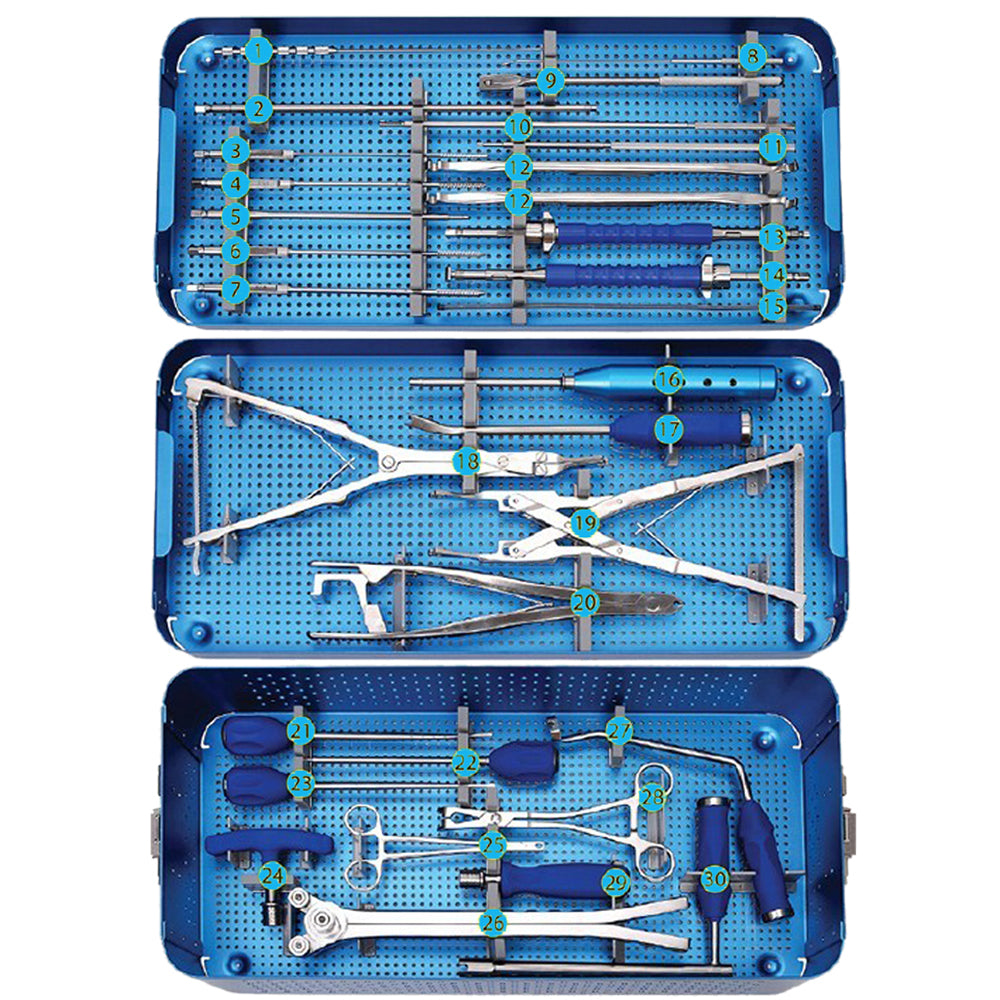
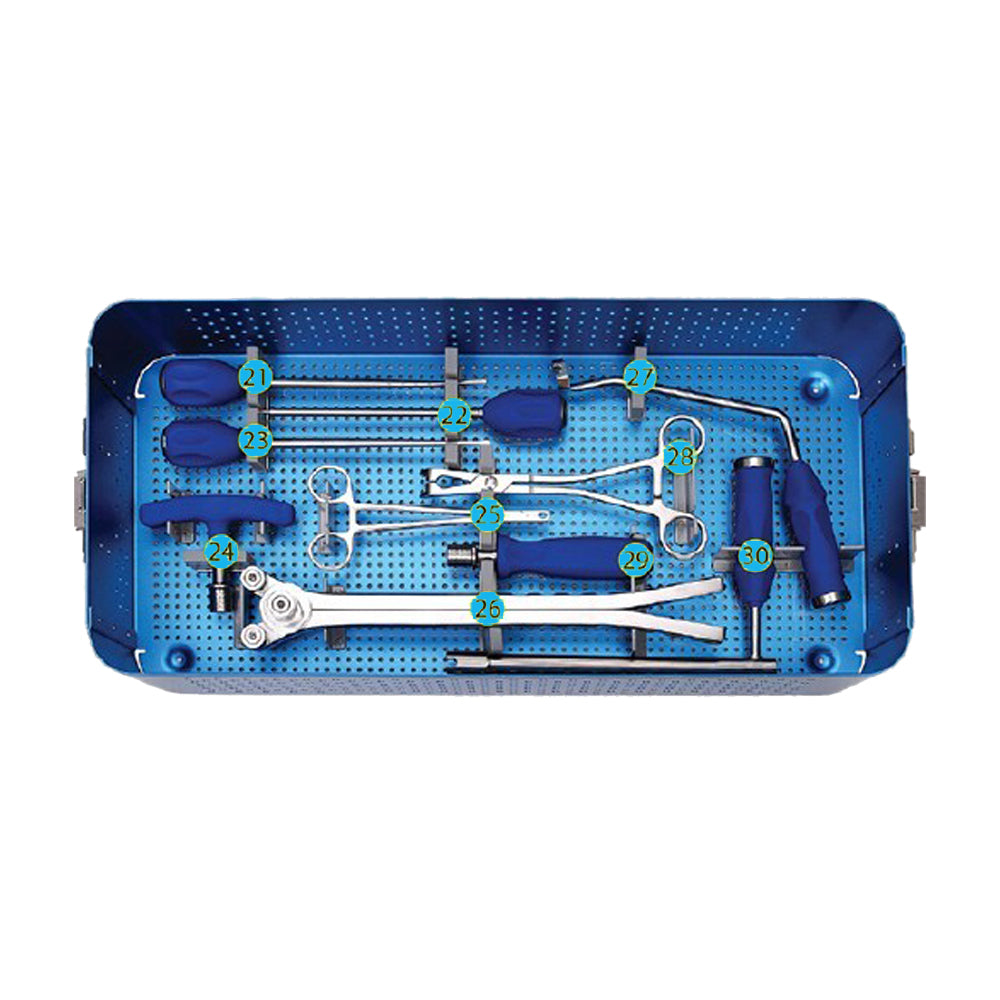
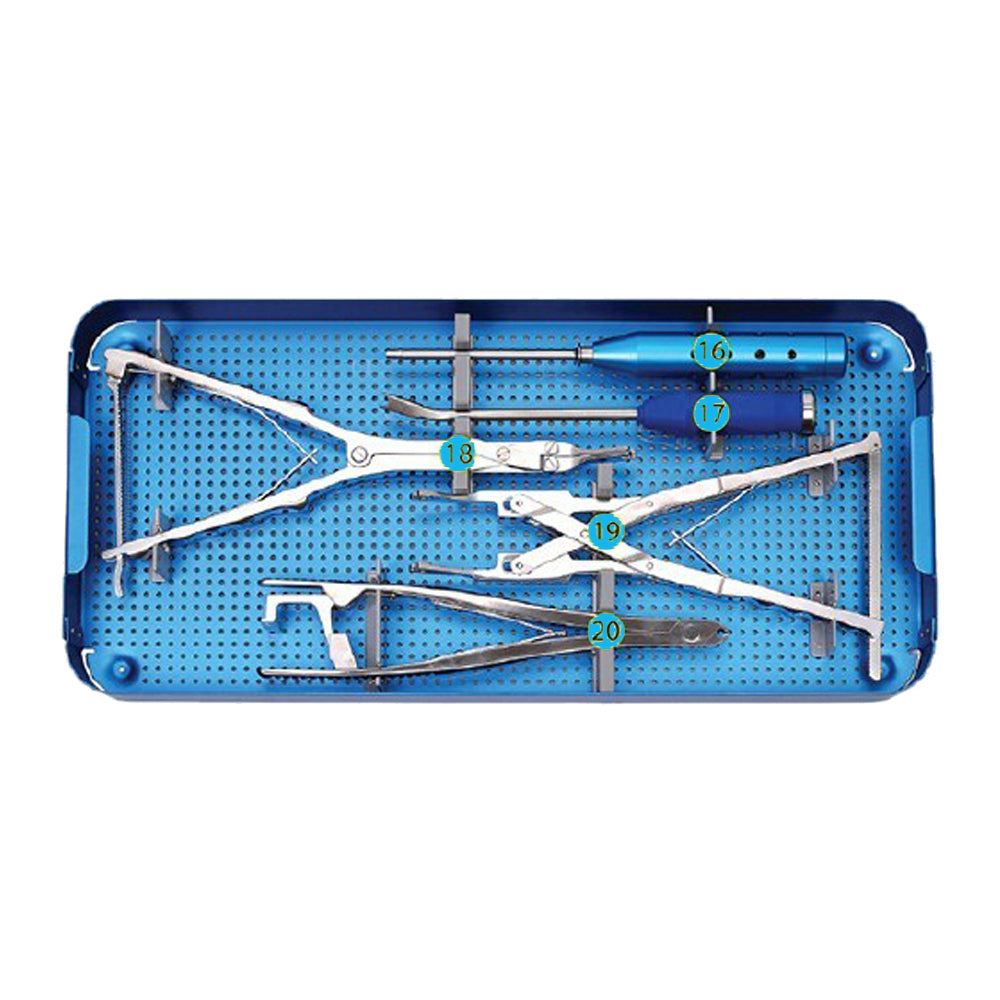
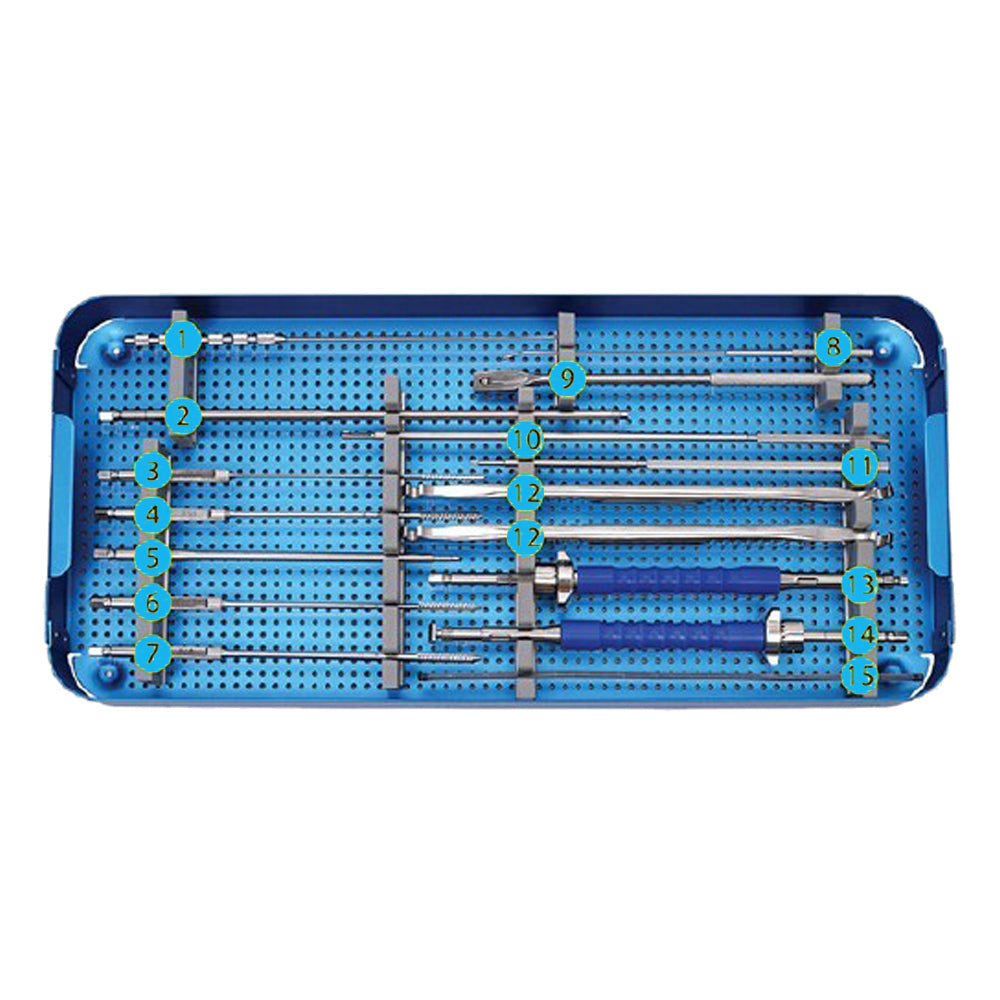
The Spinal Pedicle Screw System from Peak Surgicals is a 30-piece comprehensive pedicle screw instrumentation set in stainless steel, designed to support the complete intraoperative workflow of posterior spinal pedicle screw fixation — covering pedicle access preparation, screw channel feeler assessment, tapping across four diameters, polyaxial and monoaxial screw insertion, rod introduction and contouring, in-situ rod bending, rod-to-screw compression and distraction, crosslink fixation, and screw cutter management. The set includes straight and bent Pedicle Probes and Screw Channel Feelers for pedicle integrity assessment, four Taps (φ4.0 to φ7.0mm) for screw channel preparation, dedicated screwdrivers for polyaxial and monoaxial screw types, a Rod Bender and In-situ Bending Iron for intraoperative rod contouring, Parallel Spreader and Parallel Compressor for segmental distraction and compression, a Trial Rod, and all associated nut holders, counter torques, and quick coupling handles, supplied in an aluminium box. It is used by spine surgeons and neurosurgeons in hospital operating theatres performing posterior spinal instrumentation for lumbar and thoracic fusion, spinal deformity correction, spinal stenosis with instability, spondylolisthesis, spinal fracture stabilisation, and spinal tumour surgery.
Safe pedicle screw insertion begins with identifying the pedicle entry point on the posterior surface of the vertebra, establishing a pedicle channel through the pedicle cortex and into the vertebral body without breaching the medial, lateral, superior, or inferior pedicle cortex walls, and confirming the channel integrity before screw insertion. The AWL (PS-AWL-023) establishes the initial cortical entry at the pedicle entry point — the pedicle entry point varies by spinal level and vertebral morphology, and the AWL creates the cortical breach through which the pedicle probe is advanced. The Pedicle Probe Straight (PS-PPS-021) advances through the cancellous bone of the pedicle and into the vertebral body along the correct screw trajectory under fluoroscopic guidance — the curved tip of the straight probe follows the cancellous trabecular path between the pedicle cortex walls. The Pedicle Probe Bent (PS-PPB-022) addresses levels or trajectories where the standard straight probe cannot be advanced without cortical contact, providing an alternative angulation for difficult pedicle access. The Feeler for Screw Channel Straight (PS-FSCS-001) and Feeler for Screw Channel Bent (PS-FSCB-008) are then used to assess the integrity of the prepared pedicle channel — the feeler is passed around the walls of the channel and rotated to feel for any cortical breach that would indicate medial or lateral pedicle wall penetration before the screw is inserted.
The set includes four taps in diameters matched to the pedicle screw sizes used across the thoracic, lumbar, and sacral spinal levels. Tap φ4.0 (PS-T-003) prepares the pedicle channel for smaller-diameter screws used in the thoracic spine and smaller lumbar pedicles. Tap φ5.5 (PS-T-004) addresses the intermediate range used for standard lumbar pedicle screw sizes. Tap φ6.0 (PS-T-006) is used for larger lumbar pedicle screws where the pedicle diameter permits a 6mm screw diameter, providing enhanced pullout strength in high-load lumbar levels. Tap φ7.0 (PS-T-007) prepares the channel for 7mm large-diameter screws used in the ilium or large lumbar pedicles where maximum fixation strength is required, such as in adult deformity correction or high-grade spondylolisthesis requiring sacropelvic fixation. All taps are used with the T-Handle Quick Coupling (PS-TQC-024) or Straight Handle Quick Coupling (PS-SHQC-029) depending on access angle, and pre-tapping is particularly important in cortical bone at the pedicle isthmus where a self-tapping screw alone may generate excessive rotational force on the pedicle cortex during insertion.
The set provides separate screwdrivers for the two dominant pedicle screw head designs used in contemporary posterior spinal instrumentation. The Screwdriver for Polyaxial Screw (PS-SPS-013) engages the inner drive mechanism of a polyaxial pedicle screw head — in polyaxial screws, the screw shaft can pivot within the tulip head through a defined angular range before the set screw is tightened, allowing the rod to be inserted into the tulip without requiring the screw trajectory to exactly match the rod curvature. The Screwdriver for Monoaxial Screw (PS-SMS-014) engages a monoaxial pedicle screw, in which the screw head is fixed permanently in line with the screw shaft. Monoaxial screws provide a stiffer, stronger construct at the cost of reduced rod seating flexibility, and their use at specific levels (such as S1 in lumbosacral fusion or at the apex of a deformity correction) requires the dedicated monoaxial screwdriver for accurate torque application. The Screw Nut Holder Hex (PS-SNHH-010) and Hex Screwdriver for Screw Nut (PS-HSSN-002) complete the nut torque application toolkit for set screw final tightening.
The rod component of the procedure — bending the connecting rod to match the required sagittal and coronal spinal alignment and seating it into the pedicle screw tulip heads at each instrumented level — accounts for a significant proportion of the operative time in posterior spinal instrumentation and requires a complete set of dedicated instruments. The Rod Bender (PS-RB-026) contours the spinal rod ex situ to the planned spinal alignment curve before the rod is inserted into the screw heads. The In-situ Bending Iron (PS-IBI-012) makes minor rod adjustments after the rod is partially or fully seated in the pedicle screw heads — avoiding the need to remove and recontour the rod outside the wound when small alignment corrections are required after the rod is provisionally seated. The Trial Rod (PS-TR-015) allows the surgeon to test rod length, curvature, and seating fit before using the definitive implant rod. The Rod Holding Forcep (PS-RHF-025) grips the rod for controlled introduction into the wound and into the screw tulip heads. The Rod Pushing Forcep (PS-RPF-028) and Rod Pusherial (PS-RP-017) assist with seating the rod into the screw tulip at each level, providing the directed force needed to advance the rod into the tulip without applying torque through the pedicle screw. The Rod Twist (PS-RT-020) rotates the seated rod around its own longitudinal axis as part of the deformity correction manoeuvre in scoliosis or kyphosis cases.
The Parallel Spreader (PS-PS-018) and Parallel Compressor (PS-PC-019) apply distraction and compression forces between adjacent instrumented levels along the seated rod — distraction increases intervertebral height and reduces lordosis, while compression reduces height and increases lordosis, allowing the surgeon to fine-tune segmental alignment and disc height after rod seating and before set screw final tightening. The Crosslink Nut Holder Hex (PS-CNHH-011) and Screwdriver Hex 3.5mm for Crosslink Nut (PS-SHC-005) seat and tighten the crosslink connectors that connect the left and right rod systems transversely, improving torsional stability of the bilateral construct. The Counter Torque (PS-CT-030) provides the reactionary force during screw nut tightening, preventing torque transmission from the screwdriver from rotating the pedicle screw in the bone during final tightening. The Counter Torque for Screw Cutter (PS-CTSC-027) provides the same function during Screw Cutter for Long Arm Screw (PS-SCLAS-009) operation — after set screw tightening, any extended tulip arm of the screw used for minimally invasive or percutaneous access is cut flush with the rod using the screw cutter, and the counter torque prevents the construct from rotating under the cutting force. The Insert Device for Fixation Pin (PS-IDFP-016) provides controlled insertion for any fixation pin elements used in the system.
The Spinal Pedicle Screw System is manufactured under CE Mark, ISO 13485, and FDA compliant quality standards. ISO 13485 certification confirms Peak Surgicals operates a documented quality management system covering design control, material traceability, and production consistency for spinal surgical instruments. CE Mark confirms conformity with European medical device regulations, and FDA compliance supports procurement for US-based hospitals, spine surgery centers, and neurosurgical departments requiring verified regulatory documentation for spinal instrumentation purchases.
| SKU | — (verify in Shopify admin) |
|---|---|
| Product Name | Spinal Pedicle Screw System |
| Price | $1,705.00 USD |
| Total Instruments | 30 + Aluminium Box |
| Instrument Category | Spine Surgery — Pedicle Screw Instrumentation System |
| Procedure | Posterior spinal pedicle screw fixation — lumbar, thoracic, and sacropelvic instrumentation |
| Taps Included | φ4.0mm, φ5.5mm, φ6.0mm, φ7.0mm |
| Pedicle Probes | Straight (PS-PPS-021) + Bent (PS-PPB-022) |
| Feelers | Straight (PS-FSCS-001) + Bent (PS-FSCB-008) |
| Screwdrivers | Polyaxial Screw (PS-SPS-013), Monoaxial Screw (PS-SMS-014), Hex for Screw Nut (PS-HSSN-002), Hex 3.5mm for Crosslink Nut (PS-SHC-005) |
| Rod Instruments | Rod Bender (PS-RB-026), In-situ Bending Iron (PS-IBI-012), Trial Rod (PS-TR-015), Rod Holding Forcep (PS-RHF-025), Rod Pushing Forcep (PS-RPF-028), Rod Pusherial (PS-RP-017), Rod Twist (PS-RT-020) |
| Alignment Instruments | Parallel Spreader (PS-PS-018), Parallel Compressor (PS-PC-019) |
| Other Instruments | AWL, Screw Nut Holder Hex, Crosslink Nut Holder Hex, Screw Cutter for Long Arm Screw, Counter Torque, Counter Torque for Screw Cutter, Insert Device for Fixation Pin, T-Handle Quick Coupling, Straight Handle Quick Coupling |
| Container | Aluminium Box (PS-AB-31) |
| Certifications | CE Mark, ISO 13485, FDA |
| Warranty | 1 Year |
| MOQ | 1 Set |
| OEM / Custom Orders | Available |
| After-Sale Service | Return and Replacement |
What surgical procedures is the Spinal Pedicle Screw System used for?
The Spinal Pedicle Screw System is used for any posterior spinal surgical procedure that requires pedicle screw-rod fixation across one or more spinal levels. Primary indications include lumbar spinal fusion for degenerative disc disease with instability, spondylolisthesis (Grade I–IV), lumbar stenosis with instability, isthmic and degenerative spondylolisthesis, adult degenerative scoliosis, and post-discectomy instability. Additional indications include thoracic and thoracolumbar spine fracture stabilisation, spinal tumour surgery requiring posterior instrumented reconstruction, adult spinal deformity correction, and revision surgery for failed prior instrumentation. The system's taps covering φ4.0 to φ7.0mm support screw selection across thoracic and lumbar levels from standard adult anatomy to large-diameter sacropelvic iliac fixation.
What is the difference between polyaxial and monoaxial pedicle screws, and why does this set include screwdrivers for both?
A polyaxial pedicle screw has a tulip head that pivots on the screw shaft through a defined angular range — typically ±20° to ±30° — before the set screw locks the rod into the tulip. This pivot allows the rod to be inserted into the tulip at any angle within that range, so minor differences between the rod curvature and the screw head positions can be accommodated during rod seating without precise screw trajectory matching. Monoaxial pedicle screws have a fixed tulip permanently aligned with the screw shaft, providing a stiffer construct at a specific controlled angle but requiring precise alignment between the screw trajectory and the rod curvature. Both designs are used in posterior spinal instrumentation: polyaxial screws at most levels for flexibility during rod seating, monoaxial screws at specific levels (S1, ilium, deformity apices) where maximum construct stiffness at a defined angle is required. This set includes dedicated screwdrivers for both designs so the surgeon can use either screw type at any level without supplemental instruments.
What is the purpose of the In-situ Bending Iron compared to the Rod Bender?
The Rod Bender (PS-RB-026) is used outside the surgical wound before the rod is inserted — the surgeon bends the rod to the planned sagittal and coronal alignment curve based on preoperative templating and the interscrew distances confirmed intraoperatively. The In-situ Bending Iron (PS-IBI-012) is used after the rod is seated in the screw tulips — it applies a three-point bending force to the rod inside the wound to make minor alignment adjustments without removing the rod. This is particularly useful when the rod is partially seated and a small additional curvature is needed to reduce the force required to seat the rod into a remaining screw head, or when slight sagittal alignment fine-tuning is needed after the rod is provisionally locked but before final set screw tightening. In-situ bending avoids repeated rod removal and reinsertion cycles that prolong operative time and increase the risk of pedicle screw disturbance.
What does the Parallel Spreader and Parallel Compressor do?
The Parallel Spreader (PS-PS-018) and Parallel Compressor (PS-PC-019) are segmental alignment instruments that apply distraction or compression forces between two adjacent instrumented spinal levels along the seated rod, after the rod is provisionally in position but before the set screws are finally tightened. Distraction increases intervertebral disc height, opens the neuroforamina on the distracted side, and reduces segmental lordosis — used to restore disc height at collapsed levels or to reduce kyphotic deformity. Compression reduces disc height, closes the foramen, and increases segmental lordosis — used to create or augment lumbar lordosis, to reduce and hold spondylolisthesis, or to reduce segmental kyphosis. The final set screw torque locks the position achieved after spreader or compressor adjustment.
What certifications does this set carry?
The Spinal Pedicle Screw System is manufactured under CE Mark, ISO 13485, and FDA compliant quality standards. ISO 13485 certification confirms Peak Surgicals operates a documented quality management system covering design control, material traceability, and manufacturing consistency for spinal surgical instruments. CE Mark confirms conformity with European medical device regulations, and FDA compliance supports procurement for US hospitals, spine surgery centers, and neurosurgical departments requiring verified regulatory documentation for spinal instrumentation purchases.
Can individual instruments be ordered as replacements?
Individual instruments from the Spinal Pedicle Screw System — including specific taps by diameter, pedicle probes, rod bender, rod bending iron, parallel spreader and compressor, and screwdrivers — are available from Peak Surgicals as replacement items using their PS reference numbers. OEM manufacturing and custom set configurations are available for spine surgery centers and distributors requiring modified tray layouts, extended tap diameter ranges, or custom packaging. Contact Peak Surgicals directly for replacement instrument pricing, OEM specifications, or institutional procurement arrangements.
