
Featured Collection
Your cart
Featured Collection

PEAK SURGICALS
SKU:PS-J-151
Couldn't load pickup availability
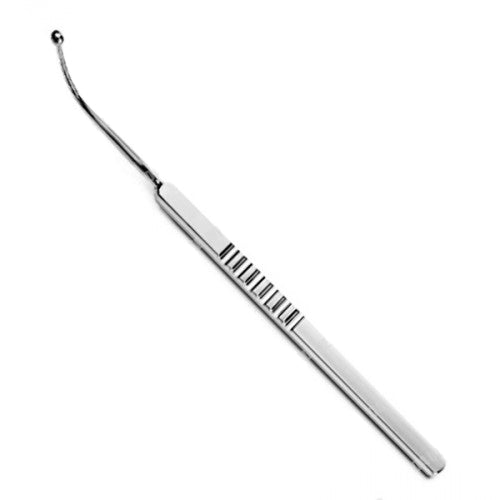

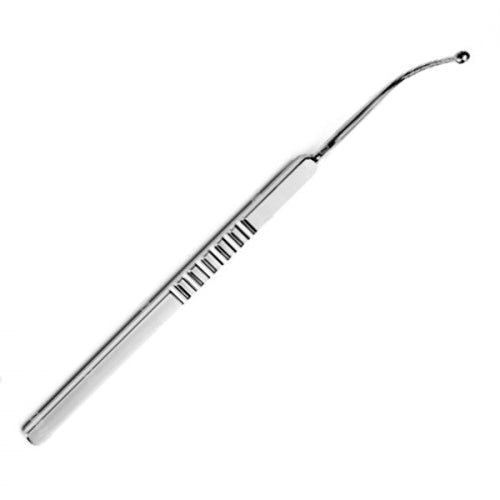
The Scleral Depressor is a specialized ophthalmic instrument used to apply controlled external indentation to the sclera during retinal examination and vitreoretinal procedures. By gently depressing the scleral wall, the instrument helps bring peripheral retinal structures into a more accessible viewing position during indirect ophthalmoscopy and surgical assessment.
This technique is particularly relevant when the clinician needs improved visualization of areas toward the retinal periphery that may be difficult to examine through routine viewing alone. The product is intended for professional ophthalmic use in eye hospitals, retinal clinics, surgical centers, and other specialist environments.
The primary function of a scleral depressor is to create controlled external indentation of the eye wall. This changes the position of the peripheral retina relative to the examiner's viewing system, helping the clinician inspect retinal areas that may otherwise remain outside the direct field of observation.
The current product information associates the instrument with examination of the peripheral retina, including regions near the ora serrata and vitreous base. These anatomical areas can be important during detailed retinal evaluation and vitreoretinal procedures where peripheral visualization is required.
Scleral depression may be used together with indirect ophthalmoscopy to improve examination of the peripheral retina. While the examiner views the fundus through the selected ophthalmic viewing system, the depressor is applied externally according to the clinician's technique to bring the targeted peripheral area into view.
Instrument positioning, pressure, and movement should always be determined by the trained ophthalmic professional performing the examination or procedure. The instrument is intended to assist visualization rather than replace appropriate diagnostic technique or clinical judgment.
The Scleral Depressor is also associated with vitreoretinal surgery, where controlled external indentation can assist visualization of peripheral retinal structures during operative assessment. This may be useful when the surgeon needs to inspect areas around the retinal periphery while working within an established vitreoretinal surgical approach.
Because scleral depressors are available in different patterns and working-tip configurations, the exact instrument selected should correspond with surgeon preference and the requirements of the intended procedure.
This instrument is intended for ophthalmologists, vitreoretinal surgeons, retinal specialists, and trained clinical teams who require a dedicated tool for scleral indentation. It may form part of an ophthalmic examination set, retinal surgery tray, or specialist vitreoretinal instrument inventory.
The current live listing does not clearly specify the exact tip pattern, tip dimensions, overall instrument length, or handle style for SKU PS-J-151. These specifications should therefore be confirmed when they are important for matching an existing surgical set or surgeon preference.
| Product Name | Scleral Depressor |
|---|---|
| SKU | PS-J-151 |
| Instrument Type | Scleral Depressor |
| Primary Specialty | Ophthalmology |
| Subspecialty | Vitreoretinal Surgery / Retinal Examination |
| Primary Function | External Scleral Indentation |
| Associated Examination | Indirect Ophthalmoscopy |
| Clinical Visualization | Peripheral Retina, Ora Serrata and Vitreous Base |
The Scleral Depressor is suitable for eye hospitals, retinal clinics, ophthalmic surgery centers, specialist practices, medical distributors, and procurement teams sourcing vitreoretinal instruments. SKU PS-J-151 provides a defined product reference for ordering and inventory identification.
Before purchasing, buyers should confirm the required tip design, working dimensions, and handle configuration if these details are essential for compatibility with an existing ophthalmic instrument set or surgeon preference.
What is a scleral depressor used for?
A scleral depressor is used to apply controlled external indentation to the sclera to help improve visualization of the peripheral retina.
Is a scleral depressor used during indirect ophthalmoscopy?
Yes. The product information associates scleral depression with indirect ophthalmoscopy and peripheral retinal examination.
Which part of the retina can be examined with scleral depression?
The technique can assist visualization of peripheral retinal structures, including areas near the ora serrata and vitreous base.
Is this instrument used in vitreoretinal surgery?
Yes. The product information identifies vitreoretinal surgical applications as part of its intended clinical context.
What is the SKU of this Scleral Depressor?
The listed SKU is PS-J-151.
Is the exact tip design specified for this model?
The current product page does not clearly confirm the exact tip pattern or tip dimensions for this specific SKU.

