Featured Collection
Your cart
Featured Collection

PEAK SURGICALS
SKU:PS-J-005
Couldn't load pickup availability
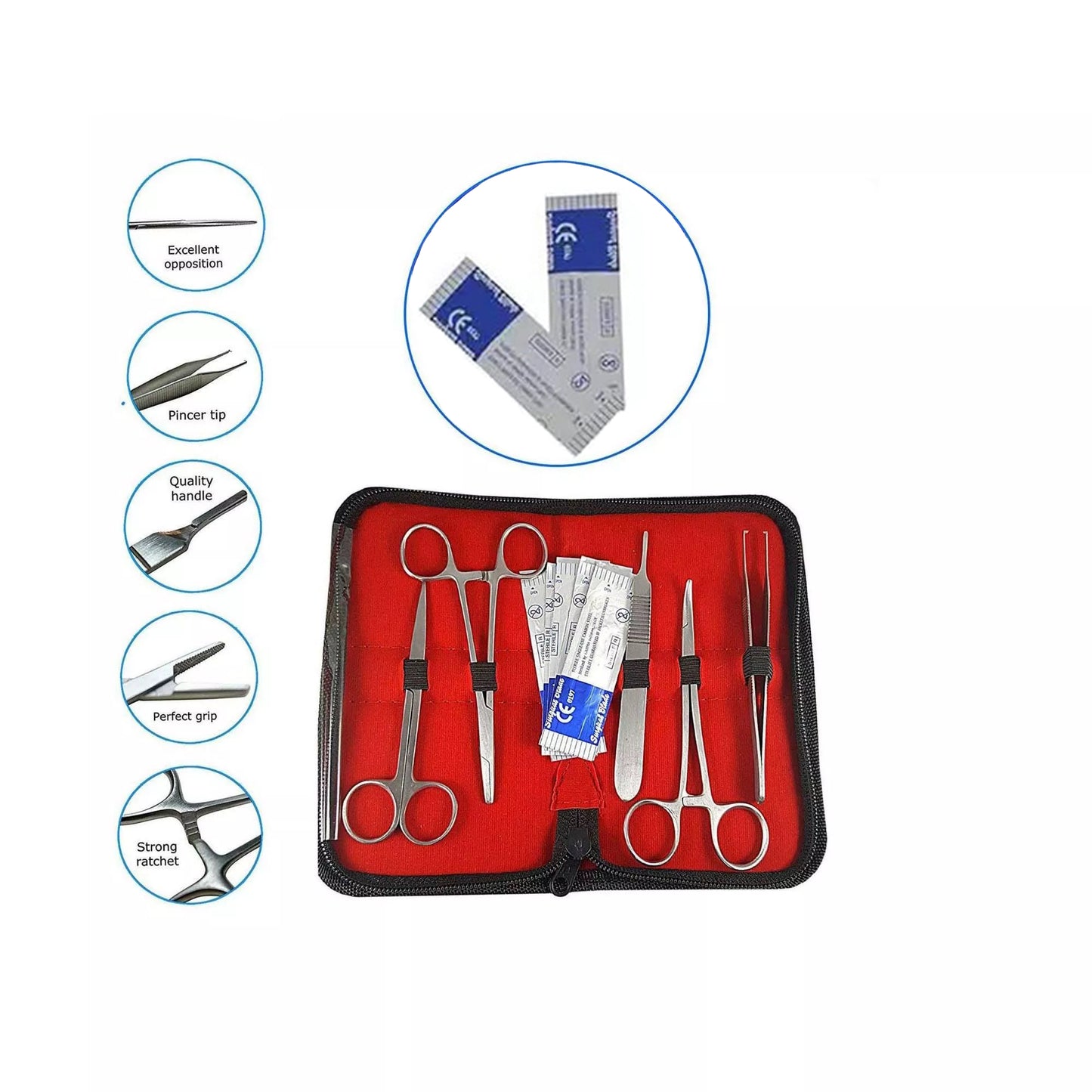
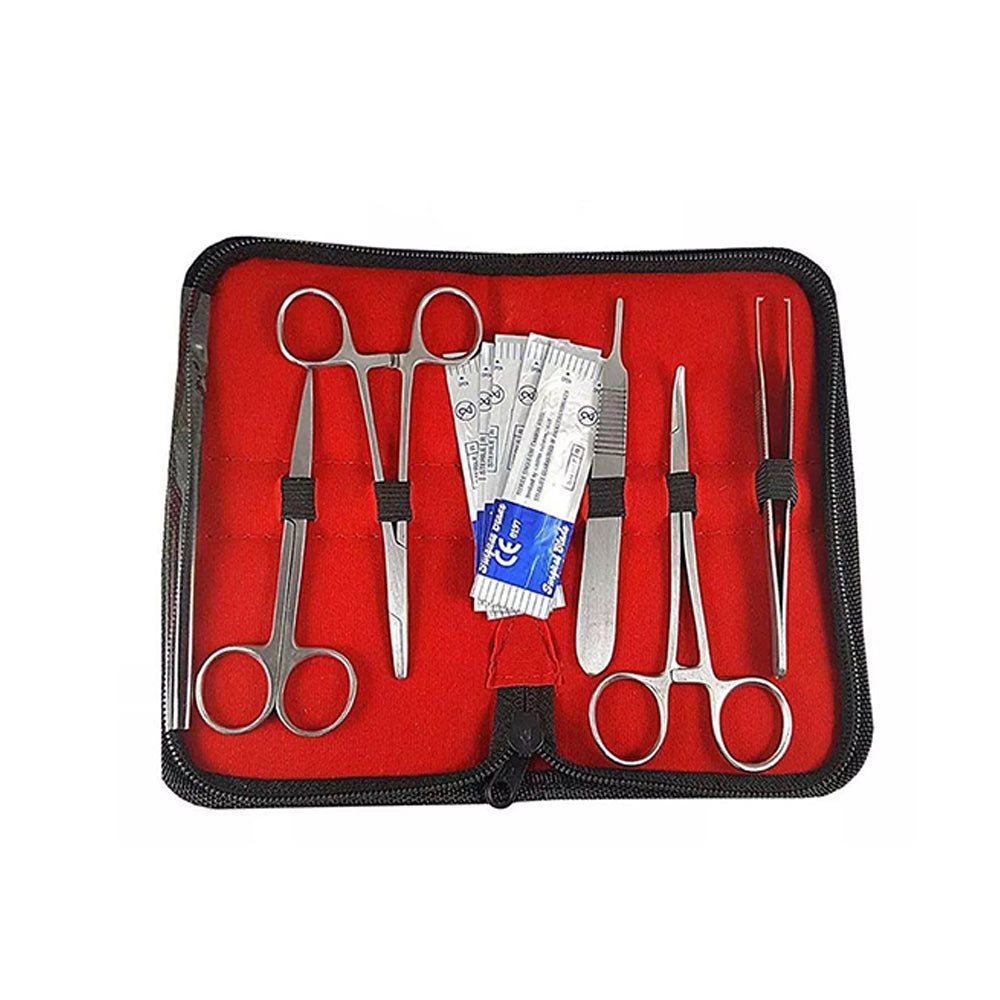
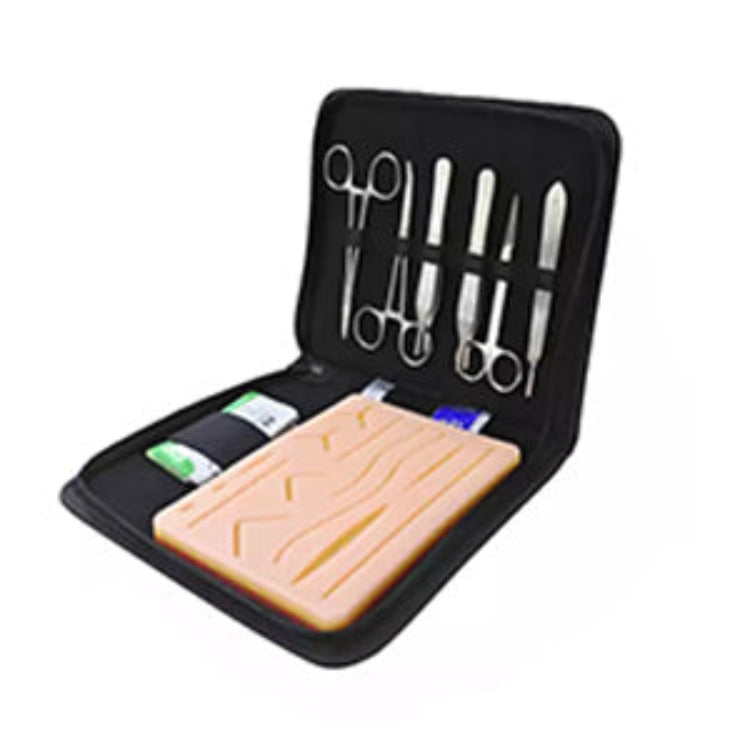
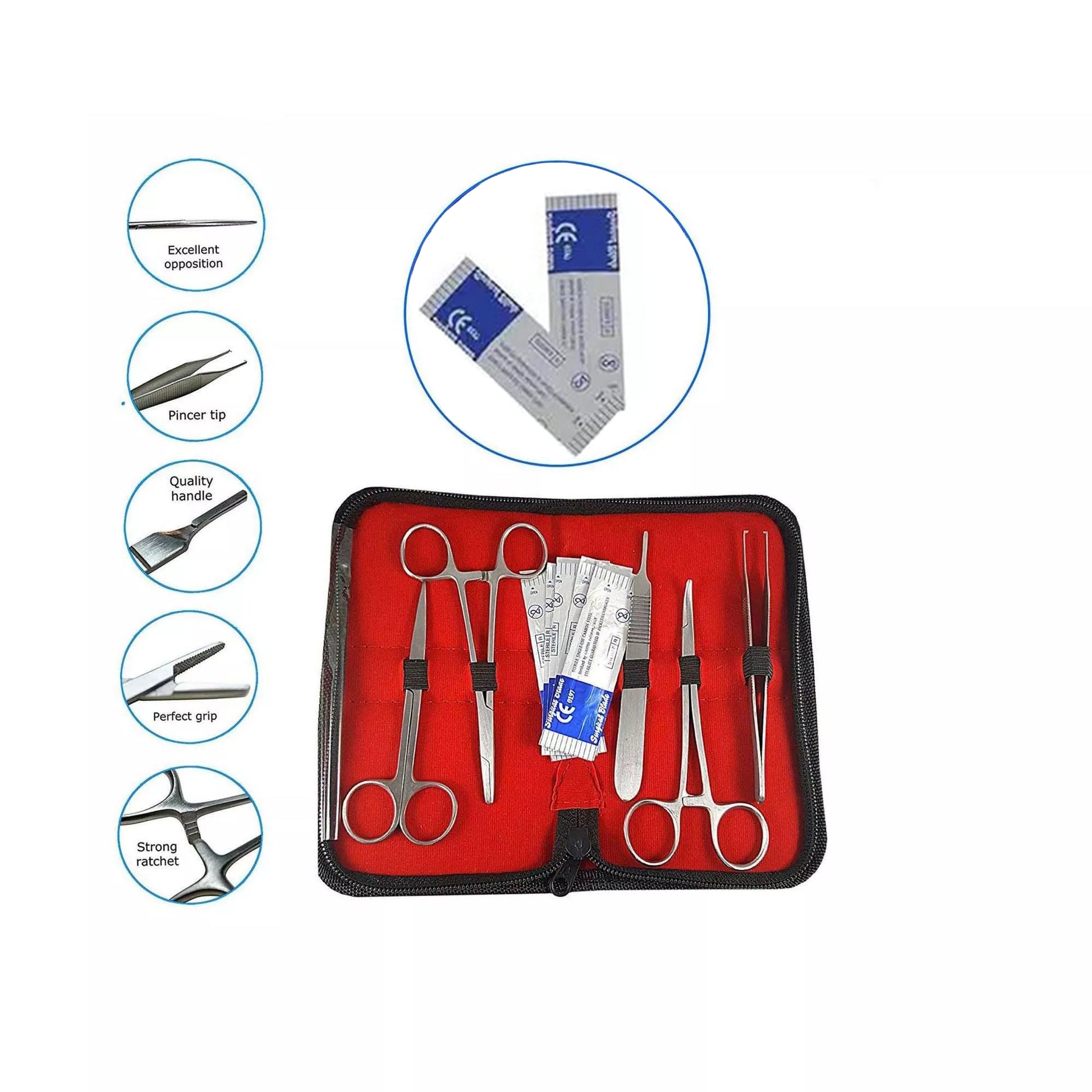
<p>The Minor Surgery Kit from Peak Surgicals (SKU: PS-J-005) is a reusable Medical Stainless Steel instrument set designed for medical student training, clinical skills practice, basic wound care, and minor office-based surgical procedures. Each kit is priced at $28.58 and is supplied as a compact instrument configuration in custom packing. The visible set includes ring-handled hemostatic forceps, ring-handled scissors, a scalpel handle, sterile blade packets, straight thumb forceps, fine tissue forceps, and a zippered carrying case with internal elastic retention bands. Medical students, surgical trainees, emergency clinicians, general practitioners, outpatient clinics, skills laboratories, hospital training departments, and procurement teams use this kit during suturing practice, wound assessment, dressing preparation, foreign body handling, superficial tissue dissection, minor incision planning, suture removal practice, instrument handling drills, and basic aseptic technique training. The set combines grasping, cutting, clamping, blade handling, and tissue control instruments in one portable arrangement, supporting structured procedural learning and routine clinic preparation without requiring separate instrument sourcing.</p>
<h2>Ring Handles, Ratchet Control, Pincer Tips, Cutting Edges, and Zipper Case Layout</h2>
<p>The Minor Surgery Kit is arranged around core hand instruments used in basic procedural workflow. The ring-handled forceps provide controlled hand closure and finger stability during clamping, grasping, or needle-handling practice. The ratchet mechanism holds the selected jaw pressure when tissue, gauze, tubing, or suture material needs temporary retention without continuous hand compression. Fine pincer tips create accurate opposition for grasping small objects, tissue edges, dressings, or suture ends during training. The scissors provide a controlled cutting function for gauze, suture material, dressing preparation, or superficial tissue practice depending on the training station. The scalpel handle supports safe blade mounting and controlled incision orientation during skills laboratory use. The sterile blade packets give the kit a prepared cutting component for supervised procedural sessions. The straight thumb forceps support tissue presentation, dressing manipulation, and fine object handling. The zippered case keeps the instruments arranged against the red interior, with elastic bands holding each component in position so the set can be opened, checked, counted, and stored efficiently.</p>
<h2>Suturing Practice, Minor Wound Care, Clinical Skills Training, and Office Procedures</h2>
<p>During suturing practice, the forceps hold tissue edges or simulation material while the scissors trim suture ends and the ring-handled instrument supports clamp or needle-handling drills. In wound care, the thumb forceps help lift dressing material, remove small debris, and present wound edges for inspection. During minor incision training, the scalpel handle and blade packets support controlled skin-incision simulation under instructor supervision. In superficial dissection exercises, the forceps and scissors allow trainees to learn tissue handling, cutting angle, traction, and counter-traction. Emergency departments and outpatient clinics use minor procedure sets for dressing changes, superficial foreign body handling, small abscess preparation, suture removal workflow, and basic instrument readiness. Medical skills laboratories use the kit to teach grip control, instrument passing, sterile field setup, blade safety, tissue opposition, and ratchet release technique. The compact case supports repeated training sessions because instruments remain organized for counting, transport, cleaning, and storage after use.</p>
<h2>Hemostatic Forceps, Scissors, Scalpel Handle, Thumb Forceps, Blade Packets, and Case Function</h2>
<p>The hemostatic forceps provide clamping and controlled retention during basic procedural training, including gauze handling, simulated vessel control, and suture manipulation. Their ring handles and ratchet teeth teach the hand mechanics used in operating rooms and procedure clinics. The scissors provide cutting control for suture trimming, dressing work, and training material preparation. The scalpel handle is the blade-carrying component used for incision technique, blade loading practice, and cutting-angle control. The sterile blade packets support supervised skills practice where sharp instrumentation is part of the learning sequence. The straight thumb forceps provide pincer opposition for grasping small tissue edges, dressings, swabs, or suture strands. The fine forceps component supports delicate holding where broad clamps would obscure the field. The zippered carrying case protects the set during storage and transport, while internal elastic loops keep the components separated and visible for quick inspection. Together, these instruments cover the common sequence of minor procedure preparation, grasping, cutting, clamping, and finishing.</p>
<h2>Medical Stainless Steel, Finish Options, Sterilization, and Procurement Documentation</h2>
<p>Medical Stainless Steel gives the Minor Surgery Kit the corrosion resistance, surface durability, and reusable construction required for repeated clinical training and minor procedure workflows. The forceps jaws must maintain opposition because poor alignment affects grasping accuracy and clamp control. The scissors must retain smooth cutting action, while the scalpel handle must hold blades securely during supervised use. The listed satin, dull, and mirror finish options support different institutional preferences. Satin and dull finishes reduce glare under clinic lighting, skills lab illumination, or procedure lamps, while mirror finish provides a smooth surface for inspection after cleaning. After use, the instruments are decontaminated, hinged instruments are opened for brushing, ratchet teeth are cleared, forceps tips are inspected, scissors are checked for blade alignment, and the scalpel handle is cleaned before steam sterilization by autoclave when compatible with the instrument workflow. The Class I classification, CE marking, ISO-13485 certification, and FDA compliance support procurement files, distributor documentation, and training program purchasing. The 1-year warranty, MOQ of 1 kit, OEM availability, custom packing, and return and replacement service support repeat institutional ordering.</p>
<table>
<tbody>
<tr><th>SKU</th><td>PS-J-005</td></tr>
<tr><th>Product Name</th><td>Minor Surgery Kit</td></tr>
<tr><th>Price</th><td>$28.58 per kit</td></tr>
<tr><th>Size/Gauge Variants</th><td>Standard multi-instrument kit configuration</td></tr>
<tr><th>Instrument Category</th><td>Medical Student Instruments / Basic Surgery Sets</td></tr>
<tr><th>Procedure</th><td>Suturing Practice, Wound Care, Dressing Preparation, Minor Incision Training, Foreign Body Handling, Suture Removal Practice, Clinical Skills Training</td></tr>
<tr><th>Material</th><td>Medical Stainless Steel</td></tr>
<tr><th>Finish</th><td>Satin, Dull, Mirror</td></tr>
<tr><th>Sterilization</th><td>Steam sterilizable / Autoclave compatible for reusable stainless steel instruments</td></tr>
<tr><th>Instrument Classification</th><td>Class I</td></tr>
<tr><th>Reusable</th><td>Yes</td></tr>
<tr><th>Certifications</th><td>CE, ISO-13485, FDA</td></tr>
<tr><th>Warranty</th><td>1 Year</td></tr>
<tr><th>MOQ</th><td>1 Kit</td></tr>
<tr><th>OEM / Custom Orders</th><td>Available</td></tr>
<tr><th>After-Sale Service</th><td>Return and Replacement</td></tr>
</tbody>
</table>
<p><strong>How does the Minor Surgery Kit compare with a disposable wound care tray?</strong><br>The Minor Surgery Kit is a reusable stainless steel instrument set, while a disposable wound care tray is intended for single-session use. A disposable tray is convenient for one procedure, but it does not provide the same repeated training value for instrument grip, ratchet control, blade handling, and forceps opposition. The Minor Surgery Kit is better suited for medical students, skills laboratories, and clinics that need instruments available across repeated training or minor procedure sessions. Its hemostats, scissors, forceps, scalpel handle, blade packets, and zippered case provide a complete basic handling workflow. Disposable trays are useful for rapid prepacked wound care, while this kit supports durable procedural learning and routine clinic preparedness. For procurement teams, the reusable kit reduces the need to reorder the core metal instruments after every practice session. The decision is based on whether the facility needs one-time consumable convenience or repeated instrument access.</p>
<p><strong>Which components are used during suturing and minor wound work?</strong><br>The forceps are used to hold tissue edges, dressing material, swabs, or suture ends during wound care and suturing practice. The ring-handled hemostatic forceps support clamping drills, gauze handling, and controlled retention with the ratchet mechanism. The scissors are used for trimming suture material, cutting gauze, and preparing dressings. The scalpel handle and blade packets support supervised incision practice and controlled cutting technique in training environments. The thumb forceps help present small tissue edges or objects without using a clamping instrument. The Minor Surgery Kit keeps these instruments together so the user can follow a standard sequence from preparation to grasping, cutting, clamping, and final dressing work. This makes the set useful for student labs, outpatient clinics, and basic procedural training.</p>
<p><strong>What do CE, ISO 13485, and FDA compliance mean for procurement?</strong><br>CE marking supports conformity documentation for hospitals, clinics, distributors, and training institutions sourcing reusable surgical instruments. ISO 13485 indicates that manufacturing is managed under a medical device quality management system with controlled production, inspection, and traceability. FDA compliance supports procurement files for buyers sourcing stainless steel surgical instruments for regulated markets. The Minor Surgery Kit is listed as a Class I reusable instrument set, which fits standard purchasing categories for medical student instruments and basic surgery sets. These credentials help procurement officers compare the item against internal purchasing rules, distributor documentation needs, and institutional training requirements. The Medical Stainless Steel construction, 1-year warranty, MOQ of 1 kit, OEM availability, and custom packing strengthen the ordering record. For training programs and clinics, the documentation aligns practical instrument function with regulated purchasing expectations.</p>
<p><strong>How is the ratchet mechanism used in the kit instruments?</strong><br>The ratchet mechanism is used by closing the ring handles until the teeth engage at the required pressure. This allows the instrument to hold gauze, suture material, simulated tissue, or small procedural items without continuous hand compression. In training, the ratchet teaches controlled locking, staged pressure, and safe release technique. The user releases the lock by slightly closing the handles, disengaging the teeth, and opening the jaws in a controlled motion. This skill is important because uncontrolled ratchet release can drop material or disturb the procedural field. In the Minor Surgery Kit, ratchet control supports both clinical practice and instrument-handling education. The mechanism also helps users understand the difference between clamping instruments and non-locking thumb forceps.</p>
<p><strong>How should the Minor Surgery Kit be cleaned and sterilized after use?</strong><br>After use, each instrument is removed from the case and decontaminated promptly so blood, tissue residue, dressing fibers, lubricant, or training material does not dry on the surfaces. Hinged instruments are opened so the box lock, ratchet teeth, and jaw surfaces can be brushed thoroughly. Scissor blades are cleaned along the cutting edges and inspected for smooth movement. Forceps tips are checked for opposition, alignment, and retained debris. The scalpel handle is cleaned carefully around the blade slot and gripping surface after blade removal. Stainless steel instruments support steam sterilization by autoclave after complete cleaning and drying. The Minor Surgery Kit should be returned to the case only after all instruments are visually clean, dry, aligned, and ready for the next training or clinic session.</p>