
Featured Collection
Your cart
Featured Collection

PEAK SURGICAL
SKU:PS-OT-0511
Couldn't load pickup availability
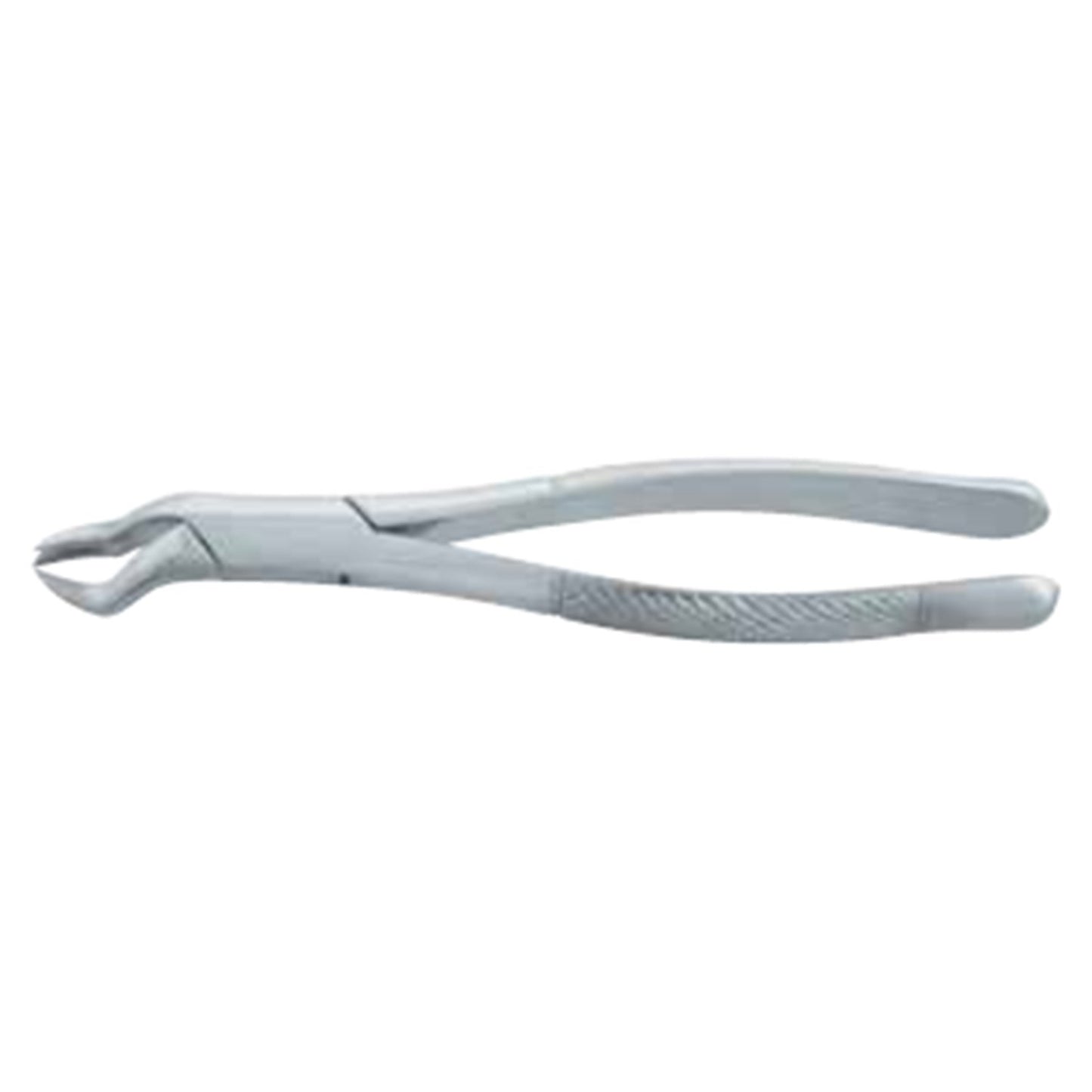
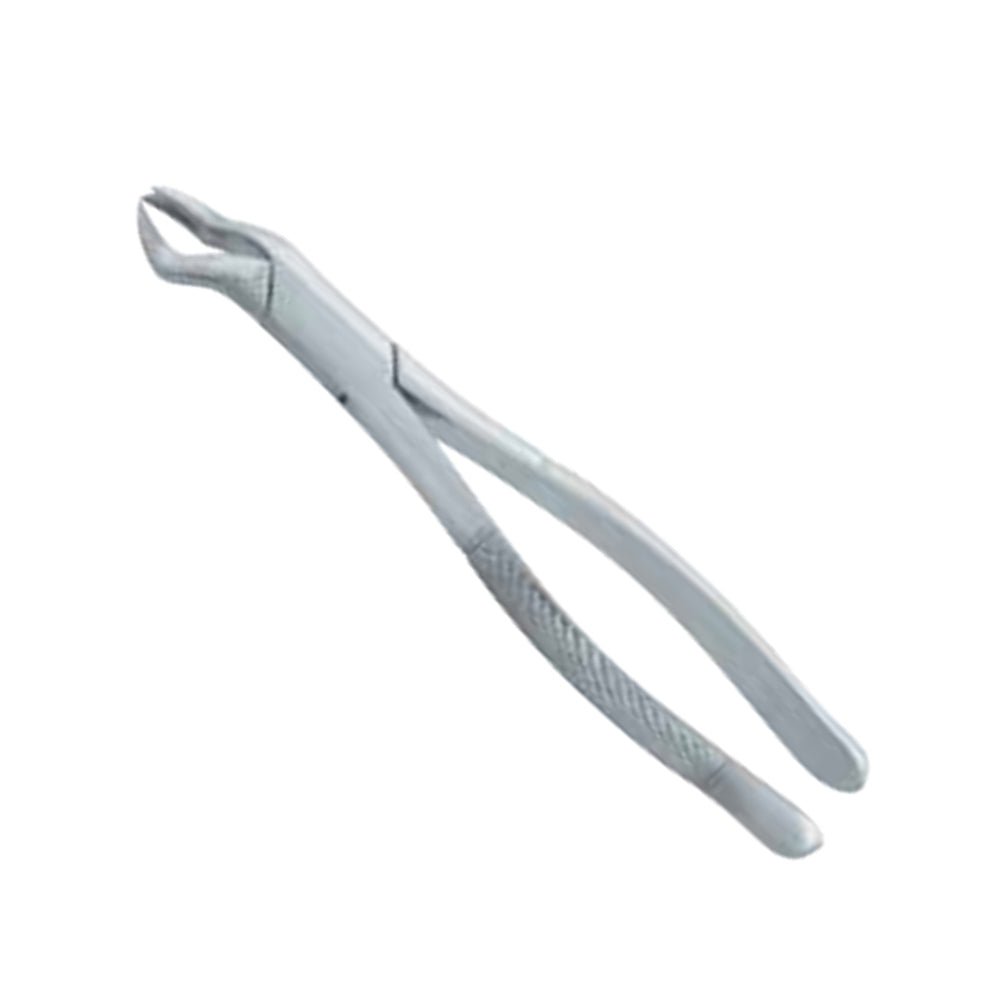
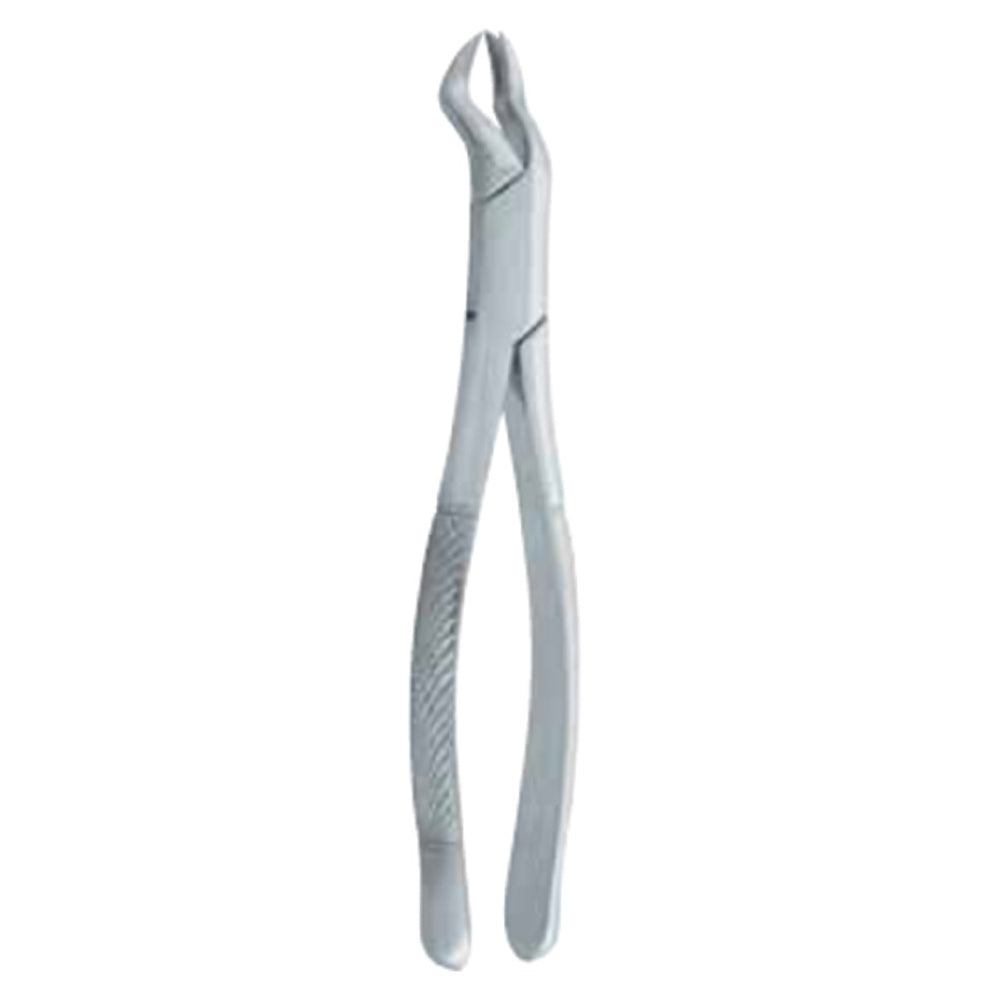
The Lower Tooth Extracting Forceps (PS-6939 series) is a pair of German stainless steel mandibular molar extraction forceps available in left (No. 88L, PS-6939) and right (No. 88R, PS-6940) configurations, designed specifically for the extraction of mandibular first and second molars — the most anatomically complex teeth in the lower arch to extract, by virtue of their bifurcated root system and the dense supporting bone of the posterior mandible. The No. 88 pattern is internationally recognized for its cowhorn or furcation-engaging beak design: the beak tips are pointed and curve inward toward each other, designed to seat into the buccal and lingual furcations of mandibular molars rather than against the smooth root trunk surface — providing mechanical engagement at the furcation that generates a more reliable grip on the lower molar's bifurcated root complex than a smooth-beaked instrument can achieve. The left and right designation is a non-interchangeable directional specification: the beak asymmetry of No. 88L is oriented for correct furcation engagement on the lower left molars, and No. 88R for the lower right molars. Manufactured from German stainless steel for the structural strength required of instruments that bear the substantial torsional and compressive forces of mandibular molar extraction, and for the corrosion resistance required of reusable instruments undergoing repeated steam autoclave sterilization. Used by dentists, oral surgeons, and maxillofacial surgeons in dental clinics, oral surgery units, and hospital dental departments. Sold as 1 piece per side selected, at $9.90.
The defining feature of the No. 88 pattern — and the reason it is a standard instrument in mandibular molar extraction rather than a generic lower forceps — is its beak design. Where a smooth-beaked lower molar forceps (such as the No. 286 featured in the Extracting Forceps 4pcs Set) has beaks that contact the root trunk surface, the No. 88's beaks curve inward and terminate in pointed tips that are specifically dimensioned and shaped to engage the furcation of the mandibular molar — the region between the mesial and distal roots, accessible on both the buccal and lingual aspects of the tooth. This furcation engagement provides a mechanical advantage that smooth beak designs do not offer: the pointed tips seat into the furcation area where the root trunk divides into the mesial and distal roots, and this anatomical interlock between the beak tips and the furcation provides positive, mechanically secure purchase on the tooth that resists beak slippage during the sustained buccal-to-lingual rocking forces of mandibular molar extraction. The furcation itself, precisely because it is the anatomical division between the tooth's two roots, provides a concave surface into which the beak tips can engage — this concavity offers more mechanical resistance to beak movement during extraction than the convex smooth surface of the root trunk that a smooth beak contacts. During the extraction procedure, the cowhorn beaks are seated with an apical pressure that drives the pointed tips into the furcation on both the buccal and lingual aspects simultaneously, and then the sustained buccal-to-lingual rocking movements that dilate the socket and fatigue the periodontal ligament are applied, with the furcation engagement maintaining beak purchase throughout.
The No. 88 pattern is produced in left (88L) and right (88R) versions because the beak geometry of a mandibular molar forceps is asymmetric — the beak's orientation relative to the shank and handle reflects which side of the mandibular arch the tooth being extracted occupies, and a forceps designed for the left side will not correctly engage the furcation of a right-side molar, and vice versa. For mandibular molar extraction, the cowhorn beak tips must engage both the buccal furcation (on the cheek side of the tooth) and the lingual furcation (on the tongue side) simultaneously, with the beak oriented so that both tips seat into the furcation anatomy at the same time when the forceps is positioned along the long axis of the tooth from above. The asymmetric relationship between the buccal and lingual furcations of a mandibular molar — which are not positioned symmetrically when the tooth is viewed from the mesiodistal direction because of the root anatomy and the arch curvature — means that the No. 88L beak geometry is calibrated for the orientation of the furcation in the left mandibular quadrant, and No. 88R for the right quadrant. Using No. 88R for a lower left molar would present the beak tips at an angular mismatch relative to the left molar's furcation anatomy, preventing simultaneous bilateral furcation engagement and reducing the instrument to a less effective, partially-engaging beak contact — losing the furcation-engagement advantage that is the No. 88 pattern's defining clinical feature. Dental practices performing mandibular molar extractions across both sides of the arch should stock both the No. 88L (PS-6939) and No. 88R (PS-6940).
Mandibular first and second molars are the most heavily used teeth in the posterior dental arch and often among the first permanent teeth to require extraction due to caries, periodontal disease, or endodontic failure in the adult dentition. Their root anatomy presents specific extraction challenges: mandibular molars are bifurcated with a mesial and distal root, each typically broader in the buccolingual dimension than in the mesiodistal dimension, and with an accessible furcation on both the buccal and lingual aspects of the tooth at a level that the No. 88 cowhorn beaks can engage from above. The surrounding bone — the dense posterior mandible with its thick buccal and lingual cortical plates — provides strong resistance to socket dilation, making the efficiency of the initial beak seating and the quality of the grip during rocking movements critical factors in the total extraction force required and the risk of root fracture. The furcation engagement that the No. 88 provides addresses both of these factors: the positive mechanical interlock at seating reduces the need for high apical beak-seating pressure that risks tooth fracture before the rocking phase begins, and the sustained furcation grip during rocking maintains beak-tooth engagement through the high forces required to dilate the posterior mandibular socket. For mandibular first molars — which typically have larger, better-formed roots and are more reliably extracted with forceps when the periodontal support is adequate — the No. 88 cowhorn design is well-suited to both intact and moderately compromised crown situations. For mandibular second molars, which sit more posteriorly and may have more variable root anatomy, the same furcation-engagement principle applies but the access geometry requires the operator to position the forceps handle and shank carefully to avoid the ramus.
Both the No. 88L and No. 88R forceps are manufactured from German stainless steel, providing the structural strength and corrosion resistance required of instruments that transmit the substantial buccal-to-lingual rocking forces of posterior mandibular molar extraction and undergo repeated steam autoclave sterilization between procedures. The cowhorn beak tips are the critical inspection point for these instruments at each reprocessing cycle: the pointed tips that engage the molar furcation must maintain their precise geometry to provide effective furcation engagement — any blunting, deformation, or spreading of the beak tips compromises the instrument's ability to seat correctly into the furcation and reduces the grip quality during extraction. The hinge mechanism should be inspected for smooth, symmetric pivot action, as an asymmetric hinge affects the equality of force transmitted to the buccal and lingual beaks during extraction, potentially causing one beak to bear more load than the other. All instruments are fully compatible with steam autoclave sterilization at 134°C pre-vacuum parameters, with ultrasonic cleaning recommended before terminal sterilization to remove organic debris from the hinge area and the concave inner surfaces of the cowhorn beaks. Available in satin, dull, or mirror surface finish.
The Lower Tooth Extracting Forceps (PS-6939 No. 88L and PS-6940 No. 88R) are manufactured under a quality management system certified to ISO 13485, governing German stainless steel material sourcing, precision forging and machining of the cowhorn beak geometry, hinge mechanism, and shanks for both left and right configurations, dimensional and functional inspection of the pointed beak tip geometry and furcation-engagement profile, surface finishing, and packaging. CE Mark certification confirms conformity with European Medical Device Regulation requirements for Class I reusable dental surgical instruments distributed within EU and associated regulatory territories. FDA compliance documentation is maintained for United States distribution. These certifications satisfy procurement and tender documentation requirements of institutional buyers in the USA, India, Pakistan, Vietnam, and across international dental instrument supply frameworks. Certificates of conformity and quality management system documentation are available on request. OEM manufacturing is available within the same certified manufacturing framework.
| SKU (Storefront) | PS-OT-0511 |
|---|---|
| Model Number (Base) | PS-6939 |
| Product Name | Lower Tooth Extracting Forceps |
| Price | $9.90 USD per piece |
| Arch | Mandibular (lower) — both patterns |
| No. 88L (PS-6939) | Lower left molar forceps — cowhorn/furcation-engaging beaks for mandibular left first and second molar extraction |
| No. 88R (PS-6940) | Lower right molar forceps — cowhorn/furcation-engaging beaks for mandibular right first and second molar extraction |
| Beak Design | Cowhorn / furcation-engaging: inward-curving pointed tips seat into mandibular molar buccal and lingual furcations simultaneously |
| Side Designation | Non-interchangeable: No. 88L for lower left molars only; No. 88R for lower right molars only |
| Clinical Distinction from No. 74N/74XN/151S | No. 88 = molar furcation forceps; No. 74N/74XN/151S = premolar/anterior smooth-beak forceps |
| Instrument Classification | Class I Reusable Dental Surgical Instrument |
| Primary Indications | Mandibular first and second molar extraction (lower left molars: No. 88L; lower right molars: No. 88R) |
| Clinical Setting | Dental clinic, oral surgery unit, hospital dental department |
| Users | Dentists, oral surgeons, maxillofacial surgeons |
| Material | German Stainless Steel |
| Surface Finish | Satin / Dull / Mirror |
| Certifications | CE Mark, ISO 13485, FDA |
| Reusability | Reusable |
| Quantity | 1 Piece per side selected |
| Rust Resistance | Yes |
| Warranty | 1 Year |
| MOQ | 1 Piece |
| OEM / Custom Orders | Available |
| Packing | Carton Box |
| Place of Origin | Pakistan |
| Brand | Peak Surgicals |
| Primary Use | Mandibular molar extraction using furcation-engaging cowhorn beaks — No. 88L for lower left first and second molars, No. 88R for lower right first and second molars |
| After-Sale Service | Return and Replacement |
What is a cowhorn or furcation-engaging beak, and why is it used for mandibular molars?
The No. 88 pattern features a cowhorn beak design — the beak tips curve inward toward each other and terminate in pointed projections that are sized and shaped to seat into the furcation of a mandibular molar: the anatomical region on the buccal and lingual aspects of the tooth where the root trunk divides into the mesial and distal roots. When the No. 88 forceps is placed on a lower molar and apical pressure is applied, the pointed beak tips engage the buccal and lingual furcations simultaneously, creating a positive mechanical interlock between the instrument and the tooth's root anatomy. This furcation engagement provides a grip that resists beak slippage during the sustained buccal-to-lingual rocking forces required to dilate the posterior mandibular socket — forces that can cause a smooth-beaked instrument to slip along the convex root trunk surface during extraction. The concave geometry of the furcation, into which the pointed beak tips seat, offers more mechanical resistance to movement during extraction than the smooth convex root trunk that smooth beaks contact. For mandibular molars — whose dense supporting bone makes extraction inherently more demanding than anterior teeth — this furcation engagement is a significant clinical advantage.
Why must No. 88L and No. 88R be selected for the correct side, and what happens if the wrong side is used?
The No. 88L (PS-6939) is designed for lower left molar extraction and No. 88R (PS-6940) for lower right molar extraction. The beak geometry is asymmetric: each pattern's beak-to-shank orientation is calibrated so that both cowhorn tips engage the buccal and lingual furcations simultaneously when the forceps is applied to a molar on the correct side of the arch. If No. 88R is applied to a lower left molar, or No. 88L to a lower right molar, the beak tips are presented at an angular mismatch relative to the tooth's furcation anatomy — the tips cannot simultaneously engage both furcations as intended, and the instrument instead contacts the root trunk asymmetrically rather than achieving the bilateral furcation engagement that is the No. 88 pattern's defining clinical feature. This reduces grip quality, increases the risk of beak slippage during extraction, and may require greater extraction force to compensate for the reduced mechanical advantage — increasing the risk of root fracture or injury to adjacent structures. Dental practices performing bilateral molar extractions should stock both No. 88L and No. 88R.
How do the No. 88L and No. 88R differ from the lower premolar and anterior forceps (No. 74N, 74XN, 151S) in the Peak Surgicals range?
The No. 74N, No. 74XN, and No. 151S patterns available in the Lower Forceps range (PS-6908 series) are designed for mandibular premolars and anterior teeth — teeth with single roots and no furcation for the beak to engage. Their beaks are either narrow and smooth (No. 74N, No. 74XN) or broader with serration (No. 151S), designed to grip the root trunk of a single-rooted tooth below the cervical margin. The No. 88L and No. 88R are molar-specific patterns with cowhorn/furcation-engaging beaks designed for the bifurcated root system of mandibular first and second molars, where the furcation provides the principal mechanical anchor for extraction forces. These two product families are therefore complementary in a complete mandibular extraction instrument inventory: the No. 74 and No. 151 patterns for premolars and anteriors, and the No. 88L and No. 88R for molars.
What sterilization protocol is recommended for these instruments?
Both No. 88L and No. 88R are manufactured from German stainless steel and are fully compatible with steam autoclave sterilization at 134°C pre-vacuum parameters. Ultrasonic cleaning before terminal sterilization is recommended to remove blood, tissue, and bone debris from the hinge area and the concave inner surfaces of the cowhorn beaks. At each reprocessing cycle, the cowhorn beak tips should be inspected for any blunting, deformation, or spreading — the pointed geometry of the tips is critical for correct furcation engagement, and any compromise to this geometry reduces grip quality during extraction. The hinge should be checked for smooth, symmetric pivot action, and any looseness should be addressed before the instrument is returned to clinical service.
What certifications do these instruments carry, and are bulk or OEM orders available?
The Lower Tooth Extracting Forceps (PS-6939 No. 88L and PS-6940 No. 88R) are manufactured under an ISO 13485-certified quality management system covering German stainless steel material procurement, precision forging and machining of the cowhorn beak geometry and hinge for both left and right configurations, and packaging. CE Mark certification confirms conformity with European Medical Device Regulation requirements for Class I reusable dental surgical instruments. FDA compliance documentation supports United States distribution. Certificates of conformity are available on request for procurement and tender documentation. Bulk orders are accepted with a minimum of 1 piece per pattern, with volume pricing available for dental clinics, oral surgery units, hospital dental departments, and dental instrument distributors — practices routinely order No. 88L and No. 88R together to cover both sides of the mandibular molar arch. OEM manufacturing for custom configurations or private-label branding is available within the same ISO 13485-certified framework. Free shipping applies on orders of $99 or more.


