
Featured Collection
Your cart
Featured Collection

PEAK SURGICAL
SKU:PS-6929
Couldn't load pickup availability
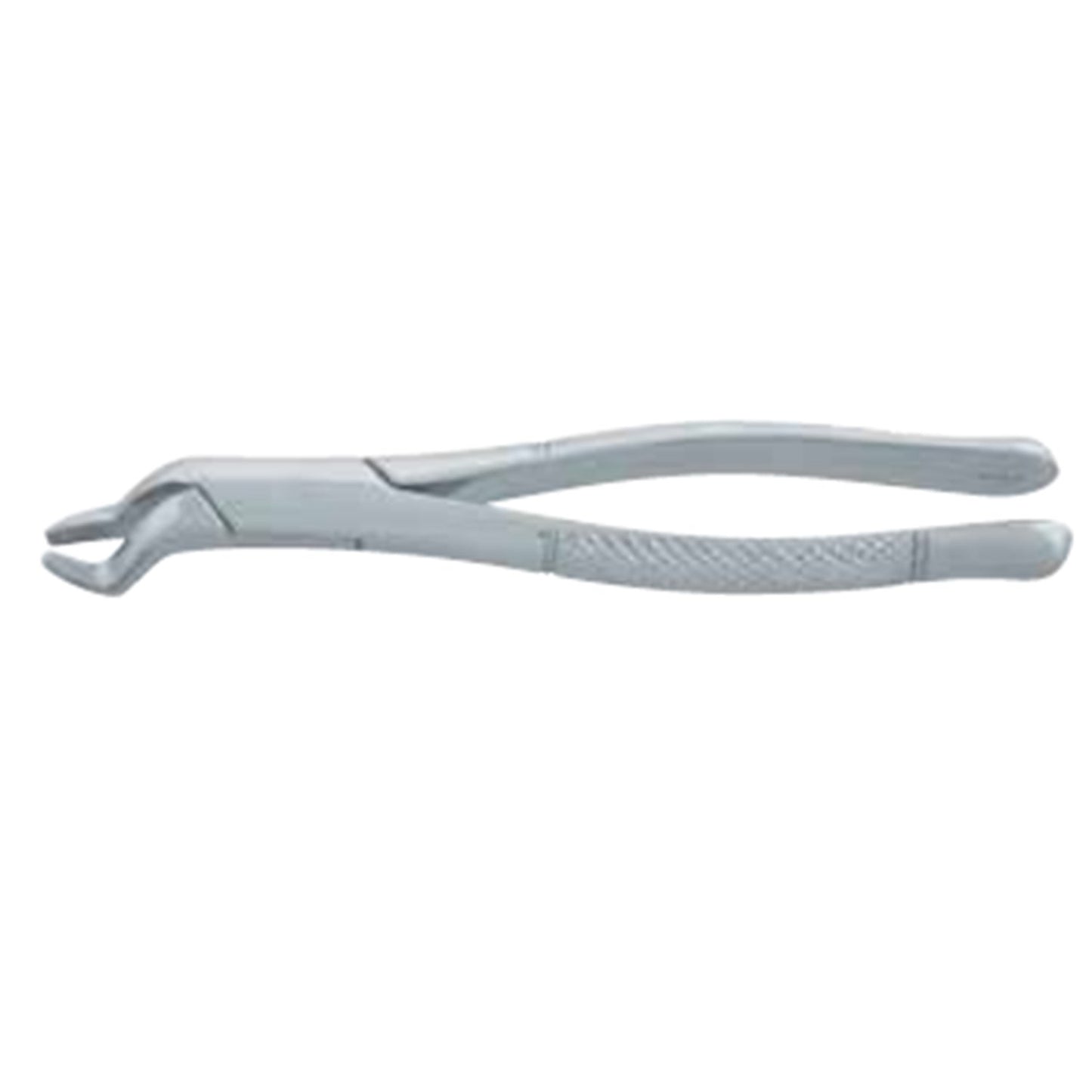

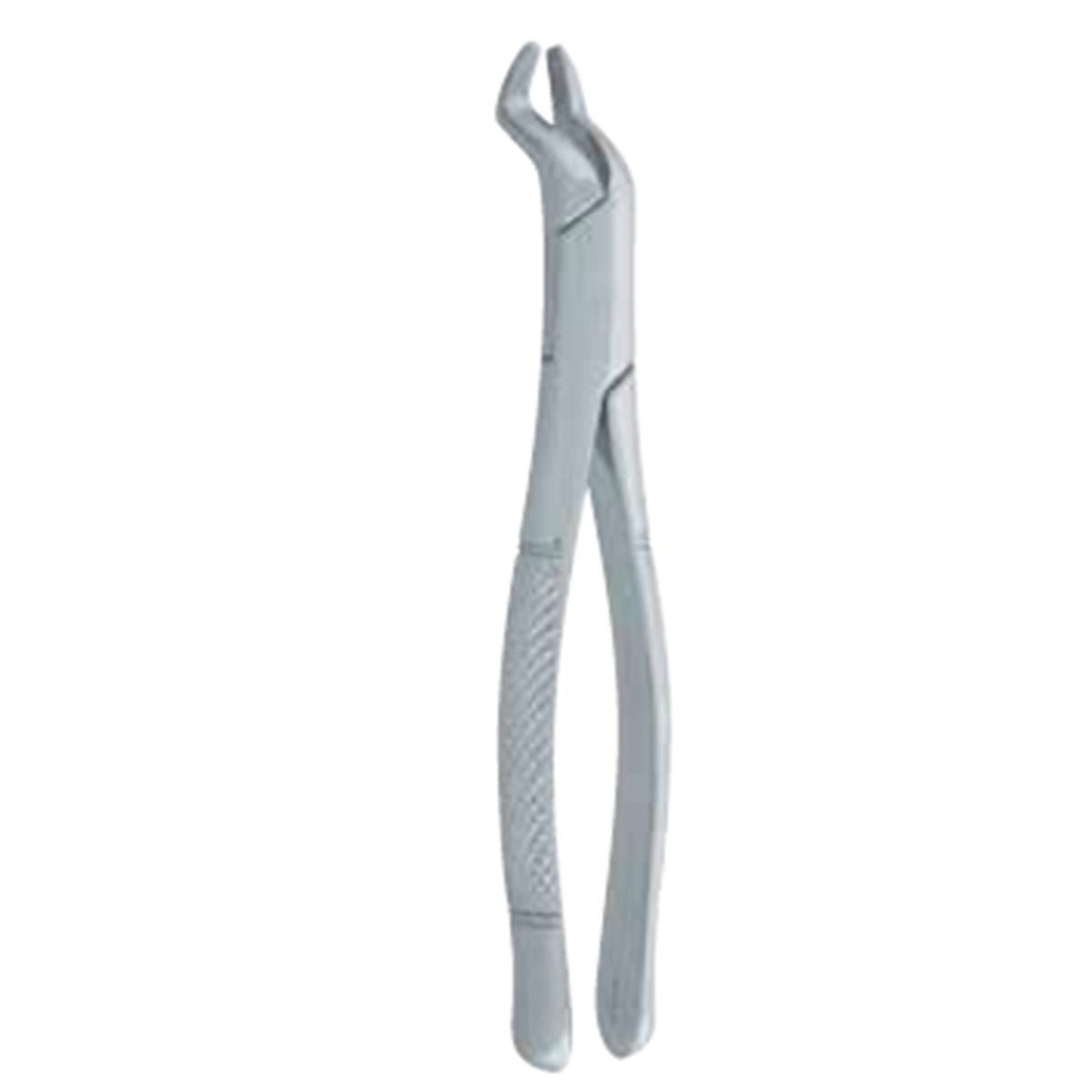
The Lower Third Molar Forceps (PS-6929) is a reusable German stainless steel dental extraction forceps, 125mm (5 inches) in overall length, designed specifically for the extraction of mandibular third molars — the lower wisdom teeth — in both fully erupted and partially erupted presentations where the tooth's crown is accessible to forceps beak placement and forceps-assisted delivery is indicated. The mandibular third molar presents the most demanding routine extraction scenario in dental and oral surgical practice: the tooth occupies the most posterior and inaccessible position in the mandibular arch, immediately anterior to the ascending ramus of the mandible, and is subject to the greatest anatomical variability of any tooth in the permanent dentition — in root morphology, root number and curvature, root angulation relative to the tooth long axis, and eruption status. A dedicated lower third molar forceps addresses the specific geometric access challenges this position creates, with a beak-to-handle angulation calibrated for the distal mandibular arch where the ascending ramus physically limits the space available for instrument placement, and a compact 125mm (5") overall length that reduces the projection of the handle into the limited posterior intraoral space during the extraction. Manufactured from German stainless steel for the structural strength required of an instrument that transmits sustained extraction forces through the beak-hinge-handle assembly during what is frequently a more technically demanding extraction than for anterior or premolar teeth. Used by dentists, oral surgeons, and maxillofacial surgeons in dental clinics, oral surgery units, and hospital dental departments. Sold as 1 piece, 125mm (5").
The mandibular third molar — lower wisdom tooth — differs from the other teeth in the lower arch in ways that directly affect the design requirements of the extraction forceps used for it. In terms of arch position, it sits at the distal end of the mandibular arch, posterior to the second molar, in a region where the ascending ramus of the mandible creates a progressively narrowing space between the distal of the second molar and the ramus itself. This narrowing means that instrument access to the third molar from the buccal aspect — the approach direction available for all other mandibular posterior teeth — is limited by the ramus, and the space available for the forceps handle during extraction is correspondingly restricted. A standard lower molar or lower posterior forceps with a handle proportioned for first or second molar extractions can be difficult to position correctly for a third molar extraction when the ramus prevents the handle from being held at the required angle without impinging on the patient's cheek or the ramus itself. A lower third molar forceps addresses this with a handle-to-beak geometry that allows the beak to reach the mandibular third molar's cervical area while the handle can be held in a more anteriorly placed position that avoids direct conflict with the ramus. The compact 125mm overall length reduces the instrument's posterior projection, further improving the working clearance available in this constrained anatomical region. The root anatomy of mandibular third molars is also characteristically variable: roots may be fused, widely divergent, curved in multiple planes, unusually short and conical, or in contrast unusually long and hypercementosed — variability that affects both the selection of extraction technique and the forces required.
The Lower Third Molar Forceps is indicated for extractions where the mandibular third molar has sufficient eruption to allow the forceps beaks to be seated below the cervical margin and engage the root surface — typically defined as a fully or partially erupted third molar whose crown is accessible and whose root trunk is accessible to beak placement. For fully erupted mandibular third molars, where the crown has emerged fully through the alveolar crest and gingiva, the extraction proceeds similarly to other mandibular molar extractions: the beaks are seated below the cervical margin, the tooth is luxated through controlled buccal-to-lingual rocking movements appropriate to the root morphology, and the tooth is delivered once adequate mobility has been achieved. The posterior position and access limitation of the third molar site means that the operator typically relies more heavily on careful elevator luxation before applying the forceps than for more anteriorly positioned teeth, to reduce the total forceps forces required and the risk of fracturing roots that may be curved or divergent. For partially erupted mandibular third molars — where the crown has partially emerged but the cervical margin may be at or below the level of the investing alveolar bone — a minor surgical approach involving mucoperiosteal flap reflection and possibly some alveolar bone removal may be required before the forceps can be applied. In these cases, the Lower Third Molar Forceps is applied after the surgical exposure has provided sufficient access to the crown and cervical area, and the tooth is delivered with the same controlled rocking and delivery technique used for fully erupted third molars once adequate surgical access has been established. Fully impacted mandibular third molars, which have no accessible crown structure, typically require a fully surgical approach with tooth sectioning and piecemeal removal rather than forceps delivery.
The beak geometry of a lower third molar forceps is derived from the same fundamental principle as all lower arch forceps — the beaks are angled relative to the handle to allow the operator to approach the lower arch from above while the beaks engage the lower tooth along its long axis — but with modifications that address the specific access geometry of the posterior mandibular arch. For the mandibular first and second molars, this angular beak-to-handle relationship provides adequate access from the standard approach position. For the mandibular third molar, the additional distal position of the tooth, and the ascending ramus that limits the posterior approach, require the beak-to-handle geometry to be calibrated to allow the beak to seat on the third molar while the handle occupies a position that the ramus does not obstruct. This may be achieved through additional angulation of the beak relative to the shank, through a modified shank curve that directs the beak distally without requiring the handle to be positioned at the distal end of the arch, or through a combination of these design features depending on the specific forceps pattern. The 125mm overall length of this instrument contributes to access in this region by reducing the total posterior projection of the instrument during use, allowing the extraction to proceed with less handle clearance from the ramus and cheek than a longer instrument would require. The beaks themselves are designed to engage the mandibular third molar root trunk, which typically has a bifurcated anatomy with mesial and distal roots — engaging the buccal and lingual aspects of the root trunk above the furcation — providing the grip needed for controlled delivery.
The Lower Third Molar Forceps is manufactured from German stainless steel, providing the structural strength and corrosion resistance required of an instrument used in what is frequently a more force-demanding extraction than the standard mandibular premolar and anterior tooth extractions for which the narrower-beaked lower forceps are designed. The mandibular third molar site — with its limited access, potentially complex root anatomy, dense posterior mandibular bone, and frequent need for more sustained luxation force than anterior extractions — places higher cumulative mechanical demands on the extraction forceps hinge and shank over the instrument's service life. The hinge mechanism should receive particular inspection at each reprocessing cycle for any sign of wear, looseness, or deformation; a loose hinge in a forceps used at the demands of third molar extraction is a safety concern and grounds for instrument replacement. The beak surfaces should be inspected for any roughness or damage from previous use. The instrument is fully compatible with steam autoclave sterilization at 134°C pre-vacuum parameters, with ultrasonic cleaning recommended before terminal sterilization for thorough debris removal. Available in satin, dull, or mirror surface finish.
The Lower Third Molar Forceps PS-6929 is manufactured under a quality management system certified to ISO 13485, governing German stainless steel material sourcing, precision forging and machining of the forceps shanks, beaks, and hinge mechanism at the 125mm overall length, dimensional and functional inspection of the beak geometry and angulation calibrated for mandibular third molar access, surface finishing, and packaging. CE Mark certification confirms conformity with European Medical Device Regulation requirements for Class I reusable dental surgical instruments distributed within EU and associated regulatory territories. FDA compliance documentation is maintained for United States distribution, satisfying regulatory requirements for reusable dental extraction instruments procured by US dental clinics, oral surgery units, and dental instrument distributors. These certifications satisfy procurement and tender documentation requirements of institutional buyers in the USA, India, Pakistan, Vietnam, and across international dental instrument supply frameworks. Certificates of conformity and quality management system documentation are available on request. OEM manufacturing is available within the same certified manufacturing framework.
| SKU | PS-6929 |
|---|---|
| Product Name | Lower Third Molar Forceps |
| Price | $11.55 USD |
| Overall Length | 125mm (5 inches) |
| Tooth Indication | Mandibular third molar (lower wisdom tooth) — fully and partially erupted presentations with accessible crown |
| Arch | Mandibular (lower) |
| Handle Geometry | Lower arch angulation with posterior mandibular calibration for third molar access, accounting for ascending ramus obstruction |
| Instrument Classification | Class I Reusable Dental Surgical Instrument |
| Primary Indications | Extraction of erupted and partially erupted mandibular third molars (lower wisdom teeth) with accessible crown |
| Clinical Setting | Dental clinic, oral surgery unit, hospital dental department |
| Users | Dentists, oral surgeons, maxillofacial surgeons |
| Material | German Stainless Steel |
| Surface Finish | Satin / Dull / Mirror |
| Certifications | CE Mark, ISO 13485, FDA |
| Reusability | Reusable |
| Quantity | 1 Piece |
| Rust Resistance | Yes |
| Warranty | 1 Year |
| MOQ | 1 Piece |
| OEM / Custom Orders | Available |
| Packing | Carton Box |
| Place of Origin | Pakistan |
| Brand | Peak Surgicals |
| Primary Use | Extraction of mandibular third molars (lower wisdom teeth) in erupted and partially erupted presentations, with beak geometry and compact 125mm profile calibrated for distal mandibular arch access |
| After-Sale Service | Return and Replacement |
Why does a mandibular third molar require a dedicated forceps rather than a standard lower molar forceps?
The mandibular third molar occupies the most posterior and physically constrained position in the lower dental arch, immediately anterior to the ascending ramus of the mandible. This position creates access geometry problems that a standard lower first or second molar forceps — designed for more anteriorly positioned teeth with greater working clearance — does not optimally address. The ascending ramus limits the space available for the forceps handle on the distal aspect of the third molar, and a standard lower molar forceps handle, if held at the angle required for second molar extraction, would conflict with or be blocked by the ramus when the beaks are directed to the third molar position. The Lower Third Molar Forceps has a handle-to-beak geometry calibrated specifically for this position, allowing the beaks to reach the mandibular third molar's cervical area while the handle occupies a more anteriorly placed position where ramus clearance is not an issue. The 125mm (5") overall length also reduces the instrument's posterior projection compared to a longer forceps, improving working clearance in this already-constrained space.
When is a lower third molar extraction performed with forceps, and when is surgical removal required instead?
Forceps extraction of a mandibular third molar is appropriate when the tooth has sufficient eruption to allow the forceps beaks to be seated below the cervical margin and engage the root trunk — typically in fully erupted third molars and in partially erupted third molars where a minor surgical exposure (mucoperiosteal flap and possibly limited alveolar bone removal) brings the cervical area into accessible range. In these presentations, the extraction proceeds with forceps-assisted delivery after adequate elevator luxation, using the controlled buccal-to-lingual rocking and delivery movements appropriate to the tooth's root anatomy. Fully impacted mandibular third molars — those with no accessible crown above the alveolar crest — typically require surgical removal involving mucoperiosteal flap, bone removal, and tooth sectioning into separate segments for piecemeal delivery, which does not involve extraction forceps in the conventional sense but may use root forceps or elevators for segment delivery. The decision between forceps-assisted and surgical extraction depends on the degree of eruption, the radiographic root anatomy and its relationship to adjacent structures, and the operator's clinical assessment of the most appropriate technique.
How does this instrument differ from the other lower arch forceps in the Peak Surgicals range?
The Peak Surgicals mandibular forceps range covers three distinct product groups: the Lower Forceps (PS-6908 series, patterns No. 74N, No. 74XN, No. 151S) for premolars and anterior teeth; the Lower Root Forceps (PS-6926 series, patterns No. 6 and No. 150S) for root fragment retrieval in the lower arch; and this Lower Third Molar Forceps (PS-6929) specifically for mandibular third molar extraction. These three products are complementary in a complete lower arch instrument inventory: the Lower Forceps address routine premolar and anterior extractions; the Lower Third Molar Forceps addresses the specific access and anatomical demands of wisdom tooth extraction from the mandible; and the Lower Root Forceps addresses the root retrieval scenario that may arise as a complication of either of the other two indications. A dental practice or oral surgery unit performing the full range of mandibular extractions would typically stock all three product groups.
What sterilization protocol is recommended for this instrument?
The Lower Third Molar Forceps is manufactured from German stainless steel and is fully compatible with steam autoclave sterilization at 134°C pre-vacuum parameters. Before sterilization, clean the forceps thoroughly — blood, tissue, and bone debris from mandibular third molar extractions, which frequently involve more bone contact and tissue trauma than anterior extractions, should be removed with ultrasonic cleaning to ensure complete debris removal from the hinge area and beak surfaces. After sterilization, inspect the hinge mechanism for smooth, secure pivot action before returning the instrument to clinical service. The beak surfaces should be inspected for any roughness or damage. Given the higher mechanical demands of third molar extraction on the hinge, the hinge should receive closer inspection than for lighter-use forceps, and any looseness or irregular action should be addressed before the instrument is reused.
What certifications does this instrument carry, and are bulk or OEM orders available?
The Lower Third Molar Forceps PS-6929 is manufactured under an ISO 13485-certified quality management system covering German stainless steel material procurement, precision forging and machining of the forceps shanks, third-molar-specific beaks, and hinge mechanism at 125mm, and packaging. CE Mark certification confirms conformity with European Medical Device Regulation requirements for Class I reusable dental surgical instruments. FDA compliance documentation supports United States distribution. Certificates of conformity are available on request for procurement and tender documentation. Bulk orders are accepted with a minimum of 1 piece, with volume pricing available for dental clinics, oral surgery units, hospital dental departments, and dental instrument distributors. OEM manufacturing for custom configurations or private-label branding is available within the same ISO 13485-certified framework. Free shipping applies on orders of $99 or more.


