
Featured Collection
Your cart
Featured Collection

PEAK SURGICAL
SKU:PS-OT-0504
Couldn't load pickup availability
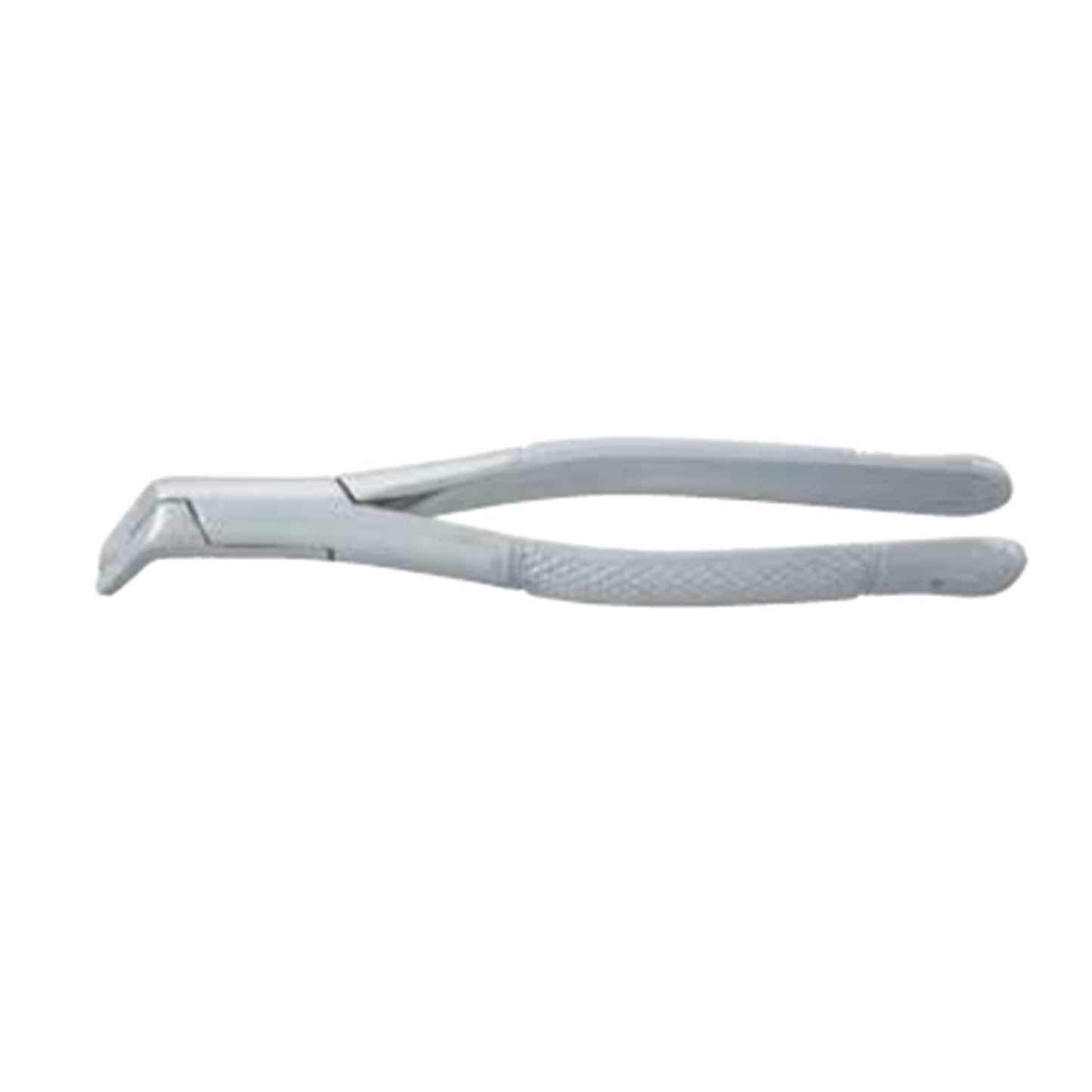

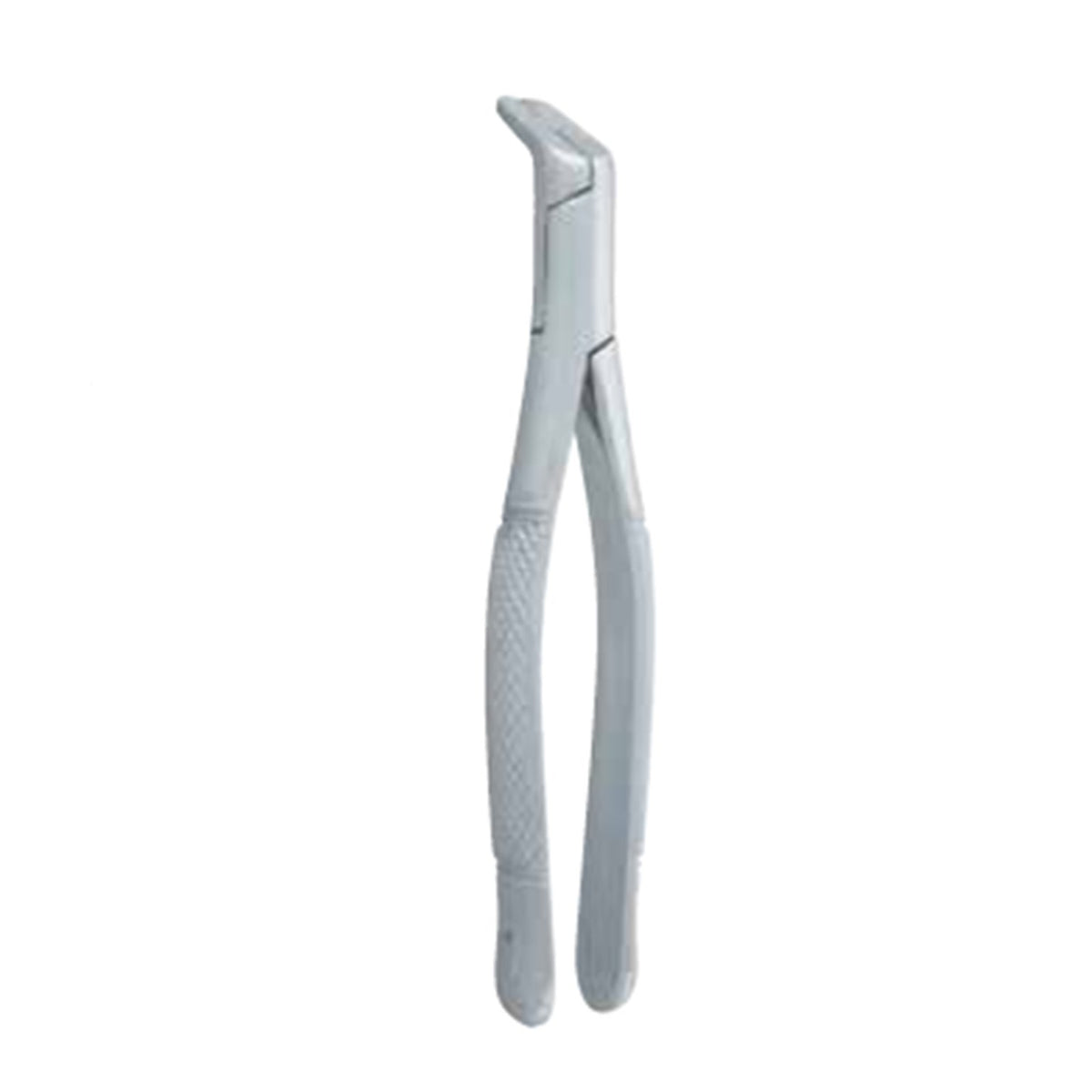
The Lower Root Forceps (PS-6926 series) is a range of two German stainless steel mandibular root retrieval forceps identified by established pattern numbers — No. 6 (PS-6926) and No. 150S (PS-6927) — designed specifically for the retrieval of retained root tips, root stumps, and fractured root fragments from mandibular (lower arch) tooth sockets, not for the extraction of intact teeth. The defining clinical distinction between root forceps and standard extraction forceps is the indication: root forceps are used after crown separation, whether from intraoperative fracture during an extraction attempt, from pre-existing crown loss due to caries or previous dental trauma, or from deliberate surgical sectioning in a divided extraction — when only a root or root fragment remains in the socket at or below the level of the alveolar crest, too short or too deeply positioned to be gripped by standard full-arch extraction forceps beaks, which are designed for crown-and-root contact rather than subcrestal root engagement. Both patterns in this range feature finer, more closely approximating beaks than standard lower extraction forceps, designed to slide along the bony socket wall and engage the root fragment at or below the alveolar crest: No. 6 (PS-6926) with a narrow beak profile for small, deeply positioned lower root fragments; and No. 150S (PS-6927) with serrated beaks that improve grip on root surfaces that smooth beaks might slip against. Manufactured from German stainless steel for the precision tip geometry and corrosion resistance required of a reusable instrument that undergoes repeated steam autoclave sterilization. Used by dentists and oral surgeons in dental clinics and oral surgery units. Sold as 1 piece per pattern, at $10.23.
Understanding the distinction between root forceps and standard extraction forceps is essential for selecting the correct instrument for each extraction scenario. Standard lower extraction forceps — such as the No. 74N, No. 74XN, and No. 151S available in the Lower Forceps range (PS-6908 series) — are designed with beaks that engage the crown-and-root complex of a tooth that still has a visible or accessible crown, seating below the cervical margin to grip the root trunk and allowing the operator to apply luxation and delivery forces through this grip. These instruments function optimally when the crown is present and the root trunk is accessible above the alveolar crest. Root forceps address the clinical situation where the crown is absent and only a root or root fragment remains in the socket. Without a crown to grip above the alveolar crest, a standard extraction forceps cannot be adequately positioned — its beaks are too wide to engage a root fragment at crest level and would either contact the surrounding alveolar bone rather than the root, or slip off the root surface without achieving purchase. Root forceps have finer, more closely approximating beaks designed for a different task: to be directed down into the socket alongside the root fragment, with the beak tips positioned at or below the alveolar crest to engage the root surface where it sits in the socket, providing the grip necessary to deliver the fragment upward and out of the socket.
The No. 6 lower root forceps has a narrow beak profile suited to engaging small root fragments and root tips in the lower arch, particularly in situations where the root fragment is deeply positioned in the socket or where the socket walls are close enough together that a wider beak instrument would be obstructed by the surrounding bone before it could be positioned alongside the root fragment. The No. 6's narrow beaks allow the instrument to be directed into the socket in the space between the root fragment and the socket wall, achieving contact with the root surface without the beak tips contacting the alveolar bone. Once the beaks are positioned alongside the root fragment, apical pressure seats the beak tips as far apically as the socket depth and root anatomy allow, and the operator then applies the delivery force — typically a controlled rotational or rocking motion appropriate to the root's shape and the socket's response — to loosen and deliver the fragment. In the lower arch, root tip retention most commonly occurs with mandibular premolars and molars, particularly when roots are curved, divergent, or hypercementosed — conditions that increase the risk of root fracture during extraction and that may complicate retrieval by requiring the fragment to be delivered along an angulated path that a straight-tip instrument cannot accommodate without modification of the approach.
The No. 150S pattern in this lower root forceps range features serrated beak surfaces — the "S" designation indicating that the inner gripping surfaces of the beaks carry a fine machined serration — providing additional friction between the beak and the root surface during retrieval. This serration is particularly valuable in the root retrieval context because root fragments, which have lost their crown and may have a smooth, tapered, or rounded apical surface, offer less inherent mechanical purchase to the beak than the cervical and mid-root surface of an intact tooth with its cervical constriction and coronal bulk above. A smooth beak contacting the smooth surface of a root tip below the alveolar crest has a tendency to slip during the retrieval force application — the forceps loses grip on the fragment and disengages without delivering it, requiring repositioning and a further retrieval attempt. The serrated beak of the No. 150S provides increased friction that helps maintain grip on the root fragment surface throughout the retrieval movement, reducing the number of repositioning attempts required and improving the efficiency and control of the retrieval. The No. 150S pattern provides a complementary option to the No. 6 in this Lower Root Forceps range: where the No. 6's narrow beak is selected for deeply positioned or small fragments where access is the primary challenge, the No. 150S may be preferred where root surface grip is the primary challenge — on larger root fragments with accessible but smooth or tapered surfaces where serration improves beak purchase.
The Lower Root Forceps (No. 6 and No. 150S) are indicated across several distinct clinical scenarios encountered in dental and oral surgical practice. Intraoperative root fracture during standard extraction is the most common scenario: when a mandibular tooth fractures during an extraction attempt, separating the crown from the root or dividing the root into segments, the remaining fragment or fragments require a dedicated root retrieval instrument. The decision whether to attempt retrieval with root forceps, use elevators, or proceed to surgical removal with flap reflection and bone removal depends on the size and accessibility of the fragment, its proximity to the mandibular canal, and the operator's assessment of the risk-benefit balance — but when retrieval is elected and the fragment is accessible to a root forceps, the No. 6 or No. 150S provides the most direct retrieval approach. Pre-existing crown loss — teeth that have lost most of their coronal structure to caries, trauma, or previous restorations before the extraction — presents a similar challenge: the remaining root or roots must be delivered from the socket without an accessible crown structure for standard forceps beak placement. Planned surgical extraction, in which the crown of a mandibular tooth is deliberately sectioned to separate it from the roots before individual root delivery, may also utilize root forceps for each divided root segment's retrieval, particularly where elevator leverage alone is insufficient to deliver a root that is accessible to a forceps grip.
Both patterns of the Lower Root Forceps are manufactured from German stainless steel, providing the precision tip geometry and corrosion resistance required of reusable instruments whose clinical function depends on fine beak dimensions that must be maintained accurately across repeated steam autoclave sterilization cycles. The beak tips of root forceps are finer and more precisely machined than those of standard extraction forceps, and this dimensional precision is more susceptible to degradation from careless handling, contact with other instruments in a cleaning bath or sterilization tray, or inadequate cleaning that allows residue to accumulate at the beak tips. At each reprocessing cycle, the beak tips should be inspected under adequate magnification for any deformation, dulling, or spreading that could compromise their ability to engage a root fragment at crest level without excessive contact with the surrounding alveolar bone. For the No. 150S specifically, the serration on the beak inner surfaces should be checked for wear. The hinge mechanism should be inspected for smooth, symmetric pivot action. All instruments are fully compatible with steam autoclave sterilization at 134°C pre-vacuum parameters. Available in satin, dull, or mirror surface finish.
The Lower Root Forceps (PS-6926, PS-6927) are manufactured under a quality management system certified to ISO 13485, governing German stainless steel material sourcing, precision forging and machining of the root forceps shanks, fine beaks, and hinge mechanisms across both pattern numbers, dimensional and functional inspection of beak geometry and tip precision, surface finishing, and packaging. CE Mark certification confirms conformity with European Medical Device Regulation requirements for Class I reusable dental surgical instruments distributed within EU and associated regulatory territories. FDA compliance documentation is maintained for United States distribution. These certifications satisfy procurement and tender documentation requirements of institutional buyers in the USA, India, Pakistan, Vietnam, and across international dental instrument supply frameworks. Certificates of conformity are available on request. OEM manufacturing is available within the same certified manufacturing framework.
| SKU (Storefront) | PS-OT-0504 |
|---|---|
| Model Number (Base) | PS-6926 |
| Product Name | Lower Root Forceps |
| Price | $10.23 USD per piece |
| Arch | Mandibular (lower) — both patterns |
| Instrument Function | Root fragment retrieval — not for intact tooth extraction |
| No. 6 (PS-6926) | Narrow beak lower root forceps — retrieval of small or deeply positioned mandibular root tips and fragments |
| No. 150S (PS-6927) | Serrated beak lower root forceps — improved grip on larger or accessible mandibular root fragments with smooth surfaces |
| Beak Design | No. 6: Fine narrow beaks for subcrestal root engagement; No. 150S: Fine beaks with inner serration for root surface grip |
| Clinical Differentiation from Lower Forceps PS-6908 | Root forceps (this product) for retained roots/fragments only; Lower Forceps No. 74N/74XN/151S for intact crown-and-root tooth extraction |
| Instrument Classification | Class I Reusable Dental Surgical Instrument |
| Primary Indications | Intraoperative root fracture retrieval, extraction of root stumps with pre-existing crown loss, divided extraction root segment delivery |
| Clinical Setting | Dental clinic, oral surgery unit, hospital dental department |
| Users | Dentists, oral surgeons, maxillofacial surgeons |
| Material | German Stainless Steel |
| Surface Finish | Satin / Dull / Mirror |
| Certifications | CE Mark, ISO 13485, FDA |
| Reusability | Reusable |
| Quantity | 1 Piece per pattern selected |
| Rust Resistance | Yes |
| Warranty | 1 Year |
| MOQ | 1 Piece |
| OEM / Custom Orders | Available |
| Packing | Carton Box |
| Place of Origin | Pakistan |
| Brand | Peak Surgicals |
| Primary Use | Mandibular root tip and fragment retrieval — select No. 6 (narrow, deeply positioned fragments) or No. 150S (serrated, accessible fragments requiring improved grip) |
| After-Sale Service | Return and Replacement |
What is a root forceps, and why is it different from a standard extraction forceps?
A root forceps is designed for a specific and clinically distinct task: retrieving a retained root tip, root stump, or root fragment from the socket after the crown has separated or when no crown remains. Standard extraction forceps — such as the Lower Forceps No. 74N, No. 74XN, and No. 151S available separately in the Peak Surgicals range — are designed to grip the crown-and-root complex of a tooth that still has an accessible crown above the alveolar crest, and they seat their beaks at the cervical margin to engage the root trunk below it. When only a root or root fragment remains in the socket, a standard forceps cannot be adequately positioned: the beaks are too wide and the beak geometry too oriented toward cervical-margin engagement to slide alongside a root fragment at crest level and achieve purchase on it. Root forceps address this with finer, more closely approximating beaks that can be directed into the socket alongside the root fragment, engaging the root surface at or below the alveolar crest to deliver the fragment. The Lower Root Forceps Nos. 6 and 150S in this product are root forceps; the Lower Forceps Nos. 74N, 74XN, and 151S in the companion product are standard extraction forceps. Both are needed in a complete dental extraction instrument inventory.
When should No. 6 (PS-6926) be selected over No. 150S (PS-6927), and vice versa?
The No. 6 (PS-6926) is a narrow beak root forceps suited to smaller or more deeply positioned root fragments, where the limited space between the root fragment and the socket walls makes a narrower beak necessary to position the instrument alongside the root without the beak contacting the surrounding alveolar bone before it has reached the root surface. The No. 6 is particularly useful for mandibular premolar and incisor root tips, which are typically narrow and may be positioned deep in the socket after fracture. The No. 150S (PS-6927) is a serrated beak root forceps better suited to situations where the root fragment is more accessible at or near crest level but where the root surface is smooth, tapered, or rounded in a way that causes smooth-beak instruments to slip without maintaining grip during the retrieval movement. The serration of the No. 150S provides additional friction that helps maintain beak purchase on the root surface throughout the delivery force. A dental practice performing a range of mandibular extractions benefits from stocking both patterns: the No. 6 for access-limited deep fragments, and the No. 150S where grip on accessible but smooth root surfaces is the primary challenge.
How does this product relate to the Lower Forceps (PS-6908 series) also available from Peak Surgicals?
The Lower Forceps (PS-6908 series, patterns No. 74N, No. 74XN, and No. 151S) and this Lower Root Forceps (PS-6926 series, patterns No. 6 and No. 150S) are complementary instruments that together cover the full range of mandibular tooth extraction scenarios. The Lower Forceps are standard extraction forceps for intact teeth — used when the crown is accessible and the beak can be seated at the cervical margin to grip the crown-and-root complex for full tooth delivery. The Lower Root Forceps are root retrieval instruments — used when the crown has separated, is absent, or has been deliberately removed, leaving a root or root segment that needs to be delivered from the socket without a crown to grip. A complete mandibular extraction instrument tray contains both product types, with the appropriate instrument selected based on whether the crown is present and accessible when it is time to apply forceps.
What sterilization protocol is recommended for these instruments?
Both patterns are manufactured from German stainless steel and are fully compatible with steam autoclave sterilization at 134°C pre-vacuum parameters. Because root forceps have finer beak tips than standard extraction forceps, they require particular care during handling, cleaning, and storage to avoid beak tip deformation from contact with other instruments. Ultrasonic cleaning before terminal sterilization is recommended to remove organic debris from the beak area and hinge mechanism. At each reprocessing cycle, inspect the beak tips under good lighting for any deformation, spreading, or damage — a beak tip that has been bent or blunted will no longer engage a root fragment effectively. The hinge should be checked for smooth, symmetric action, and the No. 150S serration checked for wear.
What certifications do these instruments carry, and are bulk or OEM orders available?
The Lower Root Forceps (PS-6926 and PS-6927) are manufactured under an ISO 13485-certified quality management system covering German stainless steel material procurement, precision forging and machining of both root forceps patterns, dimensional inspection of beak tip geometry, and packaging. CE Mark certification confirms conformity with European Medical Device Regulation requirements for Class I reusable dental surgical instruments. FDA compliance documentation supports United States distribution. Certificates of conformity are available on request. Bulk orders are accepted with a minimum of 1 piece per pattern, with volume pricing available for dental clinics, oral surgery units, and dental instrument distributors. OEM manufacturing for custom specifications or private-label branding is available within the same ISO 13485-certified framework. Free shipping applies on orders of $99 or more.


