
Featured Collection
Your cart
Featured Collection

PEAK SURGICALS
SKU:PS-OP-773
Couldn't load pickup availability
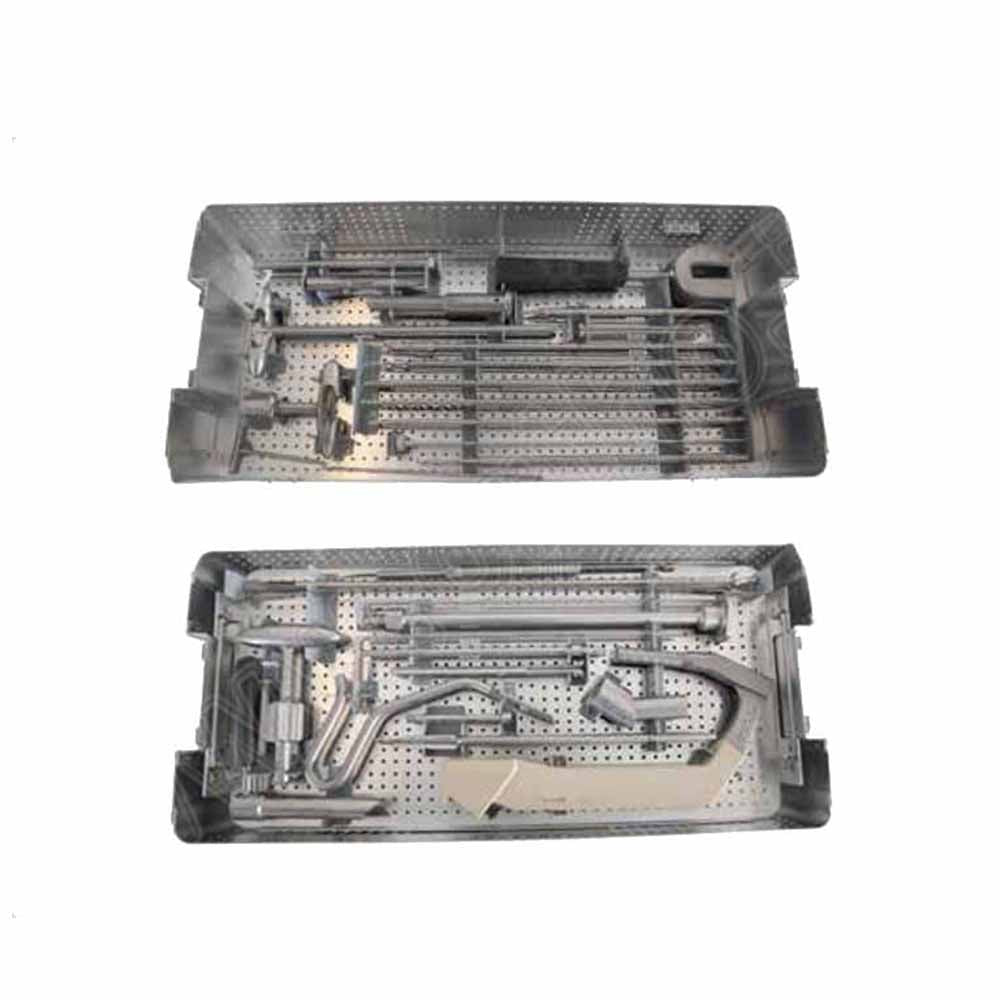
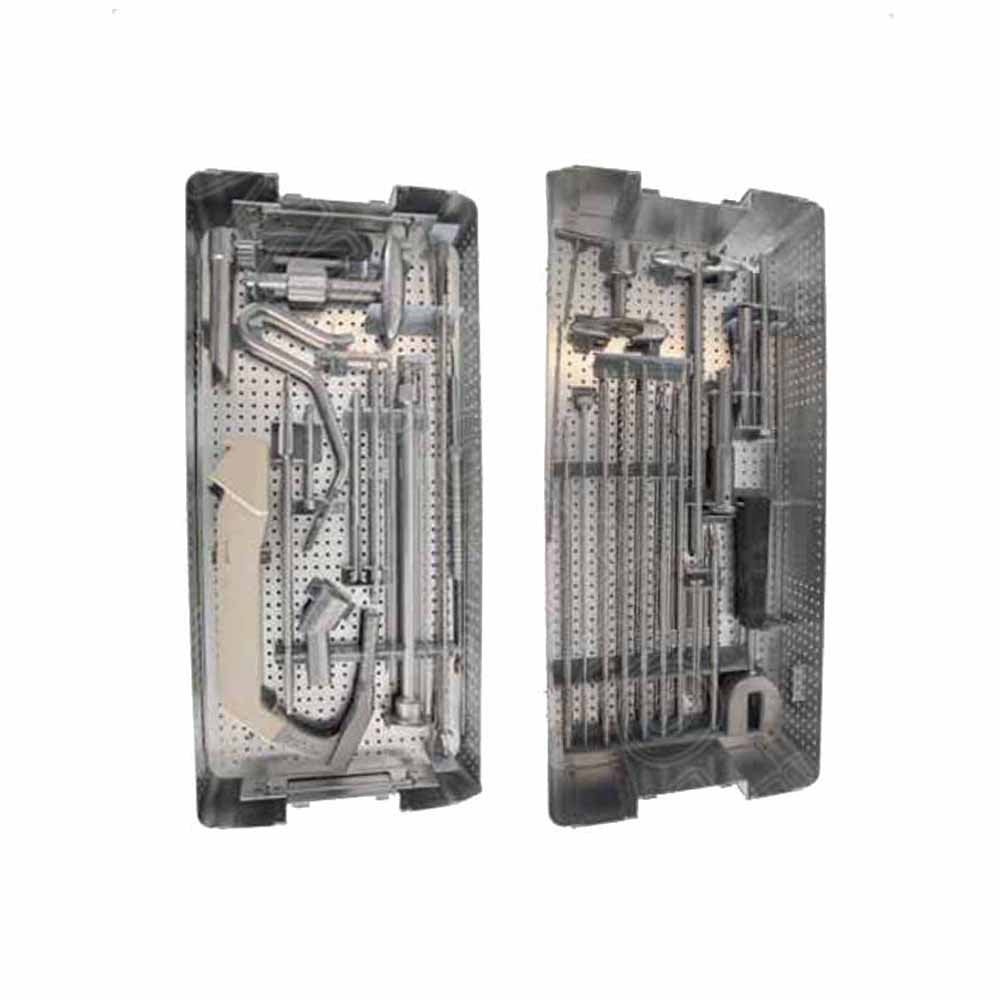
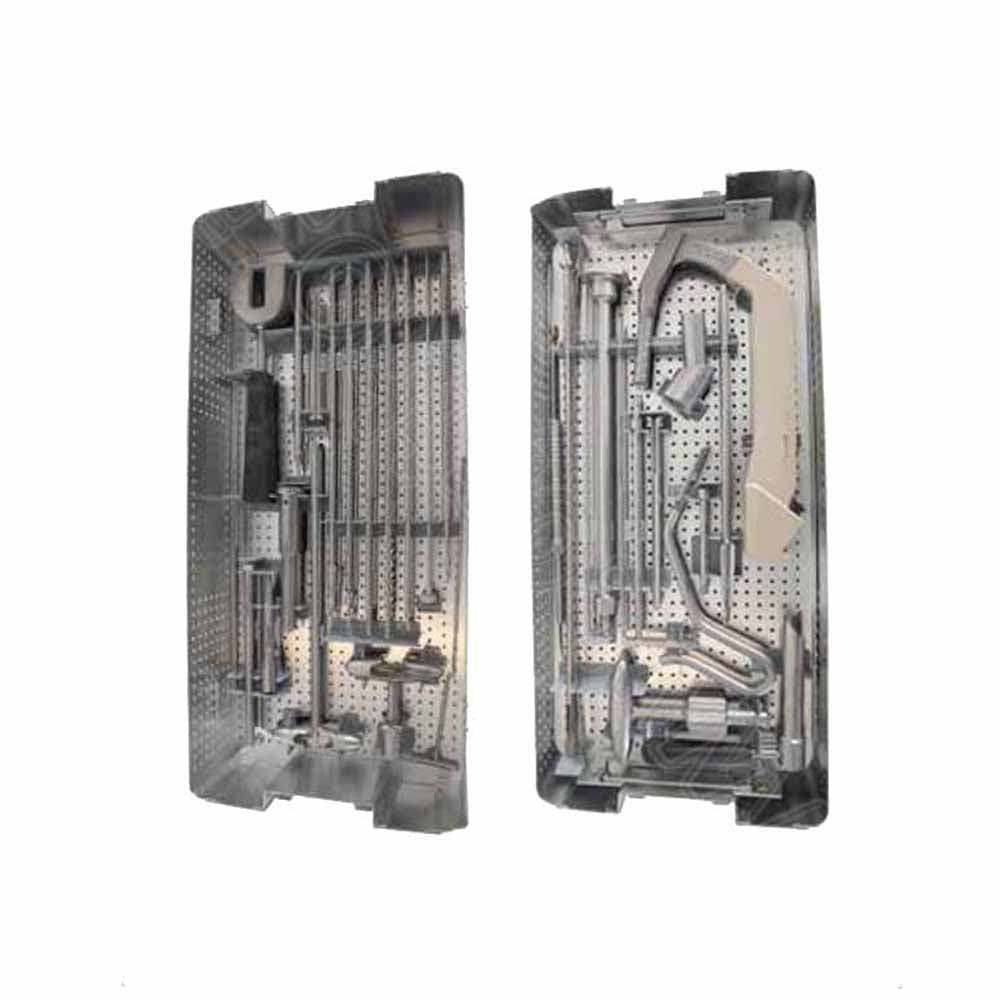
The Hip Fracture Nail Instrument Set from Peak Surgicals (PS-091 series) is a 35-piece cephalomedullary nail instrumentation set in stainless steel, designed to support the complete intraoperative workflow of proximal femoral nail fixation for hip fractures — covering femoral entry portal preparation with a Curved Cannulated Awl and Entry Portal Sleeve, proximal femoral canal reaming with a Proximal Reamer, lag screw channel targeting and preparation, anti-rotation bar assembly, distal locking, and final nail seating and compression. The set includes a dedicated Lag Screw Length Gauge, Lag Screw Outer Sleeve, Guide Pin Sleeve, Guide Pin 3.2, Lag Screw Drill, Proximal Locking Lag Screw Tap, Lag Screw Driver, Compression Screw Starter Drill, Compression Screw Drill, Compression Screw Driver Assembly, Distal Sleeve Guide Block, 9mm Distal Drill Sleeve, 4mm Pilot Drill, Hex Driver 4.75 A/F, Length Gauge, Screw Length Gauge, Distal Depth Gauge, Drill Bit QC Ø4.0mm×225mm, Quick Connect T-Handle, Keyless Chuck, Guide Bolt Wrench, Reducer, Impactor-Long, Slotted Hammer, Large Extractor, Key for Retaining Rod, Obturator, and an Instrument Case with Tray, all in a dedicated aluminium tray. It is used by orthopedic and trauma surgeons in hospital operating theatres performing cephalomedullary nail fixation of intertrochanteric, peritrochanteric, and subtrochanteric femoral fractures.
A cephalomedullary nail — also called a proximal femoral nail (PFN), intramedullary hip screw (IMHS), or hip fracture nail — is an intramedullary nail that enters the proximal femur at the tip of the greater trochanter or in the piriformis fossa and advances distally into the femoral medullary canal, while also accepting one or two lag screws or blades directed proximally and laterally into the femoral head. This combined cephalomedullary fixation stabilises hip fractures — both the femoral shaft component and the femoral head and neck component — within a single implant construct. The technique is indicated for unstable intertrochanteric femoral fractures (AO/OTA 31A2 and 31A3), reverse oblique trochanteric fractures, and subtrochanteric femoral fractures where the fracture pattern extends into the subtrochanteric zone. Compared with extramedullary fixation (dynamic hip screw and plate), cephalomedullary nailing reduces the lever arm from the hip joint to the implant, decreasing the bending moment on the implant-bone construct and allowing earlier weight-bearing in osteoporotic bone. The Hip Fracture Nail Instrument Set provides the complete instrument workflow for the nail entry, proximal lag screw, and distal locking steps of the procedure.
The proximal femoral entry portal is the most critical step in cephalomedullary nailing — an incorrectly positioned entry portal results in nail malalignment within the femoral canal, varus or valgus fracture malalduction, and difficulty advancing the nail to the correct position. The Curved Cannulated Awl (PS-091.163) creates the initial cortical breach at the entry point on the tip of the greater trochanter or just medial to it at the piriformis fossa, guided by biplane fluoroscopy. The Entry Portal Sleeve (PS-091.121) protects the surrounding soft tissue during awl insertion and provides a working channel for the subsequent instruments. The Obturator (PS-091.001) provides the blunt-tipped guide for advancing the awl assembly to the correct depth before the cortical breach is made. The Proximal Reamer (PS-091.019) then enlarges the proximal femoral entry portal to accommodate the larger proximal diameter of the nail — the proximal femoral nail is typically 13–16mm in proximal diameter, significantly wider than the entry point created by the awl alone, and the proximal reamer creates the tapered or cylindrical proximal channel required for smooth nail introduction without cortical impaction or fracture propagation at the entry site. The Reducer (PS-091.133) assists with advancing instruments through the entry portal when tissue resistance is encountered.
After the nail is seated in the femoral canal to the correct position confirmed fluoroscopically, the lag screw is inserted from the lateral cortex of the proximal femur through the nail's proximal lag screw hole, across the femoral neck, and into the femoral head at the correct position in the head — ideally within the inferior-posterior quadrant of the femoral head on lateral view and centrally positioned on anteroposterior view, at the correct tip-apex distance (TAD) to minimise the risk of femoral head cut-out. The Drill Guide (PS-091.025) engages the nail's proximal lag screw hole and directs the Guide Pin Sleeve (PS-091.049) and Guide Pin 3.2 (PS-091.055) along the correct lag screw trajectory into the femoral head. The Lag Screw Length Gauge (PS-091.013) measures the guide pin insertion depth from the lateral cortex to the subchondral bone of the femoral head to determine the correct lag screw length. The Lag Screw Outer Sleeve (PS-091.043) protects the soft tissue during lag screw drilling and insertion. The Lag Screw Drill (PS-091.067) reams the femoral neck channel for the lag screw over the guide pin. The Proximal Locking Lag Screw Tap (PS-091.073) threads the proximal locking mechanism channel. The Lag Screw Driver (PS-091.079) seats the lag screw to its final position in the femoral head. The Anti-Rotation Bar Assembly (PS-091.061) controls rotation of the femoral head fragment on the lag screw during screw insertion and in the postoperative period where a second anti-rotation implant is used.
Many cephalomedullary nail designs incorporate a secondary compression screw that passes through the lag screw or alongside it to provide additional rotational stability and controlled collapse of the fracture to promote healing. The Compression Screw Starter Drill (PS-091.085) creates the initial entry for the compression screw channel. The Compression Screw Drill (PS-091.091) prepares the definitive compression screw channel. The Compression Screw Driver Assembly (PS-091.097) inserts and seats the compression screw. The Locking Bolt (PS-091.031) secures the lag screw's sliding mechanism at the correct position once final fracture reduction is confirmed. Distal locking is performed using the Distal Sleeve Guide Block (PS-091.037), which connects to the distal targeting arm of the nail insertion handle and guides the 9mm Distal Drill Sleeve (PS-091.109) and 4mm Pilot Drill (PS-091.115) to the distal locking hole positions in the nail. The Drill Bit QC Ø4.0mm×225mm (PS-091.187) drills the distal cortex for the locking screw. The Distal Depth Gauge (PS-091.181) measures the drill depth for distal locking screw length selection. The Hex Driver 4.75 A/F (PS-091.103) applies final torque to the locking screw.
The Impactor-Long (PS-091.145) and Slotted Hammer (PS-091.151) provide the controlled impaction needed for final nail seating in the femoral canal after manual advancement — the slotted hammer engages the nail insertion handle and delivers axial impaction force to advance the nail to its final position without transmitting torsion to the fracture site. The Quick Connect T-Handle (PS-091.127) provides manual drive for all quick-connect instruments during the procedure. The Keyless Chuck (PS-091.157) provides the connection between the power drill and the reaming and drilling instruments where quick-connect is not used. The Guide Bolt Wrench (PS-091.139) applies torque to the guide bolt that locks the drill guide and lag screw targeting assembly to the nail. The Length Gauge (PS-091.169) and Screw Length Gauge (PS-091.175) provide additional intraoperative length measurement capability. The Key for Retaining Rod (PS-091.193) manages the retaining rod used during nail advancement. The Large Extractor (PS-091.007) removes the nail if repositioning is required during the procedure or at a later revision surgery.
The Hip Fracture Nail Instrument Set is manufactured under CE Mark, ISO 13485, and FDA compliant quality standards. ISO 13485 certification confirms Peak Surgicals operates a documented quality management system covering design control, material traceability, and production consistency for orthopedic surgical instruments. CE Mark confirms conformity with European medical device regulations, and FDA compliance supports procurement for US-based hospitals, trauma centers, and orthopedic departments requiring verified regulatory documentation for cephalomedullary nail instrumentation purchases.
| SKU | PS-091 (verify in Shopify admin) |
|---|---|
| Product Name | Hip Fracture Nail Instrument Set |
| Price | $1,648.90 USD |
| Total Instruments | 35 + Instrument Case and Tray |
| Instrument Category | Orthopedic — Cephalomedullary / Proximal Femoral Nail Instrumentation |
| Procedure | Cephalomedullary nail fixation of intertrochanteric, peritrochanteric, and subtrochanteric femoral fractures |
| Entry Instruments | Curved Cannulated Awl (PS-091.163), Entry Portal Sleeve (PS-091.121), Obturator (PS-091.001), Proximal Reamer (PS-091.019), Reducer (PS-091.133) |
| Lag Screw Instruments | Guide Pin 3.2 (PS-091.055), Guide Pin Sleeve (PS-091.049), Drill Guide (PS-091.025), Lag Screw Outer Sleeve (PS-091.043), Lag Screw Drill (PS-091.067), Proximal Locking Lag Screw Tap (PS-091.073), Lag Screw Driver (PS-091.079), Anti-Rotation Bar Assembly (PS-091.061) |
| Compression Screw Instruments | Starter Drill (PS-091.085), Compression Screw Drill (PS-091.091), Compression Screw Driver Assembly (PS-091.097) |
| Distal Locking Instruments | Distal Sleeve Guide Block (PS-091.037), 9mm Distal Drill Sleeve (PS-091.109), 4mm Pilot Drill (PS-091.115), Drill Bit QC Ø4.0×225mm (PS-091.187), Distal Depth Gauge (PS-091.181), Hex Driver 4.75 A/F (PS-091.103) |
| Gauges | Lag Screw Length Gauge (PS-091.013), Length Gauge (PS-091.169), Screw Length Gauge (PS-091.175), Distal Depth Gauge (PS-091.181) |
| Drive and Assembly | Quick Connect T-Handle (PS-091.127), Keyless Chuck (PS-091.157), Locking Bolt (PS-091.031), Guide Bolt Wrench (PS-091.139), Key for Retaining Rod (PS-091.193) |
| Impaction and Extraction | Impactor-Long (PS-091.145), Slotted Hammer (PS-091.151), Large Extractor (PS-091.007) |
| Container | Instrument Case (PS-091.199) + Instrument Tray (PS-091.205) |
| Certifications | CE Mark, ISO 13485, FDA |
| Warranty | 1 Year |
| MOQ | 1 Set |
| OEM / Custom Orders | Available |
| After-Sale Service | Return and Replacement |
What types of hip fractures does the cephalomedullary nail fix?
The Hip Fracture Nail Instrument Set is designed for cephalomedullary nail fixation of proximal femoral fractures in the trochanteric and subtrochanteric regions. Primary indications are unstable intertrochanteric femoral fractures (AO/OTA 31A2 and 31A3), which have significant posteromedial comminution and cannot be reliably stabilised with an extramedullary sliding hip screw alone; reverse oblique trochanteric fractures (31A3.1) where the fracture line runs from distal-medial to proximal-lateral and the femoral shaft fragment tends to migrate medially with extramedullary fixation; and subtrochanteric femoral fractures (AO/OTA 32) where the fracture extends into the subtrochanteric zone and requires the mechanical advantages of intramedullary nail fixation to resist the large bending forces generated by the hip abductors and iliopsoas in this region. Stable intertrochanteric fractures (AO/OTA 31A1) can be treated with either a sliding hip screw plate or a cephalomedullary nail depending on surgeon preference and patient factors.
What is tip-apex distance (TAD) and why is correct lag screw positioning critical?
Tip-apex distance is the sum of the distance from the tip of the lag screw to the apex of the femoral head measured on the anteroposterior radiograph and the same distance measured on the lateral radiograph, both corrected for magnification. A TAD exceeding 25mm is associated with a substantially higher rate of lag screw cut-out through the femoral head — the most common mechanical failure of cephalomedullary nail fixation. The Lag Screw Length Gauge (PS-091.013) confirms that the lag screw tip is positioned within the inferior-posterior quadrant of the femoral head at the correct depth, allowing the TAD to be minimised before the lag screw is finally seated. Correct lag screw positioning — confirmed fluoroscopically on both anteroposterior and lateral views with the guide pin in place before drilling — is the single most important technical step in cephalomedullary nailing for reducing the risk of implant failure and revision surgery.
What is the role of the Anti-Rotation Bar Assembly in this set?
The Anti-Rotation Bar Assembly (PS-091.061) provides rotational control of the femoral head and neck fragment on the lag screw axis during the lag screw insertion step and in nail designs where a secondary anti-rotation implant is placed alongside the lag screw. In intertrochanteric fractures, the femoral head fragment can rotate around the lag screw — a phenomenon called femoral head rotation or Z-effect in two-screw designs — during screw insertion and in the early postoperative period before fracture healing provides rotational stability. The anti-rotation bar passes through a second hole in the nail proximal to or alongside the lag screw hole and engages the femoral head, preventing this rotation. In some nail designs, the anti-rotation bar also provides additional resistance to varus collapse under loading.
How does this set differ from the Femoral Reconstruction Intramedullary Nail Set also available from Peak Surgicals?
Both are cephalomedullary sets — both address femoral shaft fixation combined with proximal femoral head and neck fixation — but they address different clinical situations. The Femoral Reconstruction Intramedullary Nail Set is configured for reconstruction nailing in young patients with peritrochanteric fractures combined with femoral shaft fractures, using a reconstruction nail that spans from the greater trochanteric entry to the distal femur. The Hip Fracture Nail Instrument Set (PS-091 series) is specifically configured for short cephalomedullary hip fracture nails — optimised for osteoporotic intertrochanteric and subtrochanteric hip fractures in older patients, with the proximal lag screw, anti-rotation bar, compression screw, and distal locking instruments that are specific to the hip fracture nail design. The dedicated entry instruments including the Curved Cannulated Awl, Entry Portal Sleeve, and Proximal Reamer in this set are specific to the tip-of-trochanter entry used in hip fracture nailing.
What certifications does this set carry?
The Hip Fracture Nail Instrument Set is manufactured under CE Mark, ISO 13485, and FDA compliant quality standards. ISO 13485 certification confirms Peak Surgicals operates a documented quality management system covering design control, material traceability, and manufacturing consistency for orthopedic surgical instruments. CE Mark confirms conformity with European medical device regulations, and FDA compliance supports procurement for US hospitals, trauma centers, and orthopedic departments requiring verified regulatory documentation for cephalomedullary nail instrumentation purchases.


