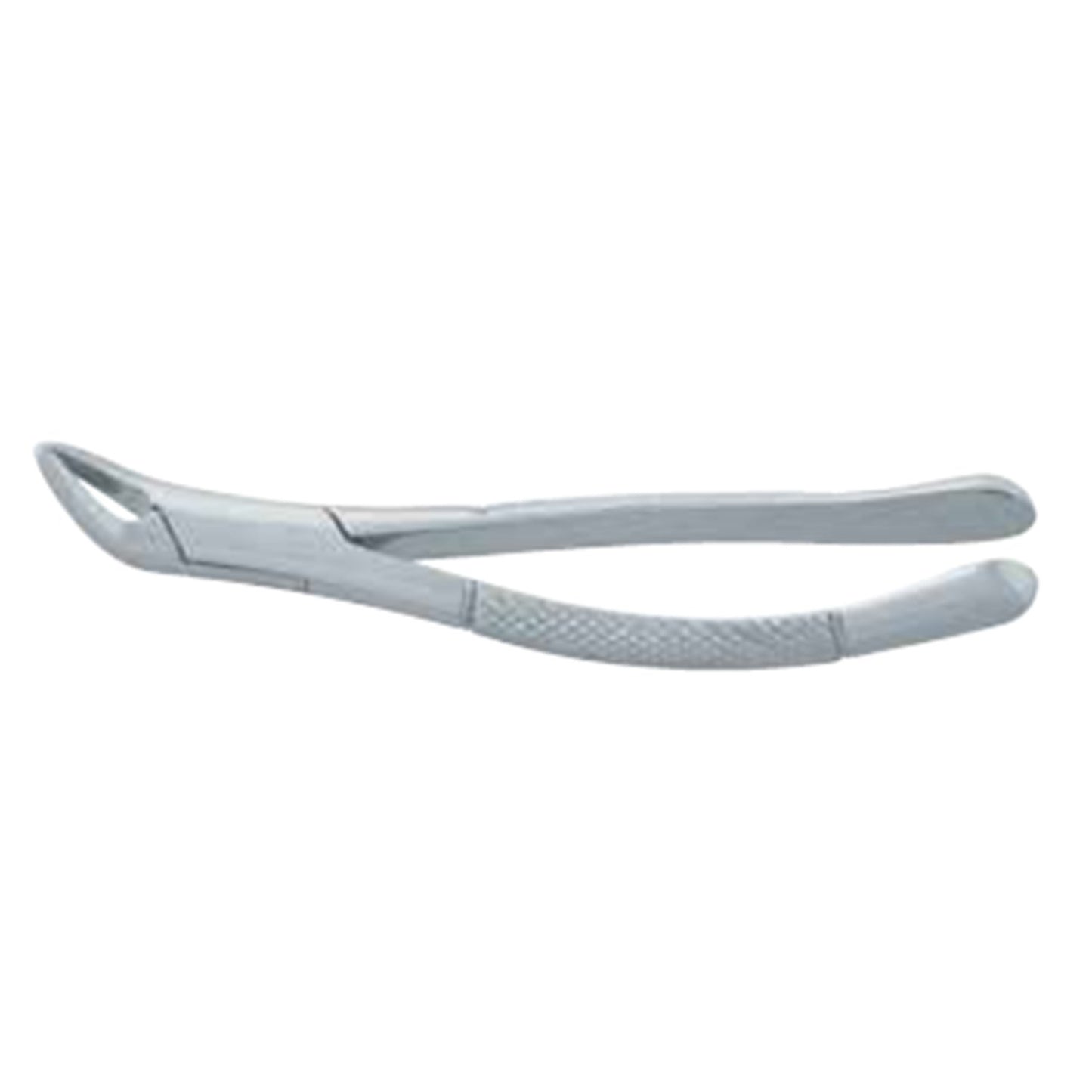
The Foundation of Oral Surgery: Dentist Extracting Forceps
In the field of dentistry in general, the extracting forcep can be considered to be the most well-known and indispensable instrument for removing teeth. Modern dentistry is focused on the preservation of teeth; extractions are an essential treatment option for those suffering from serious decay, periodontal disease or overcrowding of the orthodontics. They aren't merely "pliers"; they are precisely engineered levers that convert hand pressure into the mechanical force needed to expand the bony socket and cut off attachments to the periodontal.
Anatomy and Design Principles
The form of the dental forcep is determined by the shape of the tooth that it is designed to eliminate. A standard forcep is composed of three components that are three parts: the blades (beaks), the joint (hinge), and the handles.
-
Beaks: This is the most crucial component. Beaks are made to be shaped to match the contours of the tooth's cervical line (neck). For instance, forceps are used for maxillary (upper) molars, which feature pointed projections on one end of the beak, which allows them to accommodate the buccal bifurcation. The mandibular (lower) forceps usually feature points on both of the beaks.
-
The Hinge. This is the fulcrum. High-quality forceps utilize the box joint to ensure that the beaks are aligned each time precisely, without any lateral "wobble."
-
the Handles They are designed ergonomically designed to offer maximum leverage. They usually have the serrated or knurled pattern to ensure a non-slip grasp, even if you wear wet surgical gloves.
Key Benefits of Specialized Forceps
-
Atraumatic Extractions: By matching the beak's shape to the anatomy of the tooth's root, the forcep gives the user a "global" grip. It is a way of distributing pressure evenly, thus reducing the possibility of breaking the crown of the tooth or the alveolar bone that surrounds it.
-
Mechanical Benefit: The length of the handles relative to the hinge enables the dentist to apply a significant force while exerting minimal effort, which ensures a steady and stable extraction process.
-
Universal or. Analytical. Even though "universal" forceps are in use, certain forces (like that of American Pattern or the American Pattern) permit greater access to difficult areas, like impacted third molars.
Common Types and Applications
The quadrant classifies forceps for extraction of teeth they are in and the tooth type they are used for:
-
Maxillary Forceps (Upper): These are normally held by putting the palms upwards. The handle and beaks usually are in a straight line, or are curved in an elongated "S" curve to navigate the lips and cheeks.
-
Mandibular Forceps (Lower): These are designed with a $90^$ angle at the hinge, allowing the dentist to stand in front of or behind the patient and apply downward and outward pressure effectively.
-
Pediatric Forceps The forceps are much smaller than the adult versions, made to be a good fit for the first teeth of children, as well as the smaller size of the mouth of a child.
-
Root fragment forceps. They have very thin and long beaks; they are designed to dig far into the root socket in order to recover damaged root tips.
Quality and Material Standards
Forceps used to extract forceps have to withstand extreme physical strain and be repeatedly sterilized.
-
Carbon-based High-Carbon Stainless Steel . It provides the required hardness to stop the beaks from sliding or being bent under pressure.
-
Teflon (also known as Chrome Finishing): Many premium forceps have a special coating that increases corrosion resistance and offers the user a more smooth "feel" during use.
-
CNC Milling Beaks' inner edges can be crossed-cut or diamond-dusted to give an "bite" that prevents the tooth from sliding during extraction.
Conclusion
The Dentist Extracting Forcep is a marvel of mechanical and ergonomic engineering. By choosing the right pattern and maintaining the device's razor-sharp, precise beaks, a doctor can make sure that extractions are done in a safe, efficient and with the least amount of damage to the patient's bone structure.